The Blue House They Wanted To Claim
My name is Madison Carter. I’m thirty years old, I work in IT for a regional credit union out of Millhaven, Ohio, and for eight years I got up at five in the morning to work a help desk shift before most people even remembered they had a computer problem. I did that so I could save enough to buy a house nobody gave me. On the night I finally hosted a dinner in that house, not one person from my family walked through the door. By the next afternoon, I understood exactly why, and I had the paperwork to prove it.
I want to tell you about the house first, because the house is where all of this started to make sense.
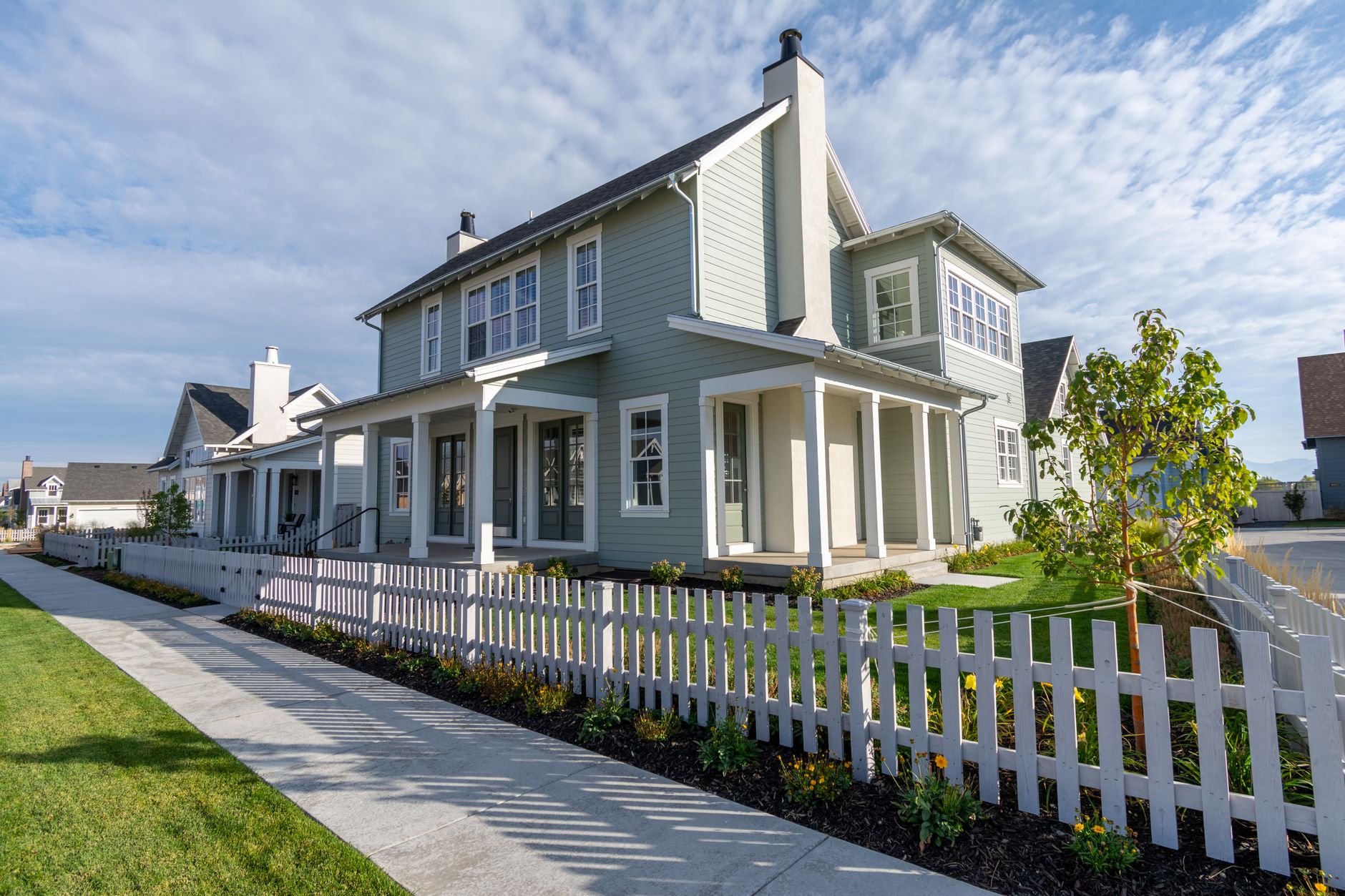
It’s a small blue place on Larkspur Lane, two bedrooms, one bath, a kitchen too small for the table I bought anyway because I liked the idea of extra chairs. There’s a white picket fence out front that the previous owners, an older couple named the Hendersons, had painted three times in forty years and asked me, almost tearfully, to keep white. There’s a porch swing that came with the house and creaks on the third push, every time, like it’s clearing its throat before it says something. When I stood in that yard the day I got the keys, I didn’t think about resale value or square footage. I thought about being nine years old, sitting in the back of my father’s truck outside a house just like it in Millhaven, watching him point at the porch light and say to my mother, “Someday.” He never bought that someday for us. I decided I would buy it for myself.
To understand why an empty dinner table broke something loose in me, you have to understand what came before it, because none of this happened in a vacuum. Nothing in a family ever does.
I grew up the older of two kids. My brother, Tyler, is twenty-six now, four years younger than me, and for as long as I can remember, he was the child my parents built their hope around and I was the child they built their reliability around. That’s not a bitter guess. It’s just how the roles landed early and never moved. When Tyler struggled in school, my mother, Carol, sat with him every night at the kitchen table, patient as a saint, while I did my own homework alone at the counter because “you don’t need help, you’re the responsible one.” When Tyler wrecked his first car at seventeen, my father, Frank, who ran a small auto repair shop off Route 9 for thirty years, fixed it himself, free of charge, and told him to be more careful next time, gently, like you’d correct a puppy. When I got my license, I was told insurance was expensive and I’d better get a part time job if I wanted to keep driving. I did. I bagged groceries at the Millhaven IGA for two years starting at sixteen, and I want to be clear, I’m not telling you that like it scarred me. Work never scarred me. What scarred me was watching the same effort get graded on two different curves depending on which kid put it in.
It kept going into adulthood, the way these patterns always do if nobody names them out loud. Tyler dropped out of community college after one semester and my parents called it “finding himself.” I finished my associate’s degree in information technology while working full time, and when I mentioned it at Sunday dinner, my father asked if I was still planning on “getting a real degree eventually,” like two years of night classes and a 3.8 GPA were a placeholder for something more legitimate. When Tyler lost his job at the tire plant at twenty-two, my parents co-signed a lease on a new apartment for him within the month, no questions, because “he just needs a fresh start.” When Tyler’s truck got repossessed at twenty-four, my father quietly paid off the balance and never told my mother the number, and I only know because I saw the check register open on the kitchen counter one Thanksgiving and did the math myself, standing there with a dish towel in my hand, feeling something in my chest go very still and very cold.
I never asked my parents for money. Not once, not ever, not even when I probably could have used it. Some of that was pride. Most of it, if I’m honest with myself now, was self-preservation. I had watched what it cost Tyler to need them. It cost him the last shred of anyone in that family believing he could stand on his own, and it cost my parents the ability to ever say no to him again, because saying no once would have meant admitting the first ten times had been a mistake. I didn’t want to be owed to anyone. I wanted, more than almost anything else in my twenties, to build one thing with my own two hands that nobody in my family could ever claim a piece of, financially or otherwise.
That’s what the house was supposed to be.
There’s one more piece of this I need to give you, because it matters for what came later, and it’s the piece that still catches in my throat a little. My grandmother, my father’s mother, was named Ruth Carter. She lived two towns over in a farmhouse with a wraparound porch, and she was the one person in my family who never once compared me to my brother out loud. Ruth taught piano lessons out of her front room until she was seventy-nine years old, and she used to tell me, while I sat on her porch steps shelling peas for Sunday supper, that the Lord doesn’t measure a woman by what her family hands her, He measures her by what she builds with what she’s given. When Ruth passed six years ago, she left a small inheritance split three ways between my father, my aunt, and directly to me and Tyler, five thousand dollars each, her way, her lawyer told us, of making sure her grandchildren got something free and clear of anyone else’s hands. Mine went straight into a savings account labeled “House” that I didn’t touch again until the day I sat across from a loan officer at the credit union where I work and put down every cent of my closing costs myself.
I found out much later what happened to Tyler’s five thousand dollars. But I’m getting ahead of myself, and this story deserves to be told in the order I lived it.
I closed on the house on a Tuesday in early spring. I stood in the empty living room after the Hendersons’ moving truck pulled away, and I cried the good kind of tears, the kind that come from finally exhaling after holding your breath for eight years. The first thing I did, before I’d even ordered furniture, was call my mother and invite my entire family over for dinner. I wanted them to see it. I wanted, and I’ll admit this plainly because pretending otherwise would be a lie, I wanted my father to stand on that porch and say “someday” again, this time about a someday that had actually arrived.
I set the date for a Saturday, three weeks out, enough time for everyone to plan around it. I told my mother to bring nothing, that I had it handled. I meant that as generosity. I know now it was also, in some small stubborn part of me, a chance to prove that I could give my family a beautiful evening without needing a single thing from them in return.
I spent that whole Saturday cooking like it was a holiday. I made my mother’s favorite dish, a roast chicken with the rosemary and lemon the way she’d made it every Easter of my childhood, and I set it to rest under foil at exactly the right time so it would still be warm at seven. I opened the bottle of red wine my father always talked about at Christmas, a bottle he’d been given years ago by a customer and had never once opened, saying it was “too good to waste on a regular night.” I bought that same label myself and had it breathing on the counter by six. I bought a table, a real dining table, my first, because I didn’t own furniture that could seat more than two people until that week, and I set six places around it with the good napkins folded into triangles the way I’d seen in a magazine, because some foolish, hopeful part of me still believed that if the table looked right, the people would show up right along with it.
At seven o’clock, the table was full and the chairs were empty.
I told myself traffic. I told myself somebody’s running late from work, that’s all, these things happen.
At seven thirty, I sent a group text. Everyone still coming? Chicken’s ready when you are, no rush.
Nobody answered.
At eight o’clock, I sat alone at a table set for six, watching the candles burn down into little pools of wax, and I felt something I recognized from a hundred smaller versions of this same moment throughout my whole life. The quiet click of being an afterthought. Not a dramatic betrayal. Just a slow, familiar sinking, the kind that doesn’t shout, it just settles into your chest like sediment.
At 8:15, my phone finally buzzed. It was my mother.
Sorry. Something came up. Busy tonight.
That was the entire message. No name of what came up. No apology beyond the word itself. No “we’ll come by tomorrow” or “I feel terrible.” Just five words that told me everything about how much thought had gone into standing me up.
I sat there a long moment with the phone in my hand. And then, instead of the tears I expected, something else arrived instead. Clarity. Plain, quiet clarity, the kind that doesn’t announce itself, it just settles over you like a light coming on in a room you’d been sitting in the dark for years without realizing how dark it actually was.
I got up. I wrapped the chicken in foil and put it in the refrigerator I hadn’t filled with much else yet. I poured the wine back into the bottle, most of it anyway, and pressed the cork back down with the heel of my hand. I folded the napkins back into their drawer. I blew out the candles one at a time and watched the smoke curl up toward the new light fixture I’d installed myself the week before, and I turned off the lamps and stood for a minute in my own quiet house.
It felt empty. But it also, for the first time that whole evening, felt honest.
Around nine thirty, there was a knock at the door.
For one unguarded second, hope did that stupid, reflexive thing hope does, and I thought, they came, they’re here, they just got held up. I opened the door with my heart already halfway to soft again.
It was Amber, my brother Tyler’s girlfriend of about a year, standing on my new porch holding a small store-bought cake, the kind with the plastic dome lid still half fogged from the grocery store cooler.
“Hey,” she said, a little too brightly for nine thirty at night. “Sorry, it’s been a whole day. People got caught up.” She held the cake out like it was an even trade. “It doesn’t have to mean anything.”
I looked at that cake for a second longer than was probably polite. Six ninety-nine, maybe seven fifty with tax, a box cake somebody grabbed off an end cap on their way somewhere else. Not made for me. Not even really meant for me. A gesture aimed at making the evening disappear rather than making it right.
“Thanks,” I said, and I took it, because I was raised not to be rude on my own porch even when rudeness would have been fully earned.
“Everyone had a lot going on,” Amber added, already half turned back toward her car, like she’d delivered a package and could now check the task off a list. “You know how it is.”
I did know how it is. That was exactly the problem.
I stood in the doorway and watched her taillights swing back down Larkspur Lane, and after her car turned the corner, I stood there a while longer in the cool spring air, and I let the truth of the evening finish settling into my bones. To them, this had been small. A scheduling inconvenience. A missed Saturday among a thousand other Saturdays. To me, it had been the first thing I’d ever built entirely on my own, and I had wanted, more than I’d let myself admit even to myself, for them to walk through that door and finally see me the way I’d spent thirty years hoping to be seen.
I went to bed that night in an unfamiliar bedroom in a house that was completely, legally, financially mine, and I slept better than I expected to.
In the morning, something in me had shifted, and it wasn’t sadness anymore. It was resolve.
I took my coffee out to the porch and sat on that creaky swing and looked at my fence, my gate, my flower beds still bare because I hadn’t gotten around to planting yet, and I thought about every dinner, every holiday, every birthday I’d quietly absorbed a smaller portion of attention at so that Tyler could have a bigger one, and I thought, not unkindly, but very clearly: I built this without you. I don’t need your presence to validate that it’s real.
I found a thick black marker in the junk drawer I’d inherited from the Hendersons, and I found a piece of white poster board left over from a garage sale sign, and I sat down at my new kitchen table and wrote out, in careful block letters, three lines:
VISITS BY INVITATION. RESPECT THE SPACE. THANK YOU.
I walked it out to the gate, and I zip tied it to the top rail where anyone coming up the walk would see it before they ever reached the porch, and I stepped back into the yard and looked at it standing there in the morning light, plain and calm and completely unangry.
For the first time since I’d moved in, the house didn’t feel like it was still waiting for somebody’s approval to be real. It felt, finally, entirely like mine.
I took a photo of the sign with the blue paint of the house soft behind it in the morning sun, and almost without thinking about it, I posted it to my own page with a caption three words long.
My house. My pace. My peace.
I didn’t expect anything from that post beyond maybe a few likes from coworkers. What actually happened surprised me. By midday, it had been shared around Millhaven’s community page, the same one where people post about lost dogs and church rummage sales and county fair schedules, and the comments underneath weren’t what I braced for. They weren’t strangers telling me I was overreacting to a missed family dinner. They were, overwhelmingly, women my mother’s age and older, women who ran the concession stand at the football field and taught Sunday school and worked the counter at the feed store, saying some version of the same thing.
Good for you, honey. Boundaries aren’t a punishment, they’re a fence, and every good farm has one.
I raised four kids and I wish somebody had told me thirty years ago that “family” doesn’t mean “unlimited access.”
That sign should be a poster in every kitchen in this county.
By early afternoon, my cousin who still lives in Millhaven texted me a screenshot of the post being talked about at the diner counter downtown, which is about as close as our town gets to a headline. I sat on my porch swing reading through it all, feeling something unfamiliar and warm settle where the hollow ache from the night before had been, and I honestly thought that might be the end of it. A small local moment, a little validation, and then Monday would come and I’d go back to my help desk queue and my quiet house.
At 1:07 that afternoon, my phone buzzed once, hard, the way it does when a call is trying to become a text and a text is trying to become a summons.
My father.
We need to talk about the house.
I looked at those six words for a long time. Then I looked over at the small kitchen counter by my keys, where a plain manila folder had been sitting untouched since the week I’d closed on the house, because filing it away in a drawer had felt, at the time, like an unnecessary formality. Inside that folder was every piece of paper that had built this house out of nothing but my own two hands: the closing disclosure with my name alone on every signature line, the loan officer’s letter confirming no gift funds and no co-signers, eight years of savings account statements showing the slow, unglamorous climb from four figures to a down payment, and one more thing I hadn’t looked at in a long time, a printed email from my father, dated four years earlier, in which I’d asked, once, carefully, whether he thought it made sense for me to ask for a small loan toward a starter home, and he’d written back two sentences telling me that money like that needed to go toward things that mattered more, and that I was young, I had time, I should be patient.
I want to be honest about what went through me in that moment, because it wasn’t rage, though I’d have understood if it had been. It was something quieter and, in its own way, more powerful. It was the sensation of finally, for the first time in thirty years, holding proof.
I texted my father back four words. Come by at four.
He arrived at 3:58, which told me something too, that whatever this was, it mattered enough to him to be early for once in his life. My mother came with him, standing half a step behind him on my new porch the way she’d stood half a step behind him my whole childhood, and for a second, before anyone said anything, I watched both of them take in the porch swing, the fresh paint, the little garden bed I’d started, the sign still zip tied to the gate they’d just walked past, and something crossed my father’s face that I didn’t expect. Not anger. Something closer to being caught out.
“Madison,” he started, standing on the porch he hadn’t stood on for a Saturday dinner three weeks before, “that sign. And that post. People are talking. Gary at the shop asked me this morning if everything’s alright at home. It’s embarrassing, is what it is.”
There it was. Not “I’m sorry we missed your dinner.” Not “how are you.” An accounting of his own discomfort, delivered on my porch, three weeks after he’d stood me up at a table I’d set with his favorite wine.
“I’m sorry it’s embarrassing for you,” I said, and I meant it evenly, not as an apology. “I wasn’t thinking about Gary at the shop when I wrote it. I was thinking about the fact that I set a table for six people on my own dining room floor for the first time in my life, and not one of you walked through that door.”
My mother’s eyes went glassy fast, the way they always had whenever a hard conversation threatened to actually happen in our family, a reflex built over decades to shut things down before they went anywhere real. “Madison, honey, we said we were sorry. Things came up.”
“You said five words,” I said. “Something came up. Busy tonight. You didn’t say what. You’ve never once, in my whole life, had to say what, because it was always understood that whatever it was, it mattered more than whatever I was doing.”
My father shifted his weight the way he used to when a customer questioned a repair bill, the stance of a man deciding whether to argue the point or absorb it. “That’s not fair,” he said. “We love you. This house is beautiful. We’re proud of you.”
“Then why,” I asked, “did you text me about the house instead of about the dinner? You didn’t call to ask if I was alright after that post went up. You called to talk about the house.”
He was quiet for a second, and in that second, I saw my opening, so I took it. I went inside, picked up the folder off the counter, and brought it back out to the porch, and I set it down on the little table between the swing and the chair I hadn’t bought yet.
“Since you want to talk about the house,” I said, “let’s talk about the house.”
I told him, plainly, what was in the folder. The closing papers with only my name on them. The loan approval that never once mentioned a family contribution, because there wasn’t one. The eight years of pay stubs and savings deposits, five, ten, sometimes forty dollars at a time, the math of a person building something slowly out of nothing. And I told him, finally, about the email, the one he’d probably forgotten he’d ever sent, where I’d asked once for help and been told, gently but firmly, to be patient.
“I was patient,” I said. “For eight years. And I built this without a single dollar from this family. So whatever it is you actually came here to talk about regarding this house, I want you to say it plainly, because I’ve already shown you I don’t owe anyone here an explanation for how I got it.”
That was when the real reason finally came out, the way these things always do once the polite cover story runs out of road.
Tyler and Amber had lost their apartment the week before. Not “lost” in the sense of a lease ending, but lost in the sense of an eviction notice taped to the door, three months behind, the truck payment and a stack of other bills having finally caught up to a young man who had never once had to sit with the consequences of running out of runway. My parents had spent that Saturday, the Saturday I’d set my table for, helping Tyler pack his and Amber’s belongings into a storage unit and figuring out, in a panic, where he was going to sleep. And somewhere in that panic, my father had landed on an idea he thought was reasonable: Madison has two bedrooms now. Madison’s not using the second one. Madison would understand, family helps family.
They hadn’t planned to ask me outright, not at first. They’d planned, my father admitted, looking at the porch boards instead of at me while he said it, to bring Tyler and Amber by “casually,” let them see the house, let the idea plant itself, and ease me into offering before anyone had to formally ask and risk a formal no. The dinner had simply gotten swallowed by the more urgent crisis of the day, and nobody had thought to call and say so, because in thirty years of this family’s arithmetic, my evening had simply never weighed as much as Tyler’s emergency.
“And the sign,” my father said finally, quieter now, “and that post. People saw it and started asking questions, and some of them are the kind of questions I don’t have good answers to. Why doesn’t your daughter want visitors. Why is your son sleeping in a motel while your daughter’s got an empty bedroom. It’s a small town, Madison. People talk.”
I sat with that for a moment. Not the anger I expected from myself, but something sadder, and clearer.
“That’s what this was about,” I said. “Not me. How it looks.”
He didn’t answer that, which was its own kind of answer.
I want to tell you I softened completely in that moment, because he’s my father and some doors in you never fully close no matter how many times they’ve been left standing open in the cold. I did soften, some. I told him I was sorry Tyler and Amber were struggling, and I meant that too, because whatever resentment I carried toward the family arithmetic, I never once wanted my brother homeless. But I also told him, as clearly and calmly as I’ve ever said anything in my life, that my house was not going to be the next place where Tyler’s emergencies quietly became my obligation while nobody asked how I felt about it first.
“If Tyler needs help,” I said, “he can call me himself, like an adult, and we can have an honest conversation about what I can and can’t offer. What I won’t do is have you show up unannounced with a plan already half made, expecting me to fall in line because that’s what I’ve always done. That’s over. That’s what the sign means. Not that you’re not welcome. That you’re not welcome to walk in here and rearrange my life without asking first.”
There was one more thing I hadn’t planned to say, but it came out anyway, because it had been sitting in me for six years, ever since Thanksgiving and that quiet check register. I told my father I knew about Tyler’s truck. I told him I knew, because I’d done the math myself standing at his kitchen counter with a dish towel in my hand, that Ruth’s five thousand dollars, the inheritance she’d left “free and clear of anyone else’s hands,” had gone into paying off that repossession instead of into whatever Tyler might have chosen to build with it himself, and that mine had gone, dollar for dollar, into a down payment nobody in this family had lifted a finger to help with. “Grandma Ruth wanted us to build something with what we were given,” I said. “I did. I don’t know what happened to Tyler’s chance to, but that’s not my debt to pay off either.”
My father didn’t have an answer for that. For maybe the first time in my adult life, I watched him simply run out of things to say to me, standing on a porch that was, in every legal and practical sense, entirely mine.
My mother reached over then, hesitantly, and put her hand on my arm. “I really am sorry about Saturday,” she said, and this time the words came slower, like she was actually reaching for them instead of reciting them. “We should have called. We should have told you what was happening instead of just texting you like that.”
It wasn’t everything. It wasn’t the full accounting of thirty years I sometimes still catch myself wishing for. But it was more honest than anything either of them had said to me in longer than I could remember, and I let myself take it for what it was.
They left a little after five, without a plan for Tyler, without a claim on my second bedroom, without the folder, which I kept exactly where it had been sitting, on the counter by my keys, a reminder rather than a threat.
Tyler called me himself two days later. It was an awkward call, full of long pauses and the particular discomfort of a younger sibling asking his older sister for something directly for maybe the first time in his life. I told him what I’d told my father. That I loved him, that I didn’t want him sleeping in a motel, and that I was willing to help him find a short term rental and even cosign if his credit needed the boost, on the clear understanding that it was a loan with a repayment plan and a deadline, written down, not a family favor that quietly turned into a permanent arrangement nobody ever had to be accountable for. He was quiet for a second, and then he said, “Yeah. Okay. That’s fair,” in a voice that sounded, for the first time I could remember, like a grown man agreeing to grown man terms.
We worked it out over the following week. He and Amber found a small one bedroom above the hardware store downtown, the kind of place with a window unit air conditioner and a landlord who knew everybody’s business, and I cosigned the lease with a signed agreement between us about what he’d pay me back and by when. It wasn’t a fairy tale reconciliation. There were still hard conversations, still moments where old patterns tried to reassert themselves, my mother once again defaulting to “can’t you just help him without all the paperwork,” and me learning, slowly, that saying no to that question wasn’t cruelty, it was the exact boundary that had let me build a house in the first place.
I left the sign on the gate for about six weeks. Not out of anger by the end, but because it had done its job, and I wanted to be sure the lesson had actually landed before I softened it. When I finally did take it down, it wasn’t because I’d stopped believing in it. It was because I didn’t need it anymore. My family had learned, the way families sometimes finally do learn, slowly and imperfectly, that walking up my front path now meant calling first, and that had simply become the new, ordinary shape of things, the way it probably should have been all along.
Three months after that first ruined dinner, I hosted another one. I invited my parents, and Tyler and Amber, and this time I also invited the Hendersons, the couple who’d sold me the house and still lived two streets over, and Marge from work, who’d become the closest thing I had to a sister in the years I’d spent building this house alone. I made the same roast chicken. I opened a different bottle of wine, a cheaper one, because I decided somewhere along the way that the “too good to waste” bottle had waited long enough for an occasion that actually deserved it, and this ordinary Tuesday dinner, full of people who’d finally learned to show up, was exactly that occasion.
Everyone came. Every chair got filled. My father sat at my table, in my house, that I built, and when he raised his glass toward the end of the meal, he didn’t say anything grand. He just said, “This is a good house, Madison,” and looked at me for a second in a way I hadn’t been looked at by him in longer than I could count, and I understood that in our family, in our small quiet corner of Ohio where nobody says the big feelings out loud very easily, that sentence was as close to sorry and I’m proud of you as I was ever going to get, and for the first time, it was enough.
I still have that manila folder. It sits in a drawer now instead of on the counter, not because I’m hiding it, but because I don’t need it in reach anymore. I know what’s in it. More importantly, my family knows what’s in it, and knows what it means: that I built this life without needing anyone’s permission or anyone’s money, and that the door I open for people now, I open on purpose, not out of habit, not out of guilt, and not because a five word text told me to clean up quietly and wait for the next time.
The sign is folded up in the same drawer as the folder, actually. Some nights I take it out and look at it, three plain lines in block letters that ended up changing more in my family than thirty years of quiet compliance ever had. Visits by invitation. Respect the space. Thank you. It sounds so small written out like that. But it was the first sentence in my whole life that I got to write entirely on my own terms, on a gate that was mine, in front of a house that was mine, and once you’ve said one sentence like that and meant it, you find out you’re capable of saying a hundred more.
These days, when people knock on my gate, it’s usually someone I invited. My porch swing still creaks on the third push, and I’ve grown to like the sound of it, a small honest announcement that somebody’s here, and this time, they’re here because I wanted them to be.