The Secret He Carried to His Grave
My husband’s father grabbed my wrist at the funeral home, and I could smell the whiskey on him from a foot away. Hollis Bennett was eighty one years old, a man who hadn’t touched a drop of liquor in front of me in the thirty six years I’d known him, and there he was, swaying in his good gray suit next to his son’s open casket, his eyes wet and red and furious all at once.
“You don’t even know what he did for you, do you?” he said.
I thought he was drunk and grieving and confused. I told him to sit down, that I’d get him some water, that Renee would take him home if he needed. He gripped my wrist harder and said it again, slower this time, like he needed me to understand every word.
“You don’t know. You divorced that boy and you don’t even know.”
I did not know. Not then. It took me three more days, a bottle of bourbon I bought myself, my son’s shaking hands, and a shoebox full of receipts to find out what Troy Bennett had actually done. By the time I understood it, I understood that I had spent the last two years of my life hating a man who had loved me more than I had ever let myself believe a person could.
This is the whole of it, start to finish, the way I finally put it together.
The boy next door
Troy and I grew up close enough to throw a rock between our bedroom windows, if either of our mothers would have allowed such a thing. Our families lived side by side on Route 9 outside a little town called Caldwell, the kind of place where the feed store still ran a tab for regulars and the volunteer fire department held a fish fry every June to buy a new truck. His father Hollis and my father worked the same land co-op for twenty years. Our mothers traded canning jars over the fence.
I have known Troy Bennett since I was five years old and he was six, and there was never a single day of my life, until I was fifty six, that I remember him not being somewhere close by. We rode the same school bus. We sat two rows apart in Mrs. Denny’s fourth grade class. We went to the same tiny Baptist church on County Road 12, where his grandmother played the organ and mine ran the nursery. When I was fourteen he carried my books home from school because he said my arms looked tired, which was a lie, but I let him do it anyway because I liked the excuse to walk slower.
We married at twenty, in that same little church, with a reception in the fellowship hall that ran out of ham before it ran out of guests. I wore my mother’s dress taken in at the waist. Troy wore his only suit, the one he’d bought for his own father’s retirement dinner two years earlier, and he sweated through the jacket by the time the pictures were done because it was August and Caldwell doesn’t believe in air conditioning in a building built in 1951.
For most of our lives together, things felt plain and steady in the best way plain and steady can feel. Troy worked at Bennett and Sons Hardware, the store his father had built and that Troy took over when Hollis’s knees finally gave out. I taught second grade at Caldwell Elementary for twenty nine years, the same building where I’d once sat in Mrs. Denny’s class myself. We had two children. Renee came first, quick and sharp and impatient with the world from the day she was born. Danny came four years later, softer, the kind of boy who cried when he stepped on ants by accident.
We raised them in the house Troy’s grandfather built, the one with the wraparound porch and the pear tree that never gave fruit worth eating but that Troy refused to cut down because his mother had planted it. We went to church most Sundays. We went to the VFW fish fry every June. We took the kids to the county fair and let them ride the same rickety Ferris wheel every August until they were too old to want to be seen with us on it.
It was not a dramatic life. I want to be honest about that, because what came later makes it sound like there must have been cracks running through it the whole time, some slow leak nobody noticed. There wasn’t. Troy Bennett was, for thirty four years, the steadiest man I had ever known. He fixed what broke. He showed up when he said he would. He held my hand in church even after thirty years of marriage, out of habit more than romance by then, but he still did it, every Sunday, without thinking about it.
That is the man I am telling you about. Please keep him in your mind, because I nearly let myself forget him.
The thirty fifth year
It started so small I almost didn’t notice it.
We kept one joint checking account, the way we always had, the way most couples in Caldwell did back then. I handled the household budget because I was better with numbers, and Troy handled the hardware store’s books because that was his half of the world. In February of what would have been our thirty fifth year married, our son Danny sent me two hundred dollars he owed me from a truck repair, and I went online to move it into our savings account like I always did.
The number didn’t add up.
I sat at the kitchen table and pulled up three months of statements, certain I had simply misread something, certain there was a bill I’d forgotten, an insurance payment I hadn’t accounted for. But the hole kept getting bigger the further back I looked. Four thousand dollars in December. Another twenty six hundred in January. A little here, a little there, all summer and fall before that too, once I really started digging, small enough on any single month that I hadn’t caught it, but adding up to something that made my hands go cold on the edge of the table.
I brought it to Troy that night after the shop closed. I laid the statements out on the counter the way I would have laid out a report card for one of my students, and I asked him, plainly, where the money had gone.
“Bills,” he said, not looking up from his plate.
I told him I paid the bills. I had the folder. I knew what we owed and to whom.
“House expenses, then,” he said. “Roof’s getting old. I’ve been setting some aside.”
I asked him to show me the estimate. He said he didn’t have one yet, he was still getting quotes. A week later I asked again and he said he’d moved some money around for a supplier deal at the shop, that it would come back around by spring. It never did. Every time I asked, the answer shifted, small and vague, never quite matching the last one, the way a man’s story shifts when he’s building it as he goes instead of remembering it.
I want you to understand something about who I was at fifty five years old. I was not a suspicious woman. I had never once, in thirty five years, gone looking through Troy’s things. I trusted him the way you trust the ground under a porch you’ve stood on your whole life, without testing a single board. But money doesn’t lie the way people do, and by March I had stopped believing his answers and started needing proof of something, anything, even if it was only proof that I was wrong to worry.
The drawer
I found it on a Tuesday, looking for batteries.
The living room remote had died and I knew Troy kept a little tin of double As in his desk drawer, the rolltop one that had been his grandfather’s, the one I almost never opened because it was his space and I respected that the way you respect a man’s shed or his truck. I pulled the drawer open and moved aside a stack of hardware store invoices to reach the tin, and underneath them, folded into a manila envelope that had clearly been handled and refolded many times, I found a stack of hotel receipts.
Same hotel, a Days Inn off the highway forty minutes north in Marion. Same room, 214, nearly every time. Different dates going back almost a year, sometimes two nights in a week, sometimes once a month, but steady, patient, deliberate. The kind of pattern a person builds when they’ve made a habit of something they don’t want found.
I sat down on the floor of that little office with the envelope in my lap and I felt something in my chest come loose that I don’t think ever went fully back into place.
I did not confront him that night. I want to tell you I marched out to the shop and threw the receipts at his feet, but I didn’t. I sat with it for two days, turning it over, trying to invent an innocent explanation and failing every time. On Thursday, while Troy was at a Rotary lunch, I called the Days Inn in Marion. I told the young man at the front desk I was Troy Bennett’s assistant, calling to book his usual room ahead of an upcoming trip, the one he always requested.
The concierge didn’t hesitate for even a second.
“Of course,” he said, cheerful, helpful, no idea what he was handing me. “He’s a regular. Room 214’s basically reserved for him at this point.”
I remember setting the phone down very gently, the way you set down something you’re afraid will shatter if you let it fall the last inch. I remember standing in my kitchen, the same kitchen where I’d made him breakfast six mornings a week for thirty five years, and understanding that the ground I had never once tested had apparently been rotten for a long, long time.
What I asked him and what he gave me
When Troy came home that evening I had the receipts fanned out across the kitchen table, next to three months of bank statements, the whole quiet architecture of the thing laid bare under the overhead light.
He stood in the doorway for a long moment. He didn’t come closer. He didn’t ask what it was, because he could see exactly what it was.
I asked him to explain it to me. I told him I would listen to anything, that I only needed the truth, that whatever it was I could survive it if he would just say it out loud instead of making me guess.
He didn’t deny it.
That is the detail that undid me more than any single receipt. A man who denies something is at least still fighting for the story you shared. Troy just looked at the table, and then looked at me, and something in his face closed like a door being pulled shut from the other side. He didn’t explain. He didn’t defend himself. He looked at me the way you look at a problem you’ve been dreading, not a wife you’ve wronged, and he said, quiet and flat, “I can’t talk about this right now, Carol.”
That was it. That was the whole of what I got. Not a denial, not a confession, not a single word about who or why or how long. Just a closed door where my husband’s face used to be, and the sound of the shop truck starting up in the driveway a few minutes later as he left for the night.
I sat at that table for a long time after he was gone. I want to be honest about what I concluded, because I have had to sit with being wrong about it since. I concluded that my husband of thirty five years had been keeping a room forty minutes north for the better part of a year, quietly draining our savings to pay for it, and that when I finally caught him, he did not even have the decency to look sorry. I concluded that he had built a second life and let me stand outside the door of it, and that whatever was on the other side of that door mattered more to him than I did.
I could not live inside a lie shaped like that. I had built my whole understanding of my own life on the belief that Troy Bennett was the one steady thing in it, and I was not willing to keep standing on ground I now knew was hollow underneath.
So after thirty six years, we divorced.
Two years alone
I won’t pretend the divorce was quiet. Caldwell is a small town, and small towns talk, and for a while I couldn’t go into the feed store or sit in my usual pew at church without feeling every eye in the room doing the math on what must have happened. Renee, my daughter, was furious at her father in a way I didn’t have the heart to correct, and Danny went quiet in a way that worried me more than his sister’s anger did, though I told myself at the time it was simple embarrassment. A boy doesn’t like hearing his father called a cheat, even when the boy is thirty years old with children of his own.
Troy moved into a small apartment above the hardware store, the same building he’d worked in his whole adult life, and he kept running the store because Caldwell only had the one and somebody had to keep the lights on for the widows who needed a bag of grass seed or a new porch light. I saw him occasionally, at the gas station, at Danny’s kids’ birthday parties, always polite, always distant, a man behind glass. He never once, in two years, offered me an explanation. He never denied it either. He simply let me believe what I believed, and went on living his shrunken, quiet life above the store, and I told myself that was the behavior of a guilty man who had run out of things to say.
I sold the house eventually, the one with his grandfather’s porch and his mother’s barren pear tree, because I couldn’t stand in that kitchen anymore without seeing the receipts fanned out under the light. I moved into a smaller place in town, closer to the school, and I rebuilt a life that was quieter than the one I’d had but that felt, in its own way, honest. I stopped waiting for an explanation that never came. I told myself I had made peace with it.
I had not made peace with it. I had only stopped asking.
The phone call
Two years and four months after our divorce was final, I got a call from Renee at six in the morning that I will remember for the rest of my life by the particular flatness in her voice, the tone people use when they are holding themselves together by sheer will.
“Mom. It’s Dad. He didn’t wake up this morning.”
Troy had died in his sleep above the hardware store, a heart that had simply stopped sometime in the night, fifty eight years old, alone in the small apartment he’d lived in since our marriage ended. The coroner said it was fast, that he likely never woke, which is the kind of small mercy you cling to because there is nothing larger available to hold onto.
I do not have a tidy way to describe what I felt. We had been divorced. I had told myself, told everyone, that I had made my peace and moved forward. But grief does not care what paperwork says. I had known that man since I was five years old. He had carried my books home from school. He had held my hand in a pew every Sunday for three decades out of habit and love tangled together so tight neither of us could have separated them if we’d tried. And now he was gone, and whatever answer I had been waiting two years for was gone with him, sealed inside a man who would never explain himself to me now, not ever, not for any reason.
I drove to Caldwell Funeral Home that same afternoon to help Renee and Danny with the arrangements, because whatever else Troy and I had been to each other by the end, we were still the only two people alive who remembered the boy he’d been at five years old, and somebody who remembered him needed to be in that room.
The funeral
Caldwell turned out for Troy the way small towns turn out for a man who spent his whole life fixing what other people’s houses needed fixed and never charged the widows full price. The little Baptist church on County Road 12 was standing room only. The VFW sent an honor guard, because Troy had done two years in the Army as a young man, stationed stateside, and they folded a flag with the kind of careful, practiced dignity that always undoes me at funerals no matter whose casket it’s draped over.
I stood near the front with Renee and Danny because that is where a family stands, whatever a piece of paper says about who is still married to whom. I shook hands. I accepted casseroles. I told people yes, it was very sudden, yes, he went peacefully, thank you, thank you, thank you, the small liturgy every grieving person learns to recite on autopilot.
It was during the visitation, before the service, that Hollis found me.
Troy’s father had always been a quiet, upright man, a deacon at that same little church for forty years, the kind of man who considered two beers at a wedding reception a wild evening. I had never once seen him drunk in thirty six years of knowing him. But grief does strange things to a man’s discipline, and someone must have handed him something stronger than the Rotary coffee, because by the time he found me near the guest book his eyes were red and his gait had gone unsteady and he smelled, unmistakably, of whiskey.
He took my wrist. His grip was stronger than I expected from a man his age.
“You don’t even know what he did for you, do you?” he said.
I told him to sit down. I told him I’d get him some water. I told Renee, quietly, to keep an eye on her grandfather, that grief and grief alone could account for whatever he was saying.
Hollis didn’t let go of my wrist. He leaned in close enough that I could count the broken blood vessels in his old cheeks, and he said it again, slower, angrier now, angry not at me but at something much larger than either of us.
“You divorced my son over that room. You divorced him and you never once asked me, because you were so sure you already knew.”
Then his voice broke, and one of the honor guard men gently steered him to a folding chair by the wall, and the service began, and I stood through my own ex husband’s funeral with my wrist still tingling where his father had gripped it, understanding that I had been carrying an answer that was wrong for two years, and that I had no idea yet what the right one was.
What Hollis told me
I did not get the truth that day. Hollis was too far gone, and a funeral is not the place to pry a confession out of an eighty one year old man with whiskey on his breath. But three days later, after the casseroles had stopped arriving and the flowers on the porch had started to wilt, I drove out to Hollis’s place on Route 9, the same house I’d grown up beside, and I sat with him at his kitchen table and asked him to finish what he’d started at the funeral home.
He was sober that afternoon, and ashamed of himself for the whiskey, and maybe that shame is what finally loosened his tongue all the way.
“Troy made me swear,” he said. “Years ago. Made me swear I’d never tell you, no matter what. I broke that promise at his own funeral because I couldn’t stand watching you walk around thinking my son was some kind of cheat when he was the best man I ever raised. I’m not sorry I told you. I’m only sorry it took his casket to loosen my tongue.”
And then he told me about Danny.
Danny’s room
My son had been gambling for years before I ever knew it, quietly at first, the way these things always start quiet. A few hands of cards with buddies after work, then trips two counties over to the riverboat casino outside Marion, closer and closer together, larger and larger sums, the way a small leak in a roof eventually becomes a hole you can see daylight through. By the time it caught up with him fully, Danny owed money to men who did not extend the kind of patience a bank does. Real money. Money that came with real threats attached to it, the kind that don’t stay confined to a phone call.
Danny went to his father first, not to me, because he could not bear the thought of his mother knowing how far he’d fallen. Troy told me later, through Hollis, that Danny had shown up at the hardware store on a Sunday afternoon shaking so badly he could barely speak, terrified for his young family, terrified of what would happen to his wife and his two little girls if the men he owed decided a phone call wasn’t getting their attention fast enough.
Troy did not tell me. Troy did not tell Renee. Troy went to the bank the next morning and began quietly moving money out of our joint savings, a little at a time so it wouldn’t jump out at either of us on a single statement, and he began meeting Danny at a Days Inn off the highway in Marion, forty minutes from Caldwell and far enough from anyone we knew to keep it private. He picked that hotel specifically, Hollis told me, because it sat two exits down from the riverboat, close enough for Danny to get to quietly, far enough from Caldwell that nobody from church or the feed store would ever spot the truck in the parking lot and start asking questions neither of them wanted answered.
Room 214 became the place they met. Sometimes to hand off a payment before it came due. Sometimes just for Troy to sit across a cheap laminate table from his son and talk him through another week of staying away from the boat, another week of not touching a card or a slot machine, one week at a time, the way you get anyone through an addiction, which is to say slowly, and expensively, and with no guarantee at all that it’s going to work.
It took the better part of two years and every dollar Troy could quietly move without alerting me, plus, Hollis admitted, a second mortgage Troy took out on the hardware store building itself, something he’d never told me either, to finally get Danny’s debts cleared and get him into a real program forty five minutes away in Springfield, three nights a week for six months, paid for in cash so there’d be no insurance paper trail landing on my desk at the kitchen table where I did the household books.
“Danny begged him,” Hollis said, and his old voice cracked on the words. “Begged him not to tell you. Said he couldn’t stand the thought of his own mother looking at him different, looking at him the way you’d look at a man who’d nearly gotten himself killed over a card table and dragged his wife and babies down with him. Troy told me once, standing right where you’re sitting, that he’d rather you hate him for something he didn’t do than have you carry around what your boy had actually done. He said you’d never forgive yourself for how you’d look at Danny after, and he wasn’t willing to let that happen to either one of you.”
I sat in Hollis’s kitchen, in the house I’d grown up next door to, and I understood at last what I had actually divorced my husband over. Not an affair. Not a second life behind a hotel room door. A father, quietly bleeding our savings dry and mortgaging the only business he owned, meeting his terrified son in secret twice a month for two years, so that his wife would never have to know how close she’d come to burying her only son instead of divorcing her husband.
He let me believe he was a cheater. He let a whole town believe it. He let his own reputation, the one thing a man in a small place like Caldwell carries with him into every room he ever walks into, curdle and die in silence, rather than break a promise to a terrified thirty year old who’d made a mistake he was desperate to keep from his mother.
Danny
I did not wait for morning. I drove straight from Hollis’s kitchen table to my son’s house on the other side of town, and I sat him down at his own kitchen table, in front of his wife and with his two little girls asleep upstairs, and I told him what his grandfather had just told me.
Danny is thirty four years old, a grown man with a mortgage and two daughters and a job installing HVAC systems for a company out of Marion, and I watched him fold in on himself like a boy of six the moment I said Room 214.
He confirmed every word of it before I’d even finished asking. He told me about the men who’d called him at two in the morning. He told me about the night he sat in his truck in our old driveway, too ashamed to come inside, and called his father instead, and how Troy had come out to the truck in his pajamas and sat with him until sunrise. He told me the program in Springfield had worked, that he’d been clean of it, completely clean, for three years now, that he went to a meeting every Tuesday night in the basement of a church two towns over where nobody in Caldwell would recognize him.
“I told him not to tell you,” Danny said, and he was crying by then, the kind of crying a grown man does when he’s been holding something down with both hands for years and finally lets it up. “I told him I’d rather lose everything than have you look at me the way you looked at him after. He told me that was his call to make, not mine, and he made it, and he never once made me feel like I owed him for it. He just kept showing up. Every single time, Mom. He never missed once.”
I asked him why he never told me himself, in two years, why he let me carry a divorce and a broken heart over a lie his father had built to protect him.
“Because he asked me not to,” Danny said. “And because by the time I was strong enough to tell you myself, he was already gone, and I didn’t know how to say it without you thinking I was making excuses for both of us.”
What I found in the shop
The week after that conversation with Danny, I drove out to the hardware store, which Renee and Danny had inherited jointly and hadn’t yet decided what to do with, and I let myself into the small upstairs apartment Troy had lived in for the last two years of his life.
It was spare, almost monastic, a single bed, a recliner, a little television, none of the comfort a man could have afforded if he hadn’t been quietly funneling every spare dollar north to a hotel room and a treatment program in Springfield. In the drawer of his nightstand I found a small spiral notebook, the kind you’d buy at the feed store for a dollar fifty, filled with his handwriting, dates and small dollar amounts, a private ledger of every payment he’d made toward Danny’s debt and every session he’d driven him to. On the last page, dated the week before he died, he’d written a single line that wasn’t a number at all.
Tell Carol when Danny’s ready. Not before.
He had been waiting for his son to be strong enough to stand in his own truth before he handed me mine. He simply ran out of time before that day came.
I sat on the edge of that narrow bed and I cried in a way I hadn’t let myself cry since the morning Renee called me, not for the marriage I’d lost two years earlier, but for the two years I had spent hating a man for loving our son more carefully and more completely than I had ever imagined a person could.
What I did with it
I am not going to tell you this story ends with some grand reversal where everything is undone and made whole again, because that isn’t how grief or forgiveness actually work, and I promised myself the day I found that notebook that I would only tell this the honest way.
Troy is still gone. The thirty six years we built together still ended, on paper, in a divorce that the whole town watched and judged, and no amount of truth arriving two years late can rewrite the fact that he spent his last months alone above a hardware store, letting people believe the worst of him, rather than break a promise to a frightened son.
But I went back to that little Baptist church on County Road 12 the following Sunday, the first time I’d sat in our old pew since the funeral, and I asked the pastor if I could say a few words at the end of the service. I told the whole congregation, the whole town that had watched us divorce and drawn its own conclusions, exactly what Hollis had told me, exactly what Danny had confirmed, exactly what that notebook said. I did not do it to shame anyone. I did it because Troy Bennett had let his own name go dark in this town rather than let our son’s shame become public, and I was not willing to let that be the last thing Caldwell ever believed about him.
Danny stood up beside me while I said it, in front of the whole congregation, and told them himself, in his own voice, what he had nearly lost and what his father had given up to save it. I have never been prouder of my son than I was watching him do that, shaking the whole time, refusing to let his father’s sacrifice stay buried out of his own shame.
Renee and I used part of what Troy left behind, along with what the hardware store eventually sold for, to set up a small fund through the VFW’s outreach program, quiet help for Caldwell families dealing with a loved one’s addiction, the kind of help that comes with no questions asked and no names published, the way Troy would have wanted it done. We named it simply the Bennett Fund. Most people in town don’t know exactly why. Hollis knows. Danny knows. I know.
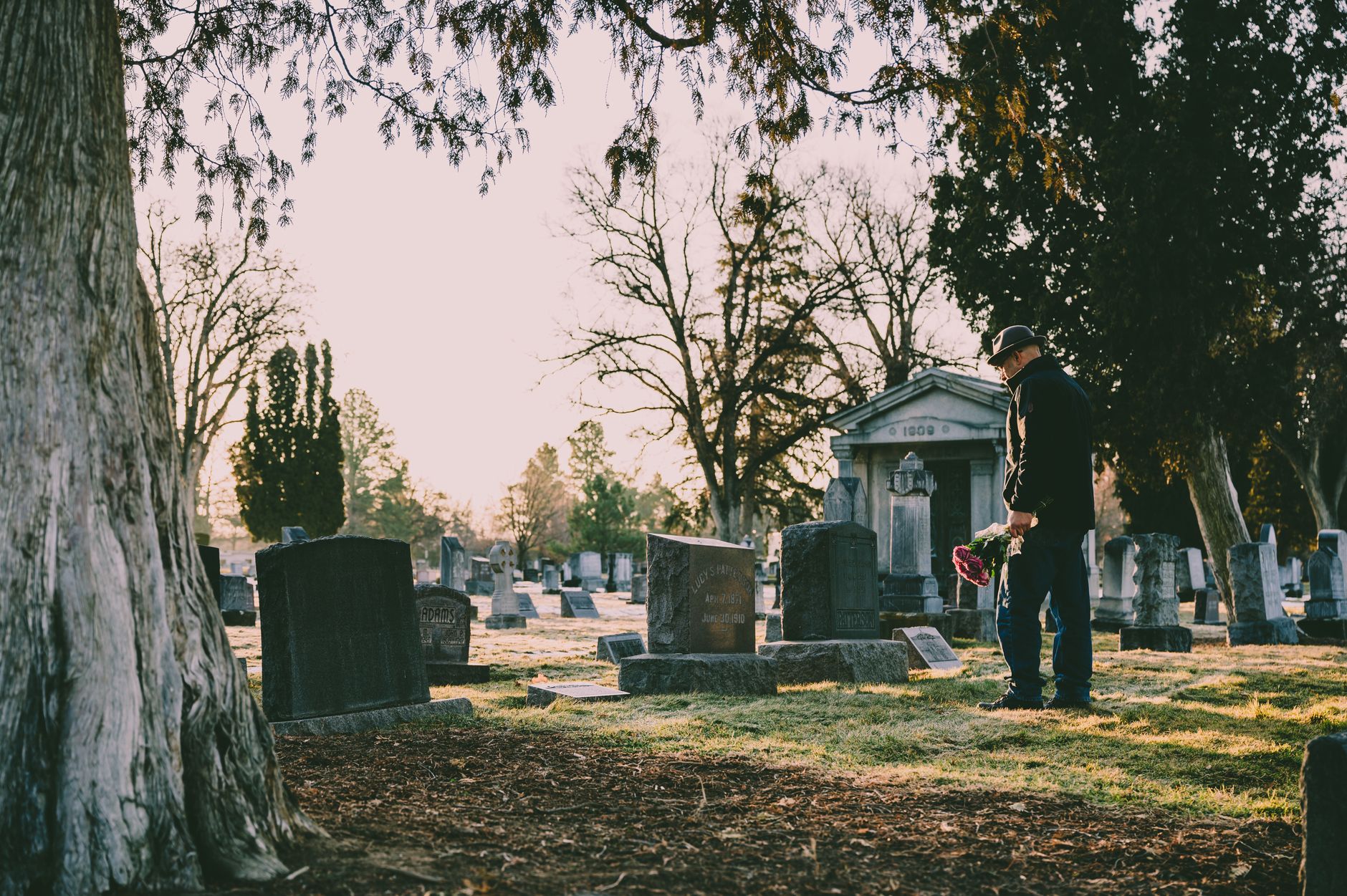
I visit Troy’s grave most Sundays now, after church, the same church where he held my hand for thirty years out of a love so steady I mistook it for habit. I bring the pear tree blossoms in the spring, cut from the tree at the old house that never gave fruit worth eating but that he refused to cut down because his mother had planted it. I sit with him a while and I tell him, out loud, that I know now. That I understand what he did and why he never said a word. That I forgive him for the silence, and I forgive myself for not trusting the thirty five years of steadiness that came before it, and I ask him, every single time, why he couldn’t have found some way to let me carry the truth alongside him instead of carrying it all alone.
He never answers, of course. He never will. But I think I already know what he’d say if he could. He’d say it was never a burden he was willing to hand me. He’d say some things a man carries because he loves you too much to set them down on your side of the table.
I divorced Troy Bennett after thirty six years because I believed he had betrayed me. I understand now that the truth was almost the opposite of betrayal. It was a man loving his family so completely, so quietly, that he was willing to let the whole world, including me, believe the worst about him rather than let our son carry a shame he was not yet strong enough to survive.
I lost two years I can never get back, believing the wrong story about the best man I ever knew. I will spend whatever years I have left making sure nobody in Caldwell ever tells it wrong again.