The Last Sunflower Held My Daughter’s Secret
My son Patrick woke me up before sunrise last Saturday because he wanted to carry fresh lemonade out to the garden before the Missouri heat came down on us, and by the time I had my robe tied I could already hear that something in his voice on the stairs was wrong.
He was standing in the kitchen doorway holding two plastic cups, not moving, looking out the screen door at the backyard the way you look at a stove you are not sure you turned off. I asked him what was the matter and he didn’t answer me. He just walked outside, slow, like his legs had made the decision without asking the rest of him, and I followed him past the clothesline and past my mother’s old rain barrel to the fence line where, for six years, we had grown a garden that was never really about vegetables.
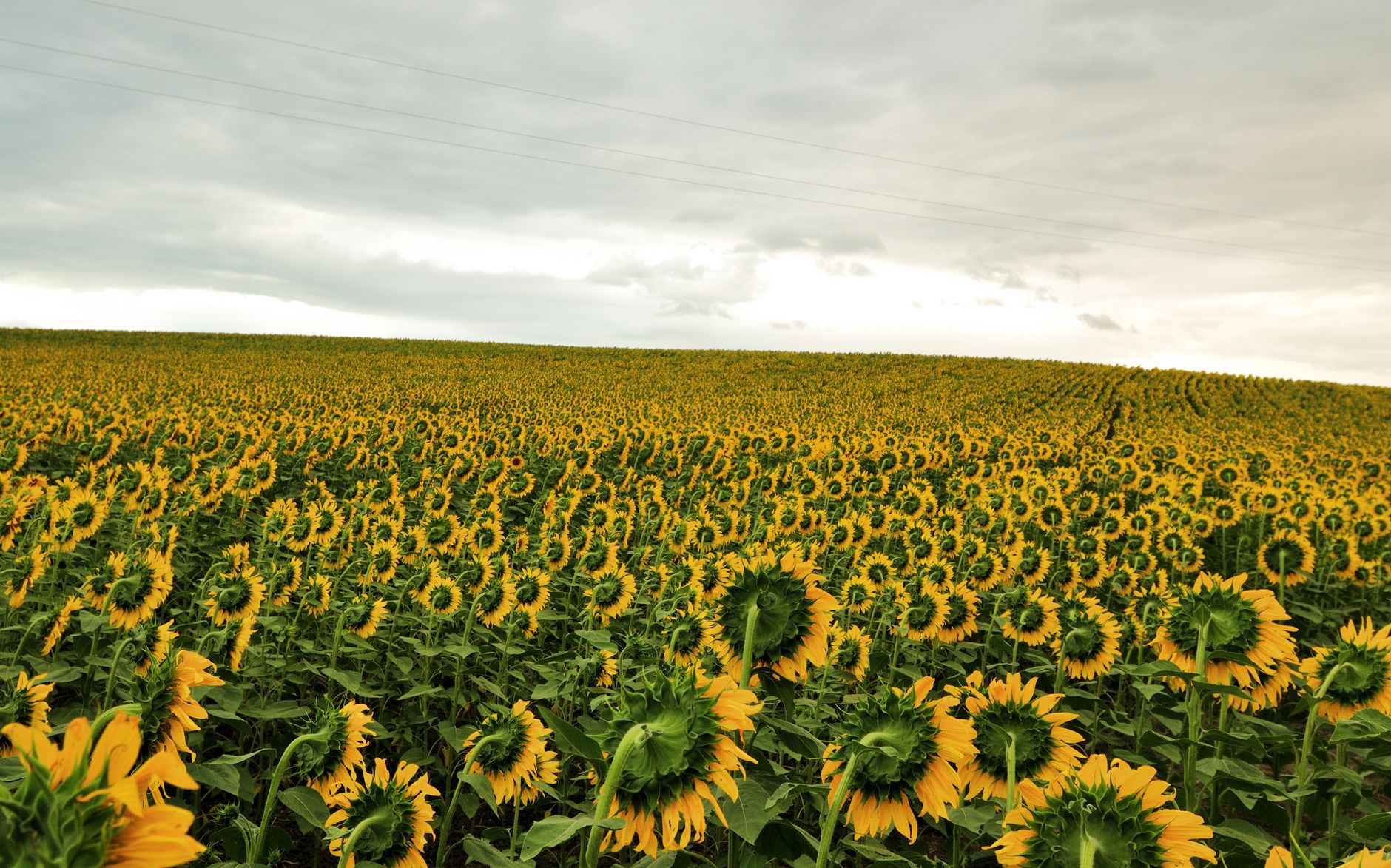
Every sunflower was down. Not wilted, not blown over by wind. Cut. Clean at the base, the way you’d cut them if you wanted them gone and wanted whoever found them to know it wasn’t the weather that did it. Two dozen stalks lying flat in the dirt in every direction, heads already starting to droop in the heat, and Patrick standing in the middle of it with his mouth open and no sound coming out.
Except one. Dead center of the ruined plot, the tallest sunflower we had ever grown, the one Patrick had bragged about three weeks earlier at my sister-in-law’s Fourth of July cookout, standing untouched like the person with the shears had walked a wide, deliberate circle around it. And hanging from its stem by a length of white ribbon, turning a little in the morning air, was a small white box.
I want to tell you I knew right away that our lives were about to split into a before and an after. I didn’t. I thought it was cruel, and I thought it was strange, and for about four seconds I thought it was some ugly prank by kids from town who didn’t understand what that garden was. Then I untied the ribbon with hands that had started shaking before I even touched it, and I lifted the lid, and every assumption I had carried for six years about what happened to my daughter came apart in my hands like wet paper.
To understand why that box nearly put me on my knees in the dirt, you have to understand who Lily was, and what we had spent six years believing had happened to her, and why we had never once let ourselves imagine what was actually inside that box until it was sitting open in my palms.
Patrick and Lily were born eleven minutes apart on a Tuesday in March, Patrick first, Lily fighting her way out hollering loud enough that the nurse said she’d never heard a newborn so determined to be heard. From the day we brought them home they were a single unit with two names. If Patrick got a scrape, Lily cried before he did. If Lily was hungry, Patrick would toddle over and hand her whatever he was holding, a cracker, a toy, once memorably an entire remote control, like feeding his sister was more important than anything he might have wanted for himself. My husband Tom used to say they’d come out of the womb having already agreed on everything, and that raising them wasn’t like raising two children so much as raising one child who happened to occupy two bodies.
We lived then, and live still, on the edge of Bellwood, a town of about eleven hundred people where everybody’s mailbox has a name on it that three generations back also had that name on it. My parents kept a small cattle operation on sixty acres a mile down the county road, my father Earl and my mother Joan, and behind their farmhouse sat a stock pond that had been there since before either of them was born, the kind of pond every family in the county had a story about, good and bad. Fishing stories mostly. One story that wasn’t good, about a teenage boy who’d drowned in the deep, reedy far corner of it back in the 1970s, a story my father told the twins more than once as a caution to stay close to the near bank.
They didn’t stay close enough.
It was the last Saturday in June, six years ago. Hot the way that day was hot, the kind of Missouri heat that makes the air over the pasture shimmer. My parents were hosting a small family cookout, nothing large, just us and my younger brother Ray, who was living in my parents’ bunkhouse that summer while he got back on his feet after a rough stretch in the city. The kids wanted to feed the ducks that nested along the near bank, and Tom and I were forty yards off at the picnic table, and Ray was down by the water himself with a fishing pole he wasn’t really using, more sitting with his thoughts than fishing, the way I remember him being that whole summer. Patrick and Lily walked down together with a heel of bread between them.
Ten minutes later Patrick came running back up the slope alone, screaming for us, saying he’d let go of Lily’s hand to grab more bread from the bag and when he turned around she was gone.
I have relived every version of what might have happened in those ten minutes more times than I can count. We searched until the sun went down and then searched by flashlight and then by the volunteer fire department’s spotlights, my father wading the shallow end over and over, Ray in the water up to his chest helping drag the deep corner near where that boy had drowned decades before, divers from two counties over coming the next morning, sonar equipment, dogs. Nothing. No shoe, no footprint past the muddy bank, nothing. After nine days the search was scaled back. After a year, the county coroner’s office, working from the drowning history of that same corner of pond and the total absence of any other lead, ruled her death an accidental drowning, body not recovered, which happens more than people think in water with a soft silt bottom and old submerged brush.
Patrick was six years old and he decided, on his own, without any of us telling him to, that it was his fault. He’d let go of her hand for four seconds to grab bread. For months he woke up most nights saying the same six words into his pillow. I shouldn’t have let go of her hand. We took him to a child psychologist in the next county over for two years. It helped some. It never fixed the thing underneath, which wasn’t really about the pond at all. It was about a boy who believed, in the deepest room of himself, that love meant never once looking away, and that he had failed the only test that mattered.
On what would have been Lily’s seventh birthday, eight months after we lost her, Patrick came to me holding one of my mother’s seed catalogs, folded open to a page of sunflowers, and asked if we could buy a packet of seeds.
“They were her favorite,” he said. He was right. Lily used to stand in my mother’s garden and put her whole face up close to the big yellow heads like she was trying to memorize them. “We should still celebrate her.”
We planted them together that afternoon along the fence line behind our own house, not my parents’ place, ours, six little seeds pressed into six little holes, and I remember thinking it was the first thing since the accident that had made my son’s shoulders come down from around his ears. The next spring we planted more. The spring after that, more still. It became the shape of our whole year. Every March we ordered seed. Every April we turned the soil. Every summer, once the flowers came up tall and heavy-headed and gold, Patrick would go out most evenings after supper and sit cross-legged among them and tell his sister everything she’d missed.
When he made the travel baseball team, he told the sunflowers before he told his father.
When he got his braces off, he walked straight out to the garden still smiling with his new bare teeth and told them first.
The local paper did a small feature on him the third year, “Bellwood Boy Keeps Sister’s Memory Growing,” a photo of Patrick standing chest-deep in gold with his arms crossed like a proud little farmer. People in town started calling him the sunflower boy, gently, the way small towns adopt a story and carry it for you so you don’t have to carry the whole thing alone. My brother Ray came to two of the plantings over those years. He always found a reason to leave town before the anniversary itself, a work thing, a friend’s wedding, once a fishing trip he’d never mentioned planning. I noticed it. I told myself grief moves through people differently and Ray had been the one in the water that day up to his chest, and maybe that corner of pond had never let go of him either.
I had no idea how right, and how wrong, that guess was.
Last Saturday was the sixth anniversary of the day we lost her, and it was Patrick’s idea, same as every year, to be up before the heat to bring lemonade to the garden. What we found there I’ve already told you. What was in that box I have to tell you slower, because I still have to slow myself down to say it out loud without my voice breaking.
Inside, resting on a folded square of white cloth, was half of a small enamel butterfly pendant, the wings split down the center in a jagged line I would know anywhere on this earth, because the other half of that exact pendant was hanging on a chain around my son’s neck at that very moment, the way it had been every day for six years. My mother had bought the twins matching split-pendant necklaces for their sixth birthday, three months before we lost her, one half apiece, a bent-tin little trinket from the gift shop at the state fair that cost eleven dollars and became the most valuable object either of my children ever owned. Lily was wearing hers the day she disappeared. We always assumed it went into the pond with her.
It was not corroded. It was not tarnished, not clouded with silt, not showing one single day of six years underwater. It was clean.
Underneath the cloth was a photograph, an instant print, slightly overexposed the way those cameras run. A girl, maybe twelve years old, honey-blond hair, standing beside a mailbox I didn’t recognize with a gap in her smile in almost exactly the place Lily had lost a baby tooth the week before she disappeared. Tucked into the same fold of cloth was a section of a local newspaper I did not recognize, folded to show a dateline. Three weeks old.
There was no signature. Only, written in pencil on the back of the photograph in handwriting I could not immediately place, four words.
She never went in.
I did not faint, though my legs came close to doing it for me. Patrick read it over my shoulder and went so pale and so still that for one terrible second I thought I was about to lose him too, right there in the ruined garden, to whatever this was.
I called Tom first, then my father, then Bellwood County Sheriff’s Department, and within the hour Sheriff Ed Boyle, who had personally walked the muddy bank of that pond six years earlier and told me gently that he did not believe we would ever find her, was standing in my backyard turning that pendant over in gloved fingers with an expression I had never seen on him before. He did not tell me to calm down or manage my hopes the way you might expect a man in his position to. He looked at that clean, unblemished pendant for a long time and then he looked at me and said, “Denise, I need you to understand that this changes what I’ve believed about this case for six years.”
The investigation moved faster than I ever imagined a small department could move, mostly because Sheriff Boyle treated it, from the first hour, like the abduction case it now clearly was rather than the closed accidental death it had been on paper. A forensic tech confirmed what the pendant already told any mother with eyes, that it had never spent meaningful time submerged. The dateline on the newspaper scrap was traced to an edition sold at exactly one gas station forty minutes north, in the direction of the interstate. And on a hunch that still makes my chest hurt to think about, Boyle asked my father whether any of the neighboring farms ran game cameras on the tree line behind the pond, for coyotes or deer.
Two did. One camera, mounted on a fence post belonging to the Delacroix place a quarter mile east, had a wide-angle lens that caught a sliver of the county road at the edge of its frame. Boyle pulled three weeks of footage. At 2:51 in the morning, four nights before we found the garden cut down, a truck with a distinctive gray primer door panel idled at the tree line for eleven minutes before pulling away.
I knew that truck. I had ridden in that truck as a girl, in the passenger seat, my little brother behind the wheel showing off the day he bought it secondhand with his own money.
Sheriff Boyle drove out to the bunkhouse himself that evening. I insisted on going with him, and Tom came too, and I will spend the rest of my life picturing my brother’s face in the porch light when he opened that door and saw the three of us standing there and understood, before anyone said a single word, that it was over.
Ray did not lie to us. I will give him that much, though it is the smallest thing I have ever had to give anyone. He sat down at the little bunkhouse table and put both hands flat on the wood like he needed something solid under them, and he told us everything in a voice that kept cracking and reforming itself, the voice of a man who has rehearsed a confession in his head ten thousand times and still cannot make it come out clean.
That summer, six years ago, he owed money to people in the city who did not extend patience. He had been sitting by that pond that Saturday not fishing but turning over, in his mind, an offer that had come to him two weeks earlier through a coworker who did odd, off-the-books favors for a man named Mercer, a broker, Ray called him, who arranged private placements for couples who couldn’t or wouldn’t go through the legal channels for adoption, no questions asked, cash only. Ray had been told, and had wanted badly enough to believe, that the children involved came from situations where they were already going to be given up, unsafe homes, young mothers in trouble. He told himself he would never actually do it. He told himself that every day for two weeks.
Then he watched my six-year-old daughter wander twenty feet down the bank after a mallard duck while her brother’s back was turned for a handful of seconds, out of sight of the picnic table, out of sight of everyone but him, and something in him that he still cannot fully explain, panic and desperation and the promise of a debt erased in one afternoon, made the worst decision of his life in less time than it takes to describe. He told her they were going to go find a baby duck as a surprise for Patrick. He carried her to his truck, which he had, for no reason he could explain except instinct, parked at the far tree line instead of near the house that day. He drove two counties over to meet Mercer. Lily was with the Hargrove family, whoever they were, inside of twenty-four hours, and Ray drove home with enough cash to clear what he owed and a story he would tell for six years, that he had been in the water up to his chest that whole afternoon helping search for a girl he knew, the entire time, was safe and dry two hundred miles away.
He kept the other half of that pendant because Mercer had sent it to him once, years ago, as what Ray called proof of delivery, the kind of ugly, businesslike detail that told me more about the world my daughter had been sold into than anything else he said that night. He had never been able to throw it away and had never been able to look at it either. He said he drove past Bellwood more times over six years than any of us ever knew, that he came to two of the plantings because he thought absence would look worse than presence, that he left before the anniversary every single year because he could not make himself stand in that garden on the one day that was entirely his fault.
He said the reunion three weeks before, the Fourth of July cookout, was what finally broke him. He’d overheard Patrick, off by himself near the garden, telling the not-yet-planted seedlings about kids at school who’d started calling him morbid for still doing “the dead sister thing,” and Patrick’s voice when he said it, still ashamed, still six years old underneath the twelve-year-old body, was the sound that undid whatever was left holding Ray together. He drove out four nights later in the dark and cut down a garden that had never been his to touch, unable to destroy the one flower his nephew had bragged about weeks earlier, and hung the only proof of the truth he had ever kept from the world on the single stalk he couldn’t bring himself to ruin.
I would like to tell you I felt nothing but rage sitting across that table from my brother. I felt that. I also felt, underneath it, something I am not proud of and will not pretend away, a thread of the boy who used to hand his baby sister the last of his own crackers, and I have had to let both of those things be true at once every day since.
Ray was arrested that night. He gave Boyle everything he had on Mercer, a name, a burner number three years expired, and the general location he believed the Hargrove family lived in, a town outside Fayetteville, Arkansas, where Mercer had told him, back then, the placement had gone. It took the Arkansas State Police and the FBI field office in Little Rock eleven days to confirm it. The Hargroves, Bill and Cheryl, had been told by Mercer that the child they were taking in, a girl they’d been raising for six years as Lily Hargrove, had been surrendered by a young mother up north who couldn’t care for her, no other details offered, no questions asked because six years of trying and failing to have a child of their own had worn away, in them, the willingness to ask the questions that might have taken her from them. When two federal agents sat down in their living room and explained what had actually happened, Cheryl Hargrove, by every account I’ve since heard, including her own, wept for an hour before she could speak, and then she cooperated with everything asked of her, because whatever else was true, she loved that little girl and did not want to be one more person in her life who chose a lie over her.
The girl they called Lily, and had always called Lily, because it was the name on the one scrap of paper Mercer had handed over with her, was twelve years old, gap-toothed no longer but with the same honey-blond hair, and she remembered almost nothing of her first six years except fragments she’d never had words for, a pond, ducks, a boy’s laugh she couldn’t place a face to. She had never once been told the truth. And in the six years since, in a yard four hundred miles from the fence line behind our house, she had planted sunflowers herself, every spring, without anyone teaching her to and without ever knowing why, because Cheryl Hargrove told the agents it was the one thing their daughter had always simply loved and never explained.
I have thought about that detail more than almost any other part of this. Two children, split apart by an act neither of them chose, growing the same flower in two different states for six of the same summers, each one certain it was for the other.
The first conversation Patrick had with his sister happened over video call, arranged carefully through a family counselor both households agreed to work with, three weeks after Ray’s arrest. I watched my son’s face when hers came up on the screen, and I watched twelve years of grief and guilt he had been carrying since he was six years old visibly loosen in his shoulders in real time, the same loosening I’d seen the day we planted that first packet of seeds, except this time it did not need a garden to explain itself. She was shy. He was shy. They talked for forty minutes mostly about nothing, a video game she liked, a dog he had, and it was the most ordinary conversation of my entire life and also the most important one.
The in-person meeting happened six weeks later, at a park roughly halfway between Bellwood and Fayetteville, with both families and both counselors present, because nobody wanted to rush what six years and one terrible choice had broken. I will not pretend it was the kind of reunion you see in movies, both children running across a field into each other’s arms with music swelling. It was quieter than that, and more careful, two kids who were strangers wearing familiar faces, circling each other for the first hour with the awkward, searching politeness of two people who both suspect they are supposed to feel something enormous and aren’t sure yet if it’s arrived. Then Patrick, without any prompting from any of the adults standing around holding our breath, reached into his shirt and pulled out his half of that little bent-tin pendant, and Lily reached into her own collar and pulled out hers, the half we had returned to her the week before through her counselor, and they held the two halves up against each other in the sunlight until the jagged line where they’d been split disappeared.
Neither of them said anything for a long moment. Then Lily said, “I used to draw this. I didn’t know what it was.”
That was the moment it stopped being careful and became real. I will not describe the rest of that afternoon in more detail than to say that by the end of it, both children were sitting cross-legged in the grass together, Patrick teaching his sister how to whistle through a blade of it, something my father had taught him years ago, and that Cheryl Hargrove and I stood twenty feet apart for a long time before either of us found the courage to close that distance, and when we finally did, we did not say much. We just stood there, two mothers who had each spent six years loving the same child from opposite sides of a lie, and let ourselves cry without apologizing for it.
Ray was charged with kidnapping, interstate transportation of a minor, and a list of related federal counts I could not fully follow the first time the prosecutor read them to us. He pleaded guilty rather than put any of us, especially Patrick and Lily, through a trial, and at his sentencing he stood up on his own and asked to speak, and told the courtroom, and us, that he had spent six years telling himself he had at least kept her safe, and that he understood now that safety built on a lie was never the thing he told himself it was. It was the most honest thing I have heard him say since we were children ourselves. It changes nothing about what he did. It is, I have come to believe, the only part of this whole story I will ever be able to think of him without wanting to look away.
Mercer is still being hunted by federal investigators as I write this, along with whatever network of desperate men and unanswered questions he built his business on. I don’t know if they’ll find him. I try, most days, not to let that unfinished thread eat the parts of this that are finally, miraculously, finished.
Lily lives with the Hargroves still, for now, by every professional recommendation and by her own clearly stated wish, because tearing a twelve-year-old a second time from the only home and parents she consciously remembers would be its own kind of cruelty, and because Cheryl and Bill Hargrove, whatever the terrible circumstances of how she came to them, gave her twelve years of a decent, loving childhood that I refuse to erase just to make my own grief simpler. What we have now, instead, is something new that none of the old rules quite cover: two families, four parents, one girl who gets to have all of us, phone calls twice a week, a standing plan for her to spend part of next summer in Bellwood, and a brother who waits by the mailbox on the days her letters are due like it’s Christmas morning.
This spring, for the first time in six years, Patrick planted the sunflowers without a single word about missing anyone. He planted them because Lily asked him to send her seeds from the same packet, so that four hundred miles apart, in two different yards, on the same weekend in April, a brother and sister who spent six years apart without knowing it put the same six seeds into two different patches of ground, on purpose this time, both of them fully aware of who they were growing them for.
They came up gold and heavy-headed in July, same as always. Patrick still goes out most evenings and sits among them. He isn’t talking to a ghost anymore. He’s rehearsing what he’s going to say to his sister on their next call.
I go out there myself sometimes, after he’s gone in for the night, and I stand in the last of the light where a box once hung from the tallest stalk in a garden somebody tried to destroy, and I think about how the worst four words I have ever read in my life, written in pencil on the back of a stranger’s photograph, turned out to be the truest four words anyone has told me in six years.
She never went in.
Neither did we, in the end. We just took longer than she did to come back up for air.