The Lake House That Was Always Mine
The message came in at 11:25 the night before Father’s Day, while my kids slept upstairs and the cards they’d made for their grandfather were still drying on the dining room table. Lily had used so much purple marker that the paper had started to curl at the corners. Caleb couldn’t decide between a fish and a tractor, so he drew both, and the tractor came out looking more like a riding mower with mismatched wheels. I remember thinking I’d have to buy more glitter glue before the Fourth of July, because Lily had used almost the whole bottle on one card.
I was rinsing my mug at the sink when my phone lit up on the counter.
It was the family group chat, the one my mother had named “Taylor Family Love” three Christmases ago and nobody had ever bothered to rename, even after it stopped meaning what the name said. My brother Ryan had posted a message and tagged me directly, the way you do when you want to make sure a person can’t pretend they didn’t see something.
“Stay home tomorrow. We’re tired of your side of the family.”
I read it twice. Then I set the mug down on the drying rack and just stood there in my kitchen, waiting, the way you wait after you stub your toe, for the part where it actually starts to hurt.
For a few seconds I thought someone would say something. Not to me. I didn’t expect anyone to defend me, not really, not after twelve years of watching how this family worked. I thought someone would tell Ryan he’d gone too far, the way you’d expect if a stranger said something like that in a room full of people who loved you.
Nobody did.
My mother liked the message. I watched the little thumbs-up pop up under it in real time, like she’d been sitting there with her thumb hovering, ready.
My father added a laughing emoji. Not a sad one. Not even a neutral one. Laughing, the kind with the tears squeezed out of its eyes.
My sister Sophie wrote, “Honestly, it will be calmer that way.”
I sat down at the kitchen table with my hand wrapped around a mug that had already gone cold, and I watched three people who shared my blood respond to my brother telling me to stay away from my own father on Father’s Day, and not one of them asked whether Daniel had seen it yet. Not one of them asked about Lily or Caleb, who had spent all week cutting paper hearts and asking what time we were leaving for the lake. Not one of them asked if I was all right.
They just kept talking. Within five minutes the chat had moved on to the August trip. My family has a way of doing that, closing a door on you and then immediately going back to admiring the furniture on the other side of it, like the door isn’t even there.
Cabin rooms. Train tickets. Dinner reservations. Who wanted the room with the better view of the ridge.
The August trip was a week in the mountains I had planned for six months. I’d booked the cabin, the train tickets from three different cities so everyone’s schedules would line up, the rental cars, dinner reservations at the one restaurant in that little town that takes reservations at all. Every deposit was on my card. Every confirmation email had my name at the top. I had done it because that’s what I did in my family. I was the one who made things happen and then stood at the edge of the photo while everyone else stood in the middle.
I typed two words back into the chat. “Message received.”
Ryan reacted with a thumbs-up, the same reaction my mother had given his cruelty five minutes earlier, like it was all part of the same joke. Then he added a line underneath it. “Good. Maybe you’re finally learning not to turn everything into drama.”
That was the sentence that did it. Not the first one. Not “we’re tired of your side of the family,” which was cruel but at least honest in its cruelty. It was the second one, the one that reframed twelve years of me being the family’s emergency fund and unpaid coordinator as me being dramatic for noticing.
Something in me went still. I want to be precise about this, because for a long time I thought I understood what my own anger felt like, and I was wrong. This wasn’t the anger I’d had before, the kind that made my hands shake or my voice climb. This wasn’t the anger that used to send me typing out long messages at midnight, explaining myself, trying to find the exact right combination of words that would finally make my mother see what she was doing. I had spent years hunting for that sentence. That night, for the first time, I stopped hunting.
I was just still. Not loud angry. Not crying. Not composing an essay in my head about all the ways I’d been wronged. Just quiet, in the specific way a house goes quiet after a storm passes, when you’re not sure yet whether it’s really over or just resting.
A few minutes later Daniel came downstairs in his gray T-shirt and sweatpants, rubbing his eyes, and found me sitting in the blue light of my laptop screen. He read the messages over my shoulder without saying anything. Then he looked toward the dining room, where Lily’s card was propped against the napkin holder, “Grandpa, I love you,” in purple marker with a border of hearts she’d drawn freehand because we were out of stickers.
“Are you sure?” he asked, gently, like he already knew what I was about to do before I did.
It was the first time all night anyone had asked me what I wanted.
I want to tell you about my family before I tell you what I did next, because none of it makes sense without the twelve years behind it. I need you to understand that this wasn’t a woman who snapped over one mean text message. This was a woman who had been quietly keeping a family afloat for over a decade, and who had just been told, by the people she was keeping afloat, that her presence was the inconvenience.
I’m the oldest of three. Ryan is two years younger than me, works in equipment sales, and has never in his adult life gone longer than eight months without asking somebody in the family for money. Sophie is the youngest, five years behind me, and married her husband Tyler in a wedding I am, to this day, still owed eighteen hundred dollars for. Our parents, Carol and Wayne, live forty minutes from us in the same house I grew up in, a low brick ranch on Route 9 outside of Cedar Hollow, Missouri, a town small enough that the feed store and the funeral home share a parking lot.
I want to be fair to my parents, because I think that’s important, even now. They didn’t raise me to be a doormat. Nobody sits a six-year-old down and says, someday you will pay for your brother’s truck repairs and your sister’s wedding deposit and your mother’s gallbladder surgery, and you will do it quietly, without being asked twice, because that is the role we have assigned you. Nobody says that out loud. It happens in smaller ways, over years, until it just becomes who you are in the family, the way some kids become “the funny one” or “the quiet one.” I became “the responsible one,” and responsible, in my family, turned out to mean the one who pays.
When my mother needed her gallbladder out four years ago and the insurance left a gap bigger than my parents could cover on Wayne’s pension from the county road department, I paid it. Nobody asked me to in so many words. My mother just mentioned the number at Sunday dinner, the way you’d mention the weather, and everyone got quiet and looked at their plates until I said I’d handle it. I remember feeling almost grateful in the moment, like I’d been given a chance to prove something.
When Ryan’s truck threw a rod on the highway two winters ago and he needed twenty-two hundred dollars for a new engine or he’d lose the sales job that required him to drive three counties a week, I loaned it to him. I use the word loaned generously. We both knew, the way you know certain things without saying them, that the money wasn’t coming back. It didn’t.
When Ryan lost that same sales job eight months later after his second warning for missing quota, my mother called me crying, not about Ryan’s finances exactly, but about how the stress was hurting his confidence, how a man needs to feel useful, how it would mean so much if I could ask my boss about anything open in the warehouse where I work as an operations manager. I did ask. I got him an interview. I vouched for him with my own name attached to the recommendation. He lasted five months there before he stopped showing up on time and I had to have an uncomfortable conversation with my own supervisor about a hire I’d personally guaranteed.
When Sophie got engaged to Tyler and needed eighteen hundred dollars for the venue deposit or they’d lose the date, a barn outside of Springfield with string lights and a pond, exactly the kind of place a young bride pins to a board for two years before she can afford it, I covered it. My mother said I’d get it back after the wedding, once the gift money came in. That was three years ago. I have never once brought it up, not because I forgot, but because I already knew what would happen if I did. I’d become the sister who counts pennies at her own sibling’s wedding.
My husband Daniel had a name for all of this long before I was ready to hear it. He called it being used. I didn’t want to believe him, because believing him meant admitting that people I loved, people whose blood was in my kids’ faces, saw me primarily as a resource. It’s an ugly thing to look at directly. It’s much easier to call it “keeping the family together,” which is the phrase my mother always used, like the family was a barn roof and I was the only one willing to climb up and hammer down the loose shingles before the next storm.
Here is the part that made all of it hurt worse: none of that giving ever bought me an ounce of protection. Not for me, and not for my children.
Two weeks before that Father’s Day, Lily brought her wooden bridge project to dinner at my parents’ house. She’d been working on it for a school engineering unit, gluing and sanding little balsa struts for a week at our kitchen table, and she wanted to show her grandfather because he’d spent thirty years doing highway maintenance and she thought, in the way an eight-year-old thinks, that this made him practically an engineer himself. She carried it in with both hands like it was made of glass.
Ryan glanced at it for maybe two seconds before he said, “Careful, Lily. In this family, your mom likes building things so she can remind everybody she owns them.”
The adults laughed. My father laughed. My mother laughed, that quick, easy laugh she gives to Ryan’s jokes and almost nobody else’s. I sat there with my fork halfway to my mouth and watched my daughter’s face change, watched her fold the little cardboard project board in half so the bridge wouldn’t be visible anymore and slide it under her chair like she’d done something wrong just by bringing it.
On the drive home, from the back seat, she asked, “Why does Uncle Ryan act like he doesn’t like us?”
I didn’t have an answer a child deserved to hear. I told her something soft and useless about grown-ups sometimes saying things they don’t mean when they’re tired, and I hated myself a little for saying it, because I was protecting Ryan’s reputation in my own daughter’s eyes at the cost of teaching her what she’d actually just witnessed.
That comment, “so she can remind everybody she owns them,” rattled around in my head for two weeks before I understood it wasn’t really a joke about a wooden bridge. It was about the lake house. It had always been about the lake house.
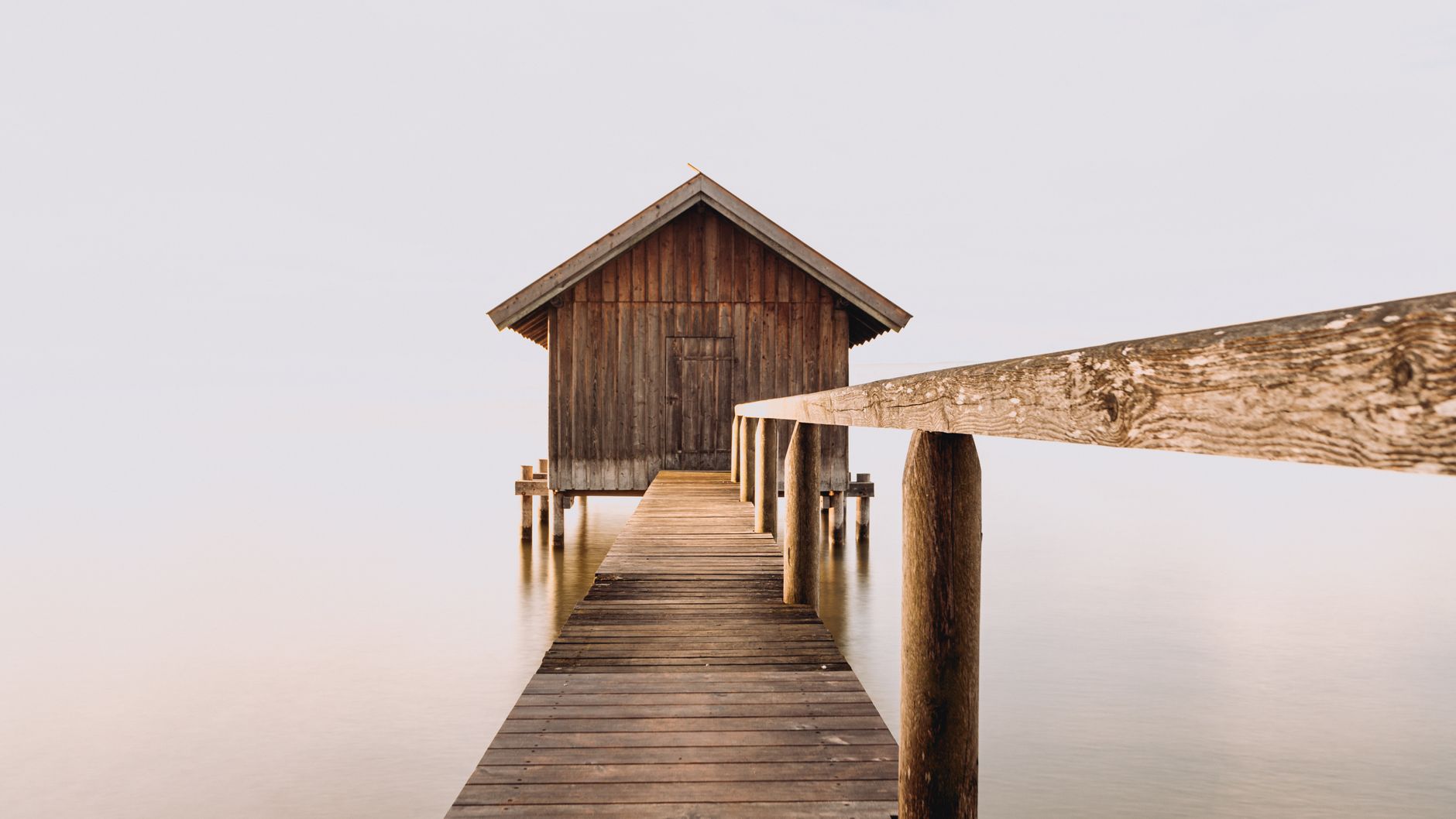
My grandmother, Fern, left me the lake house seven years ago, free and clear, in a will she wrote herself at the kitchen table of the very cabin in question, with her reading glasses pushed up into her white hair and her ancient dachshund asleep on her feet. It sits on a quiet finger of the Lake of the Ozarks, a little two-bedroom clapboard place with a wraparound porch and a dock Grandma Fern had rebuilt with her own hands back when she was still strong enough to swing a hammer, at a bend in the water where the bass fishing was better than anywhere else on that stretch.
She didn’t leave it to me because she loved me more than she loved Ryan or Sophie. She left it to me because I was the one who showed up. For the last six years of her life, I was the one who drove her forty-five minutes each way to her cardiology appointments in Springfield, who found out she’d let the property taxes lapse two years running and quietly paid the back amount so the county wouldn’t put a lien on the place, who climbed up on a ladder myself at thirty-one years old to replace the rotted porch rail after she nearly fell through it, who kept her little seasonal rental business alive, three or four bookings a summer through a website I built for her, back when her hands got too unsteady to manage it herself. Ryan visited twice in those six years. Sophie sent a card at Christmas.
Grandma Fern used to say I was the only one of her grandchildren who understood that a house doesn’t take care of itself just because you love it. I think she knew exactly what she was doing when she wrote that will.
But somewhere along the way, in the retelling that families do, in the version that got passed around at holidays and cookouts, it stopped being “Jessica’s lake house” and became “the family lake house.” Nobody voted on that. Nobody sat down and decided together that it belonged to everyone. It just slid into that shape the way water finds the low ground, because it was more convenient for everyone else if it belonged to all of them and the upkeep belonged to only me.
They used it like it belonged to all of them, too. Wet towels left on the hardwood until they mildewed. A cracked dock board that stayed cracked for a year because nobody thought to mention it until my foot went through it. A screen door yanked half off its hinges the summer Sophie’s college friends came through. Ryan once brought twelve of his buddies up for a weekend without asking, and I found out only because a neighbor called to ask if I knew there was a bonfire the size of a truck bed on my grandmother’s beach. When I brought it up afterward, gently, the way I brought everything up back then, Ryan sent me a photo of a busted bedroom door hanging crooked on one hinge with the caption, “Your place survived.”
I swallowed all of it, every single time, because that was what I did in my family. I paid, I fixed, I stayed quiet, and I told myself that was love.
That night, sitting at my kitchen table with Daniel standing behind me and his hand resting on my shoulder, I finally understood what Ryan’s comment about Lily’s bridge had really meant, and what “we’re tired of your side of the family” had really meant underneath it. My children were family when my parents wanted a photo for the Christmas card. They became “her side of the family,” an entirely separate camp from the Taylors, the moment their feelings became inconvenient to anyone else’s evening.
I opened my laptop.
The first thing I did was pull up the August mountain trip. I went through the reservation for the cabin, the train tickets, the rental cars, the dinner bookings, and one by one I removed every name that wasn’t Daniel’s, Lily’s, Caleb’s, or mine. The cabin dropped from eight guests to four. I didn’t cancel the trip. I just stopped paying for other people to enjoy a trip I had built with my own money for a family that, five minutes after being cruel to me, went right back to discussing which bedroom had the better view.
Then I opened a folder on my desktop labeled Father’s Day, where I kept the receipts and confirmations for the gathering we’d been planning to host at the lake house the next day. Twenty-two people had been expected. My parents. Ryan. Sophie and Tyler. Cousins, an aunt, a few of my father’s old coworkers from the county road crew who’d become like family over the decades. I had booked a caterer out of Camdenton for a full Father’s Day spread, a boat rental so the grandkids could go tubing, a photographer to catch candid shots because my mother had mentioned wanting “real pictures, not just phone pictures,” a grocery delivery for breakfast items, and a cleaning service to come through the morning after so nobody would have to spend part of the holiday scrubbing a kitchen.
I want to be honest about how I felt in that moment, because I think it matters. I wasn’t shaking. I wasn’t crying. I felt almost calm, the way you feel when you’ve finally stopped waiting for a phone call you know isn’t coming. I picked up my phone and called the caterer first, apologized for the short notice, and paid the full cancellation fee without arguing, because the woman on the other end of that line had nothing to do with my family and didn’t deserve to eat the cost of my brother’s cruelty. I did the same with the boat rental, the photographer, the grocery delivery, the cleaning service. Every vendor connected to that gathering got canceled and paid off before midnight.
Then I logged into the property management app I’d set up years ago for the lake house, the one that controlled the electronic gate at the top of the gravel drive, the same gate code Grandma Fern had shared with the whole family back when she was alive and had never been changed since, even though the house had been mine for seven years. I changed the code. One click sent an automated notice to every saved guest profile: all access deactivated.
I didn’t send a single angry message. I didn’t type out one word of explanation. I just closed the laptop, went upstairs, and for the first time in longer than I could remember, I slept straight through the night without waking up once to check my phone.
The family chat exploded sometime after midnight, but I didn’t see it until morning. Ryan called first, four times back to back. Then my mother. Then my father. I let all of it go to voicemail, because I had already learned, just hours earlier, what happens to my calm the moment I let myself get pulled back into the current.
I finally answered when my father called from the lake gate itself, a little after ten the next morning. I could hear gravel crunching under someone’s shoes and the tinny hum of a truck engine idling behind him.
His voice was tight, the voice he used on the road crew when a job was behind schedule and somebody above him wanted answers. “The code isn’t working.”
“I know,” I said. “I changed it.”
“You cannot lock your own parents out of the family lake house.”
I looked across my kitchen at Daniel, flipping pancakes at the stove in his Father’s Day apron that Caleb had picked out two years earlier, gray with a cartoon grill on the front, while Caleb sat at the table adding a curly mustache to the Father’s Day card he’d made and Lily bent over her wooden bridge with a tube of wood glue, quietly repairing the strut that had come loose in the two weeks since Ryan’s comment had made her hide it under a chair.
“It is not the family lake house,” I said, as calmly as I have ever said anything in my life. “Grandma left it to me. I have paid every tax bill, every repair, every insurance premium on it for seven years. It is my house.”
In the background I could hear Ryan shouting something about the caterer probably already having driven up with the food, and Sophie’s voice asking whether the boat company had shown up yet, and I almost laughed, because none of them had thought to ask if there even still was a gathering. My mother said my name in that particular tired tone she reserves for whenever a boundary of mine becomes an inconvenience for her, the tone that says, here we go again, as if I were the unreasonable one for finally acting like the owner of a house I had owned, on paper and in every other sense, for seven years.
My father’s voice dropped, trying for reasonable. “Your brother said something stupid. Don’t turn this into a war.”
I felt my hand tighten around the phone. “I didn’t start a war,” I said. “I accepted the invitation to stay home.”
Then I heard the phone change hands, and Ryan’s voice came through, sharp and fast. “This is Dad’s day. Not your therapy session.”
I hung up without another word. There wasn’t anything left to say to that. I’d tried, for twelve years, to find the sentence that would make them understand, and I finally realized that sentence didn’t exist, because understanding was never the problem. They understood exactly what they were doing. They had simply never expected it to cost them anything.
The lake house has a security camera over the gate, one I’d installed two summers back after somebody’s teenage kids got into the boat shed. For twenty-three minutes that morning, it recorded my family standing in the gravel turnaround outside a locked gate, unable to get onto property that had, without a single one of them noticing until that moment, never actually belonged to them.
I didn’t watch the footage that day. Daniel told me about it later, that Ryan had paced, that Sophie had sat on her tailgate scrolling her phone, that my mother had stood with her arms crossed staring at the house like it had personally wronged her, that my father had eventually just leaned against his truck and looked at the lake.
Then Ryan made the mistake that changed everything.
He posted about it online, a public post on his own page, the kind meant to be shared and reshared, painting a picture of his “unstable” older sister locking their “elderly father” out of the family lake house on Father’s Day out of pure spite. He didn’t mention the text message. He didn’t mention who owned the house. He left out every single fact that would have made his own words look different, and for the first time in my life, I understood exactly why that mattered so much to me. Not because I needed strangers on the internet to feel sorry for me. Because I finally understood that silence had always been the currency my family used to keep the story on their terms.
I found the post that afternoon, sitting on our back porch swing while Lily and Caleb chased each other around the yard with the wooden bridge finally repaired and sitting proudly on the porch rail. I didn’t write a single new sentence explaining myself. I didn’t type out twelve years of receipts, twenty-two hundred dollars for a truck engine, eighteen hundred for a wedding deposit, a hospital bill, a job I’d vouched for with my own name. I had spent a decade writing that kind of explanation in my head at two in the morning, and I finally understood that none of it had ever been what was missing.
Instead, I took a screenshot. Just one. It showed Ryan’s original message, “Stay home tomorrow. We’re tired of your side of the family.” Underneath it, my mother’s like. My father’s laughing emoji. Sophie’s line about how it would be calmer that way. My own two words, “Message received,” sitting right there at the bottom, plain as anything.
I posted the screenshot as a reply under Ryan’s post, where anyone who’d seen his version could see mine too. Underneath it, I wrote one sentence.
“I did stay home. I just didn’t realize the rest of you would be the ones standing outside.”
I didn’t add anything else. No explanation, no defense, no plea for anyone to see my side. I set my phone face down on the porch rail next to Lily’s bridge and went inside to help Daniel get the grill started, because we still had our own Father’s Day to have, just the four of us, and I didn’t want to spend one more minute of it staring at a screen waiting for my family to feel something.
By the time I picked the phone back up two hours later, the post had over four hundred comments.
What surprised me wasn’t the strangers. It was the people I actually knew. A cousin I hadn’t spoken to in years wrote that she remembered exactly the same pattern from her own side of the family, being useful until she was inconvenient. A woman who’d rented Grandma Fern’s cabin years before I inherited it commented that she remembered Fern saying, more than once, “that granddaughter of mine is the only one who ever picks up the phone.” One of my father’s old coworkers from the county road crew, a man named Dale who’d known my dad for thirty years and had been on my Father’s Day guest list for as long as I could remember, wrote a single line that I read three times: “Wayne, I was at that lake more summers than I can count because of Jessica keeping that place standing. Ashamed of what I just read.”
Ryan deleted his post within the hour. He didn’t apologize, not publicly and not to me. Some things about a person don’t change just because they got caught. He blocked me a few days later, which honestly felt less like punishment and more like relief, the kind of quiet you get when a smoke alarm that’s been chirping all night finally runs out of battery.
My mother called twice that week. Both times she wanted to talk about how embarrassing this had all been for the family, how people at her church had asked her about it, how I’d made everyone look bad by “airing things out in public.” Not once did she ask how I was doing. Not once did she acknowledge that she’d been the first person to like a message telling me to stay away from my own father. I told her, gently but clearly, that I loved her, and that I wasn’t available for conversations that started with my behavior and ended before hers ever came up. She hung up on me both times. I let her.
Sophie sent one text a week later. “This didn’t need to become a whole thing.” I didn’t answer that one at all. Some messages don’t deserve the dignity of a response, and I’ve learned that not answering is its own kind of sentence.
My father was the one who surprised me.
He called me alone, without the group chat, about ten days after that Father’s Day, from what sounded like his truck parked somewhere quiet, no gravel crunching, no engine idling. He didn’t lead with an apology. My father has never been a man who’s comfortable putting weakness into words. Instead he asked if he could come by and see the kids sometime, just him, and if I’d mind showing him what all I’d actually had to fix on that lake house over the years, because he said Dale’s comment had sat with him more than he wanted to admit.
I told him he was welcome anytime, alone.
He came out the following Saturday, and I walked him around the property the way I would have walked a stranger through it, pointing out the porch rail I’d rebuilt myself, the dock boards I’d replaced two summers running, the new water heater, the roof patch from the hailstorm three years back that had cost more than I’d ever told anyone. He got quiet somewhere around the dock, looking out at the water the way he had the morning he’d stood locked out at the gate, except this time there wasn’t anything blocking him from being there. He’d just finally shown up to see it, instead of assuming it.
“I laughed at that message,” he said, not looking at me. “I want you to know I’ve thought about that laugh every day since.”
I told him I believed him, and I did. I also told him that believing him didn’t erase twelve years, and that I wasn’t in a hurry to pretend it did, and he nodded like he already understood that better than I expected him to. It’s not the reconciliation I used to picture, back when I still thought there’d be some perfect conversation that fixed everything at once. It’s smaller than that, and slower, and it’s the only kind that’s ever actually held up over time: one person, showing up, doing the work of understanding, without being asked to and without expecting anything back for it.
Ryan and I haven’t spoken since. My mother and I talk maybe once a month now, careful, surface-level conversations that don’t go anywhere near what happened, and I’ve stopped waiting for them to. Sophie still owes me eighteen hundred dollars I know I’ll never see, and I’ve made peace with the fact that the debt was never really about the money. It was about who gets to keep score in a family, and for the first time in my life, I stopped being the only one keeping it.
The August mountain trip happened exactly as I’d rebooked it: four of us, a cabin with too many empty beds and not one bit of tension in it, Lily and Caleb splitting the good bedroom with the ridge view because I decided, for once, that the best view in the house should belong to the two people who’d never once made me feel like an inconvenience.
We hosted our own small Father’s Day the following year at the lake, just us and Dale and his wife, who’d become closer to us than my own siblings ever managed to be. Lily brought her wooden bridge, fully repaired, and set it up proudly on the porch rail where the light hit it best. Nobody made a joke about what she was building or who she thought she was proving something to. Caleb ate too much watermelon off the dock and fell asleep in the hammock before the sun even went down.
I keep the gate code to myself these days. I’ve shared it exactly twice since that Father’s Day, both times with people who never once made me feel like keeping a house standing was the same thing as owning them.
I think about that screenshot sometimes, the one I posted with one sentence underneath it. Not because I’m proud of going public with it, and not because I wanted an audience for my own family’s failure. I think about it because it was the first time in twelve years that I said something true about my family and didn’t take a single word of it back afterward. I didn’t soften it. I didn’t apologize for it in the next breath. I just told the truth, once, plainly, and let it stand on its own, the way I’d built and rebuilt that porch rail, the way I’d kept that dock from sinking into the lake year after year, quietly, without anyone noticing until the day they needed it and found out it was mine all along.
They told me to stay home. I did. It just turned out home was bigger, and sturdier, and far more mine, than any of them had ever bothered to notice.