The Inheritance My Family Tried to Steal
I sat in my truck outside my parents’ house for eleven minutes before I found the nerve to turn off the engine.
Cedar Bend hadn’t changed. The gravel road still washboarded the last quarter mile before the driveway. The Kesler place still had that leaning windmill nobody had fixed in twenty years. Somewhere out past the property line a dog was barking at nothing, the way ranch dogs do at dusk, and the sky over the eastern plains was doing that thing it does in July, going orange and purple at the same time like somebody spilled paint across it.
I’d forgotten how much I loved this ugly, flat, beautiful stretch of Colorado. I’d also forgotten how much it could hurt to come back to it.
The house looked the same too. White clapboard, black shutters, the porch light my father always kept a little too bright because he said a dark porch invited trouble. A small American flag hung by the door, the kind you buy at the feed store for six dollars, and I remember thinking it looked less like something anybody meant and more like a prop somebody had set dressing for a photo.
I could hear the music before I even opened the truck door. Loud, bass heavy, the kind of party music that doesn’t belong at a family gathering unless somebody wants it filmed. Through the front window I could see phones up, catching the light, and I knew before I even got out of the truck that my sister had turned my homecoming into content.
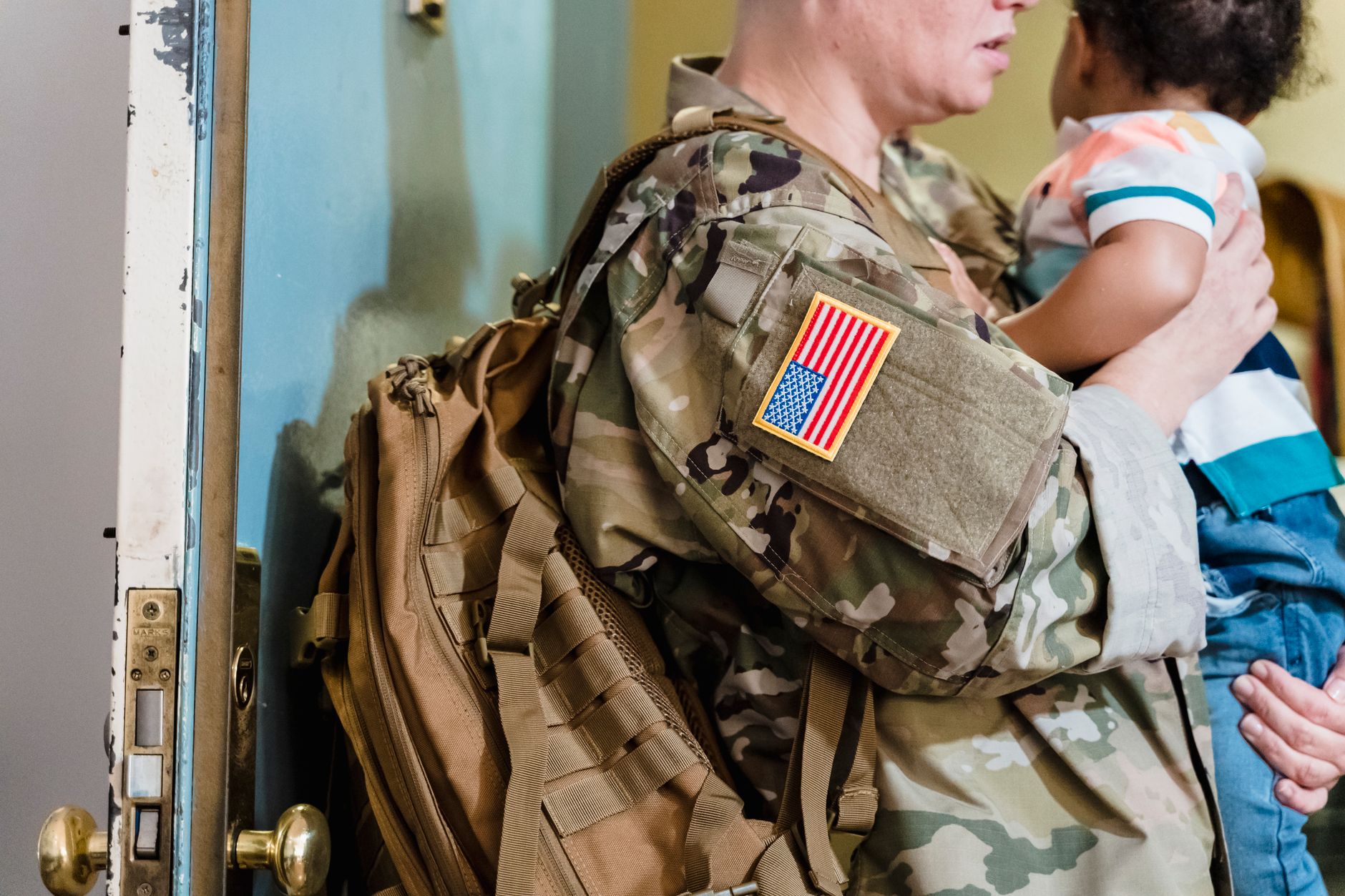
I checked myself in the rearview mirror out of habit, not vanity. Hair regulation, pulled back tight. Service uniform pressed. No medals on display, because I never wear my full rack to a family dinner, that’s not what they’re for. Just my rank on the collar, three chevrons and two rockers wrapped around a plain five pointed star with no wreath around it. Command Sergeant Major. Nineteen years in, the last five of them spent mostly overseas and then at Fort Bliss finishing the Sergeants Major Academy, the kind of stretch that ages a person in ways a mirror doesn’t always show you until you catch your own reflection in a truck window outside your childhood home and don’t quite recognize the woman looking back.
I had not come home to impress anybody. I want to be honest about that from the start, because everything that happened that night makes more sense if you understand I walked through that door with zero expectation of being seen, let alone celebrated. I had made peace with that a long time ago. What I had not made peace with, what I didn’t even know yet I needed to make peace with, was what my family was about to try to take from me.
My name is Josephine Bell. Everybody who loves me calls me Jo. That night, almost nobody in that house did.
To understand why I stayed away five years, you have to understand what this family does to the daughter who doesn’t perform.
Tiffany was born eighteen months after me and from the day she could walk she understood something about our parents that took me another decade to figure out. She understood that our mother, Carol, needed a daughter who made her look good at church, at the county fair, at the VFW pancake breakfast, and that our father, Frank, needed a daughter who never made him have an uncomfortable conversation. Tiffany gave them both exactly what they needed. She was homecoming court, then 4-H ribbons for baking instead of livestock because livestock was dirty work and Tiffany didn’t do dirty work, then a marketing degree from a college close enough that she came home most weekends smelling like somebody else’s cologne.
I was not built for any of that, and by the time I was fourteen I’d stopped trying to be.
The person who saved me during those years was my grandmother. Everybody called her Gran Lou. Louise Bell had married into this family and outlived my grandfather by eleven years, and she ran the actual working part of our place, the part with cattle and hay and a leaning barn that smelled like sweet feed and diesel, long after my father had quietly stepped back from it to sell insurance in town. Gran Lou was the one who taught me to back a trailer, to read a sky before a hailstorm, to shoot straight and speak plain. She was the only person in that house who ever looked at me like I was already enough exactly as I was.
The summer I turned seventeen I told her I was going to enlist the day after graduation, and I braced for her to try to talk me out of it the way I knew my parents would.
She didn’t. She set down the fence pliers she’d been holding, looked at me for a long moment, and said something I have carried in my chest every day since. She said the Bell women had always known how to work, but she wanted me to go find out what I was worth outside of this family’s opinion of me, because a family that only loves the daughter who performs isn’t loving a daughter at all, it’s loving a mirror. Then she pressed two twenty dollar bills into my hand, told me not to spend it on anything sensible, and made me promise her one thing.
Come back for the land, she said. Not for us. For the land, and for me. Promise me that.
I promised. I didn’t fully understand yet what I was promising.
The next nineteen years took me a lot of places. Basic at Fort Jackson. Two deployments I still don’t talk much about. A stretch at Fort Carson that let me get home for holidays, and then the last five years, which took me overseas for longer than I’d agreed to in my own head, followed by eighteen months at the Sergeants Major Academy that ate every bit of leave I had left. I called Gran Lou more than I called anybody else in that house. She wrote me letters, actual paper letters, in handwriting that got shakier every year, and I kept every single one of them in a metal box that has moved with me to six different duty stations.
Four months ago, my father called to tell me Gran Lou had passed in her sleep. I was mid rotation in a location I couldn’t leave on short notice, and by the time emergency leave paperwork cleared, the funeral was already three days past. I have not forgiven myself for that, and I understood, walking up that driveway, that my family had not forgiven me for it either. They just hadn’t said so out loud yet.
What none of them knew was that six weeks before she died, Gran Lou had mailed me a letter that I’d read so many times the creases were starting to tear. It was folded in the inside pocket of my jacket that night, the way it had been folded in that pocket every day since it arrived. I’ll tell you what it said. Not yet. Keep it in mind, because it matters more than almost anything else in this story.
The instant I stepped through the front door, Tiffany spotted me across the room and didn’t bother lowering her voice.
Well, look what the recruiting office finally shipped back to us, she said, loud enough that three separate phone cameras swung my direction.
My mother crossed the room with a smile that stopped somewhere around her cheekbones and never made it to her eyes. Five years, she said, like she was reading it off a citation. Barely a phone call. No pictures. We didn’t even know what continent you were on half the time.
I didn’t argue. There was truth buried in what she said, even if she’d left out the reasons underneath it, and I have never been the kind of soldier who wins an argument by out talking somebody. I let it sit.
Tiffany’s eyes dropped to my collar. That’s it? she said, tilting her head like she was examining livestock at auction. That’s what you came home with after five years? I thought you’d at least be a captain by now or something.
A ripple of laughter went through the room. A couple of the phones angled closer, waiting to see if I’d react.
Brad, the man Tiffany had been introducing all night as her future husband, stepped up beside her wearing a blazer that had never once seen a Colorado wind. You’re actually in the Army? he said, looking me over the way you’d look over a used truck you weren’t planning to buy. Huh. I wouldn’t have guessed.
Tiffany leaned into him and turned her phone slightly, catching them both in frame. Brad’s got real leadership instincts, she told whoever was watching her livestream. He built his whole real estate portfolio himself, no handouts. My sister just kind of does something on a base somewhere.
My father wouldn’t meet my eyes. He came close enough to speak low, just to me. Please, he said. Don’t make tonight difficult.
I said nothing. Not because I didn’t have plenty to say, but because I have learned something in nineteen years of service that most civilians never get taught, which is that silence is not surrender. Silence is information gathering. When people believe you’re not going to push back, they stop being careful about what they say in front of you, and that carelessness tells you everything you actually need to know about a person.
I was about to learn exactly how careless my family could be.
I slipped away from the noise about twenty minutes later, telling myself I just needed air, though if I’m honest I needed distance from all those phones more than I needed oxygen.
Walking past my father’s office, I heard his voice through the half open door, pitched low and urgent in a way I hadn’t heard from him since I was a kid and money was tight. A second voice answered him, calm, measured, the voice of somebody used to talking people through paperwork. Once the last signature’s down, that voice said, we can move on this by the end of the month.
I pushed the door open.
Wendell Halloway sat at my father’s desk. I’d known him my whole life, our family’s attorney, the same soft spoken man who’d drawn up wills and handled the sale of a hay baler and once, when I was nine, notarized my 4-H project paperwork because Gran Lou thought it was funny to make everything official. He looked up at me now with an expression I can only describe as caught.
The desk was covered in paper. Financial statements. A property description with our address on it. Pages with initials scrawled at the bottom in my father’s handwriting. And across the top sheet, in bold capital letters, one word.
TRANSFER.
My mother appeared in the doorway behind me, arms crossed before I’d even turned around, like she’d been waiting for this exact moment. The property’s going to Tiffany, she said, flat as a countertop. You disappeared for five years. We had to make the sensible decision for this family.
I looked past her to the wall behind my father’s desk, where Gran Lou’s photograph had hung for as long as I could remember, her in her work coat with the barn behind her, squinting into the sun the way she always did. The frame was gone. Not just gone, erased, the nail pulled, the little rectangle of unfaded wallpaper where it used to hang scrubbed clean like somebody had gone at it with a rag specifically so no one would notice it had ever been there.
It looked like they’d tried to erase her before they tried to take what she’d left behind.
I want you to understand what that did to me, standing in that doorway. Not rage, not yet. Something colder and steadier than rage. The kind of clarity that comes right before you act, the kind they train into you so that when the moment actually arrives, your hands don’t shake even if your heart does.
Gran Lou never left that ranch to whoever showed up loudest at the reading, I said quietly. Wendell’s eyes flicked toward the desk drawer, just for a second, and I filed that away too.
My mother didn’t answer that. She just repeated herself, like repetition made it truer. We had to make the sensible decision, she said again, and walked out.
I want to tell you what was actually in Gran Lou’s letter now, because I think you need it before the rest of this makes sense, the way I needed it in my jacket pocket that whole night like a hand on my shoulder.
She wrote that she knew her heart wasn’t going to hold out much longer, and that she wasn’t scared of that, she’d made her peace with the Lord a long time ago and figured He owed her a good long talk about cattle prices when she got there. She wrote that she’d already told Wendell Halloway, in writing, years before, that the ranch was mine. Not split, not shared, mine, because I was the one who’d shown up every summer even when it cost me, the one who’d mucked stalls at six in the morning instead of sleeping in, the one who’d driven three hours on a weekend pass once just to sit with her through a bad flu instead of going anywhere fun with the little leave I had. She wrote that Tiffany was a good girl in her own way, but that good in her own way and good with land are two different kinds of good, and she wasn’t going to pretend otherwise just to keep the peace at her own funeral.
Then she wrote the line I have read more times than any other sentence in my life. She wrote, I don’t need you to be a hero to me, Josephine. I already think you are one. I just need you to come home and finish what your promise started.
I hadn’t shown that letter to anybody. I hadn’t needed to, not until I stood in my father’s office and saw that word in bold capital letters sitting on top of a stack of papers meant to erase everything Gran Lou had asked for in her last months on this earth.
I walked back out to the living room. Tiffany had already resumed her livestream, smiling into the camera like she’d already won something, and in a way I suppose she believed she had.
Then three sharp knocks hit the front door hard enough to rattle the storm glass.
The music cut off mid beat. Conversation died with it. Every head in that room turned.
Two uniformed sheriff’s deputies stepped inside, scanning the room with the kind of careful, unhurried attention you learn on the job, the look of people who’ve walked into enough unpredictable rooms to never rush the read.
Tiffany pointed at me before either deputy said a word. That’s her, she said. That’s the one I called about.
My parents didn’t ask what was happening. They just watched, and there was something almost like relief on both their faces, like whatever was about to happen to me was going to solve a problem for them.
One of the deputies glanced at a slip of paper in his hand, then back at me. Ma’am, he said, not unkindly, we got a call about a disturbance. Somebody reported an unwanted person on the property, refusing to leave, possible threat made. We’re going to need you to step outside with us so we can sort this out.
I didn’t argue. I didn’t explain that I’d been invited to my own parents’ house, that I was their daughter, that I hadn’t threatened a soul. I have stood in rooms far more dangerous than that living room and learned that arguing with a first responder who’s just doing his job while somebody behind you is lying through their teeth rarely helps anybody. I said nothing. I turned toward the door.
That’s when the headlights swept across the front window.
A black SUV pulled into the driveway, engine idling low and heavy in a way no civilian vehicle sounds. A second one followed it, then a third, tires crunching gravel in a line so precise it looked choreographed, because in a way it was.
The guests near the window shifted, their smug amusement curdling fast into something closer to confusion. Tiffany’s phone was still up, still recording, and I remember thinking, distantly, that she was about to broadcast something she had not planned for at all.
The front door opened again.
A man stepped through it in full Army dress uniform, and even from across the room I recognized the walk before I recognized the face, the particular unhurried certainty of somebody who has never once in his career needed to rush into a room to command it. Four silver stars caught the porch light on each shoulder.
General Marcus Whitfield. My general. The man I had spent the last two years serving as senior enlisted advisor, the man whose calendar, whose staff, whose soldiers I had helped run through two continents and one very bad winter none of us talk about much.
His gaze swept the room once, slow and deliberate. Over my parents, who had gone the color of old paper. Over Tiffany, whose phone was shaking now in her hand. Over the two deputies, who had straightened up so fast I almost felt bad for them. Then his eyes found me, and the entire room went still in a way I have honestly never felt a room go still before, not even under fire, because fear does one kind of quiet and respect does a completely different kind.
He walked straight toward me.
Sergeant Major Bell, he said, and even though I outrank plenty of things in my life, I have never in nineteen years stopped feeling the full weight of that voice using my name.
Sir, I said, and came to something close enough to attention that my mother actually flinched.
He turned to the deputies before I could say anything else. Gentlemen, he said, I apologize for the theatrics, three vehicles is more than this situation calls for, but I was in Colorado Springs for a change of command ceremony and my aide flagged an emergency contact alert tied to Command Sergeant Major Bell’s file about forty minutes ago. When a senior noncommissioned officer’s family address shows up on a welfare flag, I don’t wait for a phone call to clear through channels. I get in the car.
One of the deputies cleared his throat. Sir, we responded to a call reporting an unwanted individual, possible threat, refusing to leave the property.
The general’s eyes moved, unhurried, to Tiffany. Is that so, he said. It wasn’t really a question.
I want to be fair to Tiffany here, because even in that moment I didn’t want to see her destroyed, I just wanted the truth standing where the lie had been. She opened her mouth twice and nothing came out either time. Her own phone, still recording, still live to however many people were watching, captured every second of her silence, and I think that silence told her followers more than any words could have.
The general turned back to the deputies. This woman, he said, nodding toward me, has served nineteen years in the United States Army. She has been overseas more months than she’s been home in the last five years. She is the senior enlisted advisor for the command I lead, which means every soldier under my authority who has a problem takes it to her before they take it to me, because she has earned that trust one deployment, one hard conversation, and one long night at a time. I have watched her carry wounded soldiers to a helicopter under fire without her voice ever once shaking. I have never, not one time, seen her make an unwanted threat against anybody.
He let that sit in the room for a second.
If there’s a disturbance here tonight, he said, I’d invite you to look a little further into who called it in, and why.
The deputies, to their credit, did exactly what good ones do. They didn’t take the general’s word as gospel and walk away, they started asking questions, calm and procedural, first to Tiffany about the specifics of her call, then, once her story started falling apart under simple follow up questions like when exactly the alleged threat was made and to whom, their attention shifted naturally toward the room itself, toward the tension everybody could feel radiating off my parents, toward the stack of papers still sitting open on a desk down the hall that my mother had forgotten to close the door on.
One of the deputies asked, almost offhand, what all the paperwork in the office was about.
That’s when Wendell Halloway did something I will be grateful for as long as I live. He set down his drink, walked into that living room in front of everybody, and said that he needed to speak honestly, because he had let this go on longer than his conscience could carry.
He told the room that Louise Bell had come to his office nearly six years earlier and executed a will that left the ranch, all of it, house and land and equipment, to her granddaughter Josephine. He told them he still had the original document in his files, notarized, witnessed, entirely valid. He told them that what my father had asked him to draft tonight, using an outdated general power of attorney I had signed years earlier before my first deployment, for entirely unrelated reasons, back when I trusted my father to handle small things in my absence, was not a legitimate transfer of anything. It was, in his own words, an attempt to move property that legally already belonged to someone else, using a legal instrument that had quietly expired the moment Gran Lou passed away, because a power of attorney dies with the person it was tied to, and everyone in that room except perhaps my parents in their grief and fear had known that from the start.
He said he’d tried twice to tell my father this wasn’t going to hold up, and twice been told to just get it done before I came home and complicated things.
The room was so quiet I could hear the porch light humming.
My father sat down hard on the arm of the couch, and for the first time since I’d walked through that door, he looked at me like he actually saw me. Not the rank. Not the uniform. Me.
I didn’t want it to be like this, he said, and his voice cracked in a way I hadn’t heard since I was small. I told myself we were being practical. I told myself you’d understand, that you’d been gone so long you probably wouldn’t even want this place.
I knelt down in front of him, right there in front of the deputies and the general and the phones and my mother’s stricken face and Tiffany’s dead livestream, and I pulled Gran Lou’s letter out of my jacket pocket. I didn’t read the whole thing out loud. Some of it was only ever meant for me. But I read the line about the promise, about coming home for the land, and I watched my father’s face come apart the way a fence line comes apart in a flood, slow and then all at once.
She asked me the same thing, he said. Years ago. To make sure you got it. I told her I would.
The deputies didn’t arrest anybody that night. There wasn’t a crime committed in front of them worth an arrest, just a family unraveling in real time, and good officers know the difference between a mess and a felony. But one of them did take Tiffany aside and explain, plainly, that filing a false report to law enforcement is itself a chargeable offense in the state of Colorado, and that he’d be noting the discrepancies in his report regardless of whether anybody chose to press it further. He told her that next time, before she called anybody’s name into a police line, she’d better be sure it wasn’t just spite dressed up as a safety concern.
Tiffany didn’t say another word to me that night. She left with Brad about twenty minutes later, and I noticed, in the way you notice small true things in the middle of a big loud night, that Brad’s hand on her back looked less like comfort and more like a man calculating an exit.
General Whitfield stayed a little longer than protocol probably required. Before he left, he pulled me aside on the porch, out of earshot of the house, and told me the real reason his aide had flagged my file that hard in the first place, which had nothing to do with police calls at all. He told me my name had gone forward, two weeks earlier, for consideration to the very top of the enlisted advisory chain, a board most soldiers never even get looked at for. He said he hadn’t planned to tell me that night, sitting in a dark rental car eating a gas station sandwich on the way to Colorado Springs, but that after watching that room, he figured I’d earned hearing good news the same night I’d had to stand in a bad one.
I’m not going to pretend that fixed everything. It didn’t. Grief doesn’t resolve just because justice shows up in three black SUVs, and neither does a family that spent twenty years teaching one daughter she was the disappointment and the other daughter she could do no wrong. Some of that doesn’t undo in a single night, no matter how many stars walk through the door.
But something did change.
I stayed in Cedar Bend another eleven days before I had to report back. I spent most of them at the ranch, not the house, the actual land, walking fence lines with my father in a silence that was finally honest instead of avoidant. We didn’t talk much those first few days. We didn’t need to. He fixed a gate hinge that had been broken since before I left for basic training, and I held the post steady while he did it, and somewhere in that quiet, ordinary work, something between us that had been broken a long time started, slowly, to knit back together.
My mother took longer. I won’t pretend she apologized in some clean, tidy way that wraps a story up in a bow, because that’s not how real people work. What she did do, three days before I flew back, was walk out to the barn where I was cleaning tack, and stand there a while, and finally say that she’d spent so many years worried about how this family looked from the outside that she’d forgotten to look closely at what was actually true on the inside. It wasn’t everything. It was something.
I hung Gran Lou’s photograph back on that office wall myself, in the same spot, the nail hole still there under the fresh coat of paint somebody had tried to cover it with. I stood there a long minute looking at her, squinting into that same Colorado sun, work coat and all, and I told her out loud that I’d kept my promise. I came back for the land. I came back for her.
The ranch is mine now, legally and otherwise, and I have no plans to sell a single acre of it or hand it to anybody who didn’t earn a say in what happens to it. I’ve hired a good hand to run the day to day while I finish out my career, a young veteran two years out of the service who reminds me a little of who I was at that age, hungry and unproven and looking for somewhere solid to stand. My father helps him most weekends now. It’s the first thing I’ve seen my father do with his hands, and not just his mouth, in longer than I can remember.
Tiffany and I are not close. I don’t know that we ever will be, and I’ve made peace with that too, the same slow, unglamorous kind of peace you make with most things that don’t resolve the way you’d script them if you got to write the ending yourself. But I heard, secondhand, that the engagement to Brad quietly ended a few months later. I won’t pretend I felt much of anything about that either way.
As for the rank Tiffany laughed at that night, the one she called minor in front of a room full of cameras, I want to say this plainly, because I think it matters to anybody reading this who has ever had their quiet, unglamorous years of showing up mistaken for having nothing to show for it. Command Sergeant Major is not a small thing. It is not flashy. It doesn’t come with a corner office or a livestream audience. It comes from nineteen years of choosing to show up when nobody was filming, in places nobody was watching, doing work that mostly goes unseen by design.
That’s the kind of work Gran Lou did too, out on that ranch, for sixty years, unseen and unbothered by whether anybody noticed.
I noticed. That’s why I came home. And that, in the end, is the whole story of what that four star general walked through that door to remind everyone in that room, including me, that some of us had forgotten to believe for ourselves.
He didn’t just say my name that night.
He said the truth out loud, in a room that had spent five years trying to bury it, and for the first time since I’d pulled into that driveway, somebody finally heard it.