The Day I Said Put It Back
The words came out of me before I had decided to say them. “Put it back.”
Three syllables, said quietly, in the same voice I used to use when Julian was seven and reaching for a second cookie before supper. I did not shout. I did not cry. I stood beside my son’s chair with a spatula still in my hand from turning the sausages, and I watched the whole backyard go still around those three words like a pond does when you drop a stone in the middle of it and the rings just keep moving out and out until they touch the edges.
Tom’s hand stopped on the grill lid. Erica stood frozen by the drink table with the sweet tea pitcher sweating in her hand. Louisa had a plate of deviled eggs halfway to the table and she just held it there, suspended, like the whole yard had been put on pause except for me.
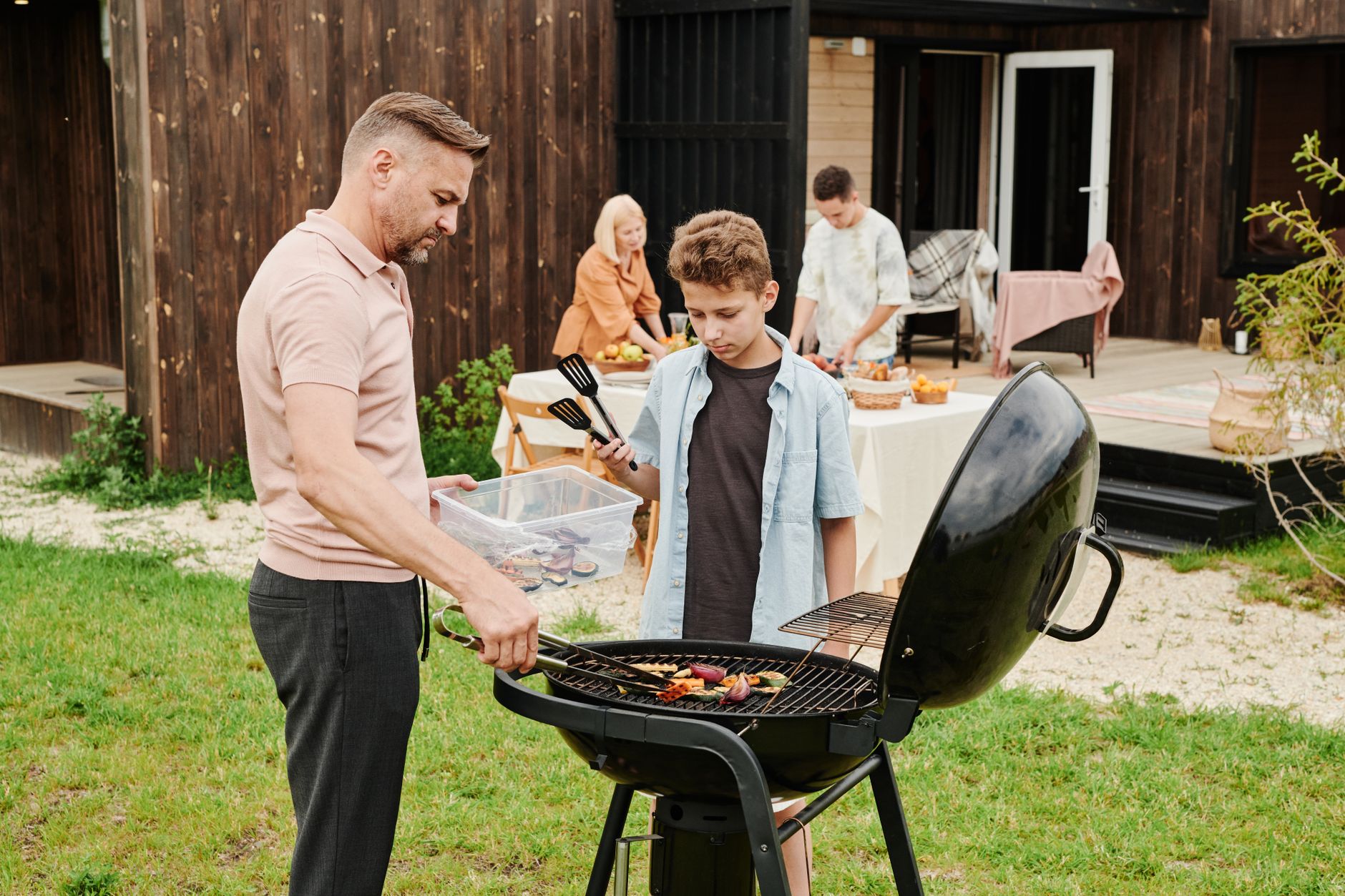
Julian looked up at me. He had a pair of serving tongs in one hand and a piece of brisket, my brisket, the piece I had trimmed myself at five that morning with my reading glasses pushed up on my head because I refused to buy the readers with the cord, halfway into a plastic container that still had the price sticker from the Dollar General on the bottom.
“Mom,” he said. Just that. Like he did not know what came after it.
Rachel’s face did something I want to describe carefully, because I have thought about it many times since that afternoon and I want to get it right. It was not embarrassment. It was not even surprise, not really. It was closer to the look a person gets when a calculator gives them an answer they do not like. A kind of recalculating.
“Betty,” she said, and she laughed the small laugh she used when she wanted a room to know she found something silly, “it’s just meat.”
I want you to understand that I had spent two hundred and forty-eight dollars that Saturday morning at Davis Market on thirty-three pounds of beef, and that Mr. Davis himself, who has cut meat for three generations of my family, had walked the counter with me picking out the marbling on the brisket like he was choosing a diamond, and that I had been awake since half past four turning that meat into something worth setting in front of people I loved. And I want you to understand that none of that, not one pound of it, not one dollar of it, was the reason I said what I said.
I said it because I watched my only son stand at my table and pack away food for two women who had walked in carrying empty totes and full opinions, while my nieces, who had brought a pie, a fruit salad, and two bottles of wine, stood there with their hands still busy serving everyone else. I said it because for three years I had watched Julian shrink a little more every time Rachel was in a room, and I had told myself it was not my business, that love means letting go. And I had let go of so much rope that I had finally reached the end of it, standing in my own backyard, holding a spatula like it was the last thing in the world I had any say over.
So I said it. And then, because the yard had gone so quiet you could hear the ice cubes settling in Erica’s pitcher, I said it might be worth explaining how we got there, because a person standing at the end of her rope usually got there one small tug at a time, and I had been counting the tugs for longer than anyone in that yard knew.
My name is Betty Miller. I am sixty-five years old. I have lived in the same house outside Fort Worth for thirty-one years, in a neighborhood where the lots are big enough that you cannot hear your neighbor’s television but small enough that everybody still knows whose truck is whose. Tom and I bought this place the year Julian turned three, back when the land out past the loop was still mostly mesquite and cattle. Tom worked thirty-four years as a lineman for the electric cooperative, climbing poles in ice storms and July heat both, and retired four years ago with a pension, a bad knee, and more opinions about football than any household needs. These days he spends his Thursday mornings at the feed store arguing about weather and dominoes, and most evenings he is out back at that smoker like a second job he chose on purpose.
We raised one child. Julian came along after two losses I do not talk about much, which is maybe why I have always held onto him a little tighter than some mothers hold their sons, and why this house became, over the years, the place everybody’s calendar bent around. Birthdays. The Fourth of July, when Tom would set off a modest and entirely legal amount of fireworks in the side yard and half the street would wander over. Graduations. Sunday dinners after church, when the sermon was still fresh enough that we’d argue gently about it over the mashed potatoes. I am a member at Grace Baptist same as I have been since Julian was in the nursery there, and there is a particular kind of pride in having your home be the one people picture when they picture family. I built that on purpose, over three decades, one pot roast and one folding chair borrowed from the fellowship hall at a time.
Julian grew up easy. He was not a difficult child, not a difficult teenager, not even a difficult young man, not until Rachel. He played tight end for two years at the high school before a shoulder injury ended that particular dream, and on Friday nights in the fall this whole town still empties out toward the stadium lights, and some of my best memories of my son are of him jogging off that field in his pads with grass stains up one side of his jersey, looking for me and his daddy in the stands before he even took his helmet off. He was polite to waitresses. He mowed old Mrs. Guthrie’s lawn next door for free for six years because she was a widow and he said it did not feel right to charge her. He called me every Sunday afternoon when he was away at Texas Tech, without fail, even once when his fraternity brothers sat out in the parking lot honking for him the whole time we talked.
He met Rachel at a work conference in Dallas about four years ago. He is a project manager for a homebuilding company and does well for himself. Rachel works in marketing, running social media accounts for a chain of boutique fitness studios, and she is, plainly, a beautiful and polished woman who knows exactly how a room should look before she walks into it. Her hair is always done. Her home, from what I have seen of the photographs, looks like something out of a catalog, all white and gray and a single perfect eucalyptus branch in a vase on the counter. She is charming in short doses, the kind of charming that leaves you liking her for the first twenty minutes of any visit before something small and cold moves across her face and you remember why you had reservations.
Her mother, Stella, is a widow herself, a retired schoolteacher who now fills her days with a ladies’ luncheon circle in Arlington and a great deal of opinions about other people’s homes, other people’s cooking, and other people’s grandchildren, whom she does not yet have but discusses as though she is already planning their wardrobes. Stella has a way of walking into a room and pricing it. I do not say that unkindly, or I try not to, but I have watched her eyes move across a room, my dining room, my kitchen, my flower beds, the same way an appraiser’s eyes move across a piece of furniture he intends to lowball you on.
I want to be fair here, because fairness matters to me and because this is not, in the end, a story about hating my daughter-in-law. It is a story about a table, and about the slow way a family can let one person redraw all its boundaries without anyone calling it what it is until it is almost too late.
It started small, the way these things do. The first Thanksgiving Rachel joined us, she brought nothing, which I told myself was fine, she was new, she did not know our rhythms yet. When I served the sweet potatoes with marshmallow on top, the way my own mother made them, the way Julian had eaten them every Thanksgiving of his life, Rachel said, loud enough for the table to hear, “Oh, we don’t really do sugar in our house,” in a voice that made my mother’s recipe sound like a bad habit I needed to break. Julian laughed along with her. I remember that specifically, because it was the first time I saw him choose her comfort over mine in front of other people, and I told myself it was nothing. A new couple finding their footing. I told myself that a lot, over the years that followed.
Christmas the next year, Rachel decided, three days before the holiday, that they would be spending it with Stella instead, because Stella “got so lonely,” which was not entirely true, Stella has a sister in Weatherford and a whole church group of her own. Julian went along with it and called me on the twenty-third, and I sat in my kitchen after that call and cried for exactly as long as it took the oven timer to go off, then wiped my face and finished the pies I had already started, because somebody in this family was going to have Christmas cookies whether anyone showed up to eat them or not.
There were birthdays canceled with two days’ notice because Rachel had “a headache” or “a work thing,” or once because she had booked a spa day for herself and Stella and forgotten it was Tom’s sixty-third birthday. When I mentioned, gently, that we had already bought the ribeyes, Rachel told me I was being “a little dramatic about a schedule mix-up.” There were remarks about my “dated” kitchen, my “cluttered” garage, my “old-fashioned” habit of cloth napkins instead of paper, a running commentary, always delivered with a smile, that over time added up to a picture: that I was a sweet but slightly embarrassing relic, and that Julian’s job, increasingly, was to manage me the way you manage an elderly relative who means well but needs correcting.
And through all of it, my son got quieter. He stopped finishing his sentences before checking Rachel’s face first. He started answering for her, apologizing for her, smoothing things over before I even had a chance to be upset, as though he had appointed himself the translator between two countries that used to be the same one. Tom noticed it before I let myself admit I had noticed it too. “That boy used to have a spine,” he said to me one night, not unkindly, just tired, the way you get tired watching something happen in slow motion that you cannot stop. “I don’t know where it went.”
I told him what I told myself. That marriages take adjusting. That Julian loved her, and you do not get to pick who your child loves, only whether you stay in the room for it. That my job now was to keep the door open, keep the table set, and trust that whatever this was, it would either work itself out or it would not, and either way, my walking away first would only cost me my son faster.
So I kept setting the table. And that is, in the end, the whole story of how thirty-three pounds of beef ended up on my counter that Sunday morning.
I had planned the cookout two weeks in advance, the way I plan most things, with a legal pad and a pen that lived in the kitchen drawer for exactly that purpose. Brisket. Ribs. Skirt steak for fajitas, because Louisa’s husband cannot eat a meal that isn’t spicy and I like to think of the ones who show up. Sausages from the same butcher who has done my sausages since before Julian could walk. Roasted potatoes with rosemary from the pot by the back door. A big salad because Tom’s cardiologist and I have an understanding. Fresh bread from the bakery on Camp Bowie that I drive forty minutes out of my way for because it is worth it. Grilled onions. Three kinds of cheese because you never know who is going to want what.
Tom looked over my shoulder at the list Saturday morning with his coffee in hand and his eyebrows halfway up his forehead. “Betty, exactly how many people are coming? Are you feeding the Dallas Cowboys?”
“There will be leftovers,” I told him, which was, in its own way, the truest sentence in this whole story, though not for the reason either of us thought at the time.
“There are always leftovers when you cook.”
“That is the point, Tom.”
At Davis Market, Mr. Davis walked the case with me himself, the way he has done since his father ran the place and mine was still alive to shop there with me. He knows my family’s whole history in cuts of meat, knows that Tom likes the brisket with a good fat cap and that Julian, since he was a boy, has always fought his cousins for the burnt ends. When the butcher paper came off the scale, it read thirty-three pounds even, and the total came to two hundred and forty-eight dollars, and I paid it without a flicker of hesitation, because that is what the money in that account has always been for. Not vacations. Not shoes I do not need. My family, fed, at my table, the way it has been done for three generations before me.
I want to tell you honestly that some part of me, driving home with that meat in the trunk, already knew what kind of afternoon I might be walking into. Rachel had texted the group chat two days before to say she and Stella were “so excited” and would “bring something small,” and something in the phrasing, small, in quotation marks in my own head before she had even said it, made me tighten my grip on the wheel a little. I told myself I was being uncharitable. I told myself a lot of things that turned out not to be true.
Sunday morning I was up before the sun, the way I always am for a big cook. Tom went out to season the grill and get his coals right, moving around that smoker with the same careful patience he used to bring to a bucket truck forty feet in the air, and I worked the kitchen alone in the quiet, which is my favorite hour of any cooking day, just me and the radio turned low and my mother’s old wooden spoon in my hand.
Erica and Louisa arrived first, the way they always do, because my nieces were raised right and it shows. Erica came in with a homemade pie balanced on one palm and her purse still on her shoulder. Louisa had a big glass bowl of fruit salad in one arm and two bottles of wine tucked under the other.
“What can we help with?” Erica asked, before she had even set her purse down on the counter, and within ten minutes both of them had aprons on and were slicing bread and filling the tea glasses and carrying serving dishes out to the patio table like it was simply understood, without discussion, that this is what you do when you walk into somebody’s home for a meal they cooked. I have thought a great deal, since that day, about how those two girls did not need a single instruction from me. They had absorbed it the way you absorb your family’s habits, by watching them modeled for twenty years at that same table.
Then the doorbell rang, and I wiped my hands on my apron and went to answer it, and there stood my son with his wife and his mother-in-law on my front porch.
Neither woman was carrying a single dish. Not a pie plate, not a bag of chips, not a two-liter of soda. But their hands were not empty either. Rachel had a large canvas tote bag over one shoulder, the kind you get free with a magazine subscription, and it was packed full of plastic storage containers, the good kind with the snap lids, stacked and nested inside like she had raided her own cabinet on the way out the door. Stella carried a second bag, a tote from some boutique in Arlington, and it rattled with the sound of lids clicking against each other every time she shifted her weight.
Rachel leaned in and pressed her cheek to mine, the air-kiss she does instead of a real hug. “Betty, everything smells incredible.”
Stella glanced past me into the entryway, taking in the console table Tom’s mother left us, the family photos on the wall, the runner rug I’d had for eleven years. “This place is very homey,” she said, in a tone that made the word homey sound like something you’d apologize for.
I led them back through the house to the yard, where Tom was standing at the grill with the lid propped open, steam rolling up off the brisket in a way that would make anybody’s mouth water, and Tom, proud as always of a good cook, said, “Betty bought thirty-three pounds of beef for today.”
Rachel and Stella looked at each other. It was quick, barely half a second, but I saw it, and I want to be honest that I have relived that half second more times than I can count since. It was not a look of appreciation for the effort or the expense. It was a look of arithmetic.
“Thirty-three pounds?” Rachel repeated, and she laughed, light and easy, the laugh she uses in front of an audience. “Good thing we brought containers.” Then, smiling wider, “We’d hate for any of it to go to waste.”
The meal had not even started, and already I felt that small cold stone drop into my stomach that I have learned, over sixty-five years, to trust completely and ignore almost every time anyway.
I did not say anything. I went back to helping in the kitchen, and I watched Rachel and Stella take their seats at the patio table while everyone else kept moving. Erica and Louisa were still setting things out. Tom was working the grill. I was running trays back and forth. Rachel and Stella sat, and talked to each other, and occasionally to the group at large, mostly to comment.
Stella criticized my flower beds, which I will admit have gotten a little away from me since my knee started acting up, but which are still, in my opinion, perfectly presentable for a Sunday cookout and not a garden show. Rachel picked up the corner of my late mother’s tablecloth, the one with the hand-stitched hem that took her four months to finish, and called it “adorably old-fashioned” to Louisa in a voice she did not bother to lower. They said the sausages were too smoky. They said the salad dressing was too sharp. They said the brisket, my brisket, the one I had trimmed with my glasses pushed up on my head at five in the morning, had too much seasoning on it.
And then they ate every bit of it. They went back for seconds. Rachel rearranged a plate for a photograph, angling the brisket and the potatoes just so, and posted it to her page with some caption about “Sunday cookouts done right,” as though she had fired up that smoker herself at dawn. Julian sat beside her through all of it with his shoulders up around his ears and his eyes mostly on his plate, and I watched my son disappear a little more with every comment his wife made about the meal his mother had built for him.
It was after the second helpings, when everyone had eaten their fill and the trays on the table were still generously full, the way I always make sure they are, that Rachel leaned back in her chair and surveyed the spread like a woman auditing a store.
“There’s no way all of this gets eaten,” she said.
Stella nodded along, solemn as a funeral. “It really would be a shame to let expensive beef go to waste.”
And Rachel turned to my son, and said, “Babe, bring me the bags.”
Julian stood up. He did not ask what she meant. He did not glance my way, not even for a second, not the way a grown man raised right ought to glance at his mother before he does something in her own backyard. He carried both totes to the patio table, and Rachel and Stella began unpacking containers, snapping lids apart, lining them up like a factory line. Large ones for the brisket. Smaller ones for the sides. Then Julian picked up the serving tongs, my tongs, the ones that hang on a hook by my grill, and began loading the best of it, the center cuts, the ribs with the most meat still clinging to the bone, into those containers, and the whole yard went quiet around him.
That is the moment I told you about at the start. That is where I stood up, walked to my son’s chair, and said the three words that stopped everything.
“Put it back.”
Now you know what led up to it. What you do not yet know is what happened after, and that is the part that actually matters, because a lot of families reach a moment like that one. Fewer of them do anything real with it.
Rachel’s laugh came first, small and disbelieving. “Betty, it’s just meat.”
“It is not just meat,” I said, and I kept my voice level, though it took everything in me to keep it there. “It is the meat I bought with my own money, that I cooked with my own hands, for the people I love, at my own table. And you have sat at that table for two hours telling me everything wrong with it while you ate two helpings, and now you want to leave with the best of it in bags you brought from home because you assumed there’d be enough to take.”
Stella’s chin came up. “There is no need to make a scene, Betty. We’re family.”
“Family brings something to the table, Stella,” I said. “Family doesn’t come with empty hands and a shopping list.”
I watched something flicker across Julian’s face, and for one terrible second I thought it was going to be embarrassment on my behalf, the same look he’d worn at every Thanksgiving and birthday where he’d let his wife’s comments slide past him like weather. But it was not that. He set the tongs down on the edge of the platter, slow, like a man setting down something heavier than it looked, and he looked at the container in his other hand, half full of my brisket, and then he looked at me.
“Mom’s right,” he said.
Rachel’s head turned so fast her earring caught the porch light. “Excuse me?”
“You’ve done this before,” Julian said, and his voice was quiet but it did not shake, not once, and I want you to understand what that sounded like to me after three years of watching him go quiet in exactly the wrong moments. “The pot roast at your book club. The peach cobbler your mom brought to her ladies’ luncheon last month, the one everybody raved about.”
I did not know, in that moment, what he meant, and from the look on Erica’s face, neither did she, but Louisa’s mouth had gone into a small, tight line. I would learn later, standing in my kitchen that night with a glass of wine I badly needed, that my niece had seen it first. Louisa follows Rachel on social media the way you follow a relative you are not close to but do not want to unfollow and cause a fuss over. Two months back, Rachel had posted a photograph of a pot roast on a white ceramic platter, captioned something about “nothing beats a homemade Sunday dinner, made from scratch.” Louisa recognized the platter, chipped on the left edge where Tom had dropped it moving furniture years back, and let it go, because who accuses somebody over a serving dish. Stella’s peach cobbler, the one her ladies’ circle had praised for three weeks running, was, Louisa was fairly sure, made from my late mother’s recipe, the one written on an index card in my kitchen drawer, the one I had sent home with Stella myself that spring “just to try,” never imagining she would serve it to a room full of women as her own and take the compliments standing up.
“You’ve been taking food out of this house for months,” Julian said, and now he was looking at Rachel, not at me, and not at his own hands, which is the part I will remember longest. “Not because you needed it. Because it’s easier than cooking, and because you can post it and let people think you made it, and because somewhere along the way you decided my mother’s kitchen was a resource instead of her home.”
“That is not what this is,” Rachel said, and her voice had climbed half an octave, the pleasant charm gone out of it entirely, replaced by something harder and more familiar to me, the same look she’d worn under the polish since the first Thanksgiving she never brought a dish to. “You’re really going to do this? In front of everyone? Over Tupperware?”
“I’m doing it because it’s not about Tupperware,” Julian said. “It’s about the fact that my mother has spent thirty years making sure this family had somewhere warm to land, and you’ve spent three years treating that like it’s beneath you right up until it’s useful to you. I’ve watched you talk down to her at every holiday for three years and I let it happen because I didn’t want to fight about it. That’s on me. But I’m not carrying your bags out of my mother’s yard.”
Stella stood up so fast her chair scraped the flagstone. “Well. I don’t think we need to stay somewhere we’re clearly not welcome.”
“Nobody said you weren’t welcome, Stella,” I said, and I meant it, because I have never in my life turned a hungry person away from my table and I was not about to start that day either. “You are welcome to sit down and finish your plate like everyone else did. What you are not welcome to do is walk out of my house with food you didn’t bring and didn’t earn, to serve at your own table under your own name, while telling everyone here what’s wrong with mine.”
Nobody said anything for a moment. Somewhere down the street a dog was barking at nothing, the way dogs do on a hot Sunday afternoon, and I remember being strangely grateful for the sound because it meant the world was still turning outside the four corners of that patio.
Rachel looked at Julian for a long moment, the way you look at someone when you are recalculating what you thought you knew about them, and I think that was the moment it landed for her, not my three words, but his. She had built three years of marriage on the assumption that Julian would always come around to her side of any argument, that his silence was agreement and his agreement was permanent. Watching him stand there, quiet but not backing down, setting my meat back on my platter with his own two hands, I think she understood for the first time that the ground under that assumption had shifted.
“Fine,” she said. Her voice had gone flat. “Fine. We’ll go.”
“You don’t have to go,” I said, and I want to be honest that I meant that too, even in the moment, even angry as I was. “You’re welcome to stay and eat like family eats, together, at the same table, contributing what you can and taking only what you need. That offer doesn’t expire. But I’m not sending you home with a truck full of food you disrespected on your way to eating it.”
Stella was already gathering her bag, empty containers rattling against each other with a hollow sound that felt, honestly, like a kind of justice all its own. Rachel stood there another moment, looking at Julian, and something passed between them that I could not fully read, not anger exactly, more like the first honest conversation they’d had in public in longer than either of them would admit.
“We’ll talk at home,” she said to him, quiet now, and he nodded, and the two women walked around the side of the house to their car without another word to the rest of us, and I heard the car doors, and the engine, and then the quiet settled back over the yard the way it does after a storm passes through and everybody is still deciding whether it’s safe to go back outside.
Julian stood there a minute with the tongs still in his hand. Then he set them down, finally, for good, and he picked up the serving fork and started putting the brisket back onto the big platter where it belonged, piece by piece, and nobody said a word while he did it, and when he was done he looked up at me, and his eyes were wet in a way I had not seen since he was nine years old and his dog died.
“I’m sorry, Mom,” he said. “I should have said something a long time before today.”
I did not scold him. I did not tell him I told you so, though God knows I could have. I walked over and I put my hand on the side of his face the way I did when he was small, and I said, “You said it today. That’s the part that counts.”
Then Tom, who had not said one word through the whole thing, cleared his throat and announced to the yard at large, “Well. I’ve got about thirty pounds of good brisket that isn’t going anywhere, and I intend to eat some more of it,” and Erica laughed, startled out of her, and Louisa started refilling the tea glasses, and just like that, the afternoon knit itself back together. We ate. We told stories. Julian sat next to me instead of beside an empty chair, and for the first time in three years I watched my son laugh the way he used to, easy and unguarded, at something Tom said about the Cowboys’ offensive line.
I would like to tell you the rest of this story wrapped up in a neat bow, and in some ways it did, though not overnight, and not without more hard conversations than I have room to tell you about here. Julian and Rachel did not divorce. I want to say that plainly, because I know some of you reading this are waiting for the ending where the villain gets what’s coming to her in a courtroom, and that is not what happened, and I have come to believe that is not always the most honest kind of ending anyway.
What happened is that Julian went home that night and had the conversation he should have had long before, about respect, about boundaries, about what he was and was not willing to watch happen to his mother in his presence again. It was not an easy few weeks. Rachel did not turn into a different person overnight, and there were a couple of stiff, quiet dinners after that where she barely spoke to me and I let her have her silence, because some things take longer to thaw than a single Sunday can manage. But by fall, something had shifted for good. She started bringing something to every gathering, not a store-bought pie dropped on the counter to check a box, but something she’d actually made, sometimes well, sometimes not, and I praised the effort either way, because effort was the thing I had been missing the whole time, not perfection.
Stella took longer, and honestly, Stella and I have settled into something closer to a polite truce than a warm relationship, and I have made my peace with that. Not every relationship in a family gets fixed. Some of them just get managed with clear eyes instead of false ones, and I think that is its own kind of progress, even if it does not make for as tidy an ending.
The following spring, Julian and Rachel told us they were expecting, and when Rachel called to tell me, her voice caught a little, and she said something I have held onto since. “I want our kid to grow up at your table, Betty. The real one. I want to be the kind of person who deserves a seat at it.”
I cried after that call, the good kind of crying, the kind that comes after you have carried something heavy for a long time and finally get to set part of it down.
These days, when the family gathers, and it still gathers here, same long wooden table, same aging grill Tom refuses to replace, I still cook enough for an army. That has not changed and never will, because feeding people generously was not the mistake I made. The mistake was letting silence stand in for self-respect for three years, letting “keeping the peace” mean absorbing every small disrespect until it added up to something so large it had to be said out loud or not said at all.
I think about that Sunday often, the containers lined up on my patio table, my son’s hand halfway to packing away food he had no business giving away, and I think about how close I came to letting it happen, the way I had let a hundred smaller versions of it happen before. What I have learned, at sixty-five years old, in a house I have lived in for thirty-one of them, is that love and self-respect are not opposites, no matter how many years you spend being told, gently, kindly, that a good mother, a good hostess, a good woman just lets things go. Sometimes the most loving thing you can do for your family, all of them, even the ones who disrespect you, even the ones you love most in the world and are terrified of losing, is to stand at the table you built with your own two hands and say three plain words, and mean every one of them.
Put it back.
Not out of anger. Out of the simple, hard-earned understanding that a table only means what you built it to mean if you are willing to defend it, once in a while, out loud, in front of everybody who is watching to see whether you will.