The Second Address On My Son’s Form
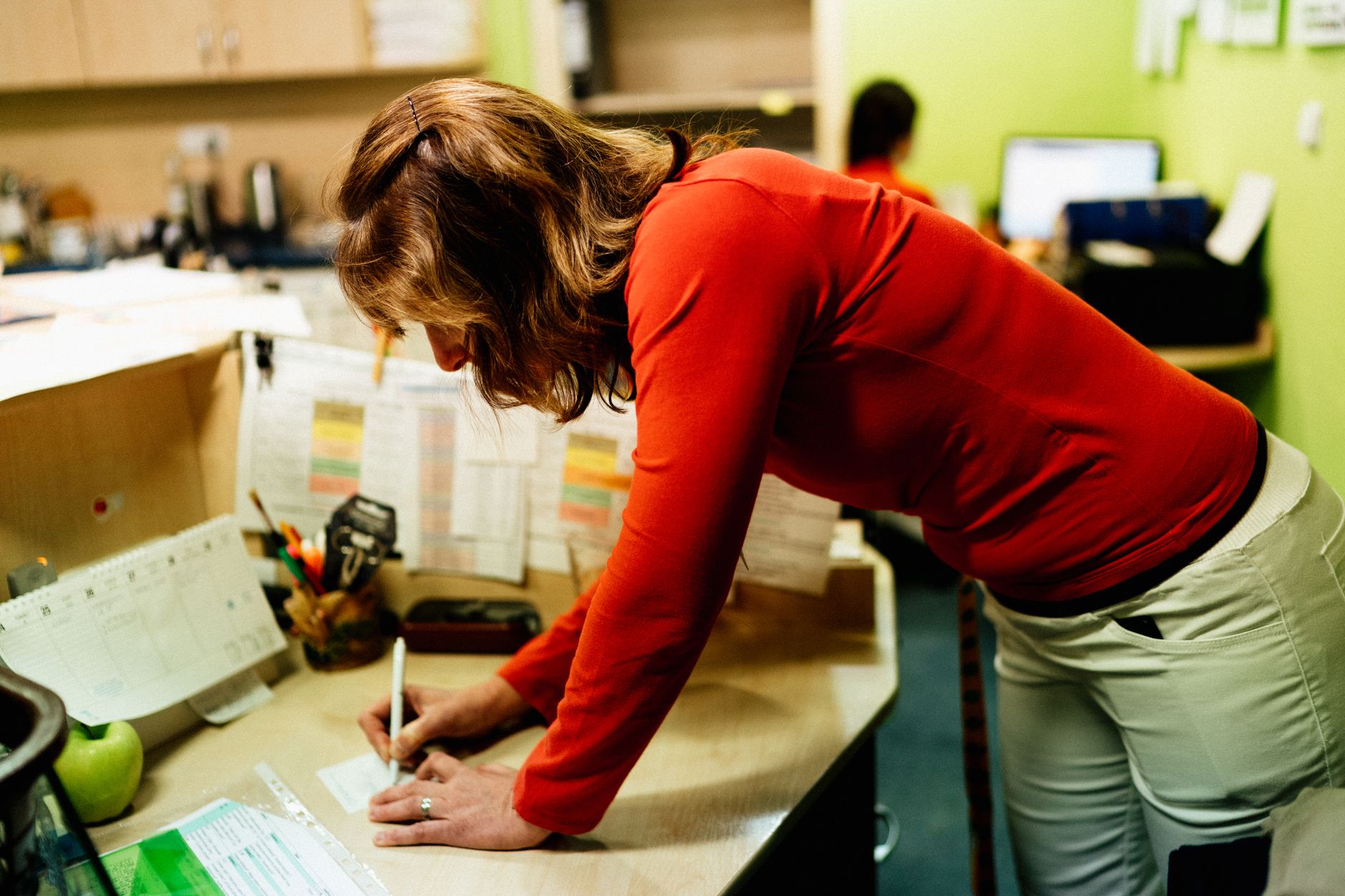
I was standing at the front counter of Renfrew’s elementary school on a Tuesday afternoon in September, the kind of ordinary Tuesday where the biggest decision I had made all day was whether to thaw chicken or pork chops for supper, when the secretary turned his emergency contact card around so I could read it, tapped the second line with the end of her pen, and asked whether the Wewoka address still needed to stay active this year or whether I wanted it taken off the file.
I did not understand the question. I asked her to say it again.
She said it a second time, patient the way school secretaries are patient with parents having a slow morning, and she read the line off the card like it was nothing at all, like it was a fact I had put there myself and simply forgotten. An address on County Road 1490, Wewoka, Oklahoma. Forty minutes northwest of Ada if the light at Fittstown is with you, closer to forty five if it isn’t. Beside the address, in the box marked SECONDARY CONTACT, someone had written a woman’s name I had never once heard in fourteen years of marriage. Beside her name, in the box marked RELATIONSHIP TO CHILD, one word, typed clean, like it had been typed there more than once before.
Stepmother.
I am thirty eight years old. I have been married to Weldy for fourteen years. Renfrew is nine, missing his top front tooth, in the fourth grade, and until that Tuesday afternoon I believed I knew every fact of my own family down to the bottom of the drawer. I am the kind of woman who keeps the coupon envelope and the shot records and the potluck sign up sheet in the same kitchen drawer, who knows which cousin owes which cousin money, who could tell you the tire pressure Weldy likes in the truck without looking it up. I did not know my own life had a second address. I found it out from a school secretary who thought she was doing me a favor by asking if I wanted to keep it current.
I want to tell you I said something sharp right there at the counter, the thing a woman is supposed to say in that moment. I did not. I said I would check into it. I said thank you. I picked up my purse and walked out to the car in the school lot and sat there with the engine off for eleven minutes before my hands worked well enough to find the key.
That night, after Renfrew was down and the house had gone quiet except for the box fan in his window, I set Weldy’s plate in front of him at the kitchen table the way I do every night, and I laid the printed card down beside his fork without a word, and I watched his face instead of mine.
He did not pick up his fork. He looked at that card for longer than a man looks at a piece of paper he has never seen, and I understood in the silence that he already knew exactly what it was before his eyes ever landed on it. Then he set it back down, careful, like it might scorch him, and he said the six words that have stayed with me clean and whole every day since.
“You were never supposed to see that form.”
Not I can explain. Not it isn’t what it looks like. Not even I am sorry. He was sorry about the form. He was sorry that a secretary with a stack of cards to clear before the first day of school had turned one around on the counter to be helpful, and in doing that small helpful thing had undone something Weldy had kept filed and current and renewed every August for longer than I knew to ask about. In fourteen years of marriage that is the sentence I understood him least by, and understood him best by, both at once.
I did not throw the plate. I want that on the record, because a woman who has been humiliated the way I was humiliated that week deserves to have it known that she did not become a scene. I stood up, I cleared his plate though he had not touched it, and I told him he would sleep in Renfrew’s old crib room that night, the one we use for the ironing board now, and he did, and I sat up at the kitchen table until almost two in the morning with that card in front of me, reading the same eleven words over and over until they stopped making any sense as English.
Ada, Oklahoma is not a big town, but it is not so small that everybody knows everybody’s business either, which I have since decided is exactly the size of town a man needs if he intends to run two households forty minutes apart. Weldy drives a route for a regional feed and farm supply outfit out of Ada, covering accounts from here up through Konawa and Seminole and on into Wewoka, a loop he has driven three, sometimes four days a week for as long as we have been married. I used to pack him a cooler for those days. Ham sandwiches, a thermos, the peanut butter crackers he likes, because I thought that was what a wife did for a husband whose work took him up the highway and back. I did not know I was packing lunches for a man driving toward a second supper table.
We met at a Vacation Bible School reunion picnic the summer I turned twenty three, at the little Baptist church on the east side of town, and he made me laugh so hard over a potato salad joke that I got the hiccups in front of his whole family. We were married the following spring in that same fellowship hall, folding chairs and paper bells, my mother’s pearl earrings and my grandmother’s veil. Weldy’s mother cried through the whole ceremony and told everyone afterward that she had never seen her son look so settled. Fourteen years, and I believed every part of that settling was real, because I lived inside it every day. The truck in the driveway at the right hour most nights. The recliner worn into the shape of him. Renfrew’s baby pictures on the mantel, Weldy holding him in the hospital in a blue paper gown, grinning like a man who had won something he intended to keep.
Renfrew came seven years into the marriage, after two losses I still do not discuss except in the barest terms, and when he finally arrived healthy and loud in the delivery room at the hospital in Ada, Weldy cried harder than I did. I remember thinking, holding my son for the first time with Weldy’s hand shaking on my shoulder, that whatever hard years had come before that one had been worth every single one of them. I did not know, holding that baby, that the man crying beside my bed was already capable of the kind of quiet, patient betrayal I would not uncover for years. I only knew, in that room, that I had never loved anyone the way I loved the two of them right then, and for a long time afterward that love felt like more than enough to build a whole life on top of.
I did not sleep that first night. I lay in our bed and did the arithmetic a wife does when the ground has gone soft under her. Forty minutes is not a slip. Forty minutes is a distance you choose because it is close enough to make the drive on a work day and far enough that nobody from Ada shops at the same grocery store. Forty minutes is a decision, made and kept, the way a man keeps a route sheet current.
The next morning I did the thing that I think saved whatever was left of my dignity in that whole ugly stretch. I did not scream at Weldy over coffee. I called the school and asked, calm as I could make my voice, if I could come look at Renfrew’s full file, not just the contact card, the whole thing, sign in logs and all. The woman I spoke with, not the same secretary from the day before, said that was a parent’s right and to come by whenever suited me.
I went that same afternoon, during my lunch break from the dental office where I have kept the books for eleven years, and a woman named nothing I will repeat here, because this story only has room in it for the people who earned a place in it, sat me down with a folder and let me go through it page by page. Most of it was what you would expect. Immunization records. A copy of Renfrew’s birth certificate. The standard release form every parent signs, the one that says who is authorized to pick a child up from school if his mother or father cannot be reached.
Two names were on that release, under mine and Weldy’s. One was Weldy’s mother, which made sense, since she keeps Renfrew some Fridays. The other name was the one from the card. And beside her name, in the sign out log, in the loose leaf binder they keep at the front desk where every early pickup gets a name, a time, and a signature, her name appeared twice in the last school year. Once in October, a Wednesday at 2:40 in the afternoon. Once in February, a Thursday at 1:15.
I remember both of those days, which is the part that still catches in my throat worse than the address ever did. The October pickup was the week my cousin’s husband died and I drove three hours to Henryetta for the funeral, and Weldy told me he had Renfrew handled, not to worry about a thing. The February pickup was the day I had an emergency root canal and could not have driven a car if the building had been on fire, and again Weldy told me it was handled.
It had been handled. Just not by him.
I sat in that school office with the binder open in my lap and understood, all at once and completely, that my son had already met her. That at some point in the last year, a woman I had never heard of had walked into his classroom, signed a line that said stepmother even then, and driven off with my child in a car I have never seen, to a house I did not know existed, and brought him home again before I ever knew a single hour of it had happened.
I asked Renfrew about it that evening, careful, over supper, the way you ask a child something you are terrified to hear answered. I said his name easy, like it was nothing, and asked if he remembered a lady named Dessia ever picking him up from school.
He did not even look up from his plate. He said, “Miss Dessia, yeah. She’s nice. She has a dog named Skillet.” He said it the way children say true things, without the faintest sense that the true thing was a bomb. He asked if we could get a dog like Skillet. I told him we would talk about it. I do not know how I managed to say those five words in a voice that did not shake.
Weldy had coached him, is what I came to understand later, not with threats, nothing so crude as that, just the ordinary quiet way a man teaches a child not to mention things. Our little secret, he must have called it, or something softer, because Renfrew did not act like a boy who had been warned. He acted like a boy who did not know there was anything to warn him about. That, in the end, was the cruelest part of the entire arrangement. Weldy had not just built a second life forty minutes up the highway. He had folded our son into the seams of it, quietly, a little at a time, until picking him up from school was an errand a stranger could run.
I did not tell Weldy I knew any of this. I packed a bag for myself and Renfrew that Thursday, told him we were visiting my sister for a few days, which was true, and I drove to Wewoka on my own the following Saturday morning while Renfrew was at his cousin’s birthday party. I did not plan the drive with any grand purpose. I told myself I only wanted to see the house. I wanted to know if it was real in the way a place is real, not just a line of type on a laminated card.
The highway out of Ada that morning was the kind of clear autumn day that makes you angry at the weather for being so unbothered, blue sky, hay bales still sitting in the far fields waiting to be gathered, a hawk sitting on a fence post like it had all the time in the world. I passed through Fittstown and Homer and a stretch of nothing but scrub oak and red dirt shoulders, and every mile marker felt like a fact accumulating against me. Forty minutes, and not one of them had ever felt long to Weldy.
The address led to a small white house at the end of a gravel drive, neat, a porch swing, a flag on a pole by the mailbox, a doghouse with a chain running to it and no dog in sight. There was a truck in the drive I did not recognize and a car I did, a silver sedan Weldy had told me belonged to a cousin of his who was letting him store it. It was parked in that driveway like it lived there. Because it did.
I sat outside that house longer than I care to admit, working up to the walk from the car to the porch steps, and when I finally knocked, the woman who answered the door was not what I had built in my mind on the drive up. I do not know what I expected. Someone younger, maybe, someone harder around the eyes. Dessia was neither. She was somewhere near my own age, in a flannel shirt with her hair pulled back, wiping flour off her hands onto a dish towel, and the first thing she said to me, before I had said a single word, was, “You’re Callista.”
Not a question. She knew my face. I understood in that instant that Weldy had shown her a picture of me at some point, the way you might show someone a photograph of your late wife, and the ground under me, which I thought could not go any softer, went softer still.
I asked if I could come in, and she stepped back from the door without a word and let me.
What she told me that morning, sitting across a kitchen table from a woman I had driven forty minutes to confront, was not the story I had built for myself on the drive up. I had built a villain. What I found instead was another woman who had been lied to with the same care and the same patience Weldy had spent on me for fourteen years, just measured out on a shorter timeline. Two years and some months, she told me. Weldy had told her he was divorced. He had told her the divorce went through the year before they met, that his ex wife, meaning me, had moved to Texas with our son and remarried, that he saw Renfrew only in the summers and every other Christmas, and that this arrangement, however sad, was settled and final and none of it was anything she needed to worry over.
She showed me, with hands that had gone unsteady by then, a folded copy of what she believed was our decree of dissolution, on paper with a county seal that looked real enough to fool a woman with no reason yet to doubt the man who handed it to her. I have since learned, because I went and checked, that the seal was lifted from a public form and the case number on it belongs to somebody else’s divorce entirely, filed the same year in a different county. Weldy had built her a whole legal fiction the way another man might build a shed, with real materials cut to a false shape, sturdy enough that nobody thought to test it by leaning their weight on it.
She had met Renfrew twice, at Weldy’s asking, both times framed to her as a rare, generous visit from a boy who lived hours away and barely knew his father. She had picked him up from school those two days because Weldy told her his ex wife was unreachable and he was stuck out on a route call and could she do him this one favor, and she had done it gladly, the way a woman does a kindness for a man she believes she is about to build a life with. She had bought Renfrew a toy dump truck for his birthday that year and mailed it to a P.O. box Weldy told her was ours. I never received it. I do not know, to this day, where that dump truck went.
We sat at her table for close to two hours. I will tell you plainly that I expected to hate her when I drove up that morning, and I did not, not for one minute after she opened that door. There is a kind of anger that wants a fight, and there is a kind that wants the truth laid all the way out on the table so two women can finally see the whole shape of the thing that had been done to both of them at once, from two directions, by the same hands. That second kind is what sat in that kitchen with us. We were not rivals. We had been two separate stages set by the same man, each of us performing a marriage he had cast us in without either of us knowing the other actor existed.
Weldy found out I had been to Wewoka before I ever said a word to him about it myself, because Dessia called him that same evening and told him plainly that she knew who I was and that she knew about the seal on that decree. He called my phone nine times before midnight. I did not answer until the tenth, and when I finally did, he was not the calm man who had told me a form was never meant for my eyes. He was frightened in a way I had never once heard in fourteen years, and frightened men say things a careful man never would. He told me Dessia was confused. He told me I had no business driving up there stirring up a woman who had nothing to do with our marriage. He told me, and I wrote this down word for word in a notebook I started keeping that week, that I was the one making all of this ugly, that if I had just left the form alone none of it would have needed to happen at all. I let him talk until he ran out of breath, and then I told him the only thing I had left to tell him, that a man does not get to blame the smoke for the fire he set himself, and I hung up the phone.
I will say this for Dessia, and I have thought about it a great deal since. When the truth landed on her, she did not spend one minute defending him. She went straight to her bedroom and came back with a shoebox, receipts, texts she had screenshotted for reasons she could not fully explain even to herself, a card from a florist in Ada dated the week of what I now know was our own anniversary, sent to an address that was not hers. She set the box on the table between us like she was laying down a hand of cards, and she said, “I think we need to figure out together what he actually did, because neither one of us has the whole thing.”
We spent that afternoon building it together, piece by piece, the way you’d piece a quilt from two different scrap bags. My contact card from the school. Her decree with the wrong case number. My fourteen years against her two. By the time I left her porch that evening, the sky gone the color of a bruise over the scrub oak, we were not friends, not yet, maybe not ever in the way that word usually means, but we were something neither of us had walked in with. Two women who had stopped believing the story a man had spent years telling each of us, and who had decided, without either one saying it out loud in those words, that we were done being embarrassed for his sake.
Word moves fast in a county this size no matter how carefully a man drives his route to avoid it. Dessia’s brother works parts counter at the same feed supply company Weldy drives for, and it did not take a week before Weldy’s district manager had heard enough of it secondhand to call him into the Ada office and ask him, plainly, whether there was a problem that was going to follow him onto company time. Weldy’s mother heard it from a cousin at Wednesday night prayer meeting before I ever called to tell her myself, and to her credit, when I did call, she did not defend her son for one single sentence. She asked me what she could do to help with Renfrew, and then she cried, and then she asked me to forgive her for fourteen years of not seeing what her own son was capable of building right under both our noses.
I stopped going to the same Sunday service for a stretch, not out of shame, but because I did not yet have the strength to receive that much sympathy in one room without coming apart at the seams. The women at the VFW auxiliary, where I have volunteered on and off since before Renfrew was born, found out the way these things get found out in a town like ours, and what surprised me was not that they knew. It was that not one of them treated me like a woman to be pitied. They treated me like a woman who had been robbed and had gone and found the thief herself, which is a different thing entirely, and a truer one.
Weldy tried, more than once in those first weeks, to make the case that what he had built was somehow a kindness to everyone involved, that he had never meant for anyone to be hurt, that he had simply loved two situations he could not bring himself to choose between. I want to be honest and say that for about four days I let that argument sit in my chest like it might mean something. Then I thought about a nine year old boy learning to keep a secret he did not know was a secret, about a dump truck mailed to a P.O. box that swallowed it whole, about a woman baking bread in a kitchen forty minutes from mine who believed, in good faith, that she was building a family out of the wreckage of my supposed divorce. There was no kindness anywhere in that arithmetic. There was only a man who did not want to be caught, and a form that finally caught him.
I filed for divorce the second week of October, in the Pontotoc County courthouse, on a Tuesday, which I noticed only after I had already picked the date and could not decide if it meant anything. My attorney, a steady, unhurried woman with an office two doors down from the feed store, told me the fabricated decree Dessia had been shown, and the school contact card itself, would matter a great deal for how the judge viewed everything else Weldy tried to argue about custody and time. Weldy was served at the feed store’s loading dock on a Thursday afternoon, in front of two coworkers and the man from Konawa who delivers propane, because that is where the process server could reliably find him on his route, and I will admit I did not feel one ounce of shame on his behalf when I heard how public it had been. At the one hearing where the fabricated decree came up, the judge asked Weldy directly whether he had shown another person paperwork claiming our marriage was dissolved when it was not, and Weldy, under oath, said he did not recall the specifics, which is as close to admitting a thing as a man like that will ever come. My attorney did not need him to say more. The paper Dessia had carried out of her own kitchen and handed to me herself said plenty on its own.
I went back to Renfrew’s school myself that same week and sat down with the front office and had every unauthorized name removed from that file, and I signed, in my own hand, the new emergency contact card, my name, Weldy’s mother’s name, my sister’s name, nobody else’s, no stepmother, no second address, nothing on that page that was not the plain and current truth.
Dessia sold that house in Wewoka by Thanksgiving. She sent me one letter afterward, care of my sister’s address so Weldy would not intercept it, and in it she told me she had moved back near her own family outside McAlester and that she hoped Renfrew was doing all right, and that she was sorry, though she had nothing to be sorry for that either of us could not lay squarely at one man’s feet. I wrote her back once. I do not know if we will ever speak again, and I have made my peace with not knowing. What I know instead is that on the worst afternoon of my life, in a stranger’s kitchen forty minutes from my own, another woman chose the truth over her own comfort, and that is worth more to me than friendship would have been.
Renfrew is ten now. He asks about his father on a regular custody schedule that a judge set and that Weldy, to his credit in this one narrow way, has kept. He does not ask about Dessia anymore. Children move through these things faster than we give them credit for, so long as the adults around them stop lying about the ground under their feet. I have told him, in words sized to fit a boy his age, that his daddy made choices that hurt people, and that none of it was ever, for one single second, about anything Renfrew did or didn’t do. He nodded like it made sense, the way he nods at most things I tell him plainly, and then he asked if we could still get a dog. We got one in the spring. Not a Skillet. A scruffy shelter mutt Renfrew named Gravy, for reasons nine, then ten year old boys do not have to explain.
I still work the same job at the dental office. I still keep the coupon envelope and the shot records in the same kitchen drawer. What is different is smaller than people expect and bigger than I can always explain. I go to that school now for every form, every conference, every early release day, and I read every line of every page before I sign it, out loud sometimes, just to myself, in an empty office with nobody standing across the counter waiting on me to hurry along. I am thirty eight years old. I live in Ada, Oklahoma, on the same street I have lived on for fourteen years, in a house that is mine now in every way that matters, and my name is the only name on the line where it counts.
The last time I sat at that school counter, updating Renfrew’s file for the new year, the secretary, a different one this time, turned the card around for me to check before I signed it, the same gesture that once broke my whole life open at that very counter. This time there was nothing on that page I did not already know, cold, and current, and entirely mine to keep. I signed it in under a minute. I did not need eleven minutes in a parked car afterward to steady my hands. I walked straight out into the sunshine and drove home to start supper, chicken, since you’re asking, and for the first time in longer than I can measure, every single fact of my own life was exactly where I had put it.
This story is a dramatization. Names, characters, and details are invented, and any resemblance to real people or events is coincidental.