The Night I Chose To Forgive Him
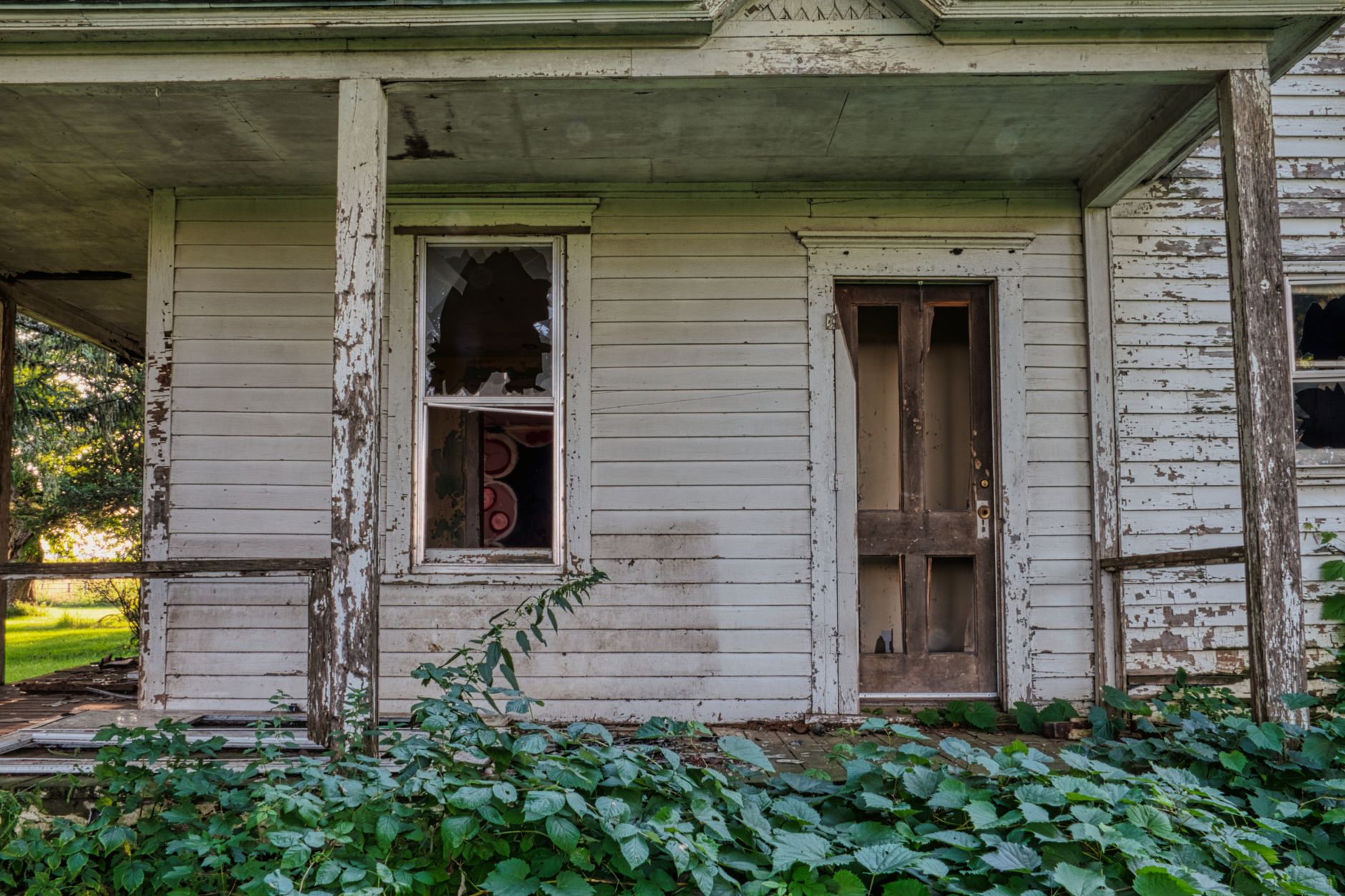
My name is Walter Hutchins. I am seventy-six years old, I have lived on Birch Hollow Road outside Cedar Falls, Iowa my whole life except for the two years the Army sent me to Vietnam, and I still have a dent above my left eyebrow shaped like a crescent moon. Most folks in town who see it figure it is from a tractor accident or a fall off a ladder. I let them think that, mostly, because the real story takes longer to tell and it does not end where you would expect.
The real story starts on a Tuesday night in March, cold enough that the mud in my yard had gone hard again after a week of thaw, when a twelve-year-old boy named Ethan Morales put a rock through my skull on my own back porch.
I want to tell you what happened, and I want to tell you what happened after, because the after is the part nobody in that courtroom got to see. The after is the part that changed both of us.
The Night
I live alone. My wife Dolores passed six years ago, breast cancer, and since then it has been me, the dog, and whatever’s on the radio in the evenings. I keep the television off most nights. Dolores used to say I was the last man in Black Hawk County who still preferred silence to noise, and she was probably right.
That Tuesday I had gone to bed early, maybe nine thirty, when Biscuit, my old beagle mix, started up a low growl from the foot of the bed. I have lived long enough in the country to know that sound means something, so I got up, pulled on my robe, and went to check the back door.
There were three of them in my yard. Two were teenagers, sixteen or seventeen by the size of them, and one was smaller, hanging back near the fence line like he wasn’t sure he wanted to be there at all. I did not know yet that the small one was Ethan. I only knew that somebody had my garden shed door open and a flashlight beam was sweeping across the inside of my kitchen window.
I have replayed what I did next a thousand times since, and I still do not know if it was brave or just old-man stubborn. I opened the back door and hollered at them to get off my property. The two older boys bolted for the fence. The small one froze.
“Go on, get,” I said, and I took a step toward him, not fast, not threatening, just an old man in a robe trying to move a scared kid off his porch. That is when he threw the rock.
I did not see it coming. I felt it. A crack against my forehead that dropped me straight to the boards of my porch, and then everything went warm and wet and the porch light above me went soft and swimmy, like looking up through pond water. I remember hearing feet running. I remember Biscuit barking from inside the screen door, frantic, unable to get to me. I remember thinking, very calmly, the way you think odd things when your body has decided panic is not useful anymore, that Dolores would have known exactly what to do and I did not.
I do not know how long I lay there. Long enough for the blood to run into my eyes and down into my collar. Long enough for the cold to start working its way into me. My neighbor Ruth Ann Voss, half a mile down, said afterward that Biscuit’s barking carried clear to her porch and that is what brought her over with a flashlight, and she is the one who called the ambulance.
They told me later at the hospital in Waterloo that the rock had fractured my skull, that a half inch either direction and we would not be having this conversation, that I was lucky. I did not feel lucky. I felt seventy years old and betrayed by my own front yard.
What the Town Said
Cedar Falls is a small enough town that everybody had an opinion inside of a week. The story ran in the Courier. A veteran, attacked in his own home, by children. That was the headline, more or less. People I had not spoken to in years called the house, or stopped me at the Hy-Vee, wanting to know how I was healing and, more than that, wanting to know what I thought should happen to “that smirking kid.”
Because by then everyone had heard about the smirk. Word travels fast when a story has a good villain in it, and by the time Ethan Morales stood in front of Judge Patricia Weller for his arraignment, half of Black Hawk County already knew his face from a courthouse photographer’s shot: a boy leaned back in his chair with a crooked half smile, like he was waiting on a school bell instead of a judge.
I will admit it to you plainly. For those first weeks, lying in a hospital bed with sixteen stitches crossing my eyebrow and headaches that came in waves like weather, I hated that boy. I hated him with a clean, uncomplicated hate, the kind that does not ask questions, the kind I had not let myself feel since I was twenty years old and carrying a rifle through a country that was not mine. I wanted him to suffer the way I understood suffering, which is to say I wanted him locked up and forgotten.
My son Danny flew in from Omaha and sat with me those first days, and I remember telling him, “I hope they throw the whole book at him.” Danny did not argue with me. He just nodded and held my hand, because that is what you do for your father after somebody has cracked his skull open in his own yard.
The Courtroom
I insisted on going to the arraignment hearing myself, against my doctor’s advice and against Danny’s better judgment, because I wanted to look this boy in the face. I sat in the third row of the gallery in the Black Hawk County courthouse, a wood-paneled room that smelled of disinfectant and old varnish, with a bandage still taped over my brow.
Ethan Morales was smaller than I expected. That was the first thing that struck me, before anything else. Twelve years old is not much of a person, not really, even when that person has done something enormous. He sat at the defense table beside his lawyer, a careful, tired-looking man named Mr. Caldwell, and he leaned back in his chair with that same crooked smirk the newspaper photo had shown, kicking absently at the table leg like he was bored in a classroom rather than standing trial for what the charges called breaking and entering, theft, and assault.
His mother sat behind him. I did not know her name yet, only that she was a thin woman with her hair pulled back hard, eyes swollen from crying, wringing a tissue in her hands until it had gone to shreds. Every few minutes her shoulders would shake, and the bailiff would glance her way as though her grief were a disturbance to be managed.
The prosecutor read through it all in a flat, official voice. How Ethan and two older boys, sixteen and seventeen, had been going door to door in the older boys’ truck looking for houses with no cars in the driveway. How they had picked mine because the porch light was the only one on. How, when the homeowner, meaning me, had come outside and told them to leave, the defendant had thrown a rock that struck the homeowner in the head, causing what the report dryly called “significant traumatic injury.”
Judge Weller adjusted her glasses and looked down at Ethan for a long moment before she spoke. She had, I would learn later from the court clerk, seen fifteen years of kids come through her courtroom, everything from shoplifting to far worse, and something about this particular boy’s flatness seemed to trouble her more than actual defiance would have.
“Ethan Morales,” she said, and her voice carried clean through that quiet room, “do you understand the charges against you?”
He shrugged. “Guess so.”
His mother made a sound behind him, half sob, half gasp, and the bailiff shot her a warning look.
“You think this is a game?” the judge asked him. “You hurt someone. A man who might never walk right again.”
That was not quite true, as it turned out. I walk fine. But I understood why she said it, because in that moment none of us knew yet how the fracture would heal, and the not-knowing was its own kind of injury.
And then Ethan said the thing that the whole town would still be repeating six months later, the thing that turned him, fairly or not, into Cedar Falls’ most famous villain.
“He shouldn’t have tried to stop us.”
The gasp that went through that courtroom was audible. I heard it from three rows back, a collective intake of breath, like the whole room had been slapped at once. Mr. Caldwell froze with his pen halfway to a legal pad. Even the prosecutor, who I imagine had heard worse in his career, looked up sharply.
Judge Weller’s eyes went hard in a way I would not have thought possible on a face that had, up to that point, seemed mostly weary.
For a long moment nobody spoke. The only sound in that room was the courthouse clock above the door, ticking through the silence like it wanted to hurry things along. Then the judge leaned forward, and her voice, when it came, was steady and cutting in a way that made the hair on my arms stand up.
“I was going to consider probation and counseling,” she said. “But your attitude leaves me no choice.”
I watched the smirk falter on Ethan’s face for the first time. Just a flicker, gone almost as soon as it appeared, but I saw it, and I have thought about that flicker more than almost anything else from that day.
“I hereby order that you be remanded to juvenile detention until further review.”
The gavel came down like a rifle crack, and the whole room seemed to flinch with it. Ethan’s face went pale, properly pale, the color draining out of it the way it does when a person finally understands something is real. As the deputies stepped forward to take him, he turned and looked back once at his mother. Her sobbing had gone quiet, replaced by a kind of shaking stillness that was worse to watch than the crying had been.
For the first time since I had laid eyes on him, the smirk was completely gone.
I sat in that gallery and I felt, God forgive me, something close to satisfaction. I thought: good. Let him sit somewhere and think about what he did. I drove home that afternoon nursing a headache and a grim kind of peace, the kind you get from watching a scale come back into balance.
It did not stay peace for long.
The Weight of It
Here is a thing nobody tells you about hating somebody properly: it is exhausting, and it does not go anywhere on its own. I thought putting Ethan Morales behind a locked door would settle something in me. Instead I found myself waking at three in the morning with my heart going, hand instinctively touching the scar above my eye, replaying the porch light and the flashlight beam and the crack of the rock. Danny wanted me to sell the house and move into a condo in town, somewhere with a security system and neighbors close enough to hear you shout. I would not do it. Dolores and I built that porch with our own hands the summer after Danny was born. I was not going to let a scared twelve-year-old chase me off my own land, even after everything.
What I could not shake was the mother. I kept seeing her face, the shredded tissue, the way her sobbing had turned to silence when the gavel fell. I had raised one son and buried one wife and I knew something about how grief looks on a person’s shoulders, and what I saw on that woman’s shoulders in the courtroom was not the posture of somebody defending a monster. It was the posture of somebody who had already lost.
I mentioned this to Pastor Dale Ostergaard one Sunday, more out of restlessness than any real intention, and he did the thing pastors do where they let a silence sit until you fill it yourself.
“You keep saying you don’t feel settled,” he said finally. “What do you think would settle it?”
“I don’t know,” I told him. “Locking him up didn’t do it.”
“No,” Dale said. “It usually doesn’t. Punishment answers the law. It doesn’t always answer the heart.”
I did not have a response to that, so I went home and sat on the porch, the same porch, in the same spot where I had fallen, and I thought about the fact that I had spent two years of my life in a jungle a long way from Iowa, doing things and seeing things I have never once described to Danny or anybody else, and that when I came home from that war the thing that put me back together, slowly, over years, was not anger. It was Dolores refusing to let me disappear into my own silence. It was people who kept showing up for me even when I gave them every reason not to.
I am not going to pretend the decision I made next came easy or came fast. It took me the better part of two months, through the spring, through Easter, through a follow-up scan that showed my skull had knit back together well enough that the doctors stopped worrying about it. But somewhere in there I decided I wanted to see the boy.
The First Visit
The Black Hawk County juvenile detention facility sits on the edge of Waterloo, a low brick building that looks more like a consolidated elementary school than what it is, if you don’t look too closely at the fencing. It took some doing to arrange the visit. Ethan was a ward of the state’s supervision by then, his mother, whose name I had since learned was Rosa Morales, allowed visits but closely monitored ones, and a victim asking to visit the boy who assaulted him was not exactly standard procedure. I had to talk to a caseworker named Ms. Prentiss, who asked me twice if I was certain, and I had to talk to Mr. Caldwell, the defense attorney, who seemed truly startled by the request and then, after a pause, grateful for it in a way he did not fully explain.
I drove to Waterloo on a Thursday morning in May with my hands sweating on the wheel worse than they had in years, and I sat across a scarred table from Ethan Morales in a visiting room that smelled like industrial cleaner and stale coffee.
He did not smirk. I want to be clear about that, because the smirk was the only thing most of Cedar Falls knew about him, and it was nowhere in that room. He looked smaller than he had in the courtroom, in a gray facility shirt too big in the shoulders, and when the guard told him who was there to see him, his face went through something complicated, fear and confusion and what I can only call bracing, like a kid expecting to be hit.
“Why are you here,” he said. Not really a question. More like he was daring me to have a bad reason.
“I wanted to see your face when you weren’t performing for a courtroom,” I told him, which was blunter than I had planned to be, but it was the truth, and I figured a boy who had already been lied to and let down plenty deserved the truth.
He didn’t say anything to that. He looked down at the table. I noticed his hands, small hands, a boy’s hands, picking at a thread on his sleeve.
“I have a scar over my eye now,” I said. “You gave me that.”
“I know,” he said quietly, and something in the flatness of it cracked just slightly. “Everybody knows. It’s all anybody talks about.”
“You said in that courtroom that I shouldn’t have tried to stop you.”
He flinched, actually flinched, at hearing it repeated back. “I didn’t mean it like it sounded,” he said. “I mean, I did mean it, but not like, I wasn’t glad about what happened. I was scared. Cole said if we got caught we’d all say it was somebody’s fault but ours, and I just, I said the first mean thing I could think of because I didn’t want to cry in front of everybody.”
I sat with that for a long moment. It did not excuse anything. A scared twelve-year-old boy putting up an ugly front for two older teenagers he was trying to impress does not undo a skull fracture. But it was the first thread of an actual human boy I had found underneath the story the whole county had built around him, and once I saw it, I could not unsee it.
“Whose idea was it,” I asked. “The houses.”
“Cole’s. And Dally’s.” He said the names like they still had some power over him, even in here. “They said I was too much of a baby to come in. I wanted to prove I wasn’t.”
I left that first visit with more questions than I had walked in with, and a headache that had nothing to do with my skull.
What I Learned
Over that summer I went back to see Ethan most Thursdays. Ms. Prentiss, once she saw I was not there to torment the boy, started leaving us alone in the visiting room with just the guard by the door, and slowly Ethan started talking.
His father, Manuel, had left when Ethan was eight, moved to Texas, called on birthdays if he remembered which was maybe half the time. Rosa worked two jobs, days at a meatpacking plant off Highway 20 and evenings cleaning offices downtown, and most days Ethan was on his own from three in the afternoon until close to ten at night. Cole and Dally, the two older boys, lived two streets over and had taken Ethan under a kind of wing that was really just a way of having somebody smaller around to blame things on. Ethan told me, in pieces over several visits, that he had gone along with the break-ins twice before mine and nothing had happened either time, no one home, easy in and out, and that he had told himself it was harmless, a game, the kind of thing that made Cole clap him on the shoulder and call him one of the guys.
“I didn’t think anybody would be home,” he told me one Thursday, staring at his hands. “And then the porch light came on and you were just, you were standing there, and I panicked. I’ve never been so scared in my whole life. I picked up the rock before I even thought about it. I wasn’t trying to, I mean, I didn’t think about what it would actually do. I just wanted you to stop coming toward me.”
“I was an old man in a bathrobe,” I said. “I wasn’t exactly a threat.”
“I know that now,” he said, and his voice cracked on it. “I think about it every night. I think about the sound it made. I think you were going to die and it was going to be because of me, and I couldn’t even, I couldn’t do anything, I just ran.”
That was the first time I saw him cry. Not performing tears, not for a judge or a caseworker, just a twelve-year-old boy finally letting himself feel the size of what he had done, months after the fact, in a room that smelled like bleach, with the man he had hurt sitting three feet away.
I did not tell him it was all right. It was not all right. But I told him something I believe with my whole chest, which is that a boy who cannot sleep for thinking about the harm he caused is not the same thing as a boy who does not care, whatever the newspapers decided about his face in one bad photograph.
The Hard Conversations
I will not pretend the road from there to here was straight or easy. There were visits where Ethan pulled back into himself and gave me one-word answers, ashamed all over again of needing to talk to the man he hurt. There was a stretch in July where he got in a fight with another boy at the facility and lost points toward his review, and I drove up there angrier than I had been since the courtroom, ready to tell him he was proving everybody right about him.
Instead I found him sitting alone at a table, refusing to look at anyone, and when I asked him what happened he told me the other boy had been mocking him, calling him “smirk boy,” repeating “he shouldn’t have tried to stop us” in a singsong voice to make the other kids laugh, and Ethan had finally swung on him rather than hear it one more time.
“That story follows me everywhere in here,” he said. “I said one stupid thing because I was scared and now it’s the only thing anybody thinks I am.”
I understood that better than he knew. I had spent fifty years being asked, gently or not, to explain a scar and a war I did not want to relive, and I had learned that a single moment, badly handled, can calcify into the whole shape of how people see you if you let it. I told him that. I told him about things I had done and seen at twenty years old that I was not proud of, decisions made in fear that I had spent a lifetime trying to understand rather than excuse. I told him the difference between being defined by your worst moment and being responsible for it. It is a fine line and most adults never learn to walk it, let alone a boy of twelve.
Rosa Morales called me that August, the first time she had reached out directly. She was crying on the phone, thanking me, apologizing for things that were not hers to apologize for, and I told her the truth, which is that I was not doing this for her or even entirely for Ethan. I was doing it because I had spent too many years of my own life letting a bad chapter write the whole book, and I did not want to watch it happen to a child if there was anything I could do to stop it.
The Review Hearing
By September, Ethan’s case came up for the six-month review Judge Weller had ordered. Mr. Caldwell asked if I would be willing to make a statement. I had never done such a thing in my life, had barely spoken in a courtroom beyond identifying myself, and I spent three sleepless nights writing and rewriting what I wanted to say on a yellow legal pad at my kitchen table.
I stood in front of Judge Weller in that same wood-paneled room, my dress shirt too tight in the collar, and I told her the truth as I had come to understand it. I told her about the scar, about the anger, about the three in the morning wakeups. And then I told her about the boy I had actually met, the one who cried the first time anyone asked him a real question, the one who could not sleep for thinking about the sound the rock had made, the one whose father was two states and a phone call he might not answer away, the one who had been sixteen minutes from turning thirteen years old the week of the review hearing and had already, by his own accounting, spent every night of six months trying to become a person his mother could look at without flinching.
“I am not asking you to pretend what he did wasn’t serious,” I told the judge. “It was. I carry the proof of it on my face. But I am asking you to consider that the boy who threw that rock and the boy sitting in your courtroom today are not entirely the same boy, and that what happens to him from here will decide which one he grows into.”
Judge Weller listened to all of it without interrupting, the way she had listened to everything all those months before, and when I finished she was quiet for a long moment.
“Mr. Hutchins,” she said finally, “in fifteen years on this bench, I have had exactly one victim ask to speak in favor of leniency for the person who hurt them. That was three years ago. This is the second.”
She did not release Ethan that day. She was careful, methodical, the way a judge who has seen too many second chances squandered has to be. But she reduced the review period, ordered him into a structured community program with counseling and, at my request and to my own surprise, agreed to let me serve as an approved mentor once his facility time concluded, provided both Rosa and Ethan consented and the counseling team signed off.
Ethan did consent. Rosa cried again, this time in the courtroom, and this time nobody shot her a warning look.
What Came After
Ethan was released from the detention facility the following February, eleven months after the night on my porch, into a program that required weekly counseling, community service, and, three afternoons a week, supervised time at my place on Birch Hollow Road.
I will tell you honestly that the first time he stepped onto that porch again, both of us stood there a long moment without either one able to say a word. He looked at the boards under his feet. I watched him look at them, and I understood exactly what he was seeing.
“You don’t have to come here if it’s too hard,” I told him.
“It’s not that,” he said. “I just keep thinking I should say sorry again, but I already said it so many times it doesn’t sound like anything anymore.”
“Then don’t say it,” I told him. “Come help me fix the railing instead.”
That railing had needed fixing since before Dolores died, one of a hundred small jobs I had let slide because doing them alone in an empty house had never felt worth the effort. Over that spring, Ethan and I rebuilt it together, board by board, and I taught him how to swing a hammer properly, how to measure twice, how to sand a joint until it was smooth enough that you would never know where the break had been. He was a quick study, quicker than I expected, and there is something about working with your hands next to another person that loosens a tongue better than any counselor’s office chair.
He told me things that spring he had never told anyone, not the caseworker, not the counselor, not even his mother. About the nights his father used to come home angry before he left for good. About how Cole and Dally had stopped writing to him within a month of his sentencing, how the friendship he had thrown a rock trying to keep had evaporated the second it stopped being convenient. About how ashamed he still was, not of getting caught, but of who he had been willing to be for two boys who never once visited him.
I told him about Vietnam. I had told almost no one the real details in fifty years, not Danny, not the men at the VFW hall who assumed we all carried the same silence and respected it enough not to ask. I told a twelve, then thirteen-year-old boy about the fear that makes you do things you cannot undo, because I thought if anyone alive could understand that particular shape of regret without flinching from it, it might be him.
Where We Are Now
It has been a year and a half now since that Tuesday night in March. Ethan is thirteen, tall enough now that he is nearly to my shoulder, and he still comes out to Birch Hollow Road most Saturdays, though the court-ordered part of it ended in the fall. He comes because he wants to, which is the part that still catches in my throat when I let myself think about it.
We finished the railing that first spring. Since then we have reroofed the garden shed, the same shed whose door he once pried open in the dark, and put in a new bed of tomatoes where Dolores used to keep hers. Rosa comes out sometimes on Saturday evenings to collect him, and I have gotten to know her enough to understand that the woman crying in that courtroom gallery was carrying weight nobody in that room, myself included, had bothered to ask about. She works one job now instead of two. Ethan’s counselor tells her, and tells me, that he is doing well in school for the first time in years, that the boy who once needed to prove himself to older kids willing to use him has found, in an old man and a porch railing, something steadier to prove himself to instead.
Judge Weller, I am told, still mentions the case sometimes when she speaks to community groups about juvenile sentencing, not by name, but as an example of what she calls the second question a courtroom rarely has time to ask: not just what happened, but who is standing in front of you now, and who they might still become.
I still have the scar. It has faded some, silver now instead of pink, and most days I forget it is there until somebody new to town asks about it. When they do, I have started telling them the whole story instead of the tractor-accident version I used to give. Not because I need the sympathy, but because I think the ending matters more than the wound, and people ought to hear both.
I lost my wife to cancer and I nearly lost my life to a scared boy’s rock, and somewhere in the middle of all that grief I found, of all things, a grandson I never expected. Not by blood. By choice, his and mine both, made slowly, across a scarred metal table in a building that smells like bleach, and later across a porch railing neither of us has looked at the same way since.
People in Cedar Falls still remember him sometimes as the smirking kid from the courthouse photo, the one who said the cruelest thing anybody had heard out of a child’s mouth in years. I understand why that image stuck. I was there. I heard it same as everyone else, and it cut same as everyone else.
But I also know what came after the smirk fell away, in that courtroom and in the eleven months that followed, and I know that a single sentence spoken by a frightened twelve-year-old is not the whole truth of a person, even when it is the only sentence a whole town chooses to remember.
I chose to remember the rest of it instead. The railing. The tomatoes. The boy who cries less now and laughs more, who calls me most Sundays just to talk, who told me last month, out of nowhere, sanding a fence post beside me in the last of the evening light, that he wants to study to be a paramedic someday, so that the next time somebody gets hurt because of a stupid, frightened decision, he can be the one who shows up to help instead of the one who has to live with having caused it.
I told him I thought that sounded like exactly the right thing to do with a life.
Some nights I still touch the crescent moon above my eyebrow before I fall asleep, not out of anger anymore, but the way you touch any old scar, absently, a habit worn smooth by time. It reminds me that the worst night of my life led, by a road neither of us could have predicted sitting in that courtroom, to one of the better ones. Forgiveness did not erase what happened on my porch that March. It just made room for something to grow up alongside it.
That, I have come to believe, is the only kind of ending worth having.
Am Glad He Helped The Boy Instead Miss Treating. It Made A Better Person Out of Both Of Them. To Learn Respect and Respondsibillity.
Thank you, Michael. Sometimes the biggest changes happen when someone chooses compassion over punishment. Respect and responsibility can truly change a person’s path.