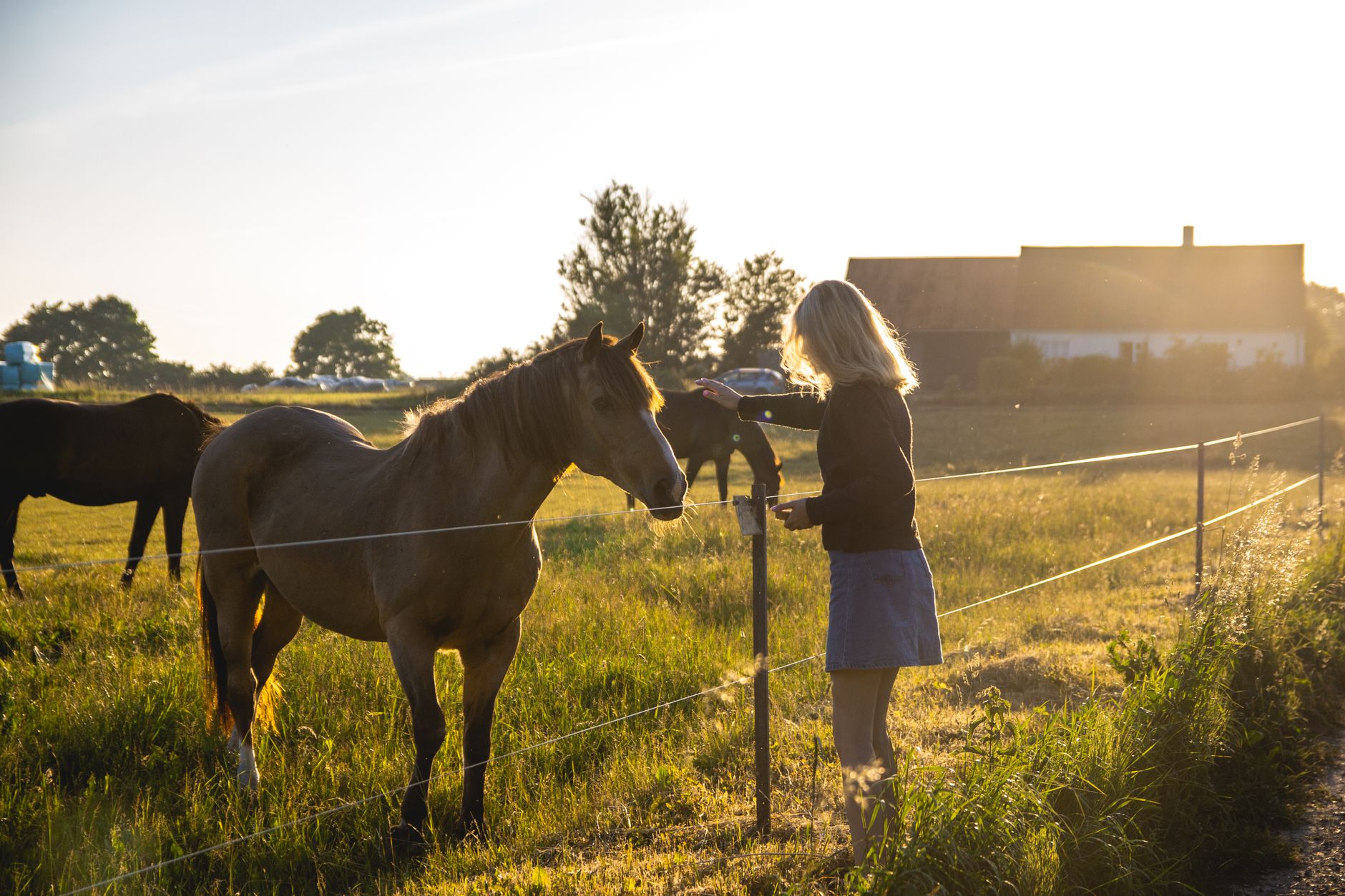
The Farm Clause My Mother Hid
Ferrell sat at my mother’s kitchen table on a Thursday afternoon in March, in the same chair he had eaten breakfast in for twenty-one years, and he signed a deed handing our farm over to his son, Cletis. I was forty minutes away at the time, on my feet on the med-surg floor at the hospital in town, covering a shift that was not even mine, because a coworker’s babysitter had canceled and I said yes the way I always say yes. I have had to piece together most of what happened in that kitchen from what Ferrell told me afterward, in two different versions, before the true one finally matched what I found written down in ink at the Crawford County courthouse three days later. But I know exactly what the room looked like, because it is the room I grew up eating supper in, and I know exactly what was on that table, because Cletis left the folder sitting open on it when he finally left, like a man who had already stopped caring whether anyone saw what was inside.
There was a pen from the bank in Pittsburg that Ferrell has used to sign every check for two decades, a stack of papers with yellow arrows stuck to the signature lines, and a manila folder with a Wichita return address on it. There was coffee going cold in Ferrell’s mug, the one with the faded wheat stalk on it that my mother bought him the Christmas before she got sick. And there was my stepfather, seventy-four years old, a farmer his whole life, signing away the one thing my mother spent the last eighteen months of her life trying to make sure nobody could ever take from me.
He did not know, when he set that pen down, that he had not actually given Cletis anything at all.
That Thursday I was pulling a double I had not planned on. A coworker on the med-surg floor called me at six in the morning, her voice cracking, her sitter having backed out an hour before her shift, and I told her to go handle it and I would cover, the way I have covered for people my whole life without much thought about what it costs me. I spent fourteen hours on my feet that day, turning patients, charting vitals, holding an old man’s hand while he waited on test results he was frightened of, and every single one of those fourteen hours, forty minutes down the road, my whole inheritance was changing hands in a kitchen I had eaten breakfast in a thousand times, without me knowing a thing about it until I walked through my own front door well past eleven that night, still in scrubs that smelled like hand sanitizer, my feet aching in a way that made the news Ferrell had for me feel, at first, like something happening to somebody else.
The ground my grandfather made
To understand what my mother did, you have to understand the ground itself, because it is not ordinary Kansas farm ground and it never has been.
My grandfather bought a hundred and eighty acres west of Pittsburg in 1947, cheap, because it was played-out strip-mine land, chewed up by coal shovels in long parallel ridges and pits that nobody wanted to farm and nobody thought ever could be farmed again. Crawford County was coal country before it was anything else, the Little Balkans they used to call it, full of Italian and Croatian and Slovenian families who came to work the mines, and when the coal companies pulled out they left the land looking like something had clawed it. My grandfather hauled dirt for six years, load by load, behind a tractor that broke down more than it ran, filling in the worst of the spoil ridges, terracing what he couldn’t fill, and seeding the rest to bluestem and fescue a handful at a time. He left two of the deepest pits alone and let them fill with groundwater, and those two ponds are still out there today, full of bass and crappie, cattails growing up around the edges same as they have my whole life. He built the farmhouse in 1952 with his own hands and a neighbor’s help, plain and square and facing east so the morning sun hits the kitchen window first, and he raised my mother, Merabelle, in it, his only child.
By the time my mother inherited that farm outright, there was not a person left alive in Crawford County who remembered it as spoiled ground. It was just the home place, cattle and hay and two good ponds, and it had taken one stubborn man’s whole life to make it that way out of something everybody else had already given up on.
My mother married my father young, and I do not remember much about him, because he died in an accident on a neighboring farm when I was six, the kind of accident that happens fast and quiet and leaves a six-year-old with a handful of memories she is never sure are real or borrowed from photographs. My mother raised me alone on that farm for nine years, running cattle herself, doing the books herself, and she was thirty-eight when she married Ferrell.
Ferrell, and Cletis
I want to be fair to Ferrell, because most of what happened was not, in the end, entirely his doing, and I think that matters.
He was a decent man in most of the ways that showed. He was a widower himself when he married my mother, steady, quiet, good with cattle, good to her. He never raised his voice to me in twenty-one years. He came to every one of my school events he could get to, and he taught me to back a stock trailer before I could legally drive, standing in the yard hollering directions until I got it right. I called him Ferrell, never anything else, because that felt honest to both of us, but I never once doubted, growing up, that he considered me his.
His son Cletis was a different matter, and had been from the very first Thanksgiving. Cletis was three years older than me, and he came to our house maybe four times a year growing up, holidays mostly, driven over by his own mother’s family from Joplin, thirty minutes across the state line. He never called it my farm or my house. He called it “Dad’s setup,” even as a teenager, in a voice that made clear he considered himself the rightful heir to whatever “setup” meant and considered me, and my dead father’s blood in that ground, an inconvenience that had somehow gotten there first. He’d walk the fence line on visits like he was pricing it. He once told me, I was maybe seventeen, that it was a shame all that acreage was going to end up with “somebody who wasn’t even really family.” I told my mother. She believed me completely, and I think that was the exact moment, though neither of us knew it yet, that she started planning for a day like the one that came in March.
Cletis moved to Joplin as an adult, ran a small construction outfit doing decks and room additions, married and divorced twice, and visited less as the years went by, until my mother got sick.
What my mother knew
My mother was diagnosed with ovarian cancer when I was thirty. She fought it for a year and eight months, through two rounds of chemo and one surgery that bought her some good months and one bad turn in a Joplin hospital that told us, in the flat particular language doctors use when they have run out of options, that we were down to time now, not treatment.
Cletis visited twice during those eighteen months. Both times he brought up, within the first hour, whether she and Ferrell had “gotten their affairs squared away,” in a tone he must have thought sounded like concern. My mother, who was dying and had exactly zero patience left for pretending, told him plainly the second time that their affairs were none of his business yet and would stay that way. He did not come back a third time before she died.
But she had already started, quietly, months before that visit, working with a lawyer downtown, a woman my mother trusted because she’d handled the estate when my grandfather passed. My mother told me what she’d done on one of the last good afternoons she had, in the front bedroom of that farmhouse with the window cracked so she could smell the cut hay, her hands so thin by then that her wedding ring had to be taped to stay on.
“I love Ferrell,” she told me. “He is going to outlive me, most likely, and I want him to stay right here on this ground until the day he dies, farming it if his back holds out, sitting on that porch if it doesn’t. That is his home and I am not taking it from him.” She paused a long time there, catching her breath the way she had to by then. “But it is not his to give away. It was never going to be his to give away, no matter what that boy talks him into, and I made sure of it while I still had the strength to sit up in a lawyer’s office and sign my own name.”
She told me the deed had already been redone, recorded at the courthouse in Girard, the county seat, a year before that conversation. Ferrell had a life estate, meaning the right to live on that farm and farm it and keep every dime it earned for as long as he drew breath. But the remainder, the actual ownership underneath his life estate, the thing that becomes whole and complete the moment his life estate ends, had already been deeded to me, in fee simple, recorded in black ink in a book at the county courthouse, years before either of us ever imagined Cletis sitting at that kitchen table with a folder from Wichita.
“He can live there,” she told me. “He can never sell it. He never owned enough of it to sell, and one day, I suspect sooner than either of us wants, that clause is going to matter more than anything else I leave you.”
She reached over then and took my hand in both of hers, thin as they were by that point, her wedding ring loose enough to spin. Through the cracked window I could hear the hay baler running two fields over, a neighbor finishing up before weather moved in, and she smiled at the sound of it like it was the most ordinary thing in the world, which by then it was, and that was exactly what she wanted for me, the ordinary sound of a farm still running long after she wasn’t there to hear it herself. “I am not doing this because I think Ferrell will turn on you,” she said. “I am doing this because I have watched Cletis size up this fence line since he was fourteen years old, and a father who loses his wife gets lonely in ways that make him easy to talk to, and I would rather build a wall now, while I still can, than trust anybody’s good sense later, mine included.”
I did not fully understand, at twenty-nine years old with a healthy mother-figure of a stepfather in front of me and no reason yet to imagine anyone trying to take the farm, why she needed to explain it in such careful detail. I understand now. She was not explaining it for that afternoon. She was explaining it for the Thursday in March, four years later, that she would never live to see.
The four years after
My mother died in the fall, in that same front bedroom, with me on one side of the bed and Ferrell on the other, and Cletis three hundred miles away and not answering his phone until the funeral home called the second time.
I moved into a little rental house in Pittsburg proper, fifteen minutes from the farm, close enough to come out most evenings and every weekend. Ferrell stayed on in the farmhouse alone, and I want to say clearly that for the first three years, it worked the way my mother had hoped it would. I helped him with calving in the spring and haying in the summer. I paid the property taxes twice when his check ran short after a bad cattle year, never mentioning it, never wanting him to feel like I was keeping score. I kept both ponds stocked the way my grandfather always had, restrung fence along the east line after an ice storm took down a quarter mile of it, and every single week, whether I’d worked a double the day before or not, I drove out to that kitchen and ate supper across the table from the man my mother chose, because he was still, in every way that counted to me, my family.
Cletis called Ferrell more often in the last year than he had in the previous twenty, and it took me too long to understand why. His construction business in Joplin had gone under the winter before, two lawsuits from unfinished decks and a bank note he could not carry, and a man in that position starts looking around for ground he can stand on, and Ferrell had a hundred and eighty acres of it.
The lies that made room
I did not know, until it was already nearly too late, what Cletis had been telling his father for the better part of a year.
He told Ferrell I had said, more than once, that I found the farm to be a burden, that a woman working full shifts at the hospital didn’t have time to be running out to a cattle operation, that I would probably want to sell the second Ferrell was gone anyway, so wouldn’t it be kinder, more practical, better for everyone, to get ahead of that and let Cletis “manage things” now, while Ferrell could still enjoy the peace of mind. He told him I rarely called, which was a lie built entirely out of the fact that I drove out instead, in person, every week, and Cletis was never there to see it.
Ferrell told me all of this himself, after, sitting at that same kitchen table with his hands wrapped around a coffee mug he wasn’t drinking from, his voice smaller than I had ever heard it. “He said you’d told him you didn’t want the headache of it,” Ferrell said. “I should have called you and asked. I know that now. I just, I didn’t want to be the kind of old man who can’t trust his own children to be telling him the truth.”
I believe that Ferrell believed every word of it, at least enough to make room for what came next. I do not believe Cletis believed a word of it. I believe Cletis needed a story that let him sit at that table with a clean conscience, and my supposed indifference was the cheapest, easiest one available to him.
The Thursday
Here is what I have pieced together, from Ferrell’s own account and from what I later confirmed at the courthouse and through a title company that called me three days after the fact, confused about why their file wouldn’t clear.
Cletis had spent two months, quietly, working a deal with a farmland investment fund out of Wichita, the kind that has been buying up small Crawford County operations two and three at a time the last several years, folding them into larger row-crop and pasture leases run by hired managers instead of families. He told them he was the owner’s son handling a straightforward transfer ahead of an estate plan, and he told them the deed would be clean and clear within the week. The number they offered was low, well under what that ground was worth even before you counted the two stocked ponds and the good bluestem, but it was fast, and fast was the only thing Cletis needed by then, because a note on his own house in Joplin was two payments behind.
He drove over on a Thursday I was working, having called ahead the night before to make sure I had a shift, something I did not think twice about at the time because he had always known my schedule from my mother’s old calendar hanging in that kitchen. He brought a folder with a warranty deed inside it, already typed up by a lawyer he’d hired in Joplin, transferring the farm from Ferrell into Cletis’s name outright. He told his father it was simple paperwork, a formality to let Cletis “help manage things going forward,” the same soft language he’d been laying down for a year. He did not mention the investment fund contract sitting in his truck, already signed on Cletis’s end, waiting only on clear title to close within thirty days.
Ferrell signed it. He told me later he read maybe half of it, trusted his son’s word for the rest, and could not, when I asked him straight out, tell me what the word “warranty” in “warranty deed” was even supposed to guarantee.
I got home a little after eleven that night, still in my scrubs, so tired I did not clock right away that Ferrell was sitting up waiting for me at the kitchen table instead of long asleep. He told me plainly, the way he tells me everything, no dressing it up. “Cletis came by today,” he said. “We got some paperwork squared away. I signed the farm over to him. He’s going to take it from here.”
I want to tell you I understood, in that moment, everything my mother had built into that deed four years earlier to protect exactly this night. I did not. I sat down across from the man who raised me for twenty-one years and felt the floor of my own life go out from under me, because as far as I knew that night, sitting in that kitchen at midnight, my mother’s farm, my grandfather’s reclaimed ground, the ponds, the fence lines I had restrung myself, all of it, was simply gone.
What I remembered at 2 a.m.
I did not sleep that night. I sat on the porch steps of my little rental house until close to two in the morning, and somewhere in the middle of turning it all over, I heard my mother’s voice again, thin and certain in that front bedroom four years earlier. “He can never sell it. He never owned enough of it to sell.” I had filed that conversation away the way you file away a lot of things a dying parent tells you, half-listened to at the time because you cannot bear to fully hear it, and it came back to me on those porch steps whole and exact, every word of it.
I did not know the legal language for what she’d described. I only knew she had told me, with absolute certainty, in a voice she never once used carelessly, that whatever happened at that kitchen table someday, it would not be able to touch what she had already made mine.
Girard
I called in sick to my own shift the next morning, the first time in six years I had done that, and I drove the twenty-five minutes to Girard, the Crawford County seat, to the Register of Deeds office in the courthouse, a building I had walked past a hundred times as a kid and never once had a reason to walk into.
The woman behind the counter pulled the file without much conversation, the way people do work they’ve done ten thousand times, and set two documents in front of me. The first was the deed Ferrell had signed the day before, filed for recording that very afternoon by a title company acting on Cletis’s behalf, purporting to transfer the farm in fee simple from Ferrell to Cletis, outright and complete.
The second was the deed my mother had recorded four years earlier, the one she’d described to me from her sickbed and I had only half understood. I read the actual language of it standing at that counter, my hands not entirely steady. It reserved to Ferrell a life estate in the premises, the full right to possess, occupy, and farm the property, and to keep every dollar of income it produced, for the whole of his natural life. And it granted the remainder, in fee simple absolute, immediately, irrevocably, and without any further act required by anyone, to me. Not upon Ferrell’s death. Not contingent on anything. Immediately, four years earlier, the moment my mother’s own signature dried on that page.
Which meant Ferrell had never, not for one single day since my mother recorded that deed, owned the farm outright. He owned a life estate, a real thing, valuable, his to keep and live inside until he died, but not a thing that included the power to convey the underlying land to anyone. He could not give Cletis what he did not have. The deed he’d signed at that kitchen table, in the plainest legal sense the clerk explained to me right there at the counter, conveyed to Cletis exactly what Ferrell actually owned and nothing more: a life estate, ending automatically the day Ferrell dies, with the full ownership underneath it belonging, and having belonged for four years already, to me.
I stood in that courthouse hallway and read it three times before I trusted myself to believe it, and then I asked the clerk for a certified copy of both documents, my hands finally steady enough to hold the pen she handed me to sign the request form.
What the fund found out
I called the title company myself that same afternoon, the number printed on their letterhead in the folder Cletis had left open on my mother’s kitchen table, and I told the closing coordinator on the other end of the line, plainly, that there was a recorded remainder interest in my name that predated the deed they were trying to close on, and that whatever her clients believed they were purchasing, it was, at absolute most, a life estate interest set to expire the moment a seventy-four-year-old man passed away, which is not the kind of asset a farmland investment fund pays cash money for in thirty days.
She went quiet for a moment, the particular quiet of someone doing fast math on a deal that has just stopped making sense, and told me she’d need to speak with her underwriting department and would call Cletis directly. I do not know exactly what was said in that call, but I know the fund’s contract with Cletis, contingent from the start on his ability to deliver clear, marketable title, could not close on a life estate that would revert to nothing they wanted, and I know that within four days the whole arrangement had collapsed under its own weight, the same way it should have collapsed the moment anyone had bothered to actually read what my mother recorded four years earlier.
The kitchen table, the second time
Cletis came back out to the farm that Sunday, and I was there when he arrived, having asked Ferrell the night before to have him come at a time I could be present, which Ferrell, chastened and quieter than I had seen him in years, arranged without argument.
I laid the certified copy of my mother’s deed on that same kitchen table, in the same spot the folder from Wichita had sat four days earlier, and I watched Cletis read it standing up, because he would not sit down at that table with me across from him.
“This doesn’t make sense,” he said, when he finished, and I watched him try, for a moment, to talk his way around it the way he’d talked his way through everything else that year. “Dad’s owned this place for twenty years. He can sign whatever he wants.”
“He’s lived here for twenty-one years,” I said. “Your father has owned exactly what that deed says he owns since the day my mother recorded it, which is the right to stay here and farm it until he dies. Nothing more. She made sure of that four years ago, and nobody, including him, could have signed that right away even if they’d wanted to, because it was never in the paper to begin with.”
He looked at his father then, and I watched something pass across Ferrell’s face that I will not forget, a kind of grief that had nothing to do with land at all. “You knew,” Cletis said to him, not really a question.
“I did not know the particulars,” Ferrell said, quiet, steady, more honest with his son in that moment than I think Cletis had been with him in a year. “I knew your stepmother trusted Nella with this place a long time ago. I never asked her exactly how. I should have.”
Cletis did not stay long after that. He said some things about family that did not sound, coming out of his mouth that afternoon, like they meant what the word is supposed to mean, and he left in the same rented car he’d driven the Thursday before, and as far as I know he has not been back to that farm since.
What Ferrell and I built after
Ferrell and I had a longer conversation that same evening than we had had in years, maybe longer than we had ever had, both of us sitting at that kitchen table with the porch light on and the cattle settled for the night outside the window. He told me he was ashamed, plainly, without asking me to talk him out of the shame, which I respected more than I expected to. He told me he had let a year of quiet flattery and a story about my supposed indifference do the work that one honest phone call to me would have undone in five minutes.
I told him I was not angry at him the way I was angry at Cletis, because I believe there is a real difference between a man who is lied to by his own son and a man who sets out to lie, and Ferrell had spent twenty-one years earning the benefit of that difference from me. I told him he was not going anywhere, that the life estate my mother built for him was real and mine to honor exactly as she wrote it, whether or not any paper ever forced me to.
We drove into Girard together the following week and sat down with the same lawyer my mother had used, the woman who had drafted the original deed and remembered every detail of it, and we put a second document in place, one Ferrell asked for himself this time: a durable power of attorney naming me, so that any decision of real consequence about that farm going forward would require both of us at the same table, together, the way it always should have. Ferrell signed that one slowly, reading every line of it out loud before he put his name down, and I think that was its own kind of apology, the kind that does not need to be spoken to be understood.
What is still standing
The farm is still ours in every way that matters, Ferrell’s to live on and farm for as long as his back and his years allow him, mine underneath it the way my mother made certain it would be four years before a Thursday in March ever came. The two ponds my grandfather dug out of played-out strip pits are still full of bass, and I took my nephew, my cousin’s boy, out there this spring with a cane pole the same way Ferrell once took me. The fence line holds. The bluestem came in thick this year after a wet spring, the best hay crop we’ve had in three seasons, and Ferrell stood at the edge of that field in June with his hat pushed back, watching it move in the wind, and told me it was the finest stand he’d seen since before my mother got sick.
I think about her often out there, especially in that front bedroom with the window that still catches the smell of cut hay in July. She never once told me she didn’t trust Ferrell. She trusted him completely, with her whole heart, for twenty-one years, right up until the day she died. What she did not trust, and what she was right not to trust, was a set of circumstances neither of us could have named yet: a grieving, aging, love-starved man, a son who had spent his whole life pricing a fence line instead of walking it for its own sake, and a folder from Wichita showing up on exactly the kind of afternoon when a person is most likely to sign something he has not fully read.
She could not stop that afternoon from coming. She made sure, four years ahead of it, that it would not be able to take anything away when it did.
The ground my grandfather hauled dirt onto for six years, that my mother inherited and loved and protected with one clause most people would never think to write into a deed, is still exactly what it has always been: a hundred and eighty acres nobody else wanted once, made whole by people who did the slow, unglamorous work of keeping it, generation after generation, one signature at a time.
I still work the same shifts at the same hospital, and I still drive out to that farmhouse most evenings after, same as I did before any of this happened, except now Ferrell and I talk more openly than we ever did while my mother was alive to do the talking for both of us. He asks my opinion on things he used to just decide alone, whether to reseed the north forty or lease it out for another year, whether a heifer looks like she’s carrying trouble, and I have come to understand that the durable power of attorney we signed together in Girard was never really about legal protection at all, not for him. It was Ferrell’s way of telling me, in the only language a quiet man like him really trusts, that he intends to spend whatever years he has left making sure nobody ever again has to find out the hard way what my mother already knew the whole time.
Some evenings I walk down to the ponds by myself before dark, past the fence I restrung after the ice storm, and I think about how much of that ground my grandfather made out of nothing, how much of it my mother spent her last strength protecting, and how close it came, on one ordinary Thursday while I was holding a stranger’s hand on a hospital floor, to slipping away from all of us over a folder somebody else had already signed his name to in Wichita. It did not slip away. It is still here, still ours, still exactly the shape two people who loved this place fiercely enough built it to be, long after either of them stopped being able to stand in the yard and say so themselves.
This story is a dramatization. Names, characters, and details are invented, and any resemblance to real people or events is coincidental.