The Boy Who Danced In Aisle Twelve
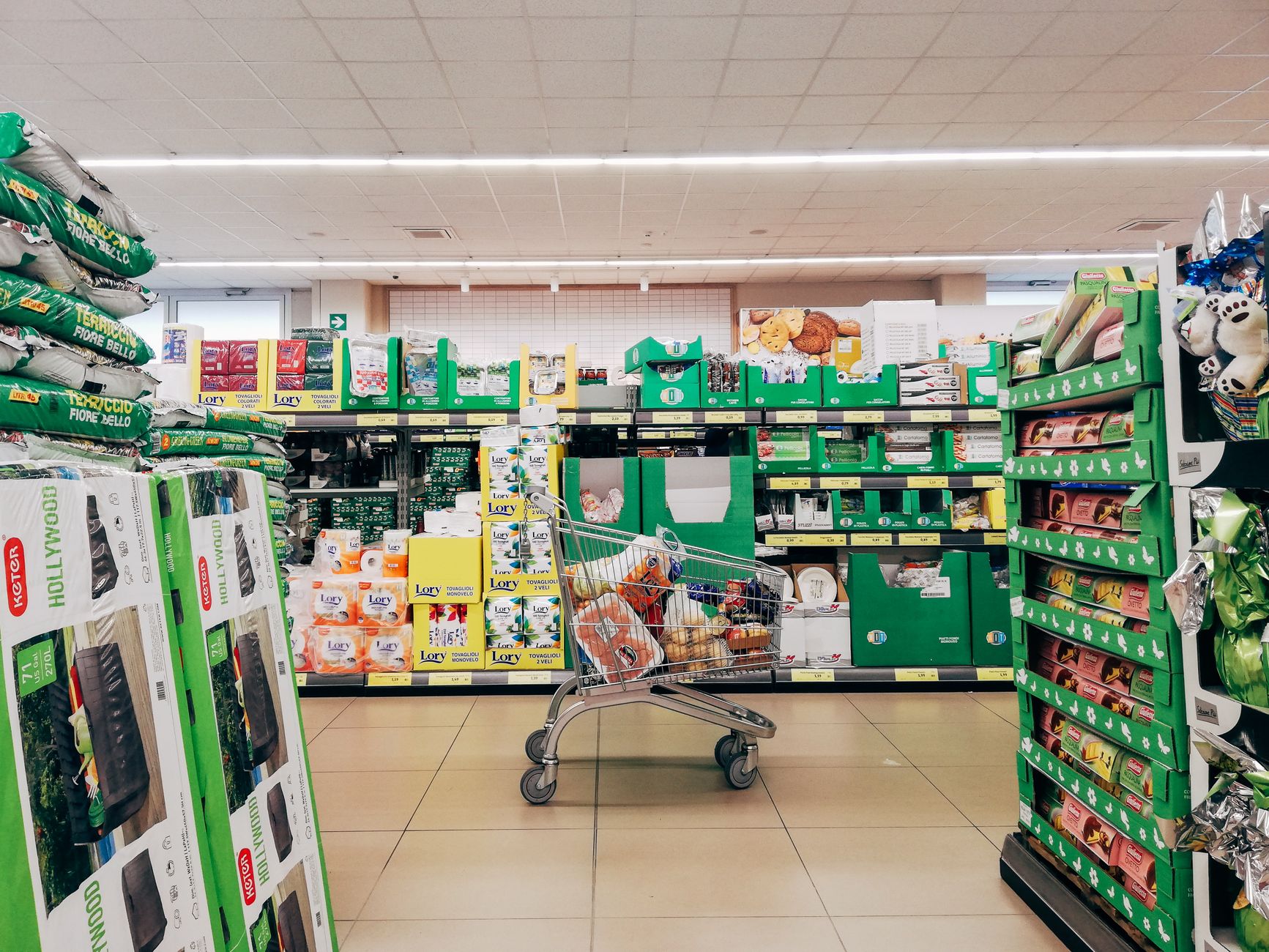
The music came on over the speakers the way it always did on a Tuesday morning at Petersen’s Market, tinny and a little too cheerful for nine fifteen, the kind of song built for a car commercial. I was halfway down the cereal aisle with my cart and my grocery list and my grandson Micah holding the edge of my sleeve the way he had held it every single day for almost a year, and I was not expecting anything. I want you to understand that. I had stopped expecting things a long time before that morning.
Then his hand let go of my sleeve.
I turned to find him, the way you turn fast when a small hand goes missing, my heart already up in my throat, and he was not gone. He was standing in the middle of aisle twelve in his blue hoodie that was two sizes too big, his rain boots planted on the tile, and his whole little body was moving. Spinning. His arms out. A grin cracking open on a face I had almost forgotten could do that.
I did not think. I got my phone out of my coat pocket with hands that would not stop shaking and I started filming, because some part of me already understood that if I did not have proof, some later, more tired version of myself would lie awake and wonder if I had made it up.
But to tell you why I was shaking, why an ordinary boy dancing to ordinary supermarket music nearly put me on the floor of a grocery store, I have to take you back. Almost a year back. To a boy who did not make a sound.
I am Delia Rasmussen. I am sixty four years old, and until fourteen months ago I lived alone in a three bedroom house at the edge of Colby Falls, a town of about two thousand people if you count the folks out on the county roads, the kind of place where the feed store still runs a tab for people it trusts and the Lutheran church potluck is the real newspaper of record. My husband Walt passed six years ago, heart trouble, quick and merciful as those things go, and after that I did what a lot of widows in small towns do. I got small. I kept the porch light on and the garden weeded and I went to church on Sundays and I told myself that raising my daughter Dana had been the great work of my life and that the great work was finished.
I was wrong about that, but I did not know it yet.
Dana was my only child, and I loved her the plain, stubborn way you love your own blood even when you cannot always defend the choices she makes. She had a hard road as a young woman, some of it circumstance and some of it her own doing, and by the time she was twenty six she was living two hours from me in a rented house with a man named Curtis, and she had a little boy, my grandson Micah.
I want to be careful here, because Dana is not a villain in this story, and I will not make her into one for the sake of a tidier telling. She loved that boy. I know that the way I know my own name. But she was young and she was scared and she was in a house where the air stayed tight all the time, where a raised voice was a weather system you learned to read before you learned to read anything else, and somewhere in that house, my grandson learned a lesson no three year old should ever have to learn. He learned that being noticed was dangerous. That a crying baby got picked up rough, or not at all. That the safest thing a small person could do was disappear in plain sight.
I do not know everything that happened in that house, and what I do know I am not going to spread across a page like gossip. I will tell you only what matters for this story: it got bad enough, and it got bad enough fast enough, that a caseworker named Renata Ibarra called me on a Thursday afternoon in April and asked if I could take my grandson, temporarily, while things got sorted out. Dana was not arrested. Dana was not the one who put a mark on that boy. But Dana was not able, in that season of her life, to keep him safe, and she knew it, and when Renata asked her whether she would rather Micah go to me or into the system with strangers, my daughter, to her everlasting credit, said my mother, take him to my mother, before the caseworker even finished the sentence.
That is the grace I hold onto when people ask me, carefully, delicately, what happened to Dana. She handed her son to safety with her own mouth. Whatever else is true, that is true too.
I drove two hours that same evening in the dark, and Renata met me in a parking lot with a car seat and a diaper bag and a boy I had only seen twice before, at Christmas and once in the summer, because Curtis did not care for family visiting and Dana had learned not to push it. Micah was three years old, all curls and enormous solemn eyes, and when Renata lifted him out of her car and set him on his feet in front of me, he did not cry. He did not reach for me. He did not reach for anyone. He stood very still with his hands folded in front of him like a little old man at a funeral, and he looked at the ground, and he waited to see what would happen to him.
That was the first time I understood what I was actually bringing home.
I had raised one child. I thought I knew what small boys needed. I did not know the first thing about a small boy who had already learned, before he could tie his own shoes, that the safest sound in the world was no sound at all.
The silence lasted eleven months.
I do not say that number lightly. I counted it the way you count anything that frightens you, quietly, in the back of your mind, marking the calendar without meaning to. Eleven months in which my grandson did not speak a single word to me. Not “no.” Not “more.” Not my name, which I do not think he ever learned to say out loud in all that time, though I know now he knew it.
He did not cry either, and that was the part that undid me more than the silence. A three year old who does not cry when he scrapes his knee on the porch steps is not a calm child. He is a child who has learned that crying does not bring anyone running, or worse, that it brings the wrong kind of running. Micah fell off the bottom step my second week with him and split his lip on the concrete, and he sat there in the dirt with blood on his chin and did not make a sound, just looked up at me with those enormous eyes to see what I would do. I scooped him up so fast I nearly threw my back out, and I held him and I talked to him in every soft voice I had, and he went stiff as a fence post in my arms, waiting, the way you wait for the other shoe.
He pointed at food instead of asking for it. He would stand in front of the refrigerator and point, small finger extended, silent, and if I did not understand fast enough what he wanted, he did not repeat the gesture or get frustrated, he simply lowered his hand and walked away, as if he had already learned that asking twice was a mistake you did not make. It took me weeks to realize that the not asking twice was the loudest thing about him. A child who has been taught that wanting things out loud costs too much will teach himself to want things very, very quietly.
He flinched at dropped pans. Not jumped, the way any child might. Flinched, and folded, curling his shoulders up around his ears and going small in a way that made my chest hurt to watch, and then he would find somewhere to be, under the kitchen table, behind the recliner, in the narrow gap between the dresser and the wall in his room, and he would stay there until the house was quiet again, sometimes twenty minutes, sometimes an hour, and I learned not to go pull him out. I learned to sit down on the floor near wherever he was hiding, not looking at him, not talking to him, just being a quiet shape in the room, until eventually he would come out on his own and stand near my leg, which was, in those early months, the closest thing to affection he had in him to give.
I want to tell you honestly what those eleven months cost me, because I think people hear a story like this and picture something soft, an old woman and a sweet silent boy, a Norman Rockwell painting. It was not that. It was the hardest stretch of my life, and I buried a husband, so that is saying something.
I was sixty three years old with a bad hip and a widow’s fixed income, and I was suddenly raising a traumatized toddler alone, and there were nights I sat on the edge of my bathtub after he was finally asleep and cried until I made myself sick, because I did not know if I was doing any of it right. There is no manual for a silent child. The library in Colby Falls had exactly one book on selective mutism and it was fourteen years old and mostly useless. I called Renata so many times that I think she started to dread my number on her phone, not because she minded, she was kind about it every time, but because I could hear in her voice that she did not have better answers than I did. Nobody had better answers than I did. I was the answer. That is a terrifying thing to be for a child who has already learned that the adults in his life cannot be trusted to keep him safe.
The town noticed. Of course the town noticed. Colby Falls is the kind of place where everybody’s business eventually becomes everybody’s business, and by June there were women at church who meant well and asked me, in the gentlest possible tone, whether I had thought about whether I was really up to this at my age, whether it might be kinder to the boy to let the state find him a younger family, a family with two parents, a family with more to give than an old woman and a house with one working heater vent. I do not blame them. I think if I had been on the outside looking in, I might have wondered the same thing. But hearing it, even gently, even from women who brought casseroles and meant only love by it, put a doubt in me that I could not fully shake for months. What if they were right. What if I was too old, too tired, too alone to be enough for this particular boy.
There was a Wednesday in August when my hip was so bad I could not get up off the kitchen floor without holding the counter, and I sat there for a minute in genuine pain, looking at a silent three year old watching me from the doorway with those solemn eyes, and I thought, plainly, this is more than I have left to give. I did not say it out loud. I have never said it out loud to another living soul until this page. But I thought it, and then I thought about what would happen to that boy if I let the thought win, some strange house, some stranger’s rules, another set of unfamiliar footsteps to learn to read, and I got myself up off that floor one hand at a time and made supper anyway. Some days the whole of my mothering, my grandmothering, whatever the word is for what I was doing, came down to nothing braver than getting up off a floor because a child needed to eat.
I kept a journal that spring, mostly so I would have somewhere to put the fear that I could not put on Micah. I wrote the same sentence more nights than I care to admit. I do not know if I am enough. I wrote it in April. I wrote it in June. I wrote it, God help me, in September, five months in, the night after he hid from me for the better part of an hour because I had dropped a cast iron skillet on the stovetop by accident and the sound of it had sent him under the dresser like a shot.
But I want to tell you about Tuesdays, because Tuesdays were where the light got in, long before I could see it landing.
Every Tuesday morning I took Micah to Petersen’s Market for the week’s groceries, partly because I needed the groceries and partly because I had read, somewhere in my desperate midnight research, that routine and gentle repeated exposure to the world were good for children who had learned to fear it. So every Tuesday, rain or shine, we walked the same aisles in roughly the same order, and every Tuesday, in the cereal aisle, a young man named Jonah Sorenson was restocking shelves off a rolling cart, because Petersen’s runs its cereal delivery on Tuesdays and Jonah had worked that shift for longer than I had been shopping there.
Jonah could not have been more than twenty five. Sandy hair, a green Petersen’s polo with his name stitched over the pocket, the kind of easy, unhurried manner that some young men have that makes you trust them without quite knowing why. And every single Tuesday, for close to a year, when our cart came down aisle twelve, Jonah would look up from his boxes, and he would say, “Hey, buddy,” to my silent grandson.
He never got a word back. Not once, for eleven months. Micah would not even look at him most weeks, would press himself against my leg or study his own rain boots with tremendous concentration. And Jonah never seemed to mind. He never pushed. He never crouched down and tried to coax a response the way some well meaning strangers did, which only ever made Micah worse. He just said it, plain and warm, “Hey, buddy,” the same two words, the same easy voice, and then he went back to his boxes and let the boy be.
I do not think Jonah Sorenson knew what he was doing, in the sense of having a theory about it. I think he was just a decent young man who had decided, on his own, without anyone asking him to, that a scared little boy deserved to be greeted like he mattered, every single week, whether or not he ever greeted you back. I used to watch him do it and think that if I ever wrote down a list of the people who saved my grandson, this stranger in a grocery store polo would be near the top of it, and he would never even know he was on the list.
Somewhere around month eight, things began to change, so slowly I almost missed it happening.
He started reaching for my hand instead of just my sleeve, which does not sound like much until you have watched a child hold onto fabric for months because fabric cannot squeeze back and a hand can. He let me hum to him at bedtime without going rigid. In October he pointed at the cereal boxes in aisle twelve, the honey ones with the bee on the front, and when I picked them up he did something he had never done before. He nodded. A small, definite nod, his chin dropping and lifting, a whole sentence packed into an inch of movement, and I stood there in the cereal aisle and had to blink hard to keep from making a scene.
By December he would sit next to me on the couch instead of across the room. By February he had started making sounds again, not words, but sounds, hums and little grunts of effort when he was concentrating on stacking blocks, the ordinary background noise of a small child that I had gone eleven months without and had stopped believing I would ever get back. Renata told me, on one of our calls, that this was exactly the shape recovery was supposed to take in a child like Micah. Not a door swinging open. A door easing off a stuck hinge, a quarter inch at a time, for as long as it takes.
I remember the night in March when he first laughed in his sleep, a small startled bark of a sound from his room down the hall that had me up and standing in his doorway with my heart pounding before I understood what I was hearing. He was fast asleep, curled around the stuffed rabbit Renata had handed me in that parking lot the first night, and his mouth was curved into something that was almost, not quite, but almost a smile. I stood in that doorway a long time, in my nightgown, in the cold hallway, watching a boy laugh at a dream I would never know the contents of, and I decided that was the finest thing I had ever seen a person do in their sleep. I did not tell anyone about it for weeks. Some things you keep folded up small and carry around in your pocket for a while before you can bear to say them out loud to another person, in case saying them makes them less true.
Which brings me back to that Tuesday in May.
We were in the cereal aisle, same as always, Jonah off to the side with his rolling cart of boxes, and the store’s overhead speakers clicked into that tinny, upbeat song they play on a loop, and I was reading the sugar content on a box of flakes when Micah’s hand slipped out of mine.
I told you already what I saw when I turned around. My grandson, eleven months silent, spinning in the middle of aisle twelve in his oversized blue hoodie and his little rain boots, his jeans rolled at the ankle the way I always rolled them because I could never find his size, his arms thrown wide, bouncing on his toes, his shoulders doing a small unselfconscious wiggle that belonged to a boy who had, for one unguarded minute, completely forgotten to be careful.
Two women pushed a cart past us on their way to the dairy case and smiled the easy smile strangers give a dancing toddler, and kept walking, the way you do, the way I would have done a year earlier without a second thought, no idea what they were witnessing. I got my phone up and I filmed, my thumb slipping on the screen because my hands would not hold still, tears already coming down my face in the cereal aisle of a grocery store on a Tuesday morning like it was the most ordinary thing in the world to fall apart in aisle twelve.
Then the intercom crackled on, the way it does forty times a day in any grocery store in America, and a bored voice somewhere in the back of the building said, “Clean up in aisle twelve.”
My grandson stopped dancing.
He looked straight up at the ceiling, at the speaker he could not even see, his whole face open in a huge, gap toothed grin, and he lifted his hand and pointed, one small finger, directly at the center of his own chest.
I understood it before I even had words for it, and it broke something open in me right there on the linoleum. A boy who had spent his entire short life learning that being noticed was the most dangerous thing that could happen to him had just heard his name called by the world, as far as he was concerned, and his first instinct, his very first instinct, was not to hide. It was to claim it. Me. That’s me. I am the one you are talking about.
Then he laughed, a real laugh, loud and unguarded and completely without fear of who might hear it, and he danced harder.
I looked up from my phone just in time to see Jonah Sorenson set his box down on the shelf, mid stock, and start to clap. Slow, delighted clapping, a grin splitting his own face, the two of them somehow in on the same joke after eleven months of a one sided hello that Jonah had never once stopped offering.
Micah finished with one proud, wobbling spin, and then he threw both arms straight up over his head, the universal signal of a small child who has just done something he is enormously proud of, and he laughed again, and the sound of it, after eleven months of silence, is a sound I will be able to call up in perfect detail on the day I die.
I want to tell you what happened after, because I think the after is the part that matters most, even though it is the part I almost do not get to tell you, since the world only ever saw the dancing.
I did not post that video that same day. I sat with it for almost a week, watching it over and over on my kitchen table late at night, partly because I could not stop and partly because I was trying to decide whether it belonged to me to share or whether it belonged only to us. In the end I called Dana.
I had not stopped calling Dana. I want to be clear about that too, because it would be easy to tell this story as though my daughter vanished from it, and she did not. She had been in a program two hours from Colby Falls since July, court ordered at first and then, by her own account, something she kept going to on her own even after the court stopped requiring it. We talked most Sundays. She asked about Micah every single time, and every single time, for a long time, I had to tell her there was not much new to report, that he was still quiet, that we were still waiting.
So when I called her on a Wednesday night instead of a Sunday, she picked up scared, the way you do when the pattern breaks, certain something was wrong.
“Nothing’s wrong,” I told her. “Something’s right. I need you to watch something.”
I sent her the video and stayed on the line while she watched it, and I listened to my daughter, twenty eight years old and eight months into the hardest work of her life, come apart on the other end of the phone in a way I had not heard since she was a little girl herself. She watched it four times before she could speak. When she finally did, her voice was wrecked and she said the only thing that made any sense to say. “That’s my boy. That’s really my boy in there.”
I asked her if I could post it. Not for attention, I told her, though I will admit some part of me also wanted the town, the well meaning women with their careful questions, to see what an old woman and a silent boy had built together in a year. Mostly I wanted it because I thought other grandparents, other frightened caregivers sitting up at two in the morning wondering if they were enough, might need to see eleven months of silence end in a grocery store instead of staying silent forever. Dana said yes before I finished asking.
I posted it that Thursday with a short caption, nothing dramatic, just the truth, and I did not expect much. It found its way further than I ever imagined, the way these things sometimes do, strangers by the thousands watching a boy point at his own chest and understand, without me having to explain a word of it, exactly what they were looking at.
Micah said his first word nine days later. It was not a big, cinematic word. It was not “grandma,” though I will confess I had hoped, in some secret undignified corner of my heart, that it would be. It was “boots,” said flatly and clearly at the back door on a Saturday morning while he pointed at his little rain boots, and I dropped the dish towel I was holding and got down on the kitchen floor with him and said “boots, that’s right, those are your boots,” and he said it again, just to hear himself say it, and then he laughed, and I laughed, and we sat on that kitchen floor saying the word boots back and forth to each other like it was the finest word in the English language, which, that morning, it was.
Words came faster after that, the way water comes fast once the dam actually breaks instead of just cracking. By July he had sentences. Simple ones, “more juice,” “outside now,” but sentences, a boy asking for what he wanted out loud, without pointing, without waiting to see if asking twice would cost him something.
Dana finished her program in June. She is not back to full custody, not yet, and I want to be honest that we are still working through what the future looks like, supervised visits first, then longer ones, a plan built slowly with Renata and a family counselor because that is how you rebuild something that broke, slowly, on purpose, with people watching to make sure it holds. But she drove up two Sundays ago and sat on my living room floor with her son, and Micah, who eleven months ago would not meet a stranger’s eyes, crawled straight into his mother’s lap and said “hi, mama,” plain as anything, and Dana held him and cried into his curly hair and I stood in the kitchen doorway and let them have it, because some moments are not for filming.
We still go to Petersen’s every Tuesday. Jonah still says “Hey, buddy,” when we come down aisle twelve, except now my grandson says it back, loud and unafraid, and half the time adds a piece of news Jonah did not ask for, about a dog he saw or a bug he found, because that is what a three year old does when he finally trusts that his voice will not cost him anything. Last week Jonah let him help stack two boxes of cereal onto the bottom shelf, and Micah was so proud of himself he told the whole checkout line about it, unprompted, at volume, and the cashier laughed and told him he had done a fine job, and I stood there with my cart and thought about a boy who once could not point at food without flinching, now announcing his accomplishments to strangers because he has learned, finally, all the way down, that being noticed is not the same thing as being in danger. Sometimes it is just what happens when you are loved out loud, in a small town, in a cereal aisle, on an ordinary Tuesday.
This story is a dramatization inspired by real experiences. Names, characters, and details have been changed.