
The show stick was in the tack box on the left side of our trailer, right where Winnie had told me it would be. I never got that far before I saw them.
Darwin was standing at the end of the wash rack behind the cattle barn, where the hoses coil on the concrete and nobody goes during a show because everybody is inside at the rail.
Amanda was standing with him. Close.
They were not talking. I will leave it at that, because I have told it plainly to the people who needed to know, and nobody else needs the picture.
It was a kiss, and it was not the first one.
I stood beside the fender of a stranger’s trailer for maybe three seconds. A fan was roaring inside the barn.
Get a new story in your inbox every morning.
Facebook doesn’t show you every story we post. Our free newsletter does. Join 2,500+ readers.
Somebody’s steer bawled. A little boy ran past me with a corn dog, and his mother hollered at him to walk.
Then I turned around, opened our tack box, took out Winnie’s show stick, and walked back the way I had come. Neither one of them looked up. I remember thinking my legs felt like somebody else’s legs.
My name is Vera. I was thirty-eight that July.
I work at the vet clinic in town, doing the books, the scheduling, and the herd paperwork, and on spring mornings I hold the tail while Doc Henning preg checks.
I had been married to Darwin Lindgren for fifteen years.
We farmed his family’s ground south of the county seat, three hundred acres of corn and beans and forty-six black cows on the pasture that runs along the creek.
Twenty-three of those cows were mine. I don’t mean mine the way a wife means it about the dishes.
I mean mine on paper, with my brand on the left hip, and I will come back to that.
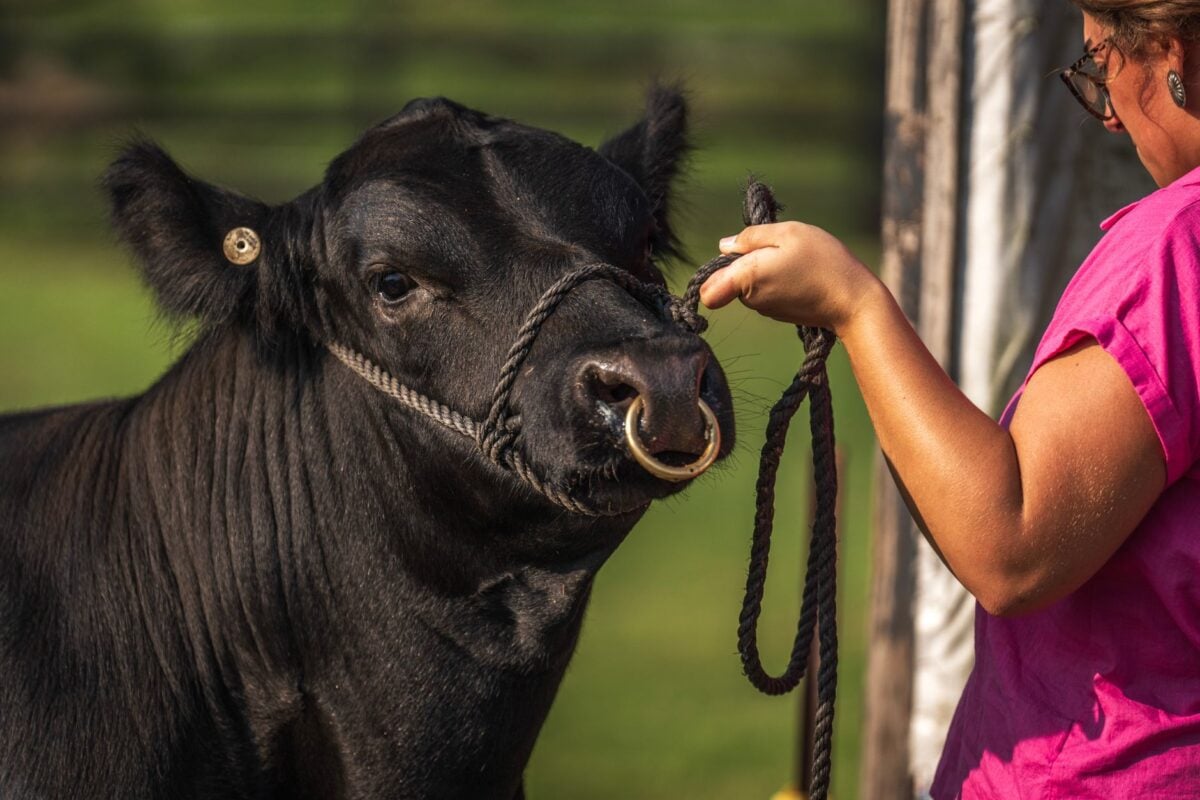
Inside the barn, Winnie was in the make-up ring with Biscuit. Biscuit was her market steer, a black baldy who weighed in at thirteen hundred and twenty-five pounds and had the disposition of a large, tired dog.
She was fourteen. It was her fourth year showing and her first year with a steer that had a real chance.
She had picked him out of our own calf crop in October and had him haltered by November.
She had fed him twice a day since then, before school and after it, in the dark both times for most of the winter.
She rinsed him every evening in the summer. She walked him down our gravel road every night so his feet would hold up.
I came up to the rail and handed her the stick. She took it without looking at me, because she was watching the ring ahead of hers and counting how many exhibitors were left.
“Where’s Dad?” she said.
“He’ll be at the rail,” I said. I reached up and fixed the back of her collar where it had folded under. Her hair was in one tight braid and smelled like the coat spray.
“You okay, Mom? You look funny.”
“Hot,” I said. “Go set his feet.”
People have asked me since why I didn’t walk straight back around that barn and say something. I could have. I knew exactly what I would have said, and I knew who would have heard it.