
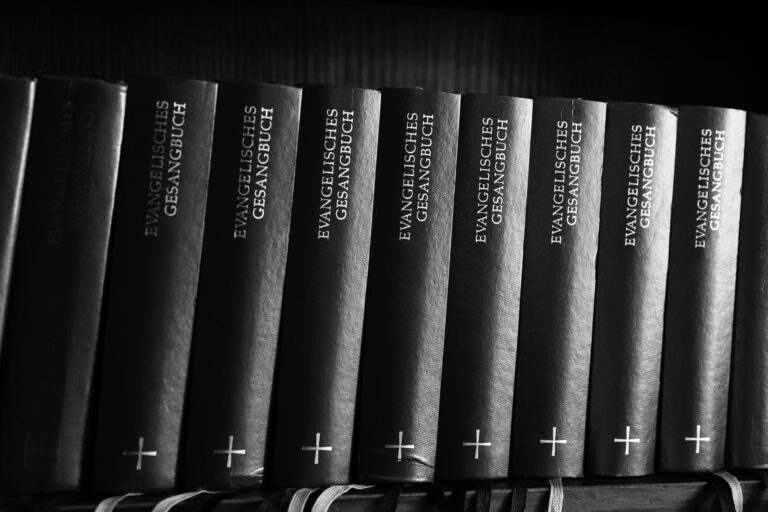
I want to tell you about the morning I buried my mother in Wickett, Nebraska, a town so small the welcome sign and the goodbye sign are bolted to the same post. I want to tell you about my brother Alden, who sat three pews ahead of me in the same suit he had owned since the Clinton administration, his shoulders set like a man bracing for weather. And I want to tell you about a hymn, an old slow hymn my mother sang over a sink full of dishwater for fifty years, the one that finally did what thirty one years of silence between two stubborn men could not.
But first I have to tell you how we got there, because a thing like that does not happen out of nowhere. It builds. It builds the way frost builds on a windowpane, one quiet crystal at a time, until one morning you cannot see through the glass at all and you have forgotten there was ever a view.
My name is Orrin Thade. I am sixty seven years old. For most of my life I have been a man with a brother I did not speak to, and if you had asked me a year ago whether that would ever change, I would have told you no. I would have told you flat, the way you state the temperature. No. Some things are just over.
I was wrong. I am glad, in the particular bone-deep way of an old man who has run out of time to be proud, that I was wrong.
The wedge
Alden is two years older than me. We grew up four miles north of Wickett on a quarter section of corn and soybeans that our father, Lemuel Thade, farmed until his hands curled up with arthritis and would not hold a wrench. Our mother, Verbena, kept the house, kept the books, kept the four of us fed, and kept, above all of it, a kind of steady faith that I did not understand as a boy and did not appreciate until I was much older than I should have been.
She sang. That is the thing you have to know about her before any of the rest of it makes sense. My mother sang while she worked, low and unhurried, the way some women hum and some women whistle. She had a whole catalog of them, the old hymns, the ones from the green Cokesbury book that lived on the upright piano in the front room. But there was one she came back to more than any other. “Be Thou My Vision.” That old Irish tune, slow as a creek in August. She sang it at the sink, at the clothesline, in the truck on the gravel road into town. I can close my eyes right now, sixty seven years old in a quiet house, and hear her on the word “vision,” the way her voice lifted just slightly and then settled, like a bird coming down to a fence wire.
Alden and I were close once. I need to say that plainly, because the years of silence make it easy to forget. We shared a room with a slope-ceiling and a window that looked out over the machine shed. We hunted the same fence rows for pheasant. We took turns on the one bicycle. When our father’s temper got short, which it did, the two of us were a single unit against it, a small wordless alliance of boys who knew when to disappear into the shelterbelt until supper.
What broke us was the farm. It is always the farm, or the house, or the money, in these stories. People who have never lived it think family ruptures come from some grand betrayal, some unforgivable cruelty. Sometimes they do. But more often it is something small and stupid and practical, a thing about acres and signatures, that gets dressed up over the years in the heavy clothes of pride until you cannot remember anymore what the original shape of it was.
When our father died in 1993, the land came to the two of us, split down the middle on paper. Alden wanted to keep farming it. I had already gone to Lincoln, taken a job at the grain co-op office, married a quiet sharp woman named Ottilie who taught fourth grade. I wanted to sell my half. I needed the money, I told myself, and that was true, but it was not the whole truth. The whole truth is that I did not want to be tied for the rest of my life to four miles of dirt and to a brother who had started, somewhere in our twenties, to feel less like my ally and more like my measuring stick.
We fought about it across our father’s kitchen table, the same table we had eaten ten thousand suppers at. I said things. He said things. I told him he was chaining himself to a dying way of life out of nothing but pride. He told me I was running out on the only thing our father ever built, that I would sell our mother’s view out from under her for a down payment on a split-level in the city. We both meant to wound, and we both succeeded, and the terrible efficiency of brothers is that we knew exactly where the soft places were.
I sold my half to a neighbor, the Pruessners, who farmed the section to the east. Alden never forgave it. He bought back what he could over the next decade, paid the Pruessners a premium out of spite as much as anything, and worked himself gray doing it. And the two of us, who had been a single unit against our father’s temper, became two men who happened to share a mother and a last name.
Thirty one years
You think, when a silence starts, that it is temporary. That is the trap of it. Nobody decides to not speak to a brother for thirty one years. You decide to not speak to him this Christmas, because the wound is still fresh and you are both too proud to be the one who calls. And then it is this Christmas again, and now there is the awkwardness of the gap itself to get over on top of the original thing, and the gap is easier to leave alone than to cross. So you leave it. And the years stack up like cordwood.
We were not enemies, understand. I want to be careful about that, because it would be easier to tell you he was a villain and I was wronged, but that is not the shape of it. There was no feud in the operatic sense. There were no slammed doors after that first year. There was just an absence, a Alden-shaped hole in my life that I learned to walk around so smoothly I stopped noticing the limp.
Get a new story in your inbox every morning.
Facebook doesn’t show you every story we post. Our free newsletter does. Join 2,500+ readers.
We saw each other. That is the strange part. In a town the size of Wickett you cannot avoid a man entirely, and I came back two or three times a year to see our mother. I would pass Alden at the Cenex station, or across the room at the Methodist church on the rare Sundays our visits overlapped, or once in the produce aisle of the Jubilee Foods in the county seat, both of us holding cantaloupes like two fools. We would nod. He would say “Orrin.” I would say “Alden.” And that was the entire content of three decades of brotherhood, two surnames-worth of syllables traded over melons.
Our mother grieved it the whole time, quietly, the way she did everything. She never lectured me, not once, which I think now was a kind of mercy and a kind of strategy both. Verbena Thade was not a woman who pushed. She planted. She would mention, on the phone, that Alden had put in a new windbreak of cedars on the north line, or that his granddaughter had made all-state in volleyball, and she would let the information sit there in the quiet, an offering, a door left unlatched. She never said you should call him. She said “your brother” in a particular soft way, and let me feel the weight of it, and let me do nothing about it, which I always did.
The last time I saw her well, really well, was the September before she passed. I drove up from Lincoln on a Saturday with a sack of the soft peppermints she liked. She was eighty nine, small now, her hands spotted and her hair gone to thin white, but her mind was clear as well water. We sat on her porch and watched the combines work the Pruessner section in the distance, and she sang under her breath without seeming to know she was doing it. “Be Thou My Vision.” Of course it was that one.
“You still sing that one the most,” I said.
“It was my mother’s,” she said. “She sang it over me. I expect I will sing it right up to the end.” She looked at me then, and there was something in it. “You boys used to sing it with me. Both of you. Standing on the kitchen chairs so you could see out the window. You remember.”
I said I remembered. I did not say what I was thinking, which was that I could not remember the last time I had sung anything at all.
She passed in her sleep on a Tuesday in late May, eleven days after her ninetieth birthday. The hospice nurse, a kind broad-shouldered woman named Tindra who had driven out from the county seat three times a week those last two months, told me later that my mother had been humming something that final evening, soft, and that Tindra had not known the tune but had thought it was pretty. I knew the tune. I have known it my whole life.
The funeral
Wickett does not have a funeral home. It has the Methodist church, white clapboard with a steeple you can see from the highway, and it has Pastor Imogen Halvard, who came to the parish eight years ago and stayed, which around here counts as devotion. And it has the church basement, where after every funeral the women of the congregation lay out ham sandwiches and bars and weak coffee on the long folding tables, the same as they have done since before I was born.
I drove up the night before and stayed at the Wagon Wheel Motel out on the highway, eleven rooms and a vacancy sign with a burned-out V. I did not sleep much. I lay there listening to the trucks downshift on the grade and I thought about my mother, and somewhere past two in the morning I admitted to myself that I was thinking about Alden too, that the thing I was dreading about the morning was not the grief, which I had been carrying for days, but the prospect of standing in a small room with my brother and having nothing to say to him but his own name.
I had it all planned out, the choreography of avoidance. I would sit in the back. I would let him have the front, the family pew, since he was the one who had stayed, the one who had buried our father from this same church and would feel he had the right to the front. I would pay my respects to my mother and I would slip out to my car before the basement coffee, and I would drive back to Lincoln to Ottilie, and the whole thing would be done with the minimum of words exchanged. That was the plan. I am ashamed of it now. At the time it felt like wisdom.
The morning came up clear and warm, a real heartland June morning, the kind my mother loved, with the meadowlarks going in the ditches and the smell of the alfalfa coming in on the breeze. I put on my suit, the gray one, and I drove the four miles I had been driving my whole life, past the Pruessner place, past the corner where the school bus used to turn around, up to the white church with the gravel lot already half full of pickups and sedans.
I came in late on purpose and took a pew near the back. The church was fuller than I expected. My mother had outlived most of her own generation, but she had taught Sunday school for forty years, and it seemed every soul she had ever shepherded through the Beatitudes had come to see her off. There were faces I half knew gone old, and young families I did not know at all, and the whole front of the church was banked with peonies and the wild orange ditch lilies somebody had cut that morning, because Verbena Thade had never in her life paid for a flower that grew free in the ditch.
Alden was in the front pew, as I knew he would be. I saw the back of his head, grayer than mine now, and the set of his shoulders, and his wife Marisol beside him, and a row of grandchildren I had never met. He did not turn around. I do not think he knew I was there. We had not spoken about the arrangements. The funeral home in the county seat had handled the few details there were to handle, and I had signed what they faxed to me, and Alden had signed his, and the two of us had buried our mother by fax machine without exchanging a single word.
Pastor Imogen spoke well. She had known my mother, really known her, and she did not reach for the easy things. She talked about steadiness. She said Verbena Thade was not a woman who made noise about her faith, that she had carried it the way a person carries water, carefully, without spilling, across a long dry distance, and that she had given a cup of it to nearly everyone in that room at one time or another. I felt that land in me. I thought about the peppermints and the porch and the combines, and I felt the grief come up hot behind my eyes, and I was glad I had sat in the back where no one could see.
And then it came time for the hymn.
The hymn
Pastor Imogen had not picked it. My mother had. She had left instructions years ago, the way that generation does, written out in her tight slanted hand and tucked into the church’s funeral file alongside the deed-careful records of two dozen other Wickett funerals. One hymn. She wanted one hymn sung at her funeral, and she had named it, and of course it was “Be Thou My Vision.”
The pianist was Hester Quenneville, who had played that upright in the corner of the sanctuary for as long as I could remember and whose own hands were not much younger than my mother’s had been. She found the opening notes, slow, that old creek-in-August tune, and the congregation rose with the rustle and creak of a hundred people standing in wooden pews, and we began to sing.
I did not want to sing. I want to be honest about that. I stood because everyone stood, and I held the open hymnal because that is what your hands do, but my throat was shut tight with grief and with thirty one years of not singing, and I made no sound for the first line. Be Thou my vision, O Lord of my heart. The congregation carried it. Naught be all else to me, save that Thou art.
And then, from the front of the church, I heard him.
I knew his voice. That is the thing that undid me, standing there in the back of the white church with the June light coming through the plain windows. I knew Alden’s voice the way you know a voice from childhood, from before either of you had any reason to perform or to hide. He was not a singer, my brother. He had a rough flat farmer’s voice, the same as our father’s, and he sang the way our father had, a little behind the beat, a little under the note, dead earnest and dead plain. And he was singing it. Loud. Not loud to be heard. Loud the way a man sings when the song is the only thing holding him up.
Thou my best thought, by day or by night.
I had not heard my brother’s voice raised above a two-word greeting in thirty one years, and here it was, cracking on the high notes the same way it had cracked when we were boys standing on the kitchen chairs so we could see out the window over the sink, singing this exact song with our mother between us, her hands wet, her voice low and steady underneath our two reedy boy-voices, holding us up.
Something broke open in me. I cannot describe it any better than that. It was not a decision. I did not decide to sing. The sound just came up out of me, rough and behind the beat, the same flat Thade voice he had, and I heard my own voice join my brother’s across that full church, two old men, four pews and three decades apart, singing our mother’s hymn in the only two voices in the room that had learned it at her sink.
Waking or sleeping, Thy presence my light.
I saw him go still. He had heard me. Of course he had heard me, that flat voice that matched his own, coming from the back where no one had told him I was. He did not turn around, not at first. His shoulders, those braced shoulders, came up and then dropped, the way a man’s shoulders drop when he sets down something he has carried a long way. And then, on the last verse, with Hester Quenneville’s old hands carrying us and the whole congregation around us, my brother turned in the front pew and he found me at the back of the church, and he looked at me down the length of that whole sanctuary while we both kept singing, neither of us missing the words because the words were the one thing thirty one years had not taken from either of us.
We sang the last line to each other. I am not ashamed to say it now, though I would have been once. High King of Heaven, my victory won. The whole church was singing and the two of us were singing to each other, down the length of the aisle, the way we had sung to our mother between us a lifetime before, and his face was wet and my face was wet and not one word had passed between us yet, not one, but the song was passing, the song our mother had sung over both of us before we could walk, the song she had carried like water across a long dry distance and handed to us, a cup each, and it turned out we had both kept it. All those years. We had both kept it.
The hymn ended. The congregation sat. And I stood in the back of the church with my mother in the box at the front and my brother’s wet face turned toward mine, and I understood that the thing I had thought was over was not over at all. It had only been waiting for a song slow enough to carry it back.
The aisle
I did not slip out to my car. The plan, the careful choreography of avoidance, fell away from me as easily as the song had come up. When Pastor Imogen gave the benediction and the pews began to empty, I stayed where I was, and I watched my brother come down the center aisle toward me against the flow of the crowd, an old man in a thirty year old suit, working his way back through the people who wanted to clasp his hand and tell him they were sorry, all of them parting around him because they could see, the whole town could see, where he was going.
He stopped in front of me. Up close he was old, the way I was old, his face weathered from a life outdoors that mine had been spared, his eyes the same pale Thade gray our mother used to call “weather eyes.” For a moment neither of us said anything, and I felt the old reflex, the two-word greeting, Alden, Orrin, the syllables we had traded over melons for thirty years, rising up to do their safe small work.
He did not let them. My brother reached out and he put his rough hand on the back of my neck, the way our father used to do to settle us, the way I had not been touched by another man since I do not know when, and he pulled my forehead down against his, two gray heads bent together in the emptying church, and he said the first real thing either of us had said to the other in thirty one years.
“She never stopped singing it,” he said. His voice was wrecked. “I’d call her on the phone and she’d be at the sink and I’d hear it in the background and I’d think, that’s the song Orrin and I are going to sing at her funeral. I thought it for years. I don’t know why. I just always thought, that’s the one we’ll have left.” He pulled back and looked at me, weather eyes streaming. “I didn’t know you were here. I started singing it for her. And then I heard you back there singing it too and I thought my heart would come out of my chest.”
I tried to answer him and could not. So I did the only thing I had left. I put my hand on the back of his neck the same way, and I bent my forehead back against his, and the two of us stood there in the front of God’s house with our mother between us in the box the way she had always been between us, holding us up, and we cried like the boys we had been on the kitchen chairs, and the song was still going in both of us even though the singing had stopped.
The basement
We went down to the basement together. I had not planned to. The women had laid out the ham sandwiches and the bars and the weak coffee on the long folding tables, the same as always, and the whole town watched the two Thade brothers come down the stairs side by side, and there was a kind of soft murmur that went through the room, because everybody in Wickett knew. In a town that size everybody knows everything, and they had all known about the silence for thirty one years, the same way they knew the depth of every well and the history of every fence line. And now here we were, coming down the stairs together, and Wickett let out a breath it had been holding for three decades.
Alden’s wife Marisol came to me with both hands out and her eyes wet and said, “Orrin,” but she said it the way you say a thing you have wanted to say for years, and she held onto my hand a long time. The grandchildren I had never met came up shy and were introduced. There was a great-grandbaby, a fat solemn thing named Wrenna, and Alden put her in my arms without asking, and I held my brother’s great-granddaughter in a church basement while she studied my face with the frank gaze of the very young, and I thought, I have been gone for all of this. Thirty one years of this. And I let it happen one Christmas at a time.
We sat at the end of one of the long tables, my brother and I, with paper plates of ham sandwiches neither of us ate, and we talked. We talked the way you talk when you have thirty one years to get across and you both know there is not enough afternoon for it, so you do not even try to be in order. He told me about the windbreak of cedars, how they were forty feet tall now. I told him about Ottilie, about the fourth graders she still got Christmas cards from, grown now with children of their own. He told me his hands had started to curl up the way our father’s had, that he had rented the ground out to the Pruessner grandson two years back and it had near killed him to do it. I told him I understood, finally, at sixty seven, why he had fought so hard to keep it, and that I had been wrong to call it pride, that it had been love wearing pride’s coat, and that I was sorry.
He waved it off. Then he stopped waving it off and he looked at his curled hands on the folding table and he said, quiet, “I was wrong too. I knew you needed the money. I knew it and I made you the villain because it was easier than being scared, and I was scared the whole time, Orrin. I was scared the whole thirty years that I’d kept the dirt and lost my brother and made the wrong trade.” He looked up. “Mother knew. She never said it but she knew. She kept that song going all those years like a lamp in a window. She left it for us in the church file. She picked the one thing she knew would still be in both of us.”
I have thought about that a great deal since. I think he is right. I think my mother, who never pushed, who only ever planted, knew exactly what she was doing when she wrote “Be Thou My Vision” in her tight slanted hand and tucked it into the funeral file years before she needed it. She knew her two stubborn sons would each refuse to be the one to cross the gap. So she built a bridge that neither of us would have to choose to walk. She made it a song. She made it the one song that lived in both of us below the level of pride, planted there at the kitchen sink before either of us was old enough to be too proud to sing it. And she trusted that if she could just get us both singing it in the same room one more time, the song would do what the two of us were too stubborn to do ourselves.
It did. My mother reconciled her sons from inside a pine box with a hymn, and she did it without saying a single word, the way she did everything.
After
That was a little over a year ago now. I am writing this in June again, a year on, in the quiet house in Lincoln, and I want to tell you what came after, because the song was not the end of it. A reconciliation that lasts one afternoon in a church basement is not a reconciliation, it is a truce. What my mother gave us was a beginning, and the rest she left to us, the way you leave the dishes to the boys when your hands are full.
Alden and I talk now. Every Sunday evening, on the telephone, the way our mother and I used to. He tells me about the cedars and the great-grandbabies. I tell him about Ottilie’s garden and the co-op pension and the small dull news of a city retirement. Sometimes there is not much to say and we sit on the line in the comfortable quiet of two old men who have decided, late, that the line itself is the point. I drove up at Christmas, the first Christmas in thirty one years, and Ottilie and I sat at the same kitchen table where Alden and I had said the unforgivable things to each other in 1993, and it was just a table again, just the place where the family eats.
We went out to the cemetery together that Christmas, my brother and I, in the cold, and we stood at our mother’s stone and our father’s beside it, and Alden said we ought to sing it. So we did. Two old men in coats in a Nebraska cemetery in December, singing “Be Thou My Vision” badly, behind the beat and under the note in the flat Thade voices she gave us, with our breath coming out white and the wind moving the dry grass, singing to a granite stone the song she had sung over us before we could walk. I do not believe she could hear us. I am not sure I believe in the kind of heaven where she stands at a window and listens. But I believe the song was true when we sang it, and I believe she meant for us to sing it together, and I believe that some part of what a person is keeps going in the people who keep singing what she taught them. That is enough heaven for me. That is more than I had any right to ask for.
Marisol passed this spring, suddenly, her heart. I drove up the same four miles to the same white church, and this time I sat in the front pew, beside my brother, where I belonged, and when the hymn came I did not wait for it to break something open in me. I just sang it, beside him, the first note, our shoulders touching, two old men holding each other up the way the song had always held us, the way our mother had taught us to before we knew that was what she was doing.
I think about the thirty one years sometimes. I would be lying if I said I had made my peace with the waste of them. There is a grief in getting a thing back that runs right alongside the joy of it, because the getting-back is also a reckoning with all the years you did without. I missed his children growing. I missed Marisol, who turned out to be one of the finest women I ever knew, and I had thirty years less of her than I could have had. I cannot get those back. Nobody can. That is the part of these stories that the tellers usually leave out, the cost that does not get refunded just because the ending is happy.
But here is what I know now that I did not know a year ago, standing in the back of that church with my plan to slip out to my car. The gap between two stubborn people is never as wide as it looks from either side of it. It looks like a canyon. It feels like a canyon. You build your whole life on the assumption that it is a canyon and cannot be crossed. And then one slow old song comes along, a song planted in both of you so long ago and so deep that pride never got a vote on it, and you find out the canyon was only ever as wide as the space between two pews, and that the bridge was there the whole time, and that it was a thing you both already knew by heart and had only been waiting for an excuse to sing.
My mother knew that. She knew it for thirty one years and she never once told me, because she understood something I am only now old enough to understand, which is that some bridges have to be sung across, not talked across, and that the singing has to be the kind you cannot do with your guard up. You cannot sing “Be Thou My Vision” with your guard up. Try it sometime. It is a song that takes both your hands.
If you have a brother you have not called, or a sister, or a son, or a father, and you have built the silence so high and so long that you cannot imagine the words that would cross it, then maybe do not look for the words. Maybe the words were never the bridge. Look instead for the song. There is one, I promise you there is one, some old shared thing planted below the level of the grievance, in a kitchen or a car or a church, before either of you had any reason to be proud. Find it. Hum it. See what comes up.
My brother and I lost thirty one years to a silence we both thought was permanent. We got the rest of our lives back from a hymn our mother sang over a sink full of dishwater for fifty years, on purpose, the way she did everything, planting and planting and never once pushing, trusting the slow seed of it to come up green long after she was gone.
It came up. We are old men now, my brother and me, and we sing badly, and we sing together, and every Sunday on the telephone before we hang up one of us hums a bar of it and the other one finishes the line. That is what she left us. Not the land, not the money, not anything you could put in a box and divide. A song. The one thing two stubborn men could not split down the middle, because the only way to have it at all is to sing it together.
Be Thou my vision. She still is. She always will be. And every time I sing it I hear three voices, not two, low and steady underneath us, the way it always was, the way it always will be, holding her boys up.
This story is a dramatization. Names, characters, and details are invented, and any resemblance to real people or events is coincidental.