The Creek Where My Grandmother Sang
For twenty years I told myself I had left the church because I had outgrown it. That was a lie I got comfortable inside of, the way you get comfortable inside an old coat that no longer fits but still smells like a place you loved. The truth was smaller and meaner than outgrowing. The truth was that I left because a room full of people I had known my whole life made me feel like a stranger in the only town I had ever called home, and I decided I would rather be lonely on my own terms than lonely in a pew.
My name is Nadine. I am fifty-eight years old, and I am Ojibwe. My people are Lake Superior Chippewa, from up north where the birch peels like paper and the wild rice grows in the shallow bays and my grandmother taught me the names of things in a language the boarding schools tried to take out of her mouth. But I did not grow up up north. I grew up here, in a heartland town small enough that everybody knows whose truck is parked outside whose house, flat and green and stitched together by county roads and grain elevators and one country church with a white steeple that you can see from the highway before you can see anything else.
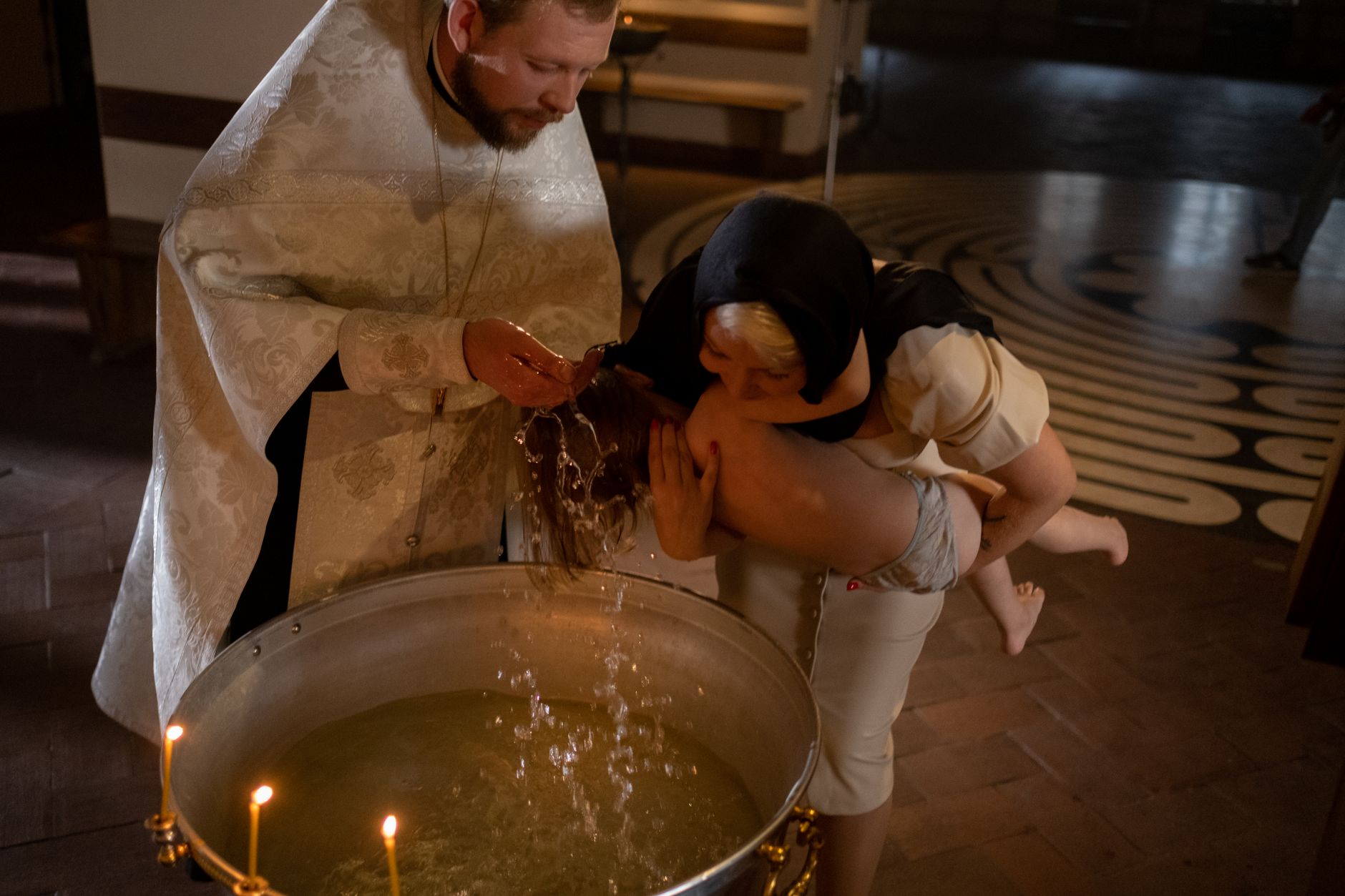
That church is called Prairie Grace. And there is a creek that runs behind it, past the cemetery and under the old iron bridge, cold and clear even in August because it is fed by springs, and it was in that creek that I was baptized when I was nine years old.
I remember it the way you remember the few things that were entirely good. My mother had braided my hair that morning and I had a white dress that was really just my Easter dress, and Pastor Vernon, who is long dead now, waded out into the water in his shirtsleeves with his trousers rolled and he held my hand and told me not to be afraid of the cold. The whole congregation stood on the bank singing. My grandmother was there, the one who spoke the old language, and I remember she did not sing the hymn. She sang something else, low, under it, in Ojibwe, and nobody told her to stop. That is the part I held onto for fifty years. Nobody told her to stop.
I am telling you all of this so you understand that Prairie Grace was not always a cold place to me. It was, for a long time, the warmest place I knew.
Let me tell you about my grandmother first, because you cannot understand what that creek meant to me without her.
Her name was Winona too. My daughter carries it, and now my granddaughter carries the English of it, three of them stacked up across a hundred years like fence posts holding one long line of wire. My grandmother was born up north in 1901, in a time when the government had decided that the fastest way to solve what they called the Indian problem was to take the children. They took her when she was seven. They put her on a train to a school three hundred miles from her mother, and they cut her hair, which if you do not know is a thing you do to us at a death, and they washed her mouth out with lye soap the first time she spoke Ojibwe, and they beat the language out of her one word at a time over nine years until she learned to keep it behind her teeth.
But she kept it. That is the thing about my grandmother I want you to understand. They spent nine years trying to empty her out and she kept the language folded up small in a place they could not reach, and when she was an old woman and safe she took it back out and she gave it to me. She taught me the names of the plants and the animals and the winds. She taught me the song. And she chose, in 1968, on a Christian riverbank in front of a whole white congregation, to sing it out loud over her granddaughter, and that was not a small thing she did. That was a woman who had been punished for the sound of her own voice deciding that God could hear it too.
So when I tell you nobody told her to stop, I need you to understand that she was braced for it. She sang expecting to be silenced, because silence was the whole shape of her life. And it did not come. Pastor Vernon stood in the water and let it wash over him and closed his eyes. That is the inheritance I got in that creek. Not just a baptism. A moment where the world did not do the cruel thing it had always done. I spent fifty years chasing the feeling of that one morning.
It got cold slowly. That is how these things happen. Not one great wound but a thousand small ones, each too small to name out loud without sounding like you are making a fuss over nothing.
It was the way conversation would drop half a degree when I walked into the fellowship hall. It was Lorraine Ackley, who ran the women’s circle for thirty years, complimenting my beadwork earrings in a voice that made them sound like a costume. It was the Thanksgiving the youth group did a pageant and dressed the little ones in construction-paper feathers and nobody thought for one second about the woman sitting in the fourth pew whose grandmother’s language had been beaten out of her in a school run by people who called it charity. It was being asked, always, to bring “something authentic” to the potluck, as if my hotdish was less real than Lorraine’s. It was the well-meaning man who put his hand on my shoulder after a sermon about the missionaries and said he sure was glad my people had been brought to the Lord, and meant it as a kindness, and could not understand why my face went still.
None of it was hatred. I want to be fair, even now, even after everything. None of it was the kind of thing you could point to and say there, that, that is why. It was a lifetime of being the guest at a table I had been baptized into. It was being loved as a project and not as a person.
The thing that finally broke it was so ordinary I am almost embarrassed to tell it.
My husband had died the winter before. His name was Garrett, and he was a big quiet white man from two counties over who fixed diesel engines and loved me plainly and completely for thirty-one years, and when he died the church did what churches do. They brought casseroles. They filled my freezer.
Garrett had been sick a long time before the end. Two years of it. His heart was failing by inches and then his kidneys followed, and for the last winter I slept in a chair beside his bed in the front room because the stairs had become too much for him and I would not put him in a home. I learned to do things in that chair I never thought my hands would do. I learned the weight of a grown man who cannot help you lift him. I learned to sing him down when the confusion came at three in the morning and he did not know the room, and the song I sang him, more often than any hymn, was my grandmother’s song, because it was the oldest thing I had and it reached him when nothing else did. He did not understand a word of it. He would go still anyway. “That one,” he’d say. “Sing that one.” A diesel mechanic from two counties over, dying in a recliner, asking his Ojibwe wife to sing him the song a boarding school had tried to kill. I held his hand the morning he went and I sang it, and I sang it low the way my grandmother sang it, and it was the last thing his ears heard in this world. So that song was not a small thing to me either, by then. It had carried two people I loved out and one small one in.
About six weeks after the funeral, when the casseroles had stopped and the silence had set in the way it does, I went to a Wednesday night service because I could not stand the sound of my own house.
And Lorraine Ackley, sitting behind me, leaned forward during the greeting and said, kindly, so kindly, “You know, Nadine, we always did wonder if you’d go back to your own people now that Garrett’s passed.”
Your own people.
Thirty-one years I had lived in that town as Garrett’s wife. Forty-some years I had sat in that church. My grandmother had sung in that creek. And in one sentence, offered as comfort, Lorraine let me know that all of it had been provisional. That I had been on loan. That the town, the church, the pew, the plot next to my husband where I intended to be buried, none of it was mine the way it was hers. I had a real people, and they were somewhere else, and it was assumed I would return to them like a library book.
I did not make a scene. I have never in my life made a scene. I sat through the rest of that service with my back straight and my hands folded, and I sang the closing hymn, and I shook Pastor Vernon’s successor’s hand at the door, and I got in my truck, and I never went back.
That was 2006.
For twenty years I did not set foot inside Prairie Grace. I drove past it going to town and I looked at the steeple the way you look at the house of someone you used to love. I told my daughter Winona, when she asked, that I had just gotten out of the habit. I told myself that God was in the creek and the rice beds and the birch and did not require a building with Lorraine Ackley in it. Some of that was even true.
But I will tell you what I lost, because it is the part people who have never been driven out of a room do not understand. I did not lose God. I lost belonging. I lost the smell of that fellowship hall and the sound of forty voices finding a hymn and the particular ache of being one small part of something older than me. I raised my daughter mostly outside of it. I got older by myself. And in the private hours, the ones nobody sees, I grieved a church the way you grieve a person, which is to say I told everyone I was fine.
Winona grew up and married a good man and they had a little girl. My granddaughter. They named her after my grandmother, the one who sang in the creek, though they call her by the English of it and not the Ojibwe, and that is its own small grief I have made my peace with.
And when that little girl turned six, Winona came to my kitchen table with a look on her face I knew meant she wanted something she was afraid to ask for.
She wanted to have her daughter baptized. And she wanted it done in the creek behind Prairie Grace. The same creek. The same water where I had been baptized, where my grandmother had sung.
“Mom,” she said, “I know. I know what it did to you. But it’s the water. It’s your grandmother’s water. I don’t want her baptized in some tank in a church I have no history with. I want her in the creek. And I don’t know how to do that without walking back into that place, and I’m not doing it without you.”
I want to tell you I said yes right away because I am a woman of faith and forgiveness. I did not. I sat at that table and I felt twenty years of cold come up my spine, and I heard Lorraine’s voice saying your own people, and I told my daughter I would think about it.
I thought about it for a month.
What changed my mind was not forgiveness. It was stubbornness, which in my experience is what forgiveness usually looks like before it grows up. I decided that my granddaughter had as much right to that water as anyone, more, because it was her great-great-grandmother’s song in it, and I was not going to let a room full of people who had made me feel small keep one more generation of my family out of the only creek God ever met me in. If they wanted to be cold, they could be cold to my face while I stood in the water holding my grandbaby.
So I called the church.
I did not know the pastor. The name in the bulletin online was Pastor Reese, and I had heard, the way you hear things in a small town even when you have stopped going, that Prairie Grace had a young minister now, maybe ten years in, and that the old guard did not entirely know what to make of her. Her. That alone told me the place had changed some. Lorraine Ackley’s Prairie Grace would not have called a woman.
I braced myself and I dialed and I said, in the flat careful voice I use for institutions, “My name is Nadine. My daughter would like to have her child baptized in the creek. I used to be a member. A long time ago.”
There was a pause. And then Pastor Reese said, “Nadine. Is this Nadine who married Garrett? The one who was baptized in the creek in, I want to say, the sixties?”
I said it was.
“Your name is in the old baptismal register,” she said. “I read it my first week here. There’s a note beside it in Pastor Vernon’s handwriting. Do you know what it says?”
I did not.
“It says, and I’m reading it, ‘Nadine, age 9. Her grandmother sang over the water. I have never heard anything closer to what I imagine heaven sounds like.'”
I stood in my kitchen with the phone against my ear and I did not say anything for a long time, because if I had opened my mouth I would have made a sound I did not want a stranger to hear.
I had carried that morning for fifty years thinking I was the only one who had. Thinking that to everyone else it had been a nice thing that happened, an Indian woman singing on a riverbank, forgotten by lunchtime. And here was proof, in a dead man’s hand, that the pastor who baptized me had gone home that day and written down that my grandmother’s song was the closest thing to heaven he had ever heard.
“We would be honored to have your granddaughter baptized in the creek,” Pastor Reese said. “And I would like you there. Not in the back. In the water, if you’re willing.”
I set a date for the second Sunday in June.
I did not tell her about Lorraine. I did not tell her about your own people or the construction-paper feathers or the twenty years. I figured a young pastor did not need to inherit an old woman’s grudges. I would go, I would stand in the water for my granddaughter, and I would leave, and if the cold came I would meet it the way I had learned to meet everything, with my back straight and my face still.
The morning of the baptism was the kind of June day the heartland gives you maybe six of a summer. The sky was scrubbed and enormous. Everything was green and the creek behind Prairie Grace ran clear and cold over its stones, and I stood on the bank in an old dress with my granddaughter’s small hand in mine, and my daughter beside me, and I looked up at the congregation gathering on the slope above the water, and my heart went cold and hard the way it does, because there in the third row, in a folding chair with a cane hooked over the arm, was Lorraine Ackley.
She was old now. She had to be near ninety. She was smaller than I remembered, the way the people who loomed over your life always turn out to be smaller, and someone had driven her out to the creek and settled her in a chair with a lap blanket even in the June warmth, and she was looking straight at me.
I looked away first. I am not proud of that but it is true. Fifty-eight years old, a widow, a grandmother, and I could not hold the eyes of a ninety-year-old woman because some part of me was still nine years old and still needed her to think I was good enough to sing over.
Pastor Reese waded into the creek. She was younger than I expected, sandy-haired, with the rolled trousers and shirtsleeves that must be handed down pastor to pastor at Prairie Grace like a set of tools. She held out her hands for my granddaughter, and my granddaughter, who is braver than I have ever been, walked out into that cold water without one look back.
And then, before the words, Pastor Reese did something I did not expect. She turned to the congregation on the bank and she said:
“Before we baptize this child, I want to tell you about the last time a member of her family was baptized in this creek. Nadine, may I?”
I did not know what she was going to say. I nodded because I did not trust my voice.
“In 1968, a nine-year-old girl named Nadine was baptized right here,” Pastor Reese said, and her voice carried out over the water and up the slope so that all of them heard it. “And her grandmother, who was Ojibwe, stood on this bank and sang over the water in her own language. Pastor Vernon wrote in the register that it was the closest thing to heaven he had ever heard. That was a long time ago. And I have to tell you, some of you were there, and I have learned since I came here that this church did not always treat Nadine’s family the way that morning deserved. That she left this church, and that we were part of why.”
The bank went very quiet. Even the little kids stopped fidgeting. I could hear the water.
“I am not going to stand in this creek and baptize a child into a family of God,” Pastor Reese said, “and pretend that family has always been what it claims to be. So before we welcome this little one, I want to say to Nadine, on behalf of this congregation, past and present: we are sorry. You belonged here. You always belonged here. This was your creek before it was ours, and we made you feel like a guest in it, and that was a sin, and we are sorry.”
I have stood in a lot of cold water in my life. I have never felt anything like standing in that creek while a whole congregation of the people I thought had cast me out sat in silence and let their young pastor apologize to me out loud in the June sun.
And then there was a sound from the third row.
It was Lorraine.
She had gotten to her feet. I do not know how, at her age, with that cane, but she was standing, gripping the shoulder of the man beside her, and she was crying, openly, in a way I had never once seen her do in forty years of watching her run the women’s circle with an iron hand. And she said, loud enough to carry, in a voice that shook:
“Nadine. It was me. Some of it was me.”
I want to be careful here, because this is the part that matters most and I do not want to make it prettier than it was.
Lorraine Ackley did not give a graceful speech. She was ninety years old and half undone and the words came out of her broken and out of order. But what she said, standing there with her cane and her lap blanket fallen to the grass, was that she had known, all those years, exactly what she was doing when she made me feel like a visitor. That she had grown up in a family that talked about Indians the way you talk about weather, something that happened to the land before the real people arrived, and that she had carried that into that church and aimed it at me for forty years while calling it being neighborly. That the day after Garrett’s funeral, when she told me I would probably go back to my own people, she had gone home and felt, for one moment, a flicker of something she pushed down, and that she had spent twenty years pushing it down, and that she was too old now to keep pushing.
“I told myself it wasn’t hate,” she said, and she was looking right at me, “because I brought you casseroles. I told myself I couldn’t be that kind of person because I brought you casseroles. But you can hand a woman a casserole and still not let her be one of you. And I never let you be one of us. And you were. You were more one of us than I ever was, because your grandmother sang to God on that bank, and all I ever did was run the potluck.”
Nobody moved. My daughter had her hand over her mouth. My granddaughter stood in the water in her white dress looking from face to face, six years old, not understanding the words but understanding, the way children do, that something enormous was happening among the grown-ups.
And I did something I did not plan.
I walked out of the creek, dripping, up the bank, to the third row, to Lorraine Ackley. And I put my arms around that small hard old woman who had made me feel like a stranger for forty years, and I felt how light she had become, how close to leaving this world, and I felt her shaking against me, and I said the only thing I had.
I said, “I forgive you.” And then, because it was true and because it needed saying too, I said, “And I’m sorry I never once tried to see it from your side either. We were both scared of each other for forty years and we never said one honest word until today.”
She laughed at that, a wet cracked laugh, and she held onto me, and for a moment we were just two old women on a riverbank who had wasted an enormous amount of time.
Then I walked back down into the creek, because there was a baby to baptize.
Pastor Reese was crying too, unashamed, and she waited until I had taken my place beside my granddaughter, and then she baptized her in the name of the Father and the Son and the Holy Spirit, and she tipped that little girl back into the cold spring water and brought her up gasping and laughing, and the whole bank erupted, and it was the sound I had not heard in twenty years and had grieved like a death. Forty voices. My people. All of them.
And here is the part I will carry the rest of my life the way I carried that morning in 1968.
As they brought my granddaughter up out of the water, I began to sing.
I had not planned it. I did not decide to. It came up out of me the way water comes up out of a spring, from somewhere colder and older and deeper than deciding. I sang the song my grandmother sang. The one in Ojibwe, the low one, the one nobody had ever told her to stop singing. I did not even know I still had all of it. But my grandmother had sung it over me in that same water fifty years before, and it turned out she had put it somewhere in me that twenty years of exile could not reach, and it came out whole.
I stood in the creek where I was baptized, holding the great-great-granddaughter of the woman who taught it to me, and I sang, and the congregation stood on the bank in total silence and let me. Nobody told me to stop.
Just like nobody told her to stop.
That was the whole of it, in the end. Two hundred years of history, and forty years of small cold cruelties, and twenty years of a widow driving past a steeple she used to love, and it came down to an old woman standing up out of a folding chair to tell the truth, and a congregation letting a Native woman sing to God in her own language over her own grandchild in her own creek, and nobody, nobody at all, telling her to stop.
Lorraine died the following spring. I sat with her twice in the home before she passed, and we did not talk about any of it again, because we did not need to. We talked about the potluck, and the weather, and whether the creek was running high. At her funeral, at Prairie Grace, Pastor Reese asked if I would sing. And I did. I sang my grandmother’s song over Lorraine Ackley’s casket in a church I had sworn I would never enter again, and the room full of people I had spent twenty years believing had cast me out wept for a woman they loved, and let a Native woman send her home in a language older than the country.
I go back to Prairie Grace now. Not every Sunday. I am fifty-eight and set in my ways and I still meet God more easily in the rice beds than in a pew. But I go. I bring my hotdish to the potluck, and nobody calls it authentic, they just call it Nadine’s, and it goes fast. My granddaughter sits beside me and swings her feet and cannot yet reach the floor. And sometimes, when the last hymn finds its way to forty voices, I let mine be one of them, and I think about how close I came to letting the coldest year of my life be the last word.
I was baptized in that creek at nine years old, and my grandmother sang over the water, and a man wrote in a book that it sounded like heaven. It took me fifty years to believe him. But I believe him now. I have stood in that water twice. Once as a child who was told not to be afraid of the cold, and once as an old woman who had every reason to be, and who walked into it anyway, and found the whole town waiting for her on the bank.
Belonging is not a thing they give you. I know that now. It is a thing you walk back into the water to claim. And the water is always colder than you remember, and it is always worth it, and there is always, if you are very lucky and very stubborn and you live long enough, somebody willing to stand up out of a folding chair at last and tell you the truth.
You belonged here. You always belonged here.
I know that now. I sang it into the water myself.
This story is a dramatization. Names, characters, and details are invented, and any resemblance to real people or events is coincidental.