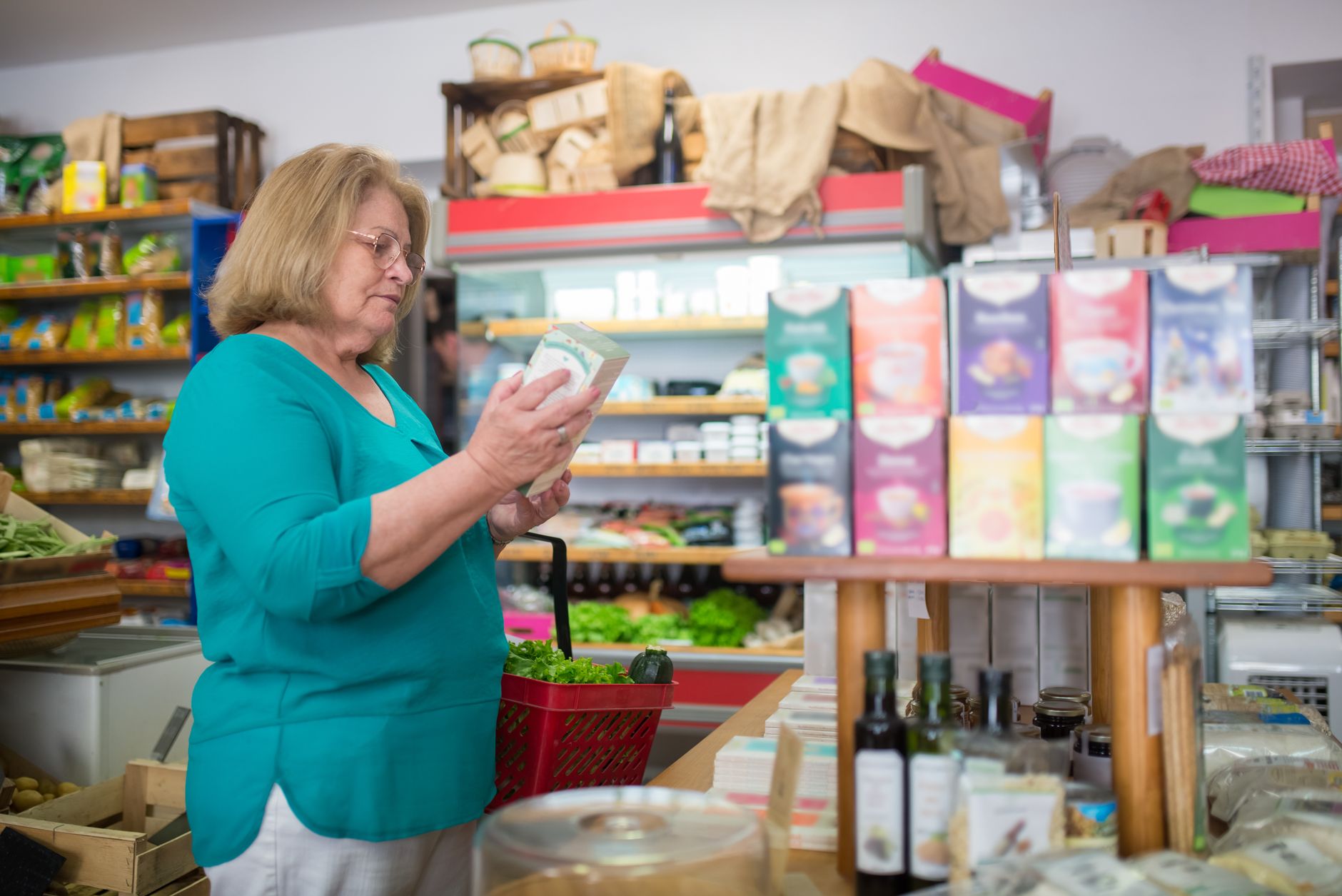
The Coupon Lady Who Saved Our Store
I have been clipping coupons since the Carter administration, and for most of those years the only people who noticed were the cashiers who sighed when they saw me coming. So you will understand why nobody, least of all me, expected that a beat-up vinyl binder full of little paper rectangles would be the thing that kept the doors open on the only grocery store in Aldous, Nebraska.
My name is Verba Stantz. I am sixty-eight years old, I have buried one husband and raised three children and one bonus grandchild who came to live with me when she was nine, and I have never once in my life paid full price for a box of saltines if I could help it. My late husband, Orlin, used to call me the Cabbage General, because I once routed an entire holiday dinner around what was on close-out at the back of the produce cooler. He said it with love. Mostly with love.
Let me tell you about Aldous first, because you have to understand the town to understand why the store mattered.
Aldous sits in the flat brown middle of Nebraska, one stoplight, a grain elevator that you can see from eleven miles out, a Methodist church and a Lutheran church that have been politely competing over casseroles since before I was born, and a Main Street with more empty windows every year. We lost the hardware store in 2009. We lost the pharmacy when the chain in Kearney swallowed it. The bank turned into a branch with one teller two days a week. When the diner closed, the men who used to take their coffee there started taking it at the gas station, standing up, which is not the same and everybody knows it.
But we still had Bittler’s.
Bittler’s Family Market has stood on the corner of Main and Sedgwick since 1951, when Augustyn Bittler came home from Korea and put every dollar he had into a building with a flat roof and a walk-in cooler. His grandson Foss runs it now. Foss Bittler is a big quiet man with hands like baseball mitts and a way of restocking the shelves that looks like he is tucking the cans in for the night. He kept the lights on through the drought years and the Walmart-in-Kearney years and the everybody-orders-online years, and he did it by being the kind of man who would drive a sack of groceries out to the Hendlemyer place himself when Orpha Hendlemyer broke her hip, no charge, no mention of it ever again.
I tell you all this so you know: Bittler’s was not just a store. For the folks out on the county roads who cannot make the forty-minute drive to a big-box on bad knees and worse tires, Bittler’s was the difference between eating and not. It was where you ran into people. It was where the high schoolers got their first jobs bagging. It was where I had been waging my private war on retail pricing for thirty years, and where Foss, bless him, had let me do it.
Now I will tell you how the war saved us.
—
It started, as most of the disasters of my life have started, with the Sunday paper.
We still get a paper in Aldous, the Kearney Hub, and tucked inside it on the good weeks are the circulars, the glossy inserts, and the coupons. I have a system. I will not pretend it is a modest system. I have a binder, vinyl, three inches thick, with baseball-card sleeves so I can see every coupon at a glance, sorted by category and then by expiration date, color-tabbed. My granddaughter Linnea, who is twenty-two now and home from her two years at the community college, calls it the Beast. The Beast goes everywhere with me. The Beast has its own seat belt. I am not ashamed.
The trouble that particular winter was that I had gotten, if anything, worse. Orlin had been gone three years by then, and a person needs something to do with her hands and her evenings. Linnea was working swing shifts at the care home over in Holdrege and gone half the time. The house was too quiet. So I clipped. I clipped like it was a calling. I drove to the recycling shed behind the Lutheran church and pulled the unwanted circulars out of the bins, because folks throw away coupons like they grow on trees. I had a contact at the senior center, Wilbern Tosh, who saved me his and his late sister’s. I had, at the peak of my powers that winter, somewhere north of four thousand active coupons in the Beast and three shoeboxes of overflow on the porch.
And here is the thing you have to understand about a serious couponer, the thing that turned out to matter: I did not just clip the things I needed. I clipped everything. A coupon for cat food, and I do not own a cat. A coupon for a brand of pickled beets that I find frankly offensive. A coupon for adult acne wash. If it was a dollar off, it went in the Beast, because you never knew, and because the clipping itself was the comfort, snip snip snip at the kitchen table with the radio on, Orlin’s empty chair across from me.
What I did not know, what nobody in town knew, was that Bittler’s was three weeks from closing.
I found out the way you find out everything in Aldous, which is by accident, in the cereal aisle.
I had come in on a Tuesday with the Beast under my arm and a flyer that promised a remarkable deal on canned chili if you bought four and used the manufacturer’s coupon on top of the store sale, which I fully intended to do, when I heard voices from the little office behind the meat counter. The door was cracked. I am not a snoop. I want that on the record. But I have excellent hearing for a woman my age and the voices were not quiet.
It was Foss, and a man I did not recognize, in a gray suit that had no business in our town.
“The numbers don’t support it, Mr. Bittler,” the gray suit was saying. “The distributor’s cutting you off at the end of the month. Your volume’s below their minimum. Without a wholesale supplier you can’t restock, and without restock you can’t stay open. I’m sorry. I really am. But you’d be looking at March, maybe February.”
I stood there in the cereal aisle with a box of bran flakes in my hand and felt the floor tilt.
Foss said something low I could not hear. Then the gray suit said, “Unless your sales volume jumps forty percent in the next three weeks, and I’ll be honest with you, sir, I’ve never once seen a store this size do that in winter. There’s no foot traffic out here. There’s nobody left to buy.”
I put the bran flakes back. I did not buy the chili. I drove home with the Beast riding shotgun and I did not clip a single coupon that night. I sat at the kitchen table and looked at Orlin’s chair and I thought, forty percent. There’s nobody left to buy.
And then, slowly, the way the sun comes up over the elevator, an idea started.
—
I want to be honest with you about the idea, because in the retelling people always make me sound smarter and kinder than I was in the moment. The truth is my first thought was not noble. My first thought was: I have four thousand coupons and most of them are about to expire.
You see, coupons expire. That is the cruelty at the heart of the whole enterprise. You clip a beautiful dollar-off, you file it lovingly in the Beast, and then life happens and the date passes and the savings evaporate like dew. I had hundreds, maybe a thousand, of coupons riding the edge of expiration that winter. Hundreds of dollars of theoretical savings that were about to turn into worthless paper. It had been keeping me up nights, if you want to know. The waste of it.
And here, in the office behind the meat counter, was a man who needed people to buy things. And here, in the Beast, was a stockpile of reasons to buy them.
I did not sleep that night. I sat at the table and I pulled out every coupon riding the edge, and I started to do arithmetic.
There is a thing in the couponing world, for those of you who have never gone down this particular rabbit hole, called stacking. A store runs a sale on, say, canned tomatoes, fifty cents off. The manufacturer also issues a coupon, fifty cents off. At a store that allows it, and Foss allowed it, you can stack the two, and now your can of tomatoes that started at a dollar twenty is twenty cents. Add a store loyalty discount and the right week and you can, with enough patience and enough paper, walk out the door having paid almost nothing for a cart that would have cost forty dollars.
Most people think that is a trick to save one person money. It is. But I sat at that table and I turned it around in my head and I saw it the other way: every coupon I redeemed was a sale on Foss’s books. The manufacturer reimburses the store for the coupon, you see. Foss did not lose the discount. The coupon company paid him back, plus a handling fee, a few cents a coupon. So if I redeemed a thousand coupons, that was a thousand transactions, a thousand items moving off his shelves, a thousand little reimbursements flowing in, and his sales volume, the number the gray suit said had to jump forty percent, that number would climb.
I could not do forty percent alone. Nobody could. One old woman, even one as committed to the cause as me, cannot move the needle on a whole store.
But I did not have to do it alone. I lived in Aldous.
—
The next morning I called Linnea down from her room and I laid it out for her at the kitchen table, the Beast open between us, and she looked at me the way the young look at the old when the old have clearly lost the thread.
“Grandma,” she said. “You want to save the grocery store. With coupons.”
“With coupons,” I said.
“That you cut out of the newspaper.”
“That I cut out of the newspaper.”
She rubbed her face. She is a good girl, Linnea, sharp as a tack and twice as practical, and I could see her deciding whether to humor me or argue. Then something shifted in her, and she pulled the Beast toward her and started turning pages, and I watched her do the same arithmetic I had done, except faster, because she had grown up with the internet in her pocket.
“Okay,” she said slowly. “Okay. So the coupons aren’t really the point. The point is getting people in the door. The coupons are just the, the bribe.”
“The incentive,” I said, with dignity.
“The bribe. Grandma, half this town is on a fixed income. Half of them are exactly the kind of people who would drive across the county to save four dollars. You’re not the only one.” She looked up at me. “You’re just the only one with a binder.”
That, I will tell you, was the moment the thing became real. Because she was right. In a town like Aldous, in a winter like that one, there is no shortage of people counting every dollar. What there was a shortage of was a reason to leave the house, and a system to make the saving worth the trip.
We needed more coupons than I had. We needed more people than I knew. And we had less than three weeks.
So we got to work.
—
Linnea took the internet half. It turns out, and I did not know this, that there is a whole world online of people who trade and print coupons, vast communities of them, mostly women, mostly grandmothers if I am honest, who treat it exactly as seriously as I do. She set up a way to print the digital ones, dozens at a time, and she found the websites where you could see every sale at every store and match it to every coupon. She sat at that kitchen table for three days with two laptops and printed until the printer overheated and we had to set it out on the porch to cool like a pie.
I took the town.
I started with my church ladies, the Lutheran ones, at our Wednesday quilting circle, which I want to note we hold in the church basement because the Methodists have the nicer fellowship hall and we are not bitter about it. I brought the Beast. I told them about the gray suit and the office behind the meat counter and the forty percent and I watched their faces change. Idalou Brensk, who has known Foss since he was in diapers, set down her needle. Marvelle Quist, who buried her own husband the same year I buried Orlin, said, “What do you need us to do, Verba.”
What I needed them to do was clip, and shop, and tell everyone they knew.
By Thursday I had the Lutheran women. By Friday, through a back channel I will not reveal, I had the Methodist women too, which in Aldous terms is roughly the equivalent of brokering peace in the Middle East. By the weekend it had jumped the church divide entirely and gotten into the VFW, where Wilbern Tosh stood up at the Saturday breakfast and announced, to a room full of veterans eating eggs, that the old grocery was going under and that Verba Stantz had a plan involving coupons, and that he for one was going to be there.
I was not at the VFW breakfast. They do not let women into the Saturday breakfast and I have made my peace with that, mostly. But Wilbern called me after and said, “Verba, I have never seen men so excited about pickled beets in my life.”
I want to tell you about that Wednesday quilting circle, the first one, because it is the night the whole thing turned from a foolish notion in my kitchen into something with arms and legs. We meet in the church basement under those flat humming lights, six or seven of us most weeks, around the big frame with whatever quilt is going to the next baby or the next funeral. There is a coffee urn that has been percolating the same way since the Ford administration and a plate of whatever someone baked, that week it was Idalou’s molasses cookies, which are too hard to eat but you eat them anyway because you do not insult Idalou Brensk.
I had brought the Beast and set it on the cutting table, and for the first twenty minutes I lost my nerve. We talked about Orpha Hendlemyer’s hip and whose grandchild was getting married and whether the furnace was going to make it through February. And the whole time I was sitting there with the end of Bittler’s in my mouth like a stone, not knowing how to say it. Because you do not, in a town like Aldous, walk in and announce that the ground is falling out from under everyone. You ease into bad news the way you ease into a cold lake.
It was Marvelle who gave me the opening. She said, offhand, threading her needle, “I had to drive all the way to Holdrege for my prescriptions again. I do not know how much longer these knees are going to do that drive.” And something in me just gave way, and I set down my needle and I said, “Ladies. I have to tell you something, and I need you to not panic.” And I told them.
I have replayed their faces a hundred times since. Idalou stopped with a cookie halfway to her mouth. Marvelle, who does not cry, who did not cry at her own husband’s graveside that any of us saw, got two bright spots high on her cheeks. And there was a long, awful silence under those humming lights, the kind of silence where you can hear the urn percolating, and I thought, I have done it now, I have brought the end of the world to quilting circle.
And then Idalou set down her cookie and said, in the voice she uses on her grandsons, “Well. We are not going to just sit here and let Augustyn Bittler’s store close. Augustyn carried my casserole to the car the week Henrik died and never said a word about it. Verba, open that binder.”
That was it. That was the whole turning. Seven old women around a quilt frame, deciding. By the time the coffee urn went cold we had a plan, a list of who knew whom, who could call the Methodists without it looking like a raid, who had a nephew at the radio station in Kearney. Marvelle took the phone tree. Idalou took the Methodists, which only she could have done, on account of a forty-year friendship with their organist that survived even the great Easter lily dispute of 1998. We did not finish the quilt that night. It is the only Wednesday in my memory we did not finish, and nobody minded.
Because here is what we did, and this was Linnea’s genius, not mine. We did not just turn people loose with coupons. We organized it. Linnea made up sheets, one per family, that told you exactly what to buy that week and exactly which coupon to use, matched to Foss’s sale flyer, so that even folks who had never clipped a coupon in their life could walk in and save twenty dollars without thinking. We mimeographed them at the church. We handed them out at both services and the VFW and the senior center and the care home where Linnea worked. We called them the Lists, capital L, and within a week half the county was shopping off the Lists.
I should mention I had not told Foss any of this.
—
That was, in hindsight, a mistake, and it nearly sank the whole thing.
Because what I had not accounted for, in all my beautiful arithmetic at the kitchen table, was that a single grocery store in a town of fading population does not stock for a stampede. Foss had three weeks of inventory on his shelves and a distributor about to cut him off. And on that first Saturday, when the whole town descended on Bittler’s clutching the Lists, they bought him out.
I mean clean out. By two in the afternoon there was not a can of tomatoes or a box of pasta or a jar of the offensive pickled beets left in the building. The shelves looked like a photograph from a hurricane. Foss stood at the front of his emptied store, ringing up the last of the line, with an expression I can only describe as a man watching a wave come in that he does not understand.
He found me in the parking lot. I had my trunk open and the Beast on the hood and I was helping Marvelle load her car, and Foss walked up with his apron still on and his hands hanging at his sides, and he said, “Verba. What is happening. I have never had a day like this. I have never had a week like this. I sold more today than I sell in a month and I have nothing left to sell.”
And I told him. Standing in the parking lot in the cold, I told him about the office and the gray suit and the forty percent and the Beast and the Lists and the church ladies and the VFW. I watched it land on him. This enormous quiet man, and his eyes filled up, right there in the parking lot, and he had to look away at the elevator for a minute before he could talk.
“You did this,” he said. “All of you. For the store.”
“For you,” I said. “And for the store. They’re the same thing, Foss. They have been for seventy years.”
But then the practical part of him came back, the part that runs a business, and the joy drained out of his face. “Verba, it doesn’t work. Don’t you see? The distributor cuts me off at the end of the month. I just sold three weeks of inventory in one day and I can’t reorder. I’m going to be a store with empty shelves. This made it worse. This made it faster.”
And that was when the happy accident happened. The thing I could never have planned, the thing that turned a sweet gesture into an actual rescue.
—
I have to back up and explain about the handling fees, because this is the part where the arithmetic that nobody understood became the arithmetic that saved everything.
When a store redeems a manufacturer’s coupon, the manufacturer pays the store back the face value of the coupon, plus a small handling fee, usually around eight cents a coupon, to cover the trouble of processing it. Eight cents is nothing. Nobody thinks about it. Foss had certainly never thought about it. In a normal month at Bittler’s, maybe a few dozen coupons came through, and the handling fees added up to lunch money.
But that Saturday, and the days around it, were not a normal month. We had put thousands of coupons through that register. Linnea, who tracks everything, sat down that night and ran the numbers, and she came to my house white as a sheet and said, “Grandma. Grandma. The handling fees.”
Here is what she had figured out. The distributor was going to cut Foss off because his volume was below their minimum. But the volume the distributor measured was based on his orders, on how much product moved. And we had just moved more product in a week than he normally moved in two months. Linnea had pulled the distributor’s actual contract, the one the gray suit had waved around, because Foss had left it sitting on the office desk and she had photographed it, the sneak, and the minimum was a dollar figure of monthly volume. And we had blown past it. Not by forty percent. By a hundred and ten percent.
The distributor’s own cut-off rule had a clause, the kind nobody reads, that said the cut-off would not take effect if the store hit the minimum volume in the final measurement period. And we had hit it. We had obliterated it. The very flood of coupon sales that emptied his shelves had, by complete accident, tripped the one number that kept the distributor on the hook.
But it was more than that, and this is the part I love, because it is the part nobody, not me, not Linnea, not Foss, not the gray suit, ever intended.
The coupon company, the clearinghouse that processes all those manufacturer coupons and pays out the reimbursements, has a program. Linnea found it buried on their website at two in the morning. High-volume redemption stores, stores that process an unusual number of coupons, get flagged for a partnership tier. Better handling fees. Promotional support. The manufacturers want their coupons redeemed, you see, because a redeemed coupon means a sold product, and a store that redeems thousands of them is a store the manufacturers want to keep alive. Bittler’s Family Market, this tiny flat-roofed store on the corner of Main and Sedgwick in Aldous, Nebraska, had in one week redeemed enough coupons to land in the top bracket the clearinghouse tracked. An automated flag went up in some office in Cincinnati. And the following Monday, Foss got a call.
It was not the distributor. It was a regional manager from one of the big food companies, the kind whose products were in half the coupons in the Beast, and she had seen the redemption numbers come across her desk, and she could not understand how a store that small was moving that much product, and she wanted to know what on earth Foss Bittler was doing right.
—
I was there for that call. Foss had asked me to come in, and Linnea too, because by then we were in it together, the three of us and the Beast.
He put the woman on speakerphone in the office behind the meat counter, the same office where I had heard the gray suit pronounce his sentence three weeks before, and she talked for forty minutes. She wanted Bittler’s as a case study. A small rural store with off-the-charts coupon redemption and community engagement, she said, was exactly the kind of story her company wanted to tell, because the big chains were all going self-checkout and online and the company was watching its rural customers vanish along with the stores that served them. She wanted to feature Bittler’s. She wanted to send promotional product, displays, co-marketing. She put Foss in touch with a regional wholesaler that worked with their partner stores, one that would happily supply a market moving the kind of volume Bittler’s was suddenly moving, distributor minimum be hanged.
By the end of that call, Foss had a new supplier, a marketing partnership with a company whose name you would know, and a reason for the original distributor to come crawling back, which they did, two weeks later, with the gray suit himself on the phone, suddenly very interested in keeping Bittler’s account.
Foss let them stew a while before he said yes. I was proud of him for that.
The store did not just survive. It got famous, in the small way that things get famous out here. The Kearney Hub ran a piece, COUPON GRANDMA SAVES HOMETOWN MARKET, with a photo of me holding the Beast that I did not love but have since made peace with. A television crew came out from Lincoln. For about a month I was, to my horror, a minor celebrity, and women would stop me at the senior center to ask about stacking, and I gave a talk on coupon organization in the Lutheran church basement that drew, I am proud to say, both Lutherans and Methodists, and we ran out of folding chairs.
But that is not the part I think about.
—
The part I think about happened a few weeks after, on an ordinary Tuesday, when I came into Bittler’s with the Beast under my arm out of pure habit and found Foss restocking the canned vegetables, tucking them in for the night the way he does.
He saw me and he came down the aisle and he did a thing he had never done in thirty years of me terrorizing his register. He hugged me. This enormous man, smelling of cardboard and cold air, wrapped me up in a hug in the canned vegetable aisle, and he said into the top of my head, “My grandfather built this store, Verba. And I was going to be the one who lost it. I was going to have to call my mother and tell her it was gone on my watch.”
I did not know what to say, so I said the truest thing I had. “It was never going to be lost, Foss. Not in this town. You just couldn’t see all the people standing behind you yet.”
Because that is what it was, in the end. It was never really about the coupons. The coupons were the bribe, like Linnea said, the excuse, the system. What saved Bittler’s was that when one stubborn old woman stood up in a church basement and said the store was in trouble, a whole town that everybody had written off as dying turned out to still be very much alive. The Lutherans and the Methodists shopped side by side. The veterans came in off the county roads. The young folks like Linnea ran the numbers the old folks like me could not. We were all still here. We had just forgotten, a little, that we were a we.
I keep the Beast on the kitchen table still. I still clip. Orlin’s chair is still empty across from me, and I have made a peace with that too, the way you do. But the evenings are not so quiet anymore, because half the town has my phone number now, and they call to ask about the week’s Lists, which we still run, every Sunday, off Foss’s flyer. Bittler’s Family Market is having its best year since 1987. There is a sign in the window now that the regional company paid for, and a little framed clipping from the Hub by the register, and a fresh-faced high schooler bagging groceries who was not even born when I started this foolishness.
And there is one more thing, by the register, that Foss put up himself and will not take down no matter how much I fuss at him.
It is a coupon. One single coupon, dollar off, for a brand of pickled beets that I find frankly offensive, framed behind glass, with a little brass plate under it that says: THE ONE THAT SAVED US.
It is not even the right coupon. It was never redeemed. It was just sitting on top of the Beast the day I told Foss everything in the parking lot, and he asked if he could keep it, and I said take the whole offensive lot of them, and he kept just the one.
I tell him every time I come in that it is sentimental nonsense and that pickled beets are an abomination before the Lord. And he just smiles and tucks the cans in for the night.
I would not change a thing.
This story is a dramatization. Names, characters, and details are invented, and any resemblance to real people or events is coincidental.