The Chapel My Mother Made Us Share
For thirty years my sister Verna and I lived eleven miles apart and never crossed them.
You can do that, in a country town. People think you can’t, that everybody knows everybody and you’re forever bumping into the past at the feed store or the funeral home. But you can shape a life around an absence the way a river shapes itself around a rock. You take the road that doesn’t pass her house. You go to the early service when she goes to the late one. You learn which checkout girl at the IGA is her neighbor’s daughter and you pick the other lane. Thirty years is a long time to practice not seeing someone. I got very good at it.
I want to tell you why, and I will, but first I need you to understand that I did not think it could be undone. I had made my peace with the wound the way you make peace with a bad knee. It was just part of me. It ached when the weather changed. I expected to take it to my grave, and I expected Verna to take her version to hers, and I figured the two of us would lie in the same churchyard one day, fifty feet apart, still not speaking.
My mother had other plans.
Mama’s name was Mabel. She was eighty-six when the doctor in Cartersville told her the cancer had moved into her bones and there was nothing left to do but keep her comfortable. She did not cry when she told me. She was peeling apples at her kitchen table, the same table where I’d done my homework and where Verna and I had once fought so hard over a hand of rummy that we knocked the lamp off. Mama just kept peeling, the skin coming off in one long red ribbon, and she said, “Cora, I’ve made my arrangements. You’re not to fuss over them. You’ll see when the time comes.”
I thought she meant the funeral. The casket, the hymns, the plot beside Daddy. I should have known better. Mabel Lattimore never in her life did the obvious thing when a quieter, slyer thing would do the same work and last longer.
She lived nine more months. I did most of the caregiving, because I was the daughter who still spoke to her and Verna was the daughter who, as far as I knew, sent a card at Christmas and called on Mother’s Day and otherwise kept her distance the way I kept mine. I drove out to Mama’s little house on the Bethel Road three and four times a week. I learned to give the morphine and to change the sheets without making her get up and to read the Psalms in the low slow voice she liked at night. I held her hand through the bad hours. I was there, and Verna was not, and I am ashamed to say I kept a tally of it in some mean little ledger in the back of my heart. See, I told myself. See who showed up. As if love were a contest and I had finally, after thirty years, won.
Mama died on a Tuesday in late October, with the maples gone gold outside her window. I was holding her hand. Verna got there an hour after, and we stood on opposite sides of the bed looking down at our mother’s face and not at each other, and we did not say one word. Two old women, sixty-one and fifty-nine, gray-headed both of us now, standing like strangers at a bus stop over the body of the woman who made us.
The funeral was the same. We sat in the same pew because the church lady put us there and neither of us had the spine to move. I could smell Verna’s powder, the same lily-of-the-valley she’d worn since she was a girl, and it about broke me, that smell, but I stared straight ahead at the casket and the spray of white mums and I did not turn my head. She didn’t either. We buried Mama beside Daddy and we went to our separate cars and drove our separate roads home, and I thought, well. That’s that. The last thing tying us together is in the ground now. We’re free of each other for good.
Three days later the lawyer called.
His name was Mr. Pruitt, an old gentleman with an office over the hardware store in town, and he asked could Verna and I both come in Thursday at ten. I said I’d rather come alone. He said the will required us both present, and there was a particular bequest that concerned us jointly, and he was sorry but Mabel had been very specific. I sat in my kitchen with the phone in my hand a long time after he hung up. Jointly. There was no word in the language I dreaded more.
I’ll tell you now what came between us, because you’ve been patient and you deserve it, and because what Mama did only makes sense once you know.
Thirty years back, I was engaged to a man named Roy Tackett. Verna stood up as my maid of honor. I loved her then, loved her the way you only love a sister, fierce and easy at once, the person who knew me before I knew myself. The week before the wedding she came to me in the back room of the church where we were sorting the programs, and she told me Roy had come to see her two nights before, that he’d had too much to drink, that he’d put his hands on her and said he wasn’t sure he was marrying the right sister.
I did not believe her.
That’s the whole of it, when you boil away thirty years of bitterness down to the bone. My sister told me the truth and I called her a liar to her face. I told her she was jealous, that she’d always been jealous, that she couldn’t stand to see me happy and was trying to wreck it. I said things a person doesn’t take back. She stood there with her face going white and then she walked out of that church and we have not had a real conversation since.
I married Roy. It lasted four years. He was exactly the man Verna said he was, and worse, and the day I finally packed a bag and left him I sat in my car in the church parking lot, of all places, and I knew. I knew she’d told me the truth. And I knew it was too late, because by then I’d spent four years telling everyone who’d listen that my sister was a jealous liar who tried to ruin my wedding, and pride is a thing that builds its own prison and then throws away the key from the inside. I could not go to her. I could not say the words. So I didn’t. And a year became five became twenty became thirty, and Roy was long dead of his liver and I was alone and Verna was alone, and the silence just kept on the way a fire keeps once it’s into the walls.
So you can imagine how I felt, sitting in Mr. Pruitt’s office that Thursday with Verna two chairs down, both of us staring at the man’s desk like schoolgirls in trouble.
He read the ordinary things first. The house to be sold, the money split even between us, Mama’s good dishes to me and her quilts to Verna, her wedding ring to Verna’s granddaughter and her Bible to mine. Fair. Even. Nothing to fight over, and I remember being almost disappointed, because a part of me had wanted there to be something to fight over, some last excuse to be angry at my sister instead of at myself.
Then Mr. Pruitt took off his glasses and looked at the two of us, and he said Mabel had one more provision, and that she’d written it out in her own hand and made him promise to read it just as she’d put it.
He read: “To my daughters Cora and Verna I leave Bethel Chapel, the little church on the Bethel Road where they were baptized and where their daddy and I were married. The deed and the upkeep pass to the two of them together, equal and undivided, to hold and to tend as long as they both shall live. Neither may sell her share. Neither may sign her part to the other. They will keep it together or not at all.”
The room was very quiet. I could hear the hardware store man downstairs sliding a drawer.
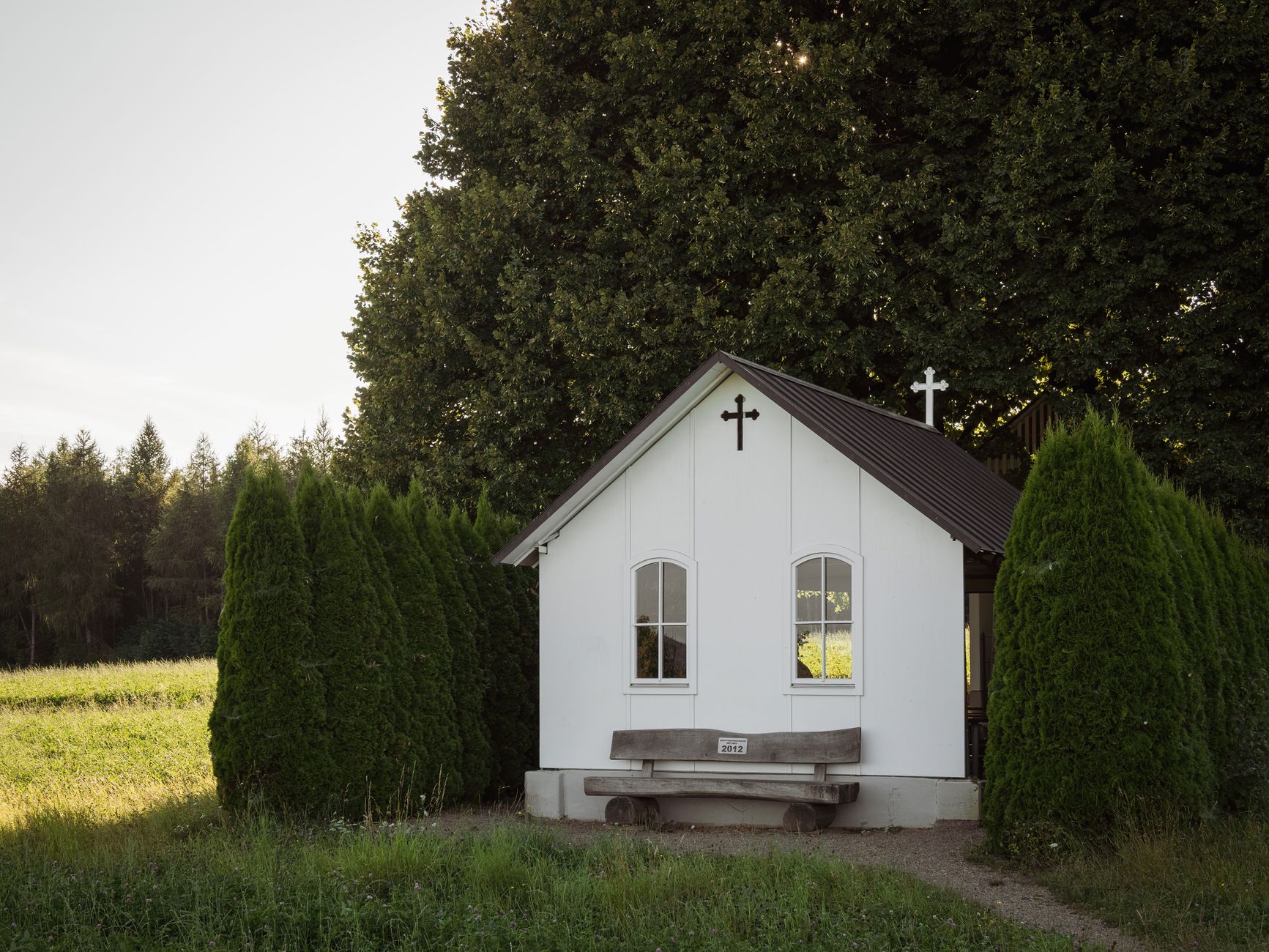
I want to be clear about what Bethel Chapel was, so you understand it wasn’t some grand inheritance. It was a one-room clapboard church, white once, gray now, that sat on a half acre at the bend of the Bethel Road with a cemetery behind it. It had been the family church going back four generations, but the congregation had dwindled to nothing decades ago, and for years it had been used maybe twice a year, for a memorial service or a Decoration Day. It had a leaking roof and a sagging porch and a graveyard going to weeds. It was, by any sensible measure, a burden. A money pit. A pile of rotting wood on a half acre nobody wanted.
And Mama had chained me and Verna to it. Together. Equal and undivided. Neither may sell. Neither may sign her part to the other. They will keep it together or not at all.
I understood, sitting in that chair, exactly what she had done. She knew us. She knew that if she left us money we’d take it and walk away from each other forever. She knew that if she left us a letter begging us to reconcile, we’d read it and cry and ignore it, because words are cheap and pride is dear. So she didn’t leave us a letter. She left us a job. A job that, by its nature, could not be done alone. You cannot hold a roof up with one hand. You cannot dig a grave or clear a churchyard or mind a building eleven miles from where you sleep, alone, twice a year, forever. She had not asked us to forgive each other. She had simply arranged it so that we could not avoid each other, and then she had died and left us to it.
Mr. Pruitt cleared his throat. “There’s a key for each of you,” he said, and slid two envelopes across the desk. Verna took hers. I took mine. Our hands did not touch.
In the parking lot, by our cars, Verna spoke to me for the first time in thirty years. She said, “I’ll see to the cemetery side. You needn’t come for that.”
I said, “The deed says together.”
She looked at me then, really looked, and there was thirty years in her face, and she said, “I know what the deed says, Cora. I was in the room.” And she got in her car and drove away, and I stood there holding a brass key to a falling-down church my dead mother had handcuffed me to my sister with, and I started to laugh, and then I started to cry, right there in the gravel, because Mama had won and we both knew it and she wasn’t even alive to see.
The first Saturday we met at the chapel was the worst.
We had agreed, by way of two stiff phone calls, to meet there Saturday mornings to assess what needed doing. I got there first. I let myself in with the brass key and stood in the cold dim of that one room, the pews furred with dust, the windows gray with grime, a bird’s nest in the rafters and the smell of damp and old hymnals everywhere, and I felt the whole weight of the place settle on me. The pulpit where Brother Hadley had married Mama and Daddy. The font where I’d been dipped as a baby and Verna after me. The very floorboards we’d scuffed our Sunday shoes on. It was all here, all of it, sixty years of a family, going to rot.
Verna came in at eight on the dot. She stood in the doorway and looked at me and looked at the room and neither of us said good morning. We worked the whole day and barely spoke ten sentences, and every one of them was about the chapel. The roof leaks worst over the east corner. The third pew’s got dry rot. We’ll need a ladder. I’ve got Daddy’s old ladder. Fine. We swept and we hauled and we made a list, and at noon we ate our separate sandwiches at opposite ends of the porch like two cats that have agreed to share a yard, and at three we locked up and drove our separate ways. That was the first Saturday. I went home and sat in the dark and thought, I cannot do this. I cannot do a year of this.
But here is the thing about a job that cannot be done alone. It does not care about your feelings. The roof did not care that I had not forgiven Verna. The roof leaked, and a leaking roof has to be fixed by two people, one on the ladder and one steadying it, one passing shingles up and one nailing them down. You cannot hold a grudge and a ladder at the same time. Your hands are full. And little by little, over the weeks, the work made us talk.
Not about anything. Not at first. About roofing nails and the price of paint and whether the Hadley boy who did handyman work could be trusted to grade the lane. About the weather. About whether it would rain Saturday and set us back. We talked the way coworkers talk, the flat functional talk of two people with a shared task and nothing else, and that was its own kind of mercy, because it asked nothing of either of us but showing up.
November we patched the roof. It took four Saturdays and it about killed us both, two old women up a ladder in the cold, but we got the east corner sound and we got the worst of the gaps shingled and the day we finished, the day no daylight showed through anywhere, Verna stood in the middle of that room looking up at the ceiling and she said, “Mama would’ve liked seeing that done.”
It was the first thing she’d said to me in thirty years that wasn’t about a nail or a board. And I didn’t know what to do with it, so I just said, “Yes. She would’ve.”
And we locked up and went home. But something had moved. Just a hair. The way a door that’s been painted shut gives the first eighth of an inch before it opens.
December we cleaned the inside. We washed every window in that church, the two of us, her on the inside and me on the outside, our faces a foot apart through the glass, scrubbing in little circles, and there was a moment, I’ll never forget it, when she scrubbed and I scrubbed at the same spot from opposite sides and our hands moved together through the glass like we were the same person, and we both stopped, and we looked at each other through the clean place we’d made, and Verna’s mouth twitched, and I felt my own face do something it hadn’t done in her presence in thirty years. We almost smiled. We caught ourselves. But it had happened.
We hung fresh greenery for what would’ve been the Christmas service, though there was no congregation to hold one for. We did it anyway. We didn’t say why. We just both showed up the third Saturday of December with armfuls of cedar and holly, like we’d planned it, though we hadn’t, and we decked that empty church for nobody, and when it was done we sat in the front pew, the two of us, a careful foot apart, and looked at what we’d made. And Verna said, quiet, “I used to love the Christmas service here. The candles in the windows.”
“I remember,” I said. “You always wanted to hold a candle and Mama wouldn’t let you because you’d dripped wax on your dress the year before.”
She laughed. It came out of her sudden and surprised, a real laugh, and it was the same laugh she’d had at twelve, at twenty, the laugh I’d grown up next to, and oh, it took the legs right out from under me, that laugh, thirty years of it gone and here it was back in the room like it had never left. I had to look away. I was afraid of what my face would do.
We sat there a while in the cedar smell, not talking, and then we went home. But I drove the eleven miles with my hands shaking on the wheel, because I’d heard my sister laugh, and I had not known how much I’d missed it until the want of it nearly drove me off the road.
January was hard. January is hard out here anyway, gray and locked-down and mean, and the chapel didn’t need much in January, just minding, just the two of us coming out to make sure the pipes hadn’t burst and the snow hadn’t caved anything. We had more time on those Saturdays. Less to do with our hands. And it was in January, with nothing to scrub or nail, that we finally had nothing to hide behind.
It was a still cold Saturday, the snow blue on the graves out back, and we were sitting in the chapel with the little space heater going between us, and out of a long silence Verna said, “I never told a soul, you know. About Roy. After you didn’t believe me. I never told anybody what he did. I figured wasn’t anybody going to believe me if my own sister didn’t.”
I sat very still. Thirty years I had known I would have to face this, and I had spent thirty years making sure I never did.
“I believed you,” I said. “Later. After I left him. I knew you’d told me the truth.”
Verna was quiet. Then she said, “When’d you know?”
“The day I left him. I sat in this parking lot, right out front here. I couldn’t tell you why I drove out, I just did. And I sat there and I knew. I knew you’d been telling me the truth in that back room and I’d called you a liar and there wasn’t any taking it back.”
“That was twenty-six years ago,” Verna said.
“Twenty-six years ago,” I said.
She turned and looked at me, and her eyes were wet, and she said, “Cora. You’ve known for twenty-six years that I told you the truth, and you never came. You never once came and said it.”
And there it was. The whole of my shame, laid out plain in the cold of that little church, in my sister’s wet eyes, and I had no defense, because there was none. I had let her carry the weight of being disbelieved for twenty-six years after I myself stopped disbelieving her. My pride had not just wronged her once at the wedding. It had wronged her every single day since, every day I knew the truth and stayed silent, every day I let her think I still thought her a jealous liar.
“I couldn’t,” I said, and my voice broke on it. “Verna, I couldn’t. I’d told everyone. I’d built my whole self on being right. And to come to you would’ve meant tearing all that down and standing in front of you with nothing, and I was a coward. I was a coward for twenty-six years and there’s no prettier word for it. I let you carry it. I’m sorry. I am so sorry. There aren’t words enough but I’m sorry.”
The space heater ticked. Outside the snow lay blue on Mama’s grave, fresh-cut, not yet settled.
Verna didn’t say it was all right. I’ll always love her for that, that she didn’t make it cheap, didn’t pat my hand and say no harm done. She let it be as heavy as it was. She sat with it. And after a long time she said, “He hurt you too. After. I know he did. The way he was, he wouldn’t have stopped at the one thing.”
“He did,” I said. “He hurt me plenty.”
“I used to lie awake,” Verna said, “those four years you were married to him, knowing what he was, and not able to do a thing, because you wouldn’t have my voice in the house. I used to pray for you, Cora. Every night. I prayed God would get you out of that house alive. And when I heard you’d left him I cried half a day, I was so glad. And then I thought, now she’ll come. Now she knows. Now she’ll come to me.” She looked at me. “And you didn’t come.”
“I didn’t come,” I said.
“For twenty-six years.”
“For twenty-six years.”
And then my sister did a thing I did not expect. She reached over, across the foot of cold air between us, across thirty years, and she took my hand. Her hand was old and cold and strong, the same hand that had held mine crossing the road when we were small, when she was the big sister and I was the little one and she would not let go in traffic for anything. She held my hand in that freezing church and she said, “I forgive you. I’ve been waiting to say it for twenty-six years and you never gave me the chance. So I’m taking it now, whether you come asking or not. I forgive you, Cora. We’re too old and there’s too little left to spend any more of it like this.”
I cried then. I cried the way you cry when something thirty years stopped is finally allowed to move, great heaving sobs that didn’t have any dignity in them at all, and Verna held my hand through every one of them, and she cried too, and the two of us sat in our mother’s chapel in the dead of January and wept and held on, and I understood at last what Mabel had done.
She hadn’t lectured us. She hadn’t shamed us or begged us or guilted us. She had simply known that her two prideful daughters would never come to each other across an empty space, so she gave us a reason we couldn’t refuse. A roof to fix. A church to mind. A duty that needed four hands. She put the work between us like a bridge and she trusted that if she could just get us standing on it together, week after week, season after season, the rest would come. She didn’t make us forgive. She made us show up. And it turns out that showing up, over and over, for a whole year, is how forgiveness gets in. Not through a grand moment. Through a hundred small Saturdays.
We changed, after January. The Saturdays got easier and then they got to be the best day of my week. February we started bringing one pot of coffee instead of two thermoses and sharing it. March we started staying past three, sitting on the mended porch as it warmed, talking. And how we talked. Thirty years of catching up, all the things the other had missed. She told me about her husband Earl, dead now eight years, a good man, the kind I should have married. I told her about my empty years, the jobs, the little house, the long loneliness I’d built and called a life. She told me her granddaughter was getting married in the spring. I told her I’d lost the ability to make Mama’s biscuits and she said she still had the recipe in her head and she’d teach me. We were old women. We did not have thirty more years to make up for the thirty we’d lost. But we had whatever we had, and we’d decided, both of us, without ever quite saying it, to spend every bit of it together.
In April we painted the chapel. White again, bright new white, the two of us and the Hadley boy and Verna’s son-in-law, four days of it, and when it was done that little church stood at the bend of the Bethel Road gleaming like it hadn’t in fifty years, white as a bride, and people driving by slowed down to look. Somebody from the county paper came and took a picture. Two sisters restore the old Bethel Chapel, the caption said. They printed our names. Cora and Verna. Together in print for the first time since my wedding announcement.
In May we held a service.
It was Verna’s idea, or maybe it was mine, or maybe by then we’d gotten so we couldn’t tell our ideas apart anymore, the way it used to be when we were girls. We put the word out that Bethel Chapel would hold a Decoration Day service like in the old times, and we didn’t expect anybody, and forty people came. Forty. Old folks who’d been baptized there, their children, a few young families curious about the pretty white church that had appeared on the Bethel Road like a thing risen from the dead. We had a preacher down from Cartersville. We had hymns, the old ones, sung by people who remembered them. We had candles in the windows, and Verna held one, and didn’t drip a bit of wax, and caught my eye across the chapel and grinned like the girl she’d been.
And we sat together in the front pew, my sister and I, in the church our mother had used to chain us back together, and we sang. And I thought about Mama out back in the churchyard, fifty feet from where we sat, and I thought, you sly old woman. You knew. You knew all along that the only way to make two stubborn fools forgive each other was to make them build something together, and you didn’t live to see it, but you knew it would come, and it came. It came, Mama. It came.
Verna lives with me now, did I say that? Her granddaughter married and moved off, and Verna’s house got too big and too quiet, and one Saturday on the porch she said it was foolish for two old widows to keep two houses eleven miles apart and pay to heat them both, and I said it surely was, and she moved in that next month. We sleep down the hall from each other now the way we did as girls. I make the coffee. She makes the biscuits, Mama’s biscuits, and she has, in fact, taught me, and I can almost get them right.
We still go to the chapel every Saturday. We don’t have to anymore, the roof’s sound and the paint’s fresh and the churchyard’s clear. But we go. We mind Mama’s grave and we sit in the front pew a while and sometimes we don’t say a word and sometimes we talk till the light goes gold in the new-washed windows. It is the best half acre on this earth, that little patch at the bend of the Bethel Road, because it is where my mother gave me back my sister, eleven miles and thirty years too late and exactly in time.
If you have a silence like that in your family, a road you’ve learned not to take, a sister or a brother or a child you’ve trained yourself not to see, I will tell you what I learned at the age of sixty-one in a cold falling-down church. You will not fix it with words. Words are cheap and pride is dear, and the right speech will never come, and the apology will sit unsaid in your chest until they lower you into the ground beside them, fifty feet apart, still not speaking. You don’t fix a thirty-year silence with words.
You fix it with a job that takes four hands. You fix it by showing up, one Saturday at a time, until the showing up does the work the words never could. My mother knew that. She didn’t leave me a letter. She left me my sister, and a roof that leaked, and the rest of our lives to mend them both.
We kept it together. Just like she said. Or not at all.
We kept it together.
This story is a dramatization. Names, characters, and details are invented, and any resemblance to real people or events is coincidental.