The Night They Called Me The Help
At 5:47 p.m., thirteen minutes before my son’s engagement party officially began, a woman in a headset named Portia looked at my father’s wheelchair, then at my discount-rack navy dress, then back at my father, and said, “The companions eat in the kitchen with the drivers, hon. I’ll show you back.”
I did not understand her at first. I actually turned around to see who she was talking to.
My name is Vivian Holt. I am fifty-eight years old. I spent thirty-one years as an emergency room nurse at Bellwood Memorial before I hung up my badge two years ago to care for my father full time, and on that particular Friday in May I had driven sixty-two miles from the only town I have ever called home to watch my son get engaged to a woman I had met exactly twice. I was not a companion. I was not hired help. The man in the wheelchair was not my client. He was my father, Emmett Holt, eighty-three years old, eleven months out from a stroke that took the strength from his left side and most of the volume from his voice, and the woman correcting my seating assignment before I had said a single word to her was standing between me and the party thrown to celebrate my only child.
I want to tell you exactly how that happened, and exactly what happened after, because for about forty minutes on the worst night of an otherwise wonderful season in my life, I stood in a hallway outside a kitchen and learned something about being underestimated that I have not forgotten since, and I doubt I ever will.
The boy I raised alone
I should tell you about Weston first, because none of the rest of it makes sense without him.
I married his father, Callum Holt, when I was twenty-two. Callum ran three hundred acres outside Bellwood, corn and soybeans mostly, a little dairy on the side that never made money but that he loved anyway. We had Weston two years later, in the same hospital where I would go on to spend three decades working nights. Callum died of a heart attack in the equipment shed on a Tuesday in October when Weston was eleven years old. I remember the exact time because the call came in on my pager at 4:52 p.m., during my shift, and I drove home in my scrubs with my hands shaking so hard I nearly missed the turn onto Route 9.
After that it was just the two of us. I picked up every extra shift the hospital would give me. I worked nights so I could be home when Weston left for school and asleep in a chair in the living room, badge still clipped to my scrub top, when the bus dropped him off in the afternoon. I sold sixty of Callum’s three hundred acres to a neighbor named Halvorsen to keep us in the house, and I leased out the rest to a young farmer who still sends me a check every March like clockwork, eleven years running. I coached no soccer teams. I missed some band concerts. I am not going to pretend I did everything right. But I got that boy to eighteen fed, clothed, and decent, and then I watched him get himself the rest of the way through an engineering degree at the state school on loans and a work-study job in the campus dining hall, which is a detail I will come back to, because it matters.
Weston moved to Cedar Falls four years ago for a job with a firm that designs water treatment systems. Cedar Falls is the closest thing we have to a real city, sixty-two miles east of Bellwood on the interstate, close enough that he came home most Sundays for a while and far enough that eventually he didn’t, the way it goes. He met Aubrey Ashford at a charity 5K eighteen months ago. She tripped over a curb near the finish line and he caught her elbow before she went down, which I have always thought was as good a way as any for two people to start a life together, one person keeping the other from falling.
Aubrey is the kind of young woman I liked from the first phone call. Warm laugh. Asked me real questions about my father and actually waited for the answers. Her family, though, is a different world than mine. Her father, Desmond Ashford, owns four car dealerships across two counties. Her mother, Genevieve Ashford, sits on the board of the Cedar Falls Symphony and chairs the spring gala for the children’s hospital and is, by every account I had heard secondhand from Weston, a woman who runs a room the way some people run a farm, with total confidence that everything in it answers to her.
I had spoken to Genevieve exactly twice before that Friday in May. Once on the phone for eleven minutes when the engagement was announced, a call that was pleasant enough, if a little like being interviewed for a position I hadn’t applied for. Once for four minutes at a restaurant in Cedar Falls where our two families had dinner and Genevieve spent most of it explaining, unprompted, the difference between the club she belonged to and “the newer ones.” We had never once met in person for longer than the length of a meal, and Genevieve had never met my father at all.
The dress and the drive
The party was an engagement dinner for a hundred and forty guests at a place called the Marbury Club, an old stone building on eleven acres outside Cedar Falls with a golf course, a ballroom with actual chandeliers, and a membership fee I later learned was twenty-two thousand dollars a year before you ever paid for a single dinner. Genevieve had planned the whole thing herself, down to the calligraphy on the place cards, and she had hired an outside coordinator, Portia Lang, to run the day-of logistics so that Genevieve herself could, in her words to Weston, “actually enjoy her daughter’s night instead of working it.”
I bought my dress at a consignment shop on Fenner Street for thirty-eight dollars two weeks before the party. It’s navy, it has a modest neckline, and the woman at the shop took it in an inch and a half at the waist for free because she has known me since I brought my own mother there for funeral clothes nine years ago. I am not a woman who apologizes for a thirty-eight dollar dress. I raised a good man on a nurse’s salary and a leased-out cornfield and I have never once been ashamed of the arithmetic that took. But I want you to have the picture, because the picture matters to what happened next.
My father cannot be left alone for more than a few hours at a stretch since the stroke. His right side works fine. His left leg drags. His speech comes out slow and sometimes not at all, though his mind, I want to be very clear, is completely intact, which is a detail that turns out to matter enormously to this story. He has lived with me since he came home from rehab fourteen months ago, in the room that used to be Weston’s, and there was never a question of whether he would come to his only grandson’s engagement party. Weston had specifically asked for him. “I want Grandpa Emmett there when I make it official, Mom,” he told me on the phone. “He’s the only grandfather I’ve got left.”
So on that Friday I got my father up at three in the afternoon, dressed him in his good gray suit, the one he wore to Callum’s funeral and has worn to exactly four occasions since, got him and his wheelchair into the accessible van I lease through a program for veterans, since my father did two tours as an Army sergeant near Da Nang in 1969 and 1970 and the VA helps with things like that, and I drove the sixty-two miles to Cedar Falls with the radio on low and my father humming along under his breath to a station he likes, the way he does when he’s happy and can’t say so in words anymore.
We arrived at the Marbury Club at 5:47 p.m. Doors were not scheduled to open until 6:00. I like to be early. Thirty-one years in an ER teaches you that the last ten minutes before anything starts are the ten minutes when things go wrong, and I wanted my father settled, his wheelchair brakes locked, a glass of water at his elbow, before a hundred and forty strangers filled up the room around him.
“The companions eat in the kitchen”
A young man in a valet vest took the van keys. I got my father’s chair down the ramp myself, the way I always do, and we came in through the side entrance because the front steps have no ramp, which is its own small unkindness I will set aside for now.
That is when Portia Lang found us in the hallway outside the ballroom.
She had a headset, a clipboard, and a laminated seating chart clipped to it. She looked at my father in his chair, at the way I was bent slightly to adjust the strap that keeps his left arm from sliding, at my thirty-eight dollar dress, and she made a decision about who we were in about four seconds, and she never once asked.
“The companions eat in the kitchen with the drivers, hon,” she said, not unkindly, the way you’d say it to someone you assumed already knew the arrangement. “I’ll show you back. We’ve got a nice spot set up, television and everything, so he won’t be bored during the toasts.”
I said, “I’m sorry, what?”
“For the gentleman’s caregiver,” she said, gesturing at me with her pen, still not looking directly at my face, already turning to lead the way. “Family and guests are seated in the main room. Staff and companions have a space in the back so it doesn’t get, you know, complicated during the toasts.”
I told her I was not his caregiver in the sense she meant. I told her my name was Vivian Holt.
She checked her clipboard. There was no Vivian Holt on it, because Genevieve, who had built the seating chart, had listed me only as “Weston’s mother, plus one,” a plus one she had assumed, without ever asking, would be some kind of hired aide rather than a man in a gray suit who happened to be her future son-in-law’s only living grandfather. Portia found no match for the name Vivian Holt anywhere on her chart, looked at the wheelchair again, looked at me again, and drew her own conclusion a second time, more confidently now that the paperwork seemed to back her up.
“I understand this is a nice club and it can feel like a lot,” she said, in the gentle, practiced voice of someone who has said a version of this sentence to a version of me before, “but I promise the back room is comfortable. We really do try to make it easy on the companions. A lot of families don’t think about it until the day.”
At that point a second woman appeared behind her, in a pale green dress with her silver hair set in careful waves, and I knew from Weston’s description before I ever heard her voice that this was Genevieve Ashford.
“Is there a problem, Portia?” Genevieve said, and then, looking at my father and then at me with a small, patient smile, the smile you give a stranger you’re being kind to, she said, “Oh, is this Mr. Holt’s companion? Portia will get you both settled, don’t you worry. We’ll take good care of him.”
I stood there in the hallway of a private club I did not belong to, holding the handles of my own father’s wheelchair, and I understood, with the particular clean clarity you get when you have spent three decades reading a room in four seconds flat, that neither of these women had the faintest idea who I was, and that both of them were far more certain of their own good manners than curious about the actual facts in front of them.
I did not raise my voice. I want to be honest about why. Part of it was thirty-one years of a job that trains the shout right out of you, because a calm voice moves a room and a raised one only feeds a crisis. But the larger part was Weston. It was 5:51 p.m. His engagement party started in nine minutes. I was not going to be the reason my son’s night began with his mother making a scene in a hallway over a seating chart, however wrong that seating chart was.
So I said, quietly, “I’m his daughter, not his caregiver, but that’s all right, I’ll go on back.”
Genevieve’s smile did not so much as flicker. She folded two twenty-dollar bills, the tip she had apparently pre-planned for whichever aide showed up with whichever elderly guest, and pressed them into my hand as she turned to greet an arriving couple in the doorway. “For your trouble tonight,” she said, already walking away. “You’re a saint, doing this work.”
I put the forty dollars in my purse rather than make a scene about that too. I have thought about that decision many times since. I am still not sure it was the right one. I only know it was the one a person makes when she has thirty-one seconds to decide between dignity and her son’s happiness, and chooses the second thing every time.
The back hallway
Portia led us down a service corridor past the kitchen to a small room with a television playing a golf tournament with the sound off, four folding chairs, and a card table with a pitcher of ice water on it. Two other people were already there: a home health aide named Paloma, tending to an elderly gentleman named Mr. Halloway, and a driver in a black suit who introduced himself as Desmond Ashford’s regular car service and who spent the whole evening on his phone.
Paloma was kind to me, the way people who do real, hard, unglamorous work for other people’s families tend to be kind to each other. She poured my father a glass of water without being asked and adjusted the volume on the television when he leaned toward it, and somewhere in the first twenty minutes she asked me, gently, how long I’d been doing this work, meaning caregiving, meaning the job Portia and Genevieve had assigned me on sight.
I could have corrected her too. I am not sure why I didn’t, except that Paloma had been kinder to my father in ninety seconds than either of the Ashford women had managed in five minutes, and it felt small and mean to make her feel foolish for a mistake that two people with far more information had made first, and with far less excuse.
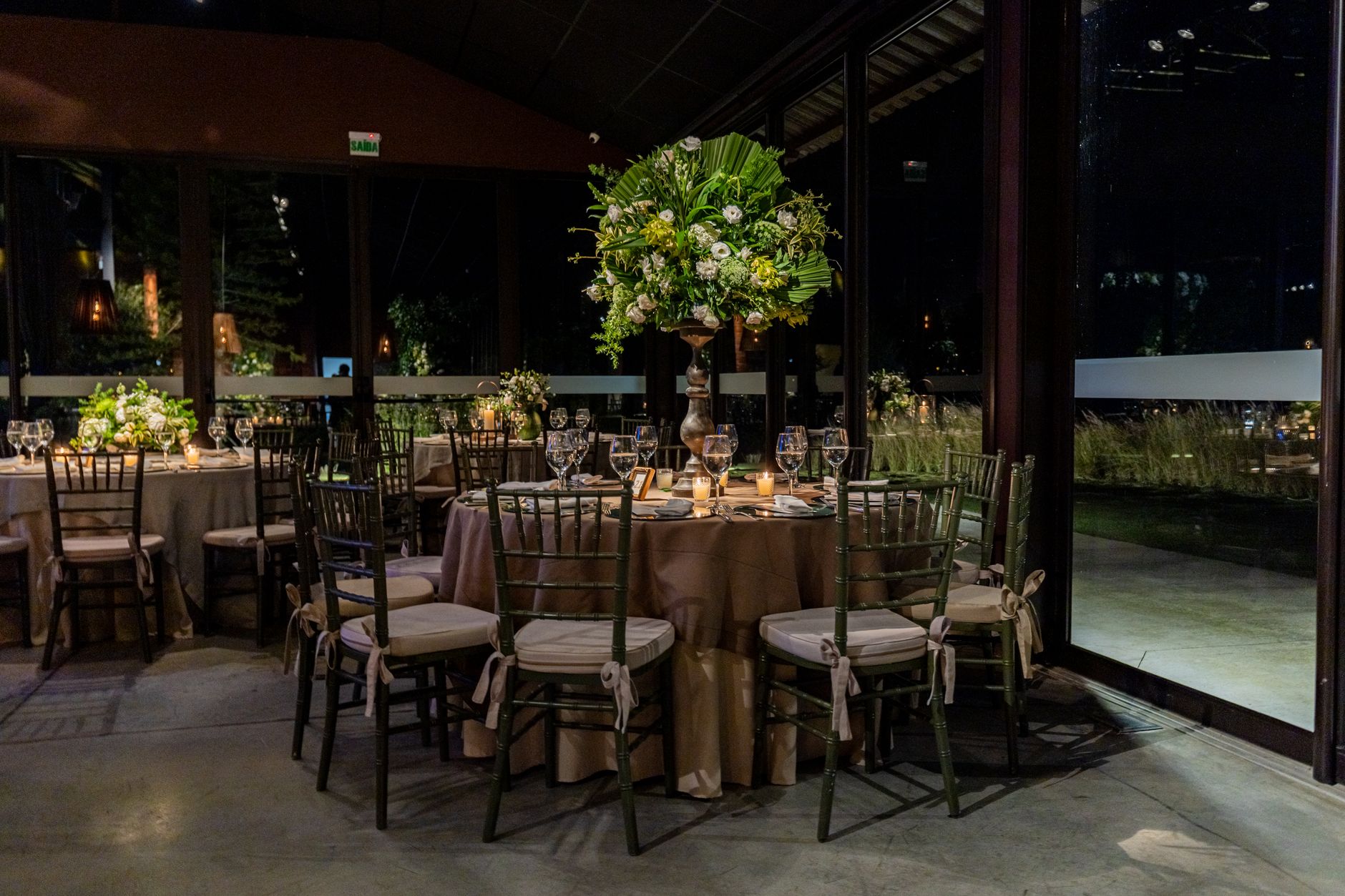
I sat with my father’s hand in mine and watched, through the service doorway, a sliver of the ballroom I could see from that angle: white tablecloths, chandeliers actually lit with real candles inside glass, a string quartet setting up in the corner, waiters in black vests moving with trays of something sparkling. I could hear the party building the way you hear a storm building, a low roar of voices getting louder as more people arrived, laughter breaking loose in patches, and somewhere in all of it, I knew, was my son, in the good navy suit I had helped him pick out over video call three weeks earlier, waiting to stand up in front of a hundred and forty people and ask everyone he loved to witness the happiest night of his life so far, not knowing that his mother and grandfather had been quietly filed under “staff” and routed to a folding chair behind the kitchen.
My father squeezed my hand with his good right hand. He cannot always get words out cleanly since the stroke, but he got three out then, slow and deliberate, the way he has to build every sentence now, one hard-won word at a time.
“Not. Your. Fault,” he said.
I have thought about those three words more than almost anything else that happened that night. My father, eighty-three years old, his own night interrupted, his own dignity handed off to a folding chair in a service corridor, spent his three words making sure I didn’t blame myself.
What happened at 7:22
At 7:22 p.m., during the cocktail hour, before the dinner and the toasts had even begun, a commotion started in the ballroom that I heard before I understood.
It was a specific sound. Anyone who has worked an ER for three decades knows the sound of a room realizing something is wrong before the room has the words for what it is: a chair scraping back too fast, a glass hitting the floor, a rising register of voices that goes from conversational to alarmed in about four seconds. I was up and moving toward the doorway before I had consciously decided to move, the way your body does after enough years of training it.
Through the gap in the service door I could see a small crowd gathering near the dessert table, and at the center of it, a woman in a champagne-colored gown going down slowly against a chair, not fainting cleanly but folding, confused, sweating, her hand pawing at the air. I heard someone say, “Is she choking?” and someone else say, “Should we call an ambulance?” and nobody moving with any real purpose, the way a crowd of well-meaning strangers freezes when the emergency is real and the training is not there.
I did not ask permission. I walked straight through that service door, past Portia, who put a hand out to stop me and then, seeing my face, did not.
The woman on the floor was Adelaide Ashford, Genevieve’s mother-in-law and Aubrey’s grandmother, eighty-one years old. I got down on the floor beside her, checked her pulse, which was rapid and thready, checked her skin, which was cold and clammy despite the warm room, and asked her, loudly and clearly, if she was diabetic. A younger woman near the edge of the crowd, one of Aubrey’s cousins, said yes, insulin-dependent, and that Adelaide had skipped dinner entirely that afternoon, too excited and too busy overseeing flowers to eat, and had been drinking champagne on an empty stomach for two hours.
I have seen this exact presentation more times than I could count across thirty-one years. It read, in about six seconds, like a hypoglycemic episode, not a cardiac event, though you treat any collapse as the worst possibility until you can rule it out, which I did, methodically, out loud, the way you’re trained to narrate a scene so the people around you can help instead of panic. I told a waiter to bring me orange juice or any real sugar, not diet anything. I told someone else, calmly, to call 911 as a precaution even if she came around, because any diabetic episode severe enough to cause a collapse needs a paramedic’s eyes on it regardless of how it resolves. I kept two fingers on her pulse and my voice low and steady, telling Adelaide her name, telling her where she was, telling her help was coming, the exact things you say to bring a frightened, disoriented person back into her own body.
It took four minutes for the orange juice to bring color back into her face and coherence back into her eyes, and another eleven minutes for the paramedics to arrive, check her blood sugar at 41, well below the threshold where a person can lose consciousness, stabilize her, and clear her to stay at the party if she ate something substantial and was watched closely for the rest of the night. Four minutes and eleven minutes. I remember both numbers exactly, because when you are the person kneeling on the floor, time becomes the only thing you’re actually tracking.
Somewhere in the middle of those fifteen minutes, I heard my son’s voice.
“Mom”
Weston had been upstairs taking photographs with the bridal party when the commotion started, and he came down the main staircase two steps at a time the moment someone told him a woman had collapsed near the dessert table. He pushed through the edge of the crowd exactly as I was helping Adelaide sit up against a chair, a paper cup of orange juice still in her hand, her color coming back.
“Mom?” he said. Just that. His face did the thing a person’s face does when two pieces of information arrive at once and refuse to fit together, his mother, on her knees on a ballroom floor in a room she was supposedly banned from, calmly running a medical emergency in front of a hundred people who, until that exact moment, had no idea she was anything but hired help.
“She’s all right,” I told him, still watching Adelaide’s color, still counting her pulse under my fingers out of habit. “Low blood sugar. Paramedics are two minutes out. She’s going to be fine.”
“Mom,” he said again, and this time it wasn’t confusion, it was something closer to horror, because I watched him do the same four seconds of math that Portia had done at 5:47, except backward, and land somewhere much worse. He looked at the folding-chair hallway behind me, at the water pitcher visible through the still-open service door, and I watched my son understand, in real time, in front of his fiancée’s entire family, exactly where his mother and grandfather had spent the first hour and a half of his engagement party.
“Where’s Grandpa Emmett,” he said, and it came out as an accusation aimed at no one and everyone at once.
Genevieve Ashford had arrived at the edge of the small crowd by then, her hand at her throat, watching her mother-in-law’s color return, watching the paramedics come through the front doors with a gurney they ultimately didn’t need, and she heard her future son-in-law say the words “Mom” and “Grandpa Emmett” in the same breath, aimed at the woman she had tipped forty dollars an hour earlier and called a saint for doing “this work.”
I will give Genevieve this much credit, because fairness matters to me even when I am the one who was wronged: her face went through something real. Not performance. Something closer to a woman watching a version of the evening she had built collapse and rebuild itself into a different, worse shape in about eight seconds.
The room finds out
Word moves fast in a room of a hundred and forty people, and it moved fastest of all once Weston, still shaking slightly from the last five minutes, walked back through that service door himself, past Portia, past the folding chairs and the television with the sound off, and found his grandfather sitting quietly with a cold cup of water, and knelt down in front of the wheelchair, and said, “Grandpa, I am so sorry, I didn’t know, nobody told me,” while my father patted his grandson’s cheek with his good hand and worked his mouth slowly around the effort of saying it was fine, it was fine, go celebrate.
Weston did not let it be fine. He wheeled my father’s chair out of that back hallway himself, past the kitchen, into the ballroom, in front of the string quartet and the candles and every one of the hundred and forty guests, and he found a microphone that had been set up for the toasts that hadn’t started yet, and he said, in a voice that was not shouting but was not quiet either, that his mother, who had spent the last hour and a half in a supply hallway because someone had assumed a wheelchair meant hired help, was a thirty-one-year emergency room nurse who had just saved his fiancée’s grandmother’s life with her bare hands on the ballroom floor, and that his grandfather, who had also spent the evening in that hallway, was a decorated Army sergeant who had done two tours overseas, and that both of them were about to sit at the head table for the rest of the night, next to him, exactly where they should have been seated since 6:00 p.m.
I stood at the edge of that room holding my father’s good hand and I watched a hundred and forty strangers go quiet and then start, slowly, to applaud, not for me, I don’t think, so much as for the plain unfairness of what had happened finally being said out loud in a room built for saying nice things to each other, and for the relief of Adelaide sitting upright and pink-cheeked and drinking a second glass of orange juice at a nearby table.
Dutch Sorrell, the club’s general manager, found Portia and Genevieve within the hour, and while I was not present for that entire conversation, Dutch found me later, personally, at the head table, and apologized in specific and useful terms rather than vague ones, telling me the club’s own written policy required staff to confirm a guest’s identity against the host’s list before making any seating determination, that Portia had not done that, and that he would be addressing it with her directly. I appreciated that he did not perform the apology loudly for the room the way Weston’s correction had needed to be loud. Some apologies are for an audience and some are for the person who was wronged, and Dutch’s was the second kind, which told me more about the club, and about him, than the incident itself had.
What Genevieve said on the terrace
Around 9:30 that night, after the toasts, after Weston had gotten down on one knee in front of the whole room and Aubrey had said yes with tears running into her champagne, Genevieve found me alone on the terrace, where I had stepped out for air and to check that my father, now settled and warm at the head table with Paloma’s help getting a proper meal into him, didn’t need anything.
She did not lead with an excuse. I want to give her that. She stood beside me at the stone railing for a moment before she spoke, and then she said, “I built the wrong story about you before I ever met you, and I let a woman I hired build it further, and I want you to know I understand exactly what that cost you tonight, not just the hour in that hallway, but the forty dollars I put in your hand like you were staff I was tipping for a service. I have thought of little else for the last two hours.”
I told her I appreciated her saying it plainly, without hiding behind “if I offended you,” the phrasing people use when they want credit for an apology without admitting the thing that made it necessary.
She asked me, quietly, why I hadn’t corrected her harder in that hallway, why I had let Portia lead us back to the folding chairs without a real fight.
I told her the truth. I told her that in thirty-one years of nursing I learned that some rooms are not the room to win an argument in, that Weston had nine minutes before his own party started, and that a mother’s math in that moment is not complicated: her son’s night mattered more to me in that hallway than my own dignity did, and I would make the same choice again if it meant protecting the first hour of his engagement from becoming a story about me. I told her the difference between us that night was never about money or membership dues. It was that I had spent three decades in rooms where the wrong assumption, unchallenged for even a few minutes, costs someone their life, and I had learned exactly when confrontation saves a person and when it only feeds a fire that was never mine to put out.
Genevieve was quiet for a long moment. Then she said the forty dollars would be donated, in my name, to the veterans’ program that helped pay for my father’s van, and two weeks later a letter from that program confirmed a four-thousand-dollar gift, which was, I understood, less an apology and more an attempt to build something better out of the wreckage of a bad first impression, and I let her, because building something better is a decent instinct even when it arrives late.
The months after
I would like to tell you the friendship between Genevieve and me became instant and easy after that night, and it did not. Trust rebuilds the way a knee heals after surgery, slowly, with setbacks, not a single grand gesture undoing months of assumption in an evening. But she called me herself, not through Weston or Aubrey, three days later, and asked if she could take me to lunch in Cedar Falls, and she showed up having done the work of learning my actual name and career and my father’s actual military record, rather than asking me to perform my own biography for her a second time.
Over the seven months between the engagement party and the wedding, Genevieve visited Bellwood twice, once for a Sunday dinner at my kitchen table, no driver, eating a pot roast I did not dress up for the occasion, and once for my father’s eighty-fourth birthday in October, where she sat beside him for forty minutes while he told her, one hard word at a time, about Da Nang in the dry season, and never once checked her phone.
Portia Lang, for her part, sent me a handwritten note two weeks after the party. I do not think Dutch Sorrell required it of her, though I cannot say for certain. It read, in part, that she had made a fast, wrong judgment in a hallway before a party she was under pressure to run flawlessly, and that she had thought often since about how many other families she might have made that same four-second judgment about before this one finally corrected her out loud. I do not know what became of her work at the Marbury Club. I know her note was the kind of apology that does not ask you to make the apologizer feel better, and I respected it for that.
The wedding, and the seat at the head table
Weston and Aubrey were married the following December, at a small stone chapel in Bellwood rather than the Marbury Club, a choice Aubrey told me she pushed for specifically, because she wanted her wedding to happen in the town that had actually raised the man she was marrying, in the pews his grandfather still sits in most Sundays when his strength allows it.
My father rolled down the center aisle beside me at the rehearsal, practicing the walk he would manage on the day itself, and on the wedding day, Genevieve Ashford herself insisted, over Aubrey’s mild protest that it wasn’t traditional, on personally arranging my father’s spot at the front of the church, checking twice that the aisle was wide enough for his chair and the sightline clear, so that nothing about his seat in that room would ever again be an afterthought decided by someone who hadn’t bothered to ask his name.
At the reception, held in the Bellwood Grange hall rather than any country club, because Weston wanted a room his father would have recognized, Genevieve stood up during the toasts, unprompted, and told a hundred and sixty guests, most of them people from my own town who had known me my whole life, about a mistake she had made seven months earlier in a hallway in Cedar Falls, and about the forty dollars, and about the folding chair, and about what it had cost her, in her words, “to learn, at fifty-nine years old, that I had spent my whole adult life mistaking quiet dignity for something lesser, simply because it didn’t announce itself the way I had been taught to expect.”
She raised her glass to me directly. She said my father had raised a daughter tough enough to save a stranger’s life on a ballroom floor without being asked and generous enough to forgive the people who had put her in that hallway in the first place. I did not cry easily even at my own husband’s funeral, but I cried at that.
What I tell people now
People ask me sometimes whether I regret not making more of a scene in that hallway at 5:51 p.m., whether a louder correction in the moment would have spared me the hour behind the kitchen. I don’t think it would have changed much. A woman who has already decided who you are in four seconds rarely gets talked out of it by your protest in the fifth. What changes a mind like that is not an argument. It is proof, delivered without asking for it, in a moment too real to argue with.
I think about my father’s three words more than almost anything else from that night. Not your fault. He was right, and he was also, in his own quiet way, telling me something bigger than that one hallway. None of it, the folding chair, the assumption, the forty dollars folded into my hand like a tip, was ever a reflection of who I actually was. It was only ever a reflection of how little effort some people put into finding out.
I still work part time now, two shifts a month at Bellwood Memorial, because thirty-one years is a hard habit to fully retire from and because Paloma, the aide who was kind to me in that back hallway before either of us knew who the other one really was, ended up calling me six weeks later to ask if Bellwood Memorial was hiring, and I gave her the number myself, because kindness in a folding-chair hallway is not the kind of thing I forget, and it is not the kind of thing I let go unanswered either.
My father still hums along to that same radio station on the drive to Cedar Falls, which we make now every few months, for lunch with Genevieve, who has become, against every early sign of that Friday in May, someone I would now call a friend. The Marbury Club sent me a formal letter, at Dutch Sorrell’s direction, updating me that their staff seating protocol now requires written confirmation of any guest’s relationship to the host family before any determination is made about where that guest sits. I do not know if that letter changed anything real inside that building. I know it meant something that they wrote it.
What I know for certain is this. I spent an hour and a half of my son’s engagement party in a folding chair behind a kitchen because two women who had never once asked my name decided, in the space of four seconds, exactly who I must be. And I spent the rest of that night, and every month since, proving something I already knew and never needed anyone else to confirm: that the woman in the thirty-eight dollar dress pushing her father’s wheelchair through a side door was never the help. She was simply the one nobody had bothered, yet, to ask.
This story is a dramatization. Names, characters, and details are invented, and any resemblance to real people or events is coincidental.