The Truck She Kept Running
The first cold morning of October, the truck would not turn over, and I stood in the gravel drive in my late husband’s barn coat and cried like the foolish old woman I had become.
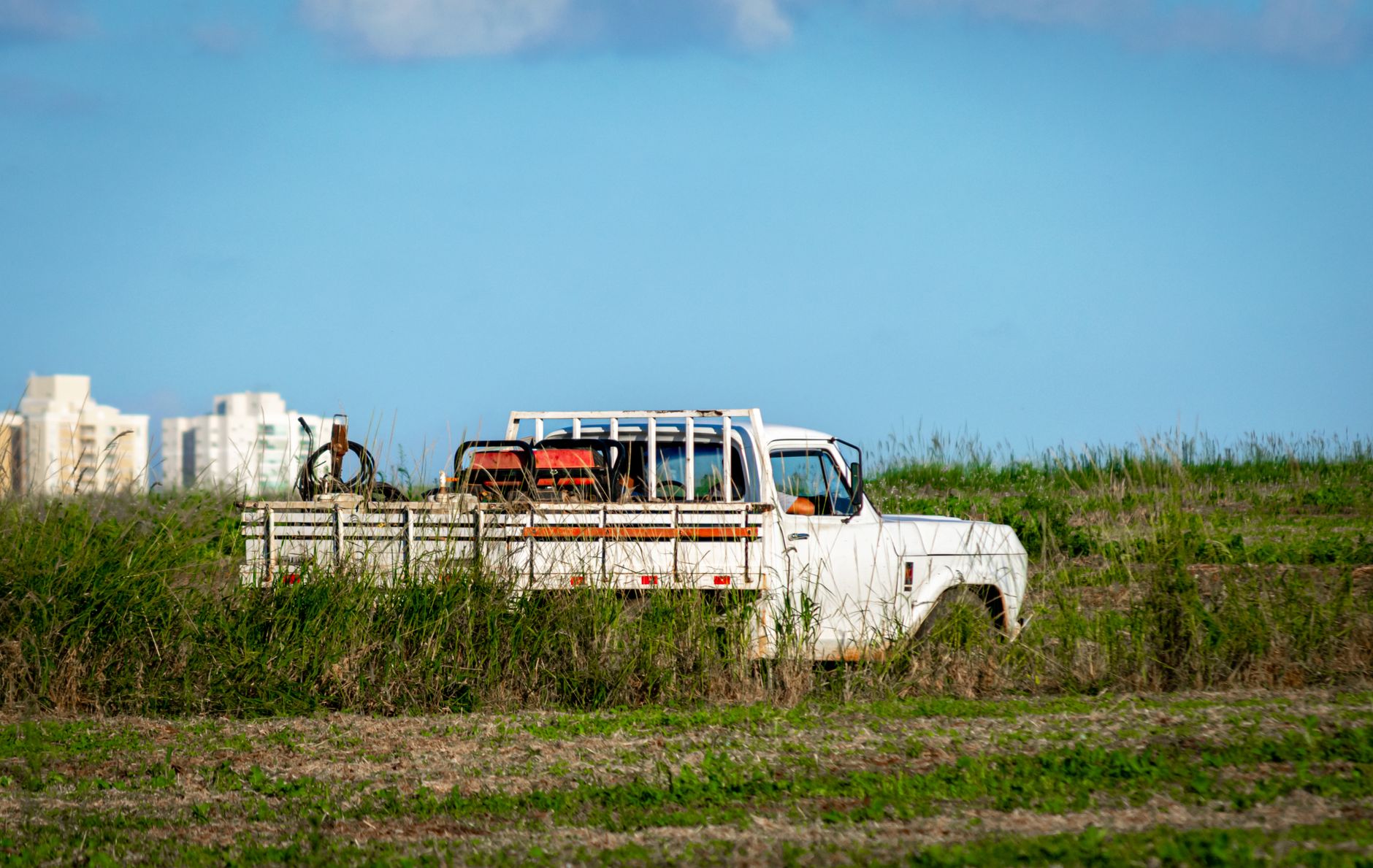
It was a 1994 Ford F-150, the color of a green apple gone dull, with a dent in the passenger door that my son Tobias had put there himself the summer he turned seventeen, backing into the corner post of our cattle chute because he was watching a girl named Lurene walk down the county road instead of watching where he was going. He never fixed that dent. He said it was character. He said a truck without a story was just a payment. By the time he was twenty-three and shipping out the second time, that truck had more story in it than most men have in a whole life, and I had decided, without ever saying it out loud, that I would keep it running until the day I died.
That morning, eleven years after we buried him, it sounded like it had finally made the same decision about me.
I live four miles outside of Halberg, Nebraska, which is not a town so much as a grain elevator, a Lutheran church, a Casey’s, and a feed store that has been called Odland’s since before my mother was born, even though no Odland has owned it in forty years. We are the kind of place the weather people on the Lincoln station forget to mention until there is a tornado. Our high school graduated nineteen seniors this past spring and the whole county turned out for it. If you have never lived in a town like mine, you might think the smallness is a sadness. It is not. The smallness is the reason that, eventually, a young man I had never met in my life ended up under my son’s truck on a Saturday morning, and I want to tell you how that happened, because I have been turning it over in my heart for a year now, and I think it is the truest thing that ever happened to me.
My name is Maren Tholstrup. I am sixty-eight years old. I have been a widow for nine years and a Gold Star mother for eleven, and if you do not know what that second thing means, it means the government sent two men in dress uniforms up my driveway on a Tuesday afternoon in April, and one of them said the words “the Secretary of the Army has asked me to express,” and I do not remember anything else they said because the ground had come up out from under me and I was somewhere else entirely, somewhere I have never fully come back from.
But this is not a sad story. I promise you that. Stay with me.
The boy who loved the truck
Tobias was my only child, which in this part of the country marks you out as a curiosity. The Hendrickson place down the road had nine. The Aalborgs had six. I had complications having Tobias that meant I could not have another, and for years I felt that lack like a draft under a door, the way you can have everything you ever wanted and still be cold in the one spot where the seal is broken.
So Tobias got the whole of me. He got the part of me that should have been spread out over a houseful of children, all funneled down into one freckled, big-eared, gap-toothed boy who could not sit still in church to save his soul and who, by the age of nine, knew more about a combustion engine than his father did.
That truck came into our lives when Tobias was twelve. My husband, Soren, bought it off a man named Casimir Pelle who was retiring out of his welding business and moving down to be near his daughter in Yuma. It was already eight years old then and it had been rode hard, but Soren said a Ford that age was just getting started, and he was the kind of man who could make almost anything true by believing it hard enough.
Tobias claimed that truck the way a dog claims a porch. Before he was old enough to drive it legally, he was driving it anyway, up and down our section road, hauling round bales out to the cattle in the dead of winter when the drifts came up over the fenceposts and Soren’s back was too bad to do it himself. He learned to drive a stick in that truck. He learned to change his own oil lying on a piece of cardboard in our machine shed with the radio playing the Cornhuskers game. He took Lurene Vasholz to the junior prom in that truck, both of them dressed up like a wedding cake, and he washed and waxed it for three days beforehand and then it rained on the way there and he laughed about it the whole rest of his life.
He was not a perfect boy. I will not pretend to you that he was, because the mothers who polish their dead children into saints are doing a disservice to the real child, who was better than any saint because he was actually here. Tobias mouthed off. He got two speeding tickets on the highway to Grand Island and tried to hide the second one from me and I found it in the glove box of that truck and we had a fight that rattled the windows. He drank too much one Fourth of July when he was nineteen and I had to go get him from the Aalborg boy’s place at two in the morning, and I did not speak to him for a day and a half, and then he came in from the field and put his sunburned arms around me and said, “Ma, I’m an idiot, but I’m your idiot,” and that was the end of it.
He enlisted at twenty. He did not tell me he was going to do it until it was done. He came home from the recruiter’s office in Hastings and set the papers on my kitchen table the way you set down a hot dish, quick, like it might burn you to hold it too long. His grandfather, Soren’s father, had been at the Chosin Reservoir in Korea and had come home with three toes gone to frostbite and a silence in him that never lifted. I think Tobias carried that man around inside him. I think he felt he had something to settle.
I did not stop him. I want you to know that I have never once been able to decide whether that was the bravest thing I ever did or the thing I will answer for when I stand before the Lord. I let my only child go to a war because I could see in his face that staying would have killed something in him that the war, God help me, only made stronger.
He was a combat engineer. He cleared roads. The second deployment, the one he did not have to take, he took anyway, because his unit was going and he said he could not sit at home in Nebraska knowing the new kids were over there doing the job he had trained them to do. He was twenty-three. The truck sat in my machine shed under a tarp for the whole eight months he was gone, and I started it once a week and let it run in the yard so the seals would not dry out, because he had asked me to, the last morning, with his duffel already in the back of his buddy’s car. “Keep her running for me, Ma,” he said. He was talking about the truck. I have spent eleven years deciding he was talking about more than the truck.
He did not come home. I will not walk you through that Tuesday. There are some doors a mother keeps shut even in the telling.
Eleven Octobers
After we buried him in the Lutheran cemetery on the hill north of town, next to his grandfather and the plot that would one day be mine and Soren’s, I made myself a promise so quiet I did not even know I had made it until months later when I caught myself out in the machine shed at dawn with a battery charger and a flashlight clenched in my teeth.
I would keep his truck running.
Not in the garage. Not under a tarp as a shrine. Running. On the road. Doing the work he would have it do. I drove it to church. I drove it to Odland’s for cattle minerals and fence staples. I drove it to the cemetery on his birthday with a thermos of coffee and sat in the cab and talked to him with the heater ticking, which is a thing I have never told a living soul before this moment and which I am only telling you because I have come to believe that the things we are most ashamed of are usually the things that prove we loved somebody right.
The trouble is that a 1994 Ford does not care how much you love it. It is a machine, and machines wear out, and I am a woman who can change a tire and check her own oil but who does not know the first thing about a fuel pump or a timing chain or whatever it is that goes wrong in the deep secret guts of an engine when it has turned over a quarter of a million times.
Soren kept it running for the first two years after Tobias died, even though his hands had started to shake by then and his heart, we would learn, was already failing him in a slow quiet way that he hid from me the same way Tobias hid that speeding ticket, because the men in my family would rather die than be a worry. And then Soren died too, in his sleep, in the winter, and I was alone on a quarter section of Nebraska with a cattle lease, a bad furnace, and a green truck that I had promised a dead boy I would keep running.
For nine years I cobbled it along. Lavern Bisgaard, who ran the garage in town until his arthritis closed it, used to come out and tinker with it for the cost of the parts and a rhubarb pie. When Lavern passed, his nephew did it for a while, until the nephew moved to Omaha for a job at a dealership and stopped answering his phone. After that it was whoever I could find. A kid from the FFA. A neighbor’s hired man who owed me a favor. The truck and I limped from one mechanical kindness to the next, and every year there was less of both. The young people leave. The old ones who could fix anything are in the cemetery on the hill with my son. Halberg gets smaller every year, and I was getting older inside of it, and the truck was getting tireder, and I could feel the three of us, me and the town and the truck, all coasting downhill toward the same stop.
Which brings me back to that first cold morning of October, a year ago now, standing in the gravel in Soren’s barn coat, turning the key and hearing nothing but a click and a groan, and crying. Not pretty crying. The ugly kind. The kind where you put your forehead on the cold steering wheel and you say a dead boy’s name out loud to an empty yard.
I had thirty-one dollars in my checking account until the cattle check came. I owed the propane company. I had been putting off a tooth that needed pulling for four months. And the truck, the one thing in this world I had sworn on my son’s grave to keep running, was finally, after eleven years, asking me to let it go.
I could not. That is the whole of it. I could not let it go, and I could not fix it, and there was no one left to call.
The Saturday a stranger came up my drive
I want to tell this part exactly as it happened, because I have learned that when something this good lands in your life, you owe it the dignity of the plain truth.
It was a Saturday, the second Saturday in October. The truck had been sitting dead in the drive for nine days. I had spread the word the only way we still have, which is to tell three women after church and let the Lord and the Halberg grapevine do the rest, that Maren Tholstrup’s boy’s truck had finally quit and she did not know what she was going to do. I was not asking for help. We do not, here. You let it be known, and then you wait to see what the community decides you are worth, and you try to make your peace with the answer either way.
I was at my kitchen sink when I saw the car come up the section road and slow at my mailbox. It was an old Honda, gray, with Colorado plates, which meant nothing to me. It turned in. A young man got out. He was maybe twenty-six, twenty-seven. He had on a faded olive field jacket, the kind the Army issued in another era, and work boots, and he stood for a second looking at the truck the way you look at a horse you have heard about but never seen.
I went out on the porch. I did not recognize him from anywhere. In a town my size, that alone was remarkable.
“Help you?” I said, which is how we say hello to a stranger out here.
He took off a ballcap. He had a soft, tired face and the kind of short haircut that is growing out from something. “Mrs. Tholstrup?” he said. “My name’s Ansel Kjerstad. You don’t know me. I served with your son.”
I had to sit down. There was a metal chair on the porch and I found it.
He stayed at the bottom of the steps, the way a man does when he does not want to crowd you. He told me he had been a private, a kid, nineteen years old, on his first deployment, when he got assigned to the route-clearance team that my Tobias was a sergeant on. He told me my son had taken one look at him, this terrified Minnesota farm kid who did not know his elbow from a culvert, and had said, “Kjerstad, stick to me and do exactly what I do, and I will personally see you get home to whatever girl you’ve got a picture of in your helmet.” He told me Tobias did exactly that, for four months, until the morning everything changed, and that he, Ansel, was alive and standing in my driveway because of choices my son made that I will not put into this story because they belong to those men and not to me.
“He talked about this truck,” Ansel said. “About teaching himself to drive it in the snow. About a dent in the door he wouldn’t fix.” He looked over at it. “I heard from a guy who heard from a guy in the unit Facebook group that it finally quit on you. That you didn’t have anybody to look at it.” He turned the ballcap over in his hands. “I’m a diesel mechanic now. Out in Colorado. I had some leave saved up.” He stopped. He was not a smooth talker. “I drove out, ma’am. I’d like to fix your son’s truck. If you’ll let me.”
I have been to a great many church services in my life. I have heard a great many men in robes try to explain the love of God. None of them ever got as close as a tired young man in a thirty-year-old field jacket standing at the bottom of my porch steps, having driven five hundred miles to repay a debt to a dead sergeant by fixing his mother’s truck.
What he found under the hood
I made him come in first. He had not eaten. I will not have a soldier on my property who has not eaten, and he was a soldier to me from the second he said my son’s name, never mind that he was out now and working civilian.
I fed him eggs and the last of the ham and put on coffee, and he sat at the same kitchen table where Tobias had set down those enlistment papers, and I made him tell me everything. Not about the bad morning. I never asked him about that and he never offered, and I think we both understood that some things you carry to the grave on the other person’s behalf. But everything else. What Tobias was like over there. Whether he was scared (he was, Ansel said, and he hid it from the young ones so they would not be). Whether he laughed (constantly, Ansel said, mostly at himself). Whether he talked about home.
“All the time,” Ansel said. “He talked about home like it was a religion. He talked about you. He said his mother could keep anything running. A truck, a marriage, a cattle operation, a town. He said you were the most stubborn woman God ever made and that it was the only reason he turned out worth anything.”
I had to leave the room for a minute. I went and stood in the mud room and pressed a dish towel to my face and let it come, because eleven years of a thing does not stop coming just because you have grown used to carrying it. Then I washed my face at the mud room sink, and I came back out, and I said, “Well. Let’s go see about this truck.”
He worked on it for two days.
The first thing he did was something no mechanic I had paid had ever done. He sat in the cab for ten minutes before he touched a single tool. Just sat. Hands on the wheel. Looking at the dent through the windshield, looking at the worn place on the seat, looking at the little plastic Cornhusker my son had glued to the dash when he was fourteen. I watched him from the porch and I did not interrupt. I knew what he was doing. He was meeting my son the only way he could now, through the things my son had touched. I had been doing the exact same thing for eleven years.
Then he got to work, and it turned out the truck was a great deal worse off than I had let myself know.
It was not one thing. It was everything, the way it is with the very old, whether they are trucks or people. The fuel pump was gone, which was what had killed it in the drive. But while he was in there he found a fuel line so cracked it should have caught fire a hundred miles back, and a brake line worn down to a whisper of steel, and a frame rail where the rust had eaten clean through and somebody, years before, had bolted a piece of angle iron over the hole instead of fixing it, which Ansel said with the flat horror of a professional was the only reason I was not already dead in a ditch on the Grand Island highway.
“Mrs. Tholstrup,” he said, wiping his hands on a rag, his face gray, “I’m not going to lie to you. This truck has been trying to kill you for about three years. Whoever’s been keeping it on the road has been doing patch jobs that are worse than doing nothing.” He was angry, but not at me. He was angry the way a son is angry when he finds out his mother has been getting by on toast and tea because she would not say she was struggling.
“Can it be fixed?” I asked. It was the only question I had.
He looked at it for a long time. “Yeah,” he finally said. “It can. But it’s not a fix. It’s a rebuild. Fuel system, brake system, that frame rail’s got to be cut out and a new section welded in and done right this time. Parts alone is more than this truck’s worth on paper by about ten times.” He said the next part carefully, watching me. “It’d be cheaper, ma’am, to let me find you a sound used truck and put your boy’s plate on it.”
“No,” I said.
I did not even have to think. He nodded before I finished the word. I believe he had known what I would say. I believe he had needed to hear me say it anyway, the same way I needed to hear it, the same way you sometimes need to say the most important thing out loud in your own yard to know that you still mean it.
“No,” I said again. “It has to be this one. He learned to drive in this one. He put that dent in this one. I made him a promise about this one.” My voice did the thing it does. “I don’t have the money, Ansel. I want to be honest with you the way you were honest with me. I have thirty-one dollars and a cattle check coming. I can’t pay you and I can’t pay for the parts and I’m an old fool to even want to.”
He was quiet. Then he said something I have repeated to myself a hundred times since.
“Ma’am, I didn’t drive out here to get paid. I drove out here because your son spent four months of his life making sure I’d have the rest of mine. There’s no money in the world that settles that. The only thing that even comes close is being allowed to keep his truck on the road. You’d be doing me the favor.”
How a small town fixes a truck
Here is the part where I learned, at sixty-eight, that I had been wrong about the answer to the question I told you about, the one where you let it be known you are struggling and then wait to find out what the community decides you are worth.
I had decided, in my low years, that the answer was: not much. The young ones had left. The old ones had died. The town was coasting downhill and I figured I was coasting down with it, and that when the truck finally died, that would be the quiet end of something, and no one would much notice.
I was wrong. I had simply forgotten that a small town is not a thing that happens to you. It is a thing you keep running, the same as a truck. You put the work in for forty years, you bring the rhubarb pies, you sit up with the dying and you bring the casseroles to the grieving and you keep the church heated and the cemetery mowed, and you do not do it for a return. You do it because that is what the place is. And then one October a young stranger gets under your boy’s truck in your driveway, and the place you spent your whole life keeping running, runs for you.
Word got out. I do not know exactly how, except that I told three women after church that a soldier who had served with Tobias had come to fix the truck, and in Halberg that is the same as taking out an ad in the Lincoln paper.
The first to come was Thorvald Aalborg, the father of the boy whose Fourth of July party I had to fetch my drunk nineteen-year-old from. Thorvald is seventy-one and farms three thousand acres and has a welding rig on the back of his flatbed that he is rumored to love more than his wife. He pulled up the second morning without a word, looked at the frame rail Ansel had cut out, and said, “I’ll do the weld. Boy, you tell me where.” He had known Tobias since Tobias was in diapers. He did not bill me. He has never mentioned it since.
Then came Lurene. Lurene Vasholz, who was Lurene Pelle now, the girl Tobias took to prom, the girl he was watching walk down the road when he put the dent in the door. She had married a Pelle (a grandnephew of the same Casimir who sold us the truck, which is how a small town works, everything loops back) and she had three kids and a job at the bank in Hastings, and she drove out on her lunch hour with an envelope of cash that the women of the Lutheran church circle had collected without telling me, three hundred and forty dollars in tens and twenties, “for the parts, Maren, and don’t you dare argue, half this town owes that boy a debt it can’t pay.”
The man at the auto parts store in Hastings, when Ansel went in with the list, heard who the truck belonged to and knocked the fuel pump and the brake lines down to his own cost. The Casey’s in town sent out two pizzas to the men working in my drive and would not take my money. A girl of about sixteen, an Aalborg granddaughter I had taught in Sunday school, showed up with a thermos of coffee and just stood and watched and asked Ansel a hundred questions about being a mechanic, and I watched something pass between them, the old keeping-it-running being handed down to the young, and I thought my heart would crack open right there in the gravel.
For two days my driveway, which had been the quietest place in Nebraska for eleven years, was full of people and noise and the smell of hot metal and somebody’s coffee always going. Ansel ran it all. He was patient and exact and he treated that truck like it was a wounded man, like every part of it mattered, because to him it did. At night he would not stay in the house. He insisted on the cot in the machine shed, right next to the truck, and I would look out my kitchen window before bed and see the light on out there and know he was sitting up with it.
The morning it ran
On the third morning, Ansel came in for breakfast and did not sit down.
“It’s done,” he said. “Frame’s sound. New fuel system, new brakes, fresh fluids all the way through. I went over every line on this truck. She’ll run another twenty years if you keep her greased.” He paused, and that tired soft face did something. “I want you to be the one to start it.”
I walked out to the drive. Half the people I have named were already there, the way a small town knows when a thing is about to happen. Thorvald with his thumbs in his belt. Lurene, who had taken a half day. The Aalborg granddaughter with her thermos. The October sun was coming up over the corn stubble all gold and cold the way it does, and the truck sat there in the middle of all of it, that dull green going bright in the light, the dent still in the door, because I had told Ansel to leave the dent.
“You leave that dent,” I had said. “That dent is my son.”
I got up into the cab. It smelled the way it had always smelled, oil and dust and the ghost of the air freshener Tobias bought in 2009. I put my hand on the wheel where his hands had been ten thousand times. I put the key in.
I want to tell you that I said something to my boy in that moment, but I did not. I had run out of words. I just turned the key.
It started on the first try. It did not click or groan or hesitate. It caught and it ran, smooth and strong and true, an engine rebuilt by a man who owed his life to the boy who used to drive it, surrounded by a town that had decided, after all, that the answer to the question was: everything. You are worth everything. You always were. You just could not hear us over the sound of your own grief.
I sat in that running truck with my hands on the wheel and I cried, and through the windshield I watched Ansel Kjerstad stand in my gravel drive in his dead sergeant’s honor, and he came to attention, this young veteran, and he saluted the truck, and then he saluted me, and Thorvald Aalborg, seventy-one years old, took off his cap, and one by one every man in that driveway who had ever worn a uniform or sent a son to wear one did the same.
What I understand now
Ansel stayed two more days. He would not leave until he had taught me, an old woman, how to do the things that would keep the truck running after he was gone, because, he said, “I can’t be here every time, ma’am, but I can make sure you don’t need me to be.” He showed me the new fuel system and how to listen to it. He showed me how to check the brake lines he had run. He left me a list, in careful block printing, of what to watch and when, taped inside the glove box right next to the speeding ticket I never threw away.
Before he left he asked if he could go up to the cemetery on the hill. I drove him in the truck. He stood at my son’s stone a long time, and he said some things I did not hear and was not meant to, soldier to soldier, and then he came back down the hill and he hugged me, this stranger who was no longer a stranger, and he said, “Thank you for letting me, Mrs. Tholstrup. I’ve been carrying this for eleven years too.” And I understood then that he had not driven five hundred miles to save my son’s truck. He had driven five hundred miles to be allowed to set something down. We had been carrying the same boy all this time, on opposite ends of the same long grief, and we had finally, in my gravel driveway, gotten to carry him together for a few days.
He calls me now. The first Sunday of every month, after church, my phone rings, and it is Ansel in Colorado asking how the truck is running and whether I am greasing the front end like he showed me. He drove out again this past spring with a girl, a sweet quiet nurse named Oksana whom he is going to marry, and he wanted her to see the truck and meet me, and I made the ham and eggs again, and we drove out to the cemetery, all three of us, in my son’s truck that runs like new.
That truck is going to outlast me now. I have made my peace with that. When I am gone it will go to Ansel, who will keep it running the way I kept it running, the way Soren kept it running, the way this town keeps itself running, one act of stubborn unrewarded love at a time, handed down the line from the dead to the living, who will hand it down again.
I started out this story telling you I was a foolish old woman crying in her driveway because a truck would not start. I was wrong about the foolish part. There is nothing foolish about keeping a promise to someone you love. The fool is the one who thinks she is doing it alone.
I kept my son’s truck running for eleven years because I thought it was the last thing I could still do for him.
I know now it was never the truck I was keeping running. It was the love. And love, it turns out, is the one engine you cannot keep going by yourself, no matter how stubborn you are. It needs a town. It needs a stranger in a field jacket. It needs the dead and the living working on the same machine in the same gold October light.
My boy’s truck is parked in my drive right now, the dent still in the door. If you came up my section road tomorrow and asked me to, I would take you for a ride in it, and I would point out the corner post he hit watching a girl walk by, and I would tell you that it runs better at sixty-eight years old than it has any right to, and that I did not fix it.
We fixed it. All of us. That is the only way anything good ever gets kept running.
This story is a dramatization. Names, characters, and details are invented, and any resemblance to real people or events is coincidental.