
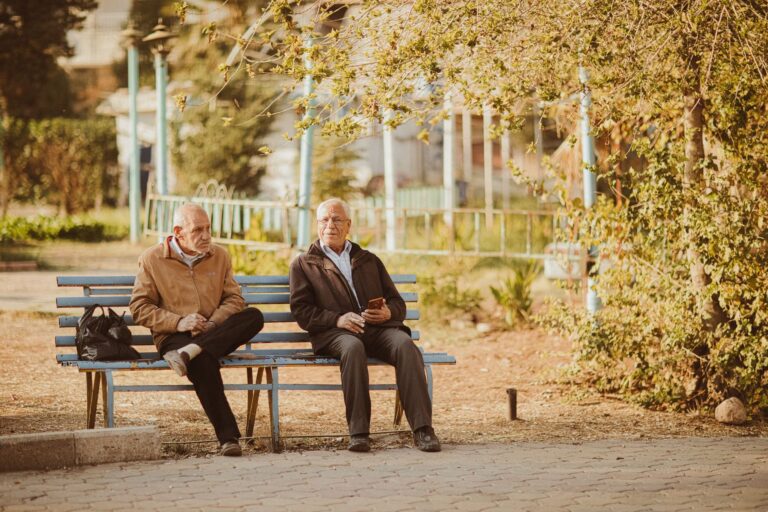
I am seventy-four years old, and for forty of those years I carried a folding card table in the back of my mind. Not a real one. A table I told a man named Roy Tibbets we would sit at again someday, the two of us, the way we used to in country, sharing whatever was in the can and arguing about nothing. I told him that the last time I saw him, in a parking lot in Killeen, Texas, in 1985, when he turned his back on me and got in his truck and drove off. I stood there in the heat and said it to the bumper. We’ll sit down again, Roy. I swear to God we will.
He didn’t believe me. I’m not sure I did either.
We were both in the same rifle company, 1st Battalion, 5th Cavalry, in the Ia Drang country and later up around the highlands, 1966 into 1967. I was a corporal. Roy was a corporal too, a hair senior to me by date of rank, which mattered to nobody but the two of us, and we used to fight about it the way brothers fight about who got the bigger half of something neither one of them wanted. He was from Beaumont. I was from a wheat town in Kansas that doesn’t have a stoplight to this day. We had no business being friends. We were friends anyway. That’s the part nobody tells you before you go. You don’t pick them. The country picks them for you, and then it tries to take them, and what you do in the seconds it tries is the thing you carry the rest of your life.
Here is the thing I carried.
There was a day in the spring of 1967 that I have never told straight to a single living person. My wife knew the shape of it. My kids know there was a war and that I don’t talk about it, which in our family is the same as a closed door with a chair against it. But the inside of the day, the actual order of the minutes, I have kept that the way you keep a stone in your shoe because taking it out would mean admitting how long you walked on it.
We were strung out along a tree line. The third man in our fire team was a kid named Danny Mercer. Everybody called him my brother because he looked like me, same jaw, same big ears, and because I treated him like one. He was nineteen. He was from two counties over from my town, and his mother had asked me at the bus station to watch out for him, and I had said yes the way you say yes to a mother, meaning it more than your own life.
When the shooting started, Danny went down in the open. Not all the way down. Down enough. He was maybe thirty yards out, in the elephant grass, and he was calling. Not screaming. Calling, like a man calling across a field at dusk to say supper’s ready. That sound has never left me. I can hear it right now, writing this at my kitchen table with a cup of coffee gone cold.
I started to go for him. Roy grabbed me by the harness and put me down in the dirt. He had a fistful of my gear and the strength of a man who has decided something, and he held me there with the rounds coming through the grass over both our heads, and he said into the side of my face, two inches away, “You go out there, you’re giving them two.”
I have spent forty years deciding whether he was right.
He held me down for what the after-action report would later call the duration of the engagement and what I have always called the longest stretch of my life. Danny stopped calling somewhere in the middle of it. I felt the exact moment the calling stopped through the ground, the way you feel a door close in another room of a house at night. And Roy did not let go. He held me down past the end of it, past when it would have been safe, because he knew me, and he knew that the second he let go I was going to run out into that grass and find my brother, and that finding him was going to break something in me that holding me there might keep whole.
When it was over, I went and got Danny. He had been gone a while by then. And I turned around, still on my knees in that grass, and I looked at Roy Tibbets, and I said the thing. I have to write it down because I have never said it out loud since. I looked at the man who had just kept me alive, and I said, “You let him die. You held me down and you let my brother die.”
He didn’t say anything. He just looked at me. And that look is the second thing I have carried, right alongside the calling.
Get a new story in your inbox every morning.
Facebook doesn’t show you every story we post. Our free newsletter does. Join 2,500+ readers.
We finished the tour barely speaking. We came home on different rotations. For about eighteen years after that we orbited each other at reunions and funerals, the 5th Cav crowd is a small world, and we would nod, and once in 1985 in that parking lot in Killeen we actually tried to talk, and it went bad inside of two minutes because I brought up Danny and Roy said, quiet, “I’ve thought about that boy every day of my life and I’d do it again,” and I heard “I’d do it again” and I did not hear the first part, and I called him a coward, and he got in his truck.
Forty years. I am not exaggerating for the page. Forty years of not one word.
In that time I married a good woman named Carol who is gone now four years. I raised two kids who turned out better than I had any right to. I drove a propane truck for thirty-one years and was good at it. I buried my parents and most of my unit. And every single year on the anniversary of that day in the grass, I would get a particular kind of quiet, and Carol learned to just set a plate in front of me and not ask, and I would sit at our table and think about a man in Beaumont, Texas, who I had decided to hate so I would have somewhere to put a thing that had no other place to go.
What changed is simple and stupid and it is the truth. In March of this year a doctor told me I have something in my chest that is not going to get better, and that I have a window, not a long one, to do the things on whatever list a man keeps. I drove home from that appointment and I did not think about my kids or about Carol’s grave or about getting my affairs in order. I thought about Roy Tibbets and a card table.
So I found him. It is easy now. My granddaughter did it in about a minute on her phone, which would have taken me a private detective and six weeks in 1990. He was still in Texas, not Beaumont anymore, a little town out west of San Antonio. Still alive. Eighty in the fall. I wrote the address on the back of a feed receipt and I put it in my shirt pocket where I could feel it.
I did not call ahead. I want to be honest about why. It was not strategy. It was cowardice of a particular old-man kind. I knew that if I called, he might say no, and then the no would be a real thing in the world and I would have to live my last little while with it. As long as I just drove, the no was only a possibility, and a possibility you can drive through. So I got in my truck, a thing my doctor and my daughter both told me not to do, and I pointed it south and east out of Kansas, and I started driving to a man I had not spoken to in forty years to set a table we swore we’d share again.
It is about two thousand miles by the route I took, because I would not take the interstate the whole way. I wanted the small roads. I wanted to see the country one more time at a speed where you can read the mailboxes. I slept in the truck twice and in a motel once where the man at the desk had a 1st Cav patch in a frame behind him and we talked for an hour and I cried in the parking lot afterward and didn’t fully know why.
I want to tell you about the second night, because it is the night I almost turned around. I was somewhere in Oklahoma, in a gravel lot behind a closed feed store, eating a gas station sandwich in the cab with the dome light on. And the old argument started up in me again, the one I’d been having with myself for forty years. It said, Roy was a coward. It said, you don’t owe that man a two-thousand-mile apology, he owes you a brother. It is a strange thing about an old grievance. It does not want to die. It will fight you for its life in a gravel lot at midnight, because it has been the load-bearing wall of your house for so long that some animal part of you believes the roof comes down without it. I sat there with the sandwich going cold in my hand and I let it have its say. And then I did a thing I had not done in forty years. I made myself walk through the actual minutes of that day, in order, slow, the way you’d walk a man through a field to defuse what’s buried in it. And when I got to the part where Roy held me down past the end of the shooting, past safe, I finally asked the question I had spent four decades refusing to ask. Why the extra minute, Roy. Why did you hold me down a full minute after it was over. And I did not have an answer. And the not having one scared me worse than the dying in my chest, because it meant the story I had built my whole life on had a hole in the middle of it that I had never once looked into. I started the truck. I kept driving south.
The whole drive I rehearsed. I am seventy-four and I rehearsed like a kid before a date. I had a whole speech. I was going to explain that I had been wrong, that I had known even on my knees in that grass that he was right, that a man who runs into open fire for a body gives the enemy a second target and a second grief and accomplishes the math of nothing. I was going to tell him I had spent forty years angry at him because anger was load-bearing, because if I let it go the whole structure I had built to stand up inside of might come down. I had it all worded. I practiced it at seventy miles an hour through east Texas with the windows down.
And here is what I did not know, what I had never once let myself think in forty years, because I had been too busy being the one who was owed something.
I pulled up to his place a little before noon. It was a small house, well kept, a flag pole with the colors up and a POW/MIA flag under it, snapped tight in the wind. There was a truck older than mine in the drive. I sat in my own truck for I would say twenty minutes. A long time. Long enough that a woman came out on the porch of the house next door and looked at me, and I lifted my hand to show I wasn’t anything to worry about, and she went back in.
Then I got out, and I walked up to the door of a man I had called a coward to his face on the worst day of both our lives, and I knocked.
I heard him before I saw him. A slow heavy step and the particular grunt of an old man getting up out of a chair he’d rather have stayed in. The door opened.
He had gotten old the way I had gotten old. We are not the men in the photographs. His hair was gone white and there wasn’t much of it and his hands shook a little, the way mine do, and he was thinner than I remembered, and for one full second he did not know me. Then he did. I watched it land. I watched forty years go across his face like weather.
I had my whole speech. Every word of it. I had it loaded and ready and I opened my mouth to start it.
And what came out instead, in a voice I did not recognize as my own, an old cracked thing, was this. “Roy. I’m sorry. I’ve been sorry the whole time. I just couldn’t get here.”
And Roy Tibbets, eighty years old this fall, stood in his doorway and his face came apart, and he reached out and took two fistfuls of my jacket the exact way he had taken two fistfuls of my harness in the grass forty years before, except this time he was not holding me down. He was holding me up. And he pulled me in against him, this old man, and he said into the side of my face, two inches away, the way he’d said the other thing, “You think you’re the one who’s been carrying it.”
That is when I learned what he had been carrying. And it was not what I thought. It was so much worse than what I thought, and so much more like grace than I had any right to receive, that I am going to have to set the rest of it down carefully, the way you set down something you’ve waited forty years to be allowed to hold.
Because Roy had a piece of that day I never had. Roy could see something from where he was that I could not see from where he held me. And the thing he had carried alone for forty years was not the guilt of holding me down. He had made his peace with that part. He told me he would do it again, and I finally heard the whole sentence this time. No, the thing he had carried, the thing that put the shake in his hands and the POW flag on his pole and the look on his face in that parking lot in 1985, was about Danny. About what Roy saw, and what Roy chose not to tell me, in that grass, on his knees, the same as me, the thing he decided in a half second that I could not be allowed to know if I was going to be able to stand up and keep being a man for the next forty years.
He decided to carry it for both of us. He let me hate him so I wouldn’t have to carry the real thing. He took the blame for letting Danny die because the blame was lighter than the truth, and he handed me the lighter thing and kept the heavy thing, and he never once in forty years, not in that parking lot, not anywhere, told me what he’d actually done.
He stepped back from me in the doorway, and he looked at me with those wet old eyes, and he said, “You’d better come in. There’s something I should have told you a long time ago. And I’ve got a table.”
He did have a table. A little square one in his kitchen, two chairs. He sat me down at it. He poured two cups of coffee with his shaking hands, and some of it went on the cloth, and neither of us moved to wipe it up. And Roy Tibbets told me, finally, what really happened in the elephant grass on the day my brother died. He told me what he saw that I couldn’t. He told me why he held me down a full minute longer than the fire required, and it was not the reason I had believed for forty years, and when he was done I understood that this man had loved me more than my own family had loved me, more than I had ever once let myself know, and that I had spent two-thirds of my life hating the only person who had carried my heaviest thing so that I would not have to.
I am not going to write down here what he told me. Some of it is Danny’s, and belongs to his mother’s memory and not to a page. But I will tell you this, because it is the part that is mine to give away. When Roy finished, I reached across that little table and I put my old hand over his old shaking hand, and I said the thing I drove two thousand miles to say, the thing I should have said in 1967 on my knees in the grass, the thing I should have said in a Killeen parking lot in 1985.
I said, “Thank you. And I forgive you, you stubborn fool. And I think you’ve been waiting forty years for somebody to forgive you for the wrong thing.”
He laughed. He laughed and he cried at the same time, the way you can only do when you are very old and very tired and a weight you have carried since you were a young man has just, in a kitchen in west Texas over spilled coffee, been set down at last.
I stayed three days. We sat at that table morning and night. We did not talk about the war the whole time. We talked about Carol, and about his Linda who passed in 2019, and about our kids, and about the price of everything, and about the boys from the company, who’s left, which is not many, and where they’re buried. We laughed more in three days than I had laughed in three years. On the second night he got out a card table, a real one, the metal folding kind, and set it up in the yard under the flag for no reason except that I’d talked about it the whole drive without knowing he’d kept one too, all these years, the same as me, in the back of his own mind.
I am home now. I am tired in a way that I think is the right kind of tired. The thing in my chest is doing what it is going to do, and I am at peace with the timing, more peace than I expected, because the one table I needed to sit at, I sat at. We are talking on the phone every few days now, two old men running down the clock together instead of apart. He says he is going to drive up to Kansas before the leaves turn. I told him not to, his daughter will have a fit. He told me to mind my own business, the same as ever.
If you are carrying something against a man, and you have decided he is the villain of your one life, I would ask you only to consider that you might have the story turned around. That the man you blame might have taken the lighter blame on purpose so you could stand. That the door you swore you’d never knock on might open to an old fool who has been holding your weight for forty years and waiting, just waiting, for you to drive up.
Set the table. While there’s still time to sit down. I almost ran out of it, and I am the luckiest man I know.