The Dance Her Father Saved
The cream card
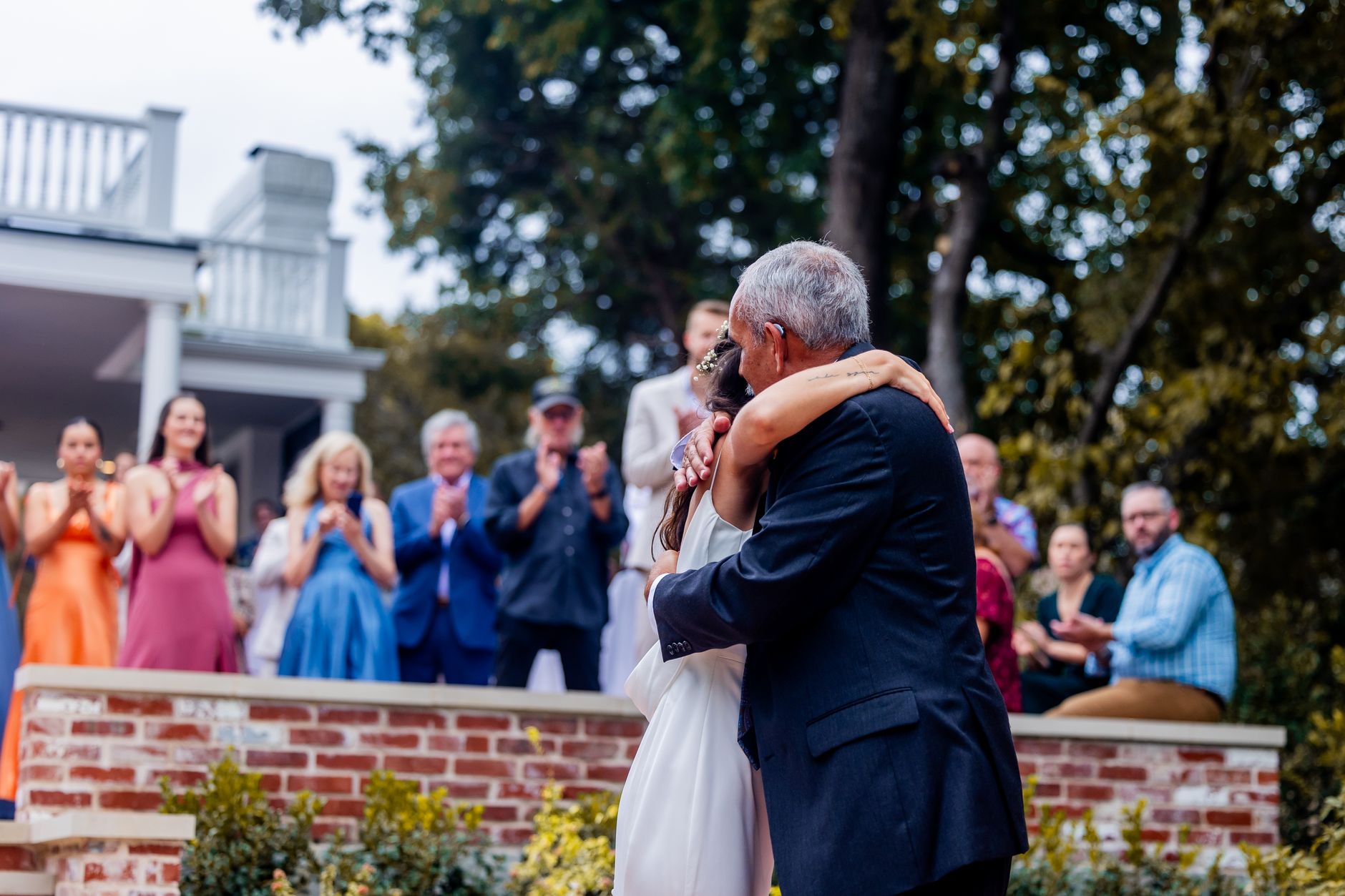
“As it would make everyone uncomfortable.”
That was the last line of the card. It was printed in gold script on heavy cream stock and slipped inside the fold of every program at every one of the one hundred forty place settings at Willow Bend Country Club, and I read it standing behind a chair at table three, holding the chair back because my knees had decided they were finished for the day.
The whole card said: Please note a change to this evening’s program. The father-daughter dance has been removed from the schedule, as it would make everyone uncomfortable.
My husband, Sam, had been in the ground eleven months. The father that dance belonged to was him.
I am Lorene Hadley. I am sixty-three years old, and I have lived my whole life within thirty miles of Hallam, Kansas, a town of nineteen hundred people, one stoplight, and a grain elevator you can see from the highway before you can see the town.
My daughter Katie had been married at two o’clock that afternoon in the Hallam First Methodist Church, the same sanctuary where she was baptized and where we held her father’s funeral in November. Then everybody drove seventy-five miles east to Wichita, because the groom’s mother had picked the club.
I had been in the building twenty minutes, and had picked up the program to see what time the cake went out, when the card fell out into my hand.
I set it back exactly where I had found it, squared it against the edge of the plate, and looked around to see who had watched me do it.
Nobody had. The room was full of people looking at their own phones and their own centerpieces, and the October sun was coming through the tall windows onto the eighteenth green, where my daughter was having her wedding pictures taken.
What Sam was to that dance
I should tell you what that dance was, because the card made it sound like a custom, and it was never a custom at our house. It was a promise.
Sam managed the Hallam Farmers Co-op elevator for thirty-one years. He was six foot three, with hands like fence posts, and he sang bass in the Methodist choir badly enough that the director told him to mouth the high parts.
When Katie was six years old, he stood her up on the toes of his work boots in our kitchen, put his father’s old Ernest Tubb record on the player, and taught her to waltz across the linoleum to “Waltz Across Texas.”
One, two, three. One, two, three. He counted out loud, and she shrieked, and I stood at the sink with a dish towel and pretended I was not watching.
He did it on every birthday until she was too tall for his boots, and after that at Christmas, and the night before she moved to Wichita for nursing school.
He used to say, “That one’s not on any program, Lorene. That one’s just owed.”
In January of last year Sam went to the doctor about a backache. By February we knew it was pancreatic. By August he weighed what he had weighed in the eighth grade, and the doctor stopped saying the word months and started saying the word weeks.
He died on the sixth of November, at home, in the front room with the hospital bed, with the television on low and the dog asleep across his feet.
Katie and Dylan had been dating a year by then. Sam had met Dylan at Easter. He liked him. He said so in his way, which was to say that any boy who would eat three helpings of my potato salad and then ask how a grain leg works was somebody worth watching.