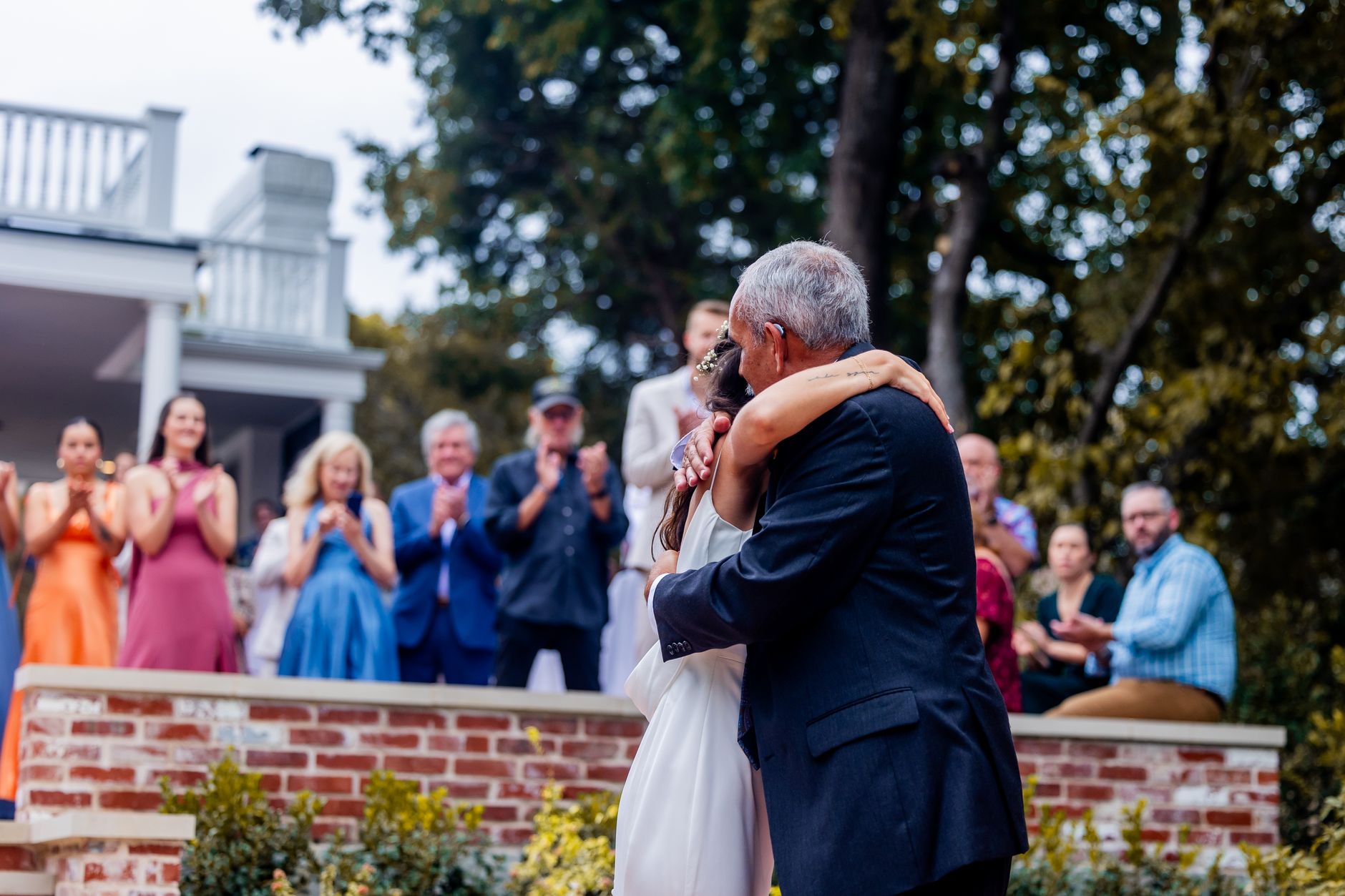
The Dance Her Father Saved
The coffee table
The Hallam people had taken over the club’s bar like a raiding party.
There were sixty-one of them, all told. They had driven seventy-five miles in good clothes, and they sat around the little tables with ginger ales and the posture of people who have been told the drinks are free and are afraid to believe it.
At the biggest table sat the Thursday coffee men. Dale Brandt, Orville Tate, and Harlan Voss had sat at the same round table in the Hallam Cafe every Thursday morning at six-thirty for twenty-six years, and Sam had sat with them for twenty-five of those. They saved his chair for a month after the funeral, until Orville’s wife made them stop.
And at the end of the table, in a brown suit that I believe he bought for Eisenhower’s funeral, sat my brother-in-law, Wendell.
Wendell is Sam’s older brother, seventy-four, a retired lineman for the rural electric co-op, with forty years of climbing poles and one bad hip to show for it. He has Sam’s long jaw and Sam’s ears and Sam’s way of studying the floor before he spoke.
His wife, June, was beside him in a lavender dress, holding his hand as if it might float away.
I put the card down in front of them, between the peanuts and the napkins.
Nobody said anything for a while. Harlan read it, and then Dale, and then Orville held it up close to his face and then far away, as if the words might change.
“I’ve been uncomfortable since nineteen eighty-seven,” Orville said. “Nobody ever had it printed.”
Wendell had not looked up. He was staring at the card the way he used to stare at a downed line, working out which end was hot.
“He asked me last August,” he said at last. His voice was very quiet. “Out on your porch, Lorene. You’d gone in to get the lemonade. He said, ‘Wendell, if I don’t make the wedding, I want you to take the first dance.’ I said, ‘Sam, you’ll make the wedding.’ And he said, ‘Wendell. Hold my place.'”
June squeezed his hand.
“I’ve been learning,” Wendell said. “After the date got set, June put me in the garage with the radio. We took six lessons at the senior center in Newton, Thursday nights, so you boys wouldn’t see.” He looked at his shoes. “I can do a box step. I can almost do a turn.”
“He can do a turn,” June said fiercely. “Mostly.”
“I was going to ask Katie at the end of the toasts. And I figured if somebody stopped me, well, I’d have to be stopped.”
“Wendell,” I said. “I have something of Sam’s that I haven’t played for anyone but me.”