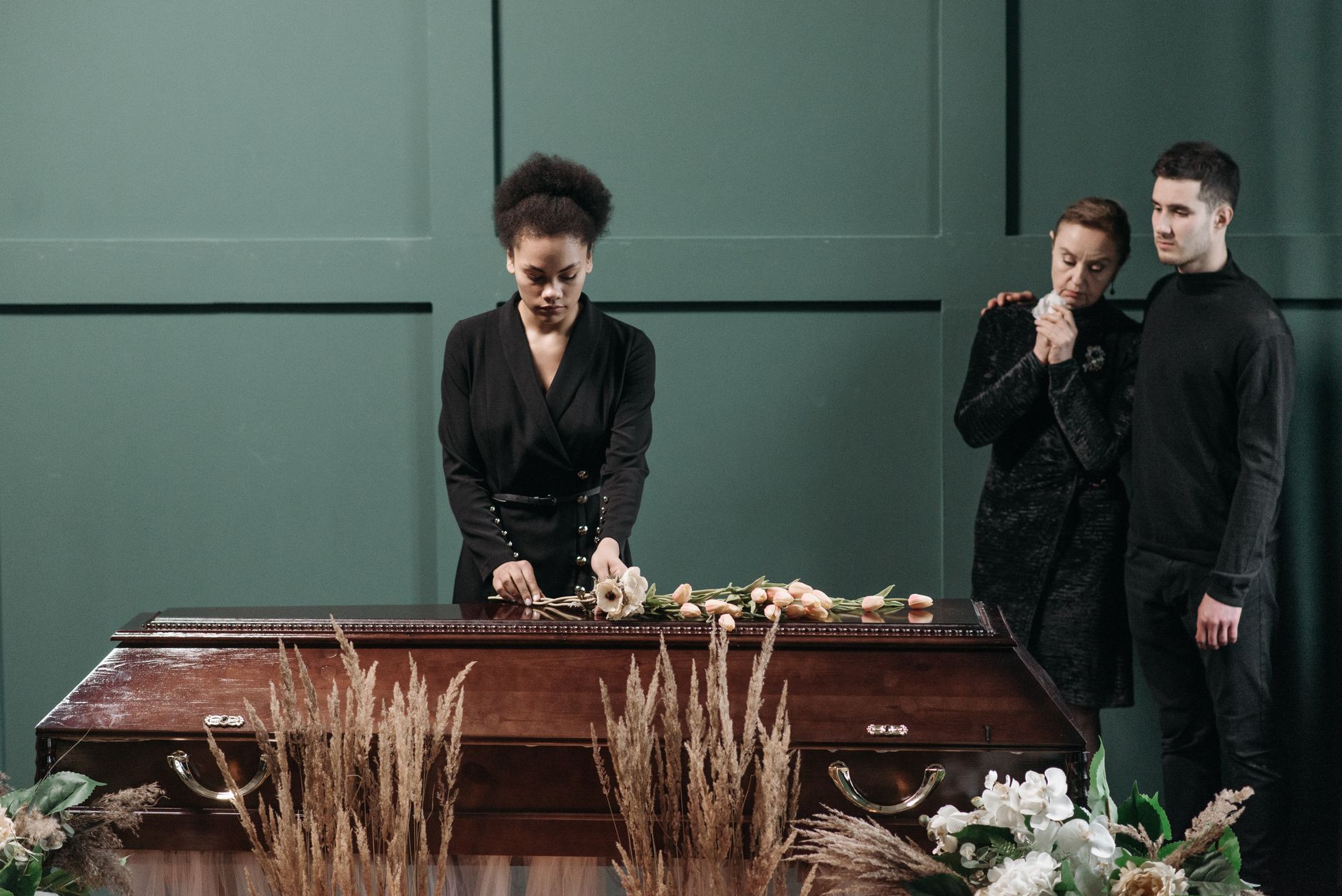
The Red Suit At Dad’s Funeral
My stepmother grabbed the lapel of my brother’s bright red suit jacket in the receiving line at our father’s funeral and told him, loud enough for the first six rows to hear, that he had made a mockery of a dying man’s last wish. She had no idea our father had planned for this exact moment for almost a year, and that by the time she let go of that jacket, she would be the one everyone in that room remembered.
I want to start with the color, because the color is the whole story.
My brother Chris arrived at Garrison Funeral Home on a gray October morning wearing a suit the color of a fire truck. Not maroon. Not burgundy, which is the word people reach for when they want to be polite about something loud. Red. The kind of red you’d notice across a parking lot. Every other man in that building wore black or charcoal or, if he was feeling bold, navy, and there was my little brother walking past our father’s open casket looking like he’d wandered in from a different occasion entirely.
I felt my face go hot the second I saw him. I will be honest about that, because the rest of this story only means something if I’m honest about how wrong I was at the start of it.
“Chris,” I hissed, pulling him by the elbow into the little side hallway by the guest book, “what is wrong with you?”
He looked exhausted in a way I hadn’t seen on him since we were kids and Mom was in the hospital. There were circles under his eyes that makeup wouldn’t have touched. “Not now, Michelle.”
“Dad would have hated this.”
He looked at me for a long second, and something in his face made me feel, for just a moment, very small. “No,” he said quietly. “He wouldn’t have. You don’t know the half of what he wanted.”
I didn’t have time to ask him what that meant, because the funeral director was already waving people toward the chapel, and the morning swallowed the conversation whole.
I should tell you about our father, Frank Doyle, because none of what happened that day makes sense without him. Dad ran Garrison Hardware and Feed on Mill Street for forty one years, the kind of store where the floor creaked in the same three places it had creaked since before I was born, where he knew which farmers were having a hard year by which tools they stopped buying and quietly extended credit to without ever saying so out loud. He raised Chris and me alone from the time I was twelve and Chris was seven, after our mother, Kathy, died of ovarian cancer in a hospital room forty minutes from Garrison, Ohio, the town where all three of us had lived our whole lives.