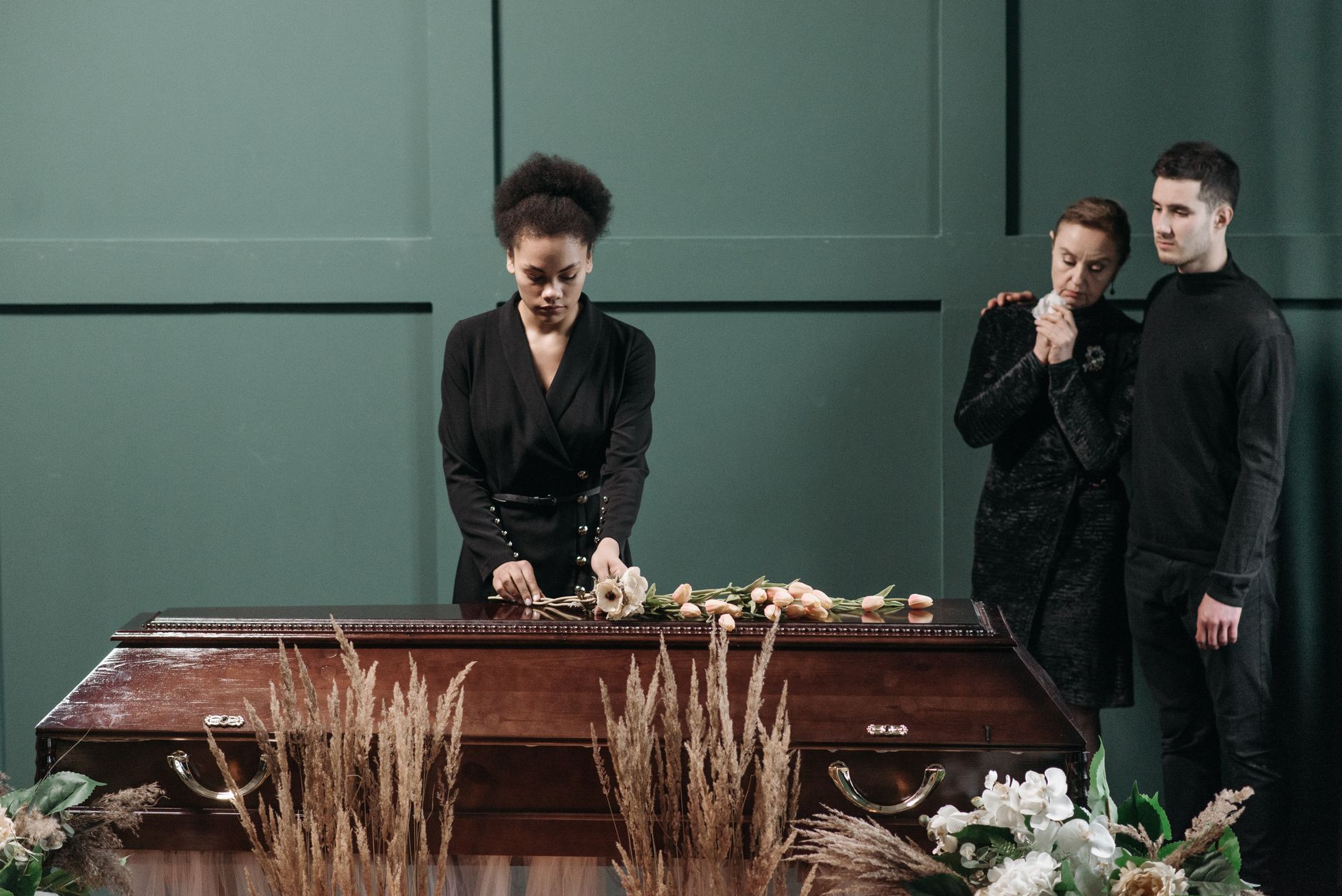
The Red Suit At Dad’s Funeral
I want to be careful here, because it would be easy for me to make her into a cartoon, and she was not that. She was sharp and well put together and, in the beginning, truly attentive to my father in a way that caught all of us off guard after years of watching him be alone. She brought him soup when he had the flu. She redid the kitchen in the house he’d lived in since before I was born, and for a little while it looked like he might get a second chapter he actually deserved.
It did not take long for the rest of it to surface.
Beverly did not like being reminded that my father had a whole life before her. She boxed up most of my mother’s photographs within the first year, telling Dad it was “for his own healing,” and when I found out and confronted her about it, she told me, with a small, patient smile, that it was not healthy to keep a shrine to a dead woman in a house where a living one was trying to build a home. She redecorated the front room where Mom’s old reading chair had sat for thirty years. She started referring to the hardware store, which Dad had built from nothing with his own two hands starting at twenty three years old, as “our investment,” in front of customers, in front of the two employees who had worked there since before I graduated high school.
And she could not stand Chris.
I think, if I am honest, it was because Chris was the one person in our family Beverly could never quite manage. She tried, in her way. She told Dad that Chris’s clown work was an embarrassment, that it made the family look unstable, that a grown man dressing up in face paint to entertain sick children was the kind of thing that made people in town whisper, and that whispering was bad for business. She suggested, more than once, in front of me, that Dad should stop “subsidizing” Chris’s apartment, not knowing or not caring that Chris had never taken a dime from our father since he was twenty two years old. She told Chris directly, at a Thanksgiving two years before Dad died, that it was time he grew up and got a real job, in front of the whole table, in front of Dad, who went quiet and did not defend him the way I expected him to.
I was angry at Dad for that silence for a long time. I understand it differently now.
Dad got sick in the spring. Pancreatic, caught late, the kind of diagnosis that doesn’t leave much room for anything but arrangements. He had seven months. I spent as many of them as I could at the house, and so did Chris, and Beverly made both of our presence feel, more often than not, like an inconvenience to whatever version of the end she had already decided she was entitled to run.