
“Put the pet back in the truck, Corinne,” my brother-in-law said, and he did not even look at her.
He was looking past me at two hundred ewes spilling out the wrong side of the shearing pens.
It was a bright, windy morning in April, the kind western Nebraska gives you after a week of mud.
The shearing crew had come up from the south and they were waiting on sheep, and the sheep were not waiting on anybody.
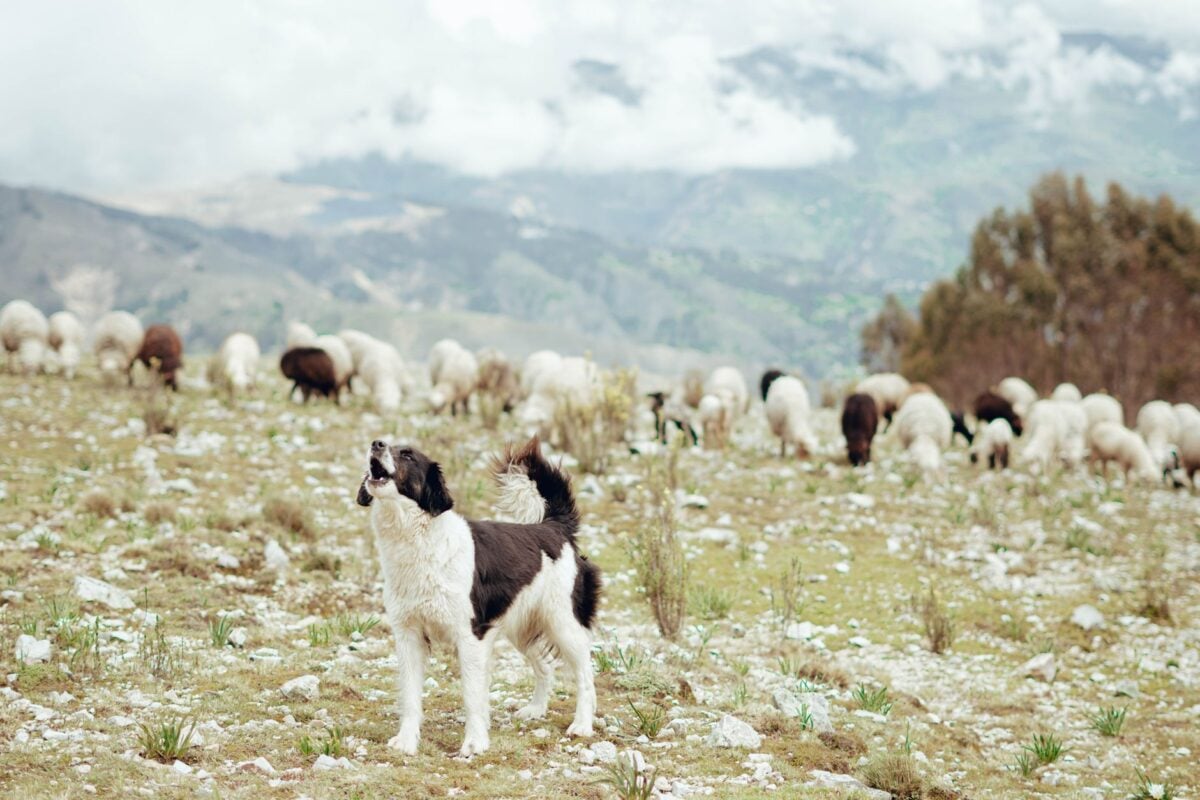
Flick sat at my left boot. She was a year old then, black and white, with one ear that stood up and one that folded over like a page somebody wanted to remember.
Get a new story in your inbox every morning.
Facebook doesn’t show you every story we post. Our free newsletter does. Join 2,500+ readers.
She was shaking, and not from fear. She wanted them.
“She can bring them around the shed,” I said. “She’s been on sheep since she was ten weeks old. I’ll keep her on a long line if you want.”
Jerrod Albrecht was forty years old that spring, a big quiet man in a canvas vest with a sorting stick in one hand.
He ran two hundred ewes on the place his father had run them on, and he did not care for anybody’s opinion about it.
“I said in the truck,” he said. “I don’t need a pet in my sheep. I’ve got a dog.”
His dog was a rough-coated red and white collie, older and slower, a good honest worker who had been doing the job a long time.
That morning the red dog was on the far side of the lot, and the ewes knew it.
My husband, Ross, was down at the chute helping the crew boss set up the board.
He looked up when he heard his brother’s voice. I shook my head at him, just a little, and he went back to his wrench.
I walked Flick to our pickup and put her in the cab.
She sat behind the steering wheel with her paws on the dash and watched those ewes run the fence line for twenty minutes while two grown men and one tired dog chased them.
I did not say a word. I went and sacked wool for the rest of the day, because that was a job nobody minded me doing, and I tied fleeces until my hands smelled like lanolin clear through supper.
I should tell you that I did not come to sheep from nothing.
I grew up on a little cattle place forty miles south, and my dad kept a few dogs because he could not afford to pay hired men.
I showed dogs in 4-H from the time I was nine. Not in a show ring, but on stock, at the summer clinics they held at the fairgrounds.
An old rancher taught a dozen of us kids how to read sheep and how to keep our mouths shut while the dog learned.
By the time I was sixteen I had trained three collies of my own. Two of them went on to work cattle for neighbors.
The third, a little female named Sis, slept on my bed until I left for college.
I did not finish college. I came home after a year and a half, took the receptionist job at the veterinary clinic in town, and I have been there ever since.