
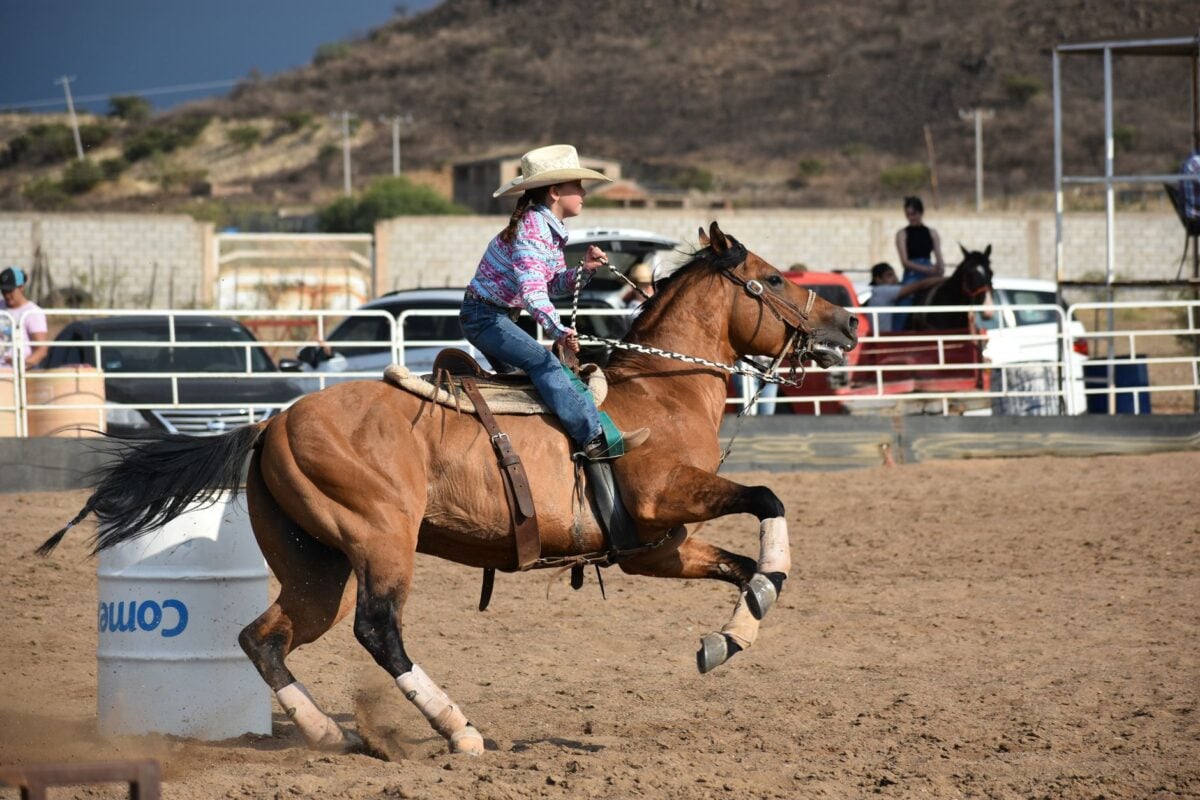
“Barrel racing is for girls with money, Josie,” my sister-in-law said, and she said it while she was coiling a lead rope in her barn aisle, not even looking up from the knot she was tying.
My daughter was standing in front of her with an envelope held out in both hands. Josie was fourteen.
She had saved four hundred and ten dollars from two summers of detasseling and every babysitting job our end of the county had to offer.
It was a bright, cold Saturday in February. The barn doors were open at both ends and the light came down the aisle in a long yellow stripe, and the old gelding Josie wanted was standing in the last stall, eating hay like none of it concerned him.
His name was Smoke. He was nineteen years old, a gray quarter horse who had carried Paige’s daughter through her first three seasons of youth barrels before Paige moved her up to a faster horse.
Get a new story in your inbox every morning.
Facebook doesn’t show you every story we post. Our free newsletter does. Join 2,500+ readers.
He was a spare now. He was eating hay and earning nothing.
“I’ll muck stalls for the rest,” Josie said. “Every Saturday. Till it’s paid. You can keep him here till I’ve worked it off, and I’ll do his feet and his feeding myself.”
Paige finally looked at her. My sister-in-law is a handsome woman, tall like all the Volds, with her hair pulled back tight and a face that has spent forty-six years outdoors.
She trains horses for a living on a place five miles south of ours.
“Honey, it isn’t the horse,” she said. “It’s everything after the horse. It’s entry fees and a trailer and a truck that can pull it. It’s shoes every six weeks and a vet bill when he colics on a Sunday. Barrel racing is for girls with money. That’s just the truth of it.”
I was standing behind Josie with my hands in my coat pockets.
I had driven her over there because she asked me to, and because she wanted to do the asking herself, and I had promised her in the pickup that I would keep my mouth shut.
I kept my promise. It was one of the harder things I have done.
Josie lowered the envelope. She didn’t cry. She is like her father that way: when something hurts, she goes still and polite, and you have to know her to see it.
“Okay,” she said. “Thank you for thinking about it, Aunt Paige.”
We drove home on the county road with the heater roaring and neither of us saying a word.
The pastures were brown and bare and the snow was lying in the ditches in dirty strips. About a mile from our lane, Josie said one thing.
“She thinks we’re poor.”
“We’re not poor,” I said. “We’re careful. There’s a difference, and your aunt knows it.”
Josie looked out the window. “She said it like it was a rule.”
I didn’t have an answer for that, so I didn’t give one.