
Tiffany came up on my mother’s porch on a Tuesday afternoon in the middle of September, holding a clipboard against her chest the way a girl holds a schoolbook she’s proud of.
I was in the kitchen with the back door open, setting Mom’s pills out in the little Sunday-through-Saturday box. I’m a home health aide, so I do that for strangers all week, and for my mother on Tuesdays.
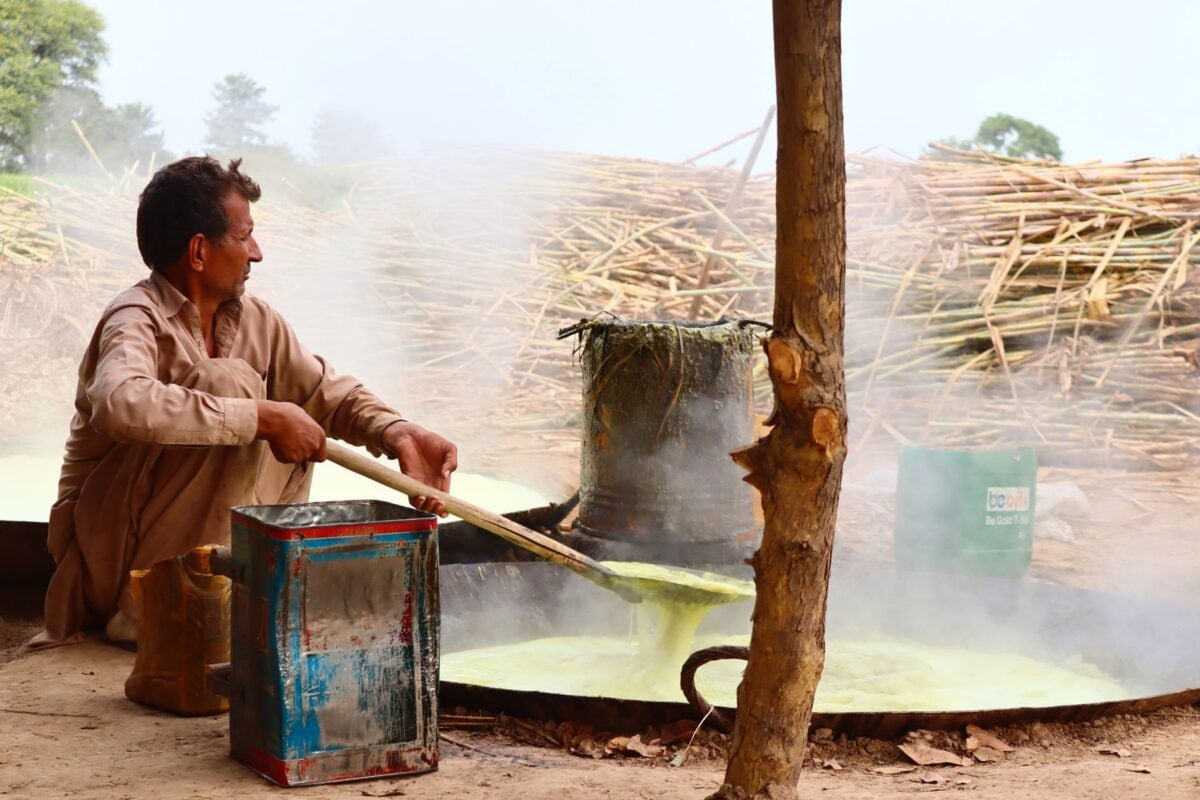
Mom was on the porch swing with a pair of scissors and a stack of brown paper, cutting the little square labels she ties on her molasses jars with twine. She had been cutting them every September since before I was born.
“Pearl,” Tiffany said, “I wanted to come tell you in person, because I think that’s the right way to do it.”
Mom set the scissors in her lap. “Well, come sit down, honey. There’s tea in the icebox.”
Get a new story in your inbox every morning.
Facebook doesn’t show you every story we post. Our free newsletter does. Join 2,500+ readers.
Tiffany didn’t sit. She looked at the clipboard instead of at my mother, and I stopped what I was doing and stood very still behind the screen door.
“The committee feels the bazaar needs a fresh look this year,” she said. “We’ve got twenty-two craft vendors coming. Candles, signs, those wreaths from the girl in Somerset. It’s going to look like a real market.”
“That sounds real nice,” Mom said.
“So we won’t be needing the molasses table this year.” Tiffany clicked her pen twice. “Next to the new crafts, it just looks like hillbilly syrup. I’m sure you understand.”
The swing stopped moving. I watched my mother’s hands, because that’s where she keeps everything. They lay flat on the brown paper, very still, and then one of them smoothed the top label as if it had a wrinkle in it.
“All right,” Mom said.
That was all. Thirty years she had run that table at the Laurel Fork church fall bazaar, and before that twenty more years of making molasses for neighbors and kin, and all she said was all right.
Tiffany let out a breath like she had been dreading a fuss and was glad not to get one. “I knew you’d be gracious about it,” she said. “You always are.” Then she went down the steps to her car.
I came out on the porch when she was gone. Mom was gathering up the labels and squaring the edges of the stack against her knee, slow and neat, the way she squares a deck of cards.
“Mom.”
“Don’t, Wanda.” She didn’t look up. “Help me up out of this swing. My hip’s stiff.”
I helped her up. She carried the labels inside and put them in the top drawer of the china hutch, under the good tablecloth, and shut the drawer. Then she went and stood at the sink and ran water over nothing.
I want to tell you about my mother before I tell you the rest, so you’ll understand what that drawer meant.
Pearl Seay is seventy-nine years old. She has buried a husband and a baby girl and both her parents, and she has never once in my hearing raised her voice above what it takes to call a dog in off the road.
She grew up making sorghum molasses with her own mother on a farm about six miles from where she lives now, back up a hollow in the Kentucky hills where the road still turns to gravel past the church.