
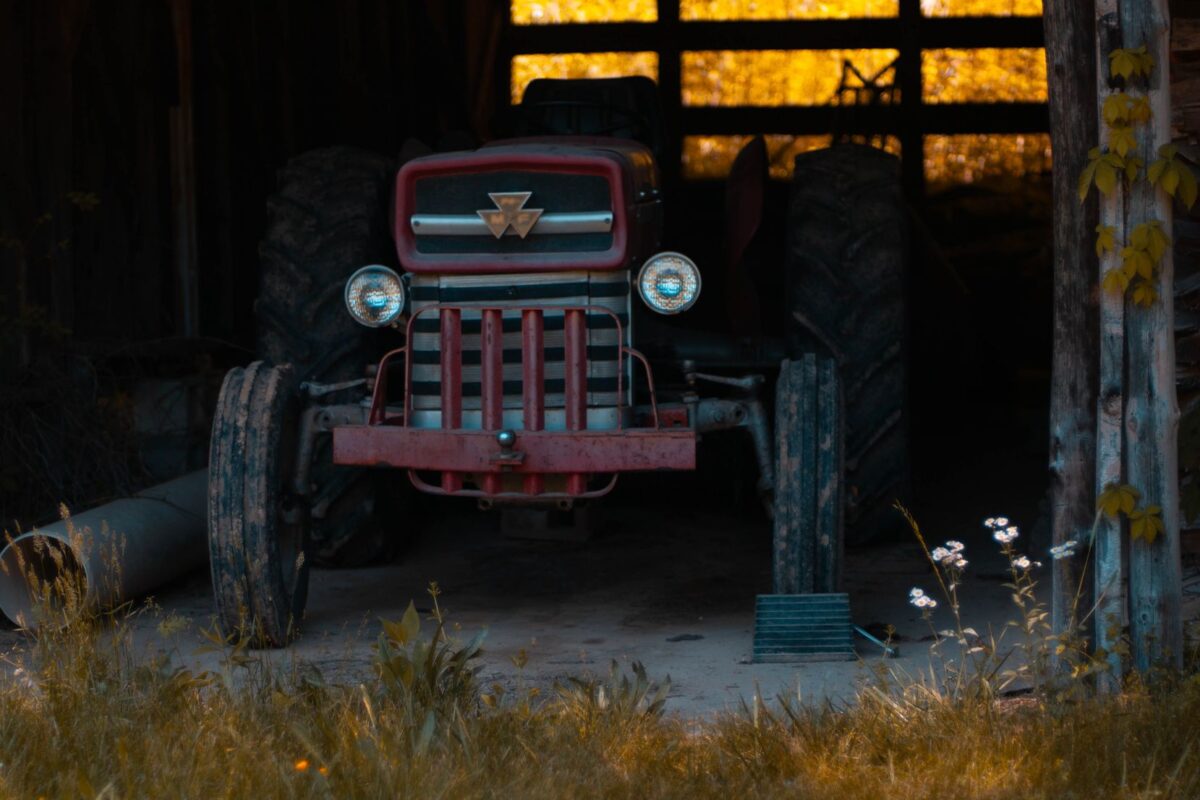
The check was on the kitchen table when I walked in, folded once, the way you fold a thing you are ashamed of. Clem had set his coffee cup on top of it.
It was a Tuesday in March, a little after five. The wind was coming hard off the bean stubble west of the home place, and the little house by the grove smelled like Folgers and wet boots.
“Your brother came by,” Clem said. He did not get up. He did not look at the check. He looked out the window at Dad’s machine shed, the way he had looked at it every morning for thirty-one years.
I moved his cup and unfolded it. It was drawn on the farm account, signed in my brother’s square insurance-agent handwriting. One hundred forty-six dollars and fifteen cents. In the memo line he had written “final.”
“What is this,” I said, though I knew. I could do the arithmetic. Thirty-eight thousand a year, divided by the working days. It was one day of Clem’s wages, figured to the penny.
Get a new story in your inbox every morning.
Facebook doesn’t show you every story we post. Our free newsletter does. Join 2,500+ readers.
“He said the farm can’t carry me anymore,” Clem said. “He said he was sorry. He said I could keep the house through the fall, till I find a place.” He turned his cup a quarter turn on the oilcloth. “That was decent of him.”
That was Clem Brekke. A man hands him one day’s pay after thirty-one years and he finds the decent part and holds it up to the light for you.
My name is Marnie Siebert. I was born a Roesler, on that farm three miles northeast of Sheldon, Iowa, and I was thirteen years old the spring Clem came to work for my dad.
Thirty-one years
It was 1995. Dad had lost his last hired man to the packing plant in Sioux Center, and Clem answered an ad in the paper.
He was thirty-two, already quiet, already wearing his shirts buttoned to the collar.
He moved into the little house that had been my grandpa’s, with a single bed, a radio and a box of paperbacks.
My mother sent me over with a casserole that first night. He thanked me like I had brought him the deed to the place.
He taught me to drive the old Farmall H that summer, in the pasture, with the throttle set so low I could have walked faster. He stood on the drawbar and said “easy, easy” the whole way around.
When my mother got sick, years later, it was Clem who did chores on the mornings Dad drove her to Sioux City for treatment.
He never once mentioned it. I only found out because I came home early one day and saw him at the feeders in the dark.
He never married. He went to the Lutheran church in town, sat in the same back pew, and left during the last hymn so he would not have to make conversation. He gave to every building fund they ever had.
He knew Dad’s four hundred acres the way a man knows his own hands. Which corner of the north eighty stayed wet. Which tile line had collapsed in 2008. Which way the planter pulled on the side hill by the creek.
My brother Garrick is three years older than me. He went to Iowa State and came home to sell crop insurance out of an office on Third Avenue.
Half the farmers in O’Brien County buy their coverage from him. He is good at it, careful with numbers, and he has never once in his life farmed a day.
That is not a crime. Somebody has to read the fine print. But I want you to understand who was making the decisions, because it matters to the rest of this.