
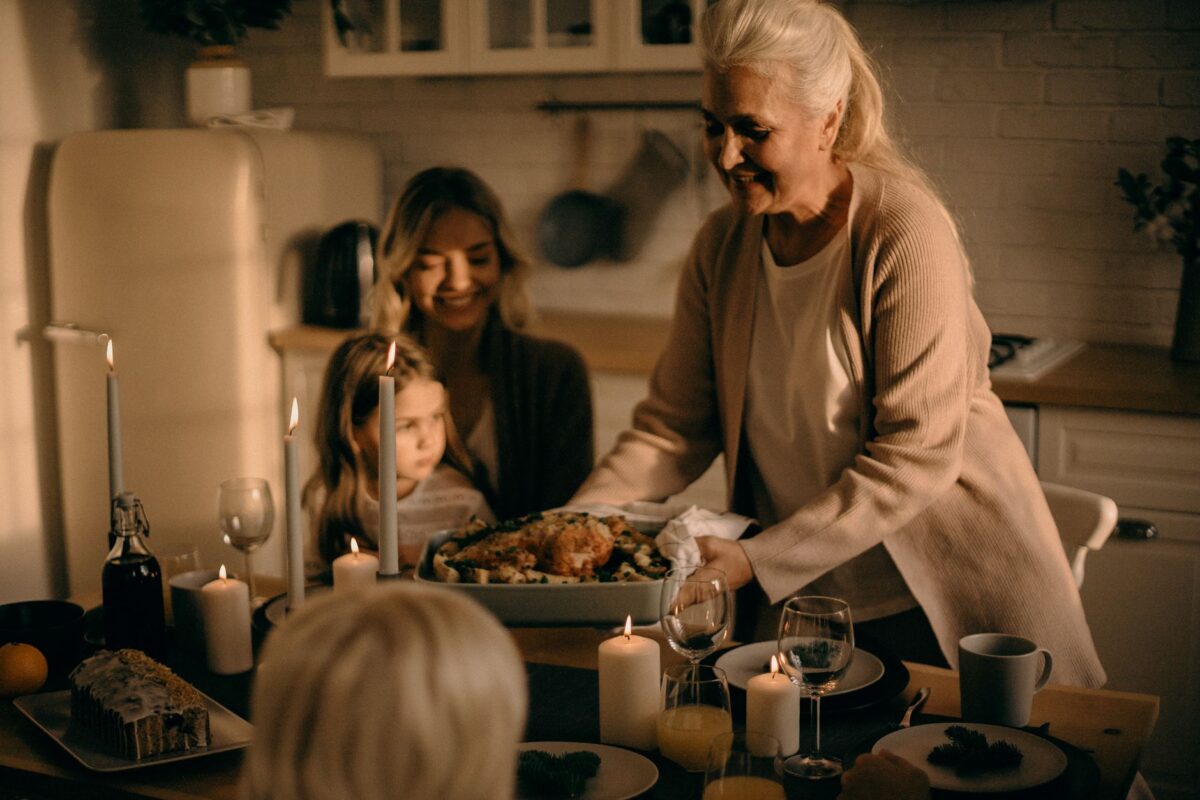
I was bent over the oven pulling out the second pan of rolls when I heard my mother-in-law say it, in the same easy voice she uses to ask for the salt.
“Kids eat last in this family, sweetheart. Always have. You can have whatever’s left.”
I straightened up with the hot pan still in my mitts, my ponytail coming loose and flour down the front of my rust-orange sweater, and turned around. Bernadine was standing at my kitchen counter, right where I had lined up the sides for people to serve themselves.
In front of her sat four plastic take-home containers, the clear kind with the blue snap lids.
She had brought them from her house in a canvas tote, and I had not thought one thing about it when she came in.
Get a new story in your inbox every morning.
Facebook doesn’t show you every story we post. Our free newsletter does. Join 2,500+ readers.
The lids were stacked off to the side. The containers were full. One held a pile of white meat, sliced thick, the best of what Neil had carved not twenty minutes before, laid over the crusty dressing from the corners of the pan.
The second was packed tight with more of the dressing.
The third had two slices of pecan pie in it, off the first pie, the one already cut, and a wide square of persimmon pudding wedged in beside it.
The fourth was mashed potatoes with beef and noodles ladled over the top, the way everybody in southern Indiana eats them at Thanksgiving, whether the rest of the country has heard of it or not.
Out on the dining table behind her, where Neil had set the carved turkey, the platter was down to two wings, the back, and some dark meat clinging to the bones.
On the counter the roast hen I had done for the dark-meat people sat whole, because Neil does the carving and Neil was not in the house. The dressing pan had a hollow scooped out of the middle of it like somebody had dug a well.
And in front of her, holding an empty plate with both hands, one of my good ones with the brown rim, stood my son.
Jonah is 9. He had on the green long-sleeve shirt he picked out himself that morning because he said it looked like a pilgrim’s, which it did not, but I let him have it.
He had been up since six watching me cook. He had peeled potatoes.
He had cracked the eggs for the pumpkin pie and only gotten a little shell in. He had asked me four times when we were going to eat.
He looked at the containers, and then he looked up at his grandma, and he said, “Okay, Grandma.” That was all. He did not argue. He did not look at me. He just started to turn toward the platter with the bones on it.
That was the part that went through me like cold water. Not what she said. What he said. How fast he believed her, like being last was simply a thing that was true about him.