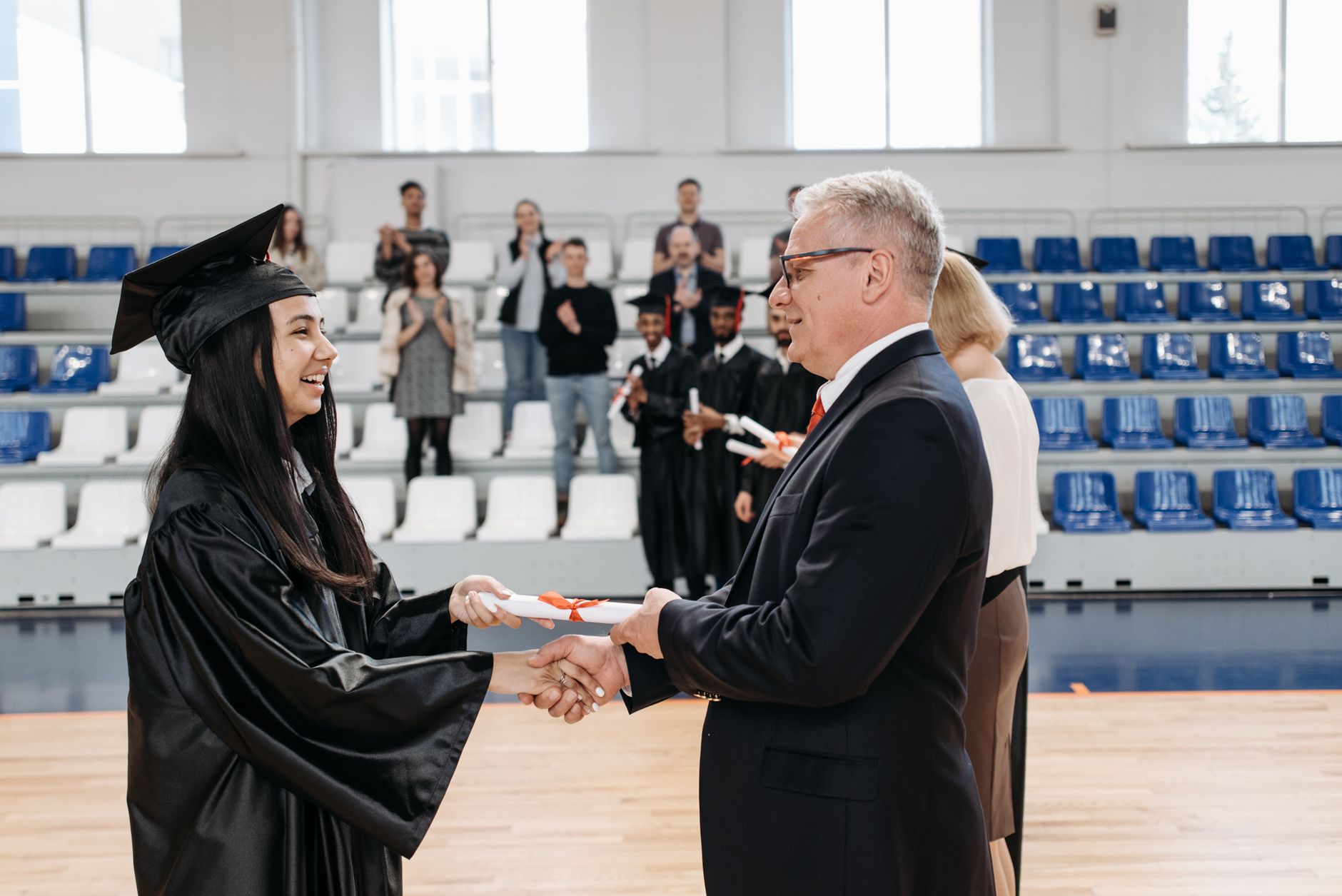
The Graduation Party in the Fire Hall
I didn’t tell Brooke right away. I wanted the hall locked in and the brats ordered before I said a word, because I could not stand the idea of promising her something and having it fall apart.
When I did tell her, she was sitting on the end of her bed in her socks, doing her nails with the window open.
The lilacs in the alley were almost done and the whole apartment smelled like them and like nail polish.
“I booked the fire hall,” I said. “For the twenty-fourth. Your open house.”
She held the little brush in the air. “Mom,” she said. “With what?”
“With my doubles,” I said. “It’s done. It’s paid for. You don’t get a vote.”
She looked at me for a long time, and then she said the thing that I think about more than anything Rhonda said.
She said it quietly, like she was trying not to hurt my feelings.
“Mom, nobody’s going to come to a party for a C student.”
I sat down on the bed next to her. I didn’t say she was wrong. I didn’t give her a speech.
I just put my arm around her and kept it there until she finished the second hand of nails.
Dad called on the Tuesday before. He was home by then, back in Manitowoc, and he sounded good, stronger than he had in the hospital, more like himself.
“So did my girl get her card?” he asked. “Rhonda said she took care of it.”
I was standing in the care center parking lot on my fifteen-minute break, in my scrubs, with a cup of vending machine coffee going cold on the hood of my car. I closed my eyes.
“She did, Dad,” I said. “Rhonda took care of it.”
It was not a lie. It was not the truth either.
I have thought a lot about that sentence since, and I still don’t know which one it was. I only know it kept his voice steady.
“You let me know the party time,” he said. “I don’t know if the doctor’ll let me make the drive. He’s being a worrier about it.”
“It’s okay, Dad,” I said. “You rest. I’ll send you pictures.”
I worked my fourth double on the Thursday before the party. By hour fourteen I was so tired the hallway lights looked like they had halos.
Mrs. Lindstrom in room 12 asked me if I’d been crying, and I said no, it was allergies.
Mrs. Lindstrom is ninety-one and was a home economics teacher for forty years. She took my wrist in her thin hand, the way I usually take hers, and she held on.
“I had girls who couldn’t add a column of figures,” she said. “Some of them run this whole county now. You tell your girl that from me.”
On Friday I slept for eleven hours. On Saturday I drove to Marshfield for the paper goods and came home and made ten dozen of my mother’s ham buns, sitting at the kitchen table with my feet in a bucket of warm water.