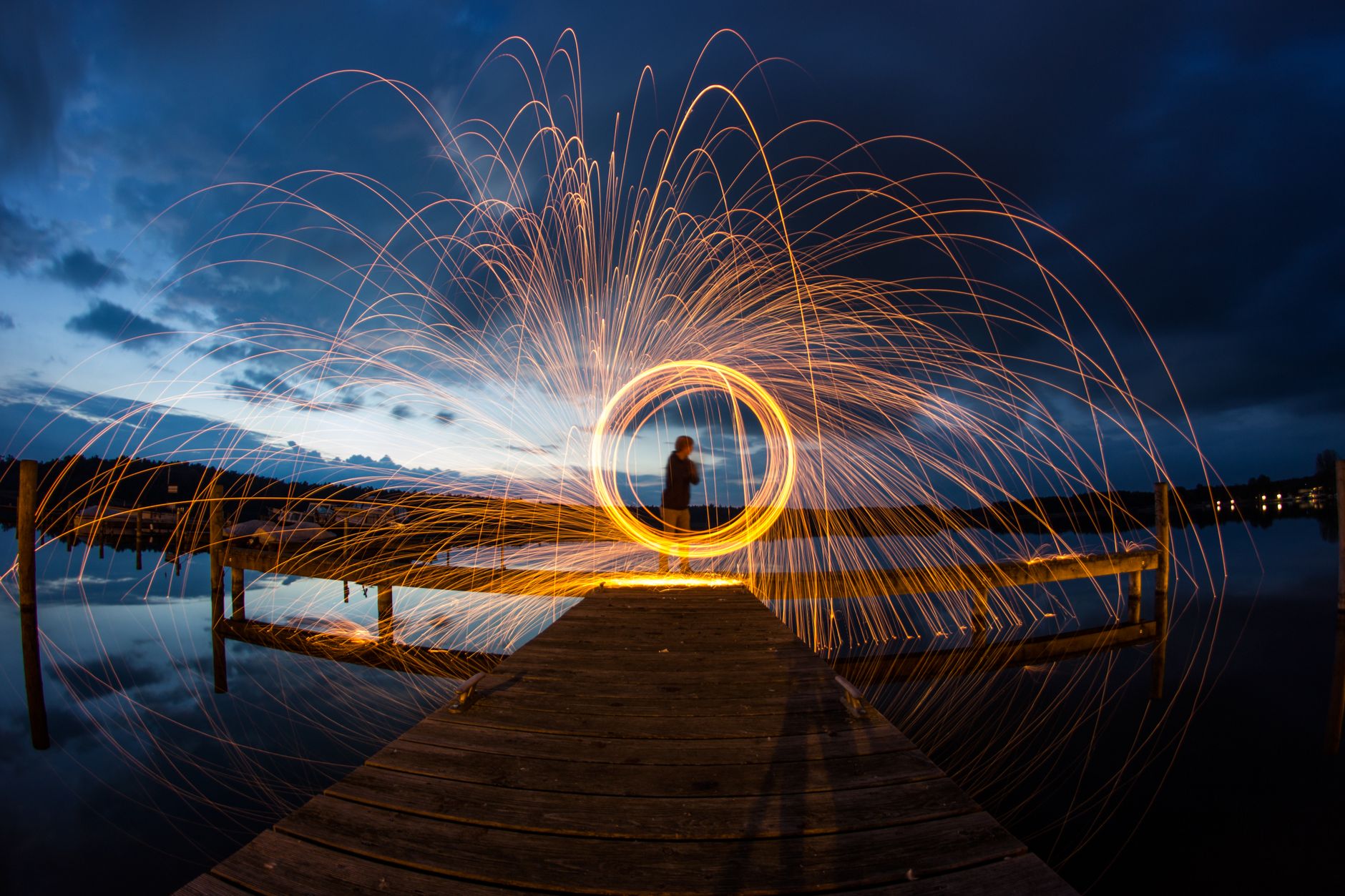
Fireworks From My Half of the Dock
When Rachel and I were girls, we fought over that dock like it was the last chair at a wedding. One summer, when I was about seven and Rachel was ten, Daddy had heard enough of it.
He walked us both out to the end, put a hand on each of our heads, and settled it the way he settled everything, with as few words as possible.
“Left side is Missy’s,” he said. “Right side is Rachel’s. Middle board belongs to me, and nobody stands on it but me. You girls want to fight, fight on your own side.”
It ended the fighting. For thirty years after, whenever Rachel and I were sideways, somebody would say, “Go stand on your own half of the dock,” and we would both laugh.
Our mother died when I was fourteen. Breast cancer, eleven months from the first appointment to the funeral at St. Mary’s.
Rachel was seventeen, and she grew up in about one week, and in a lot of ways she never stopped being the oldest after that.
She packed my lunches. She signed my permission slips in a handwriting that looked enough like Mom’s that nobody at the school ever asked.
She was the one who showed me how to do my hair for homecoming, and maybe that is why I ended up doing hair for a living.
So I want to be fair to my sister, even now, even after the phone call. Rachel was a mother to me before she was anything else.
That is part of why it hurt so much, and part of why I did what I did instead of something worse.
Daddy died two years ago in March, of a heart attack in the driveway of his house in Gaylord, with the snow shovel still in his hand.
The man who had cleared county roads for thirty-one years went out to clear his own driveway and never came back in.
He left a will that was one page long. Everything split down the middle. The house in town was sold and the money divided.
The lake house went to both of us, half and half, with a note in his own handwriting stapled to the back of the will.
The note said, “You girls figure out the lake. Don’t sell it unless you have to. Left side, right side, and I’ll be standing in the middle.”
We did not sell it. We split the taxes and the propane and the insurance down the middle, and we traded summer weekends, and we mostly got along.
Rachel and Hal do not have children. I knew they had tried. I knew there had been doctors, and appointments in Grand Rapids, and one year when Rachel did not come to Thanksgiving and Hal said she had the flu.
I did not know the rest of it, and I did not ask, because she never wanted me to.
New Year’s Eve at the lake house had always been Daddy’s night. Ever since we were small, he would have the family up, his brothers and their wives, the cousins, a few neighbors from around the lake, and they would play euchre at the kitchen table until midnight.
At eleven, every single year, Daddy would take whatever kids were in the house down to the dock with a paper sack of fireworks from the tent on the highway.