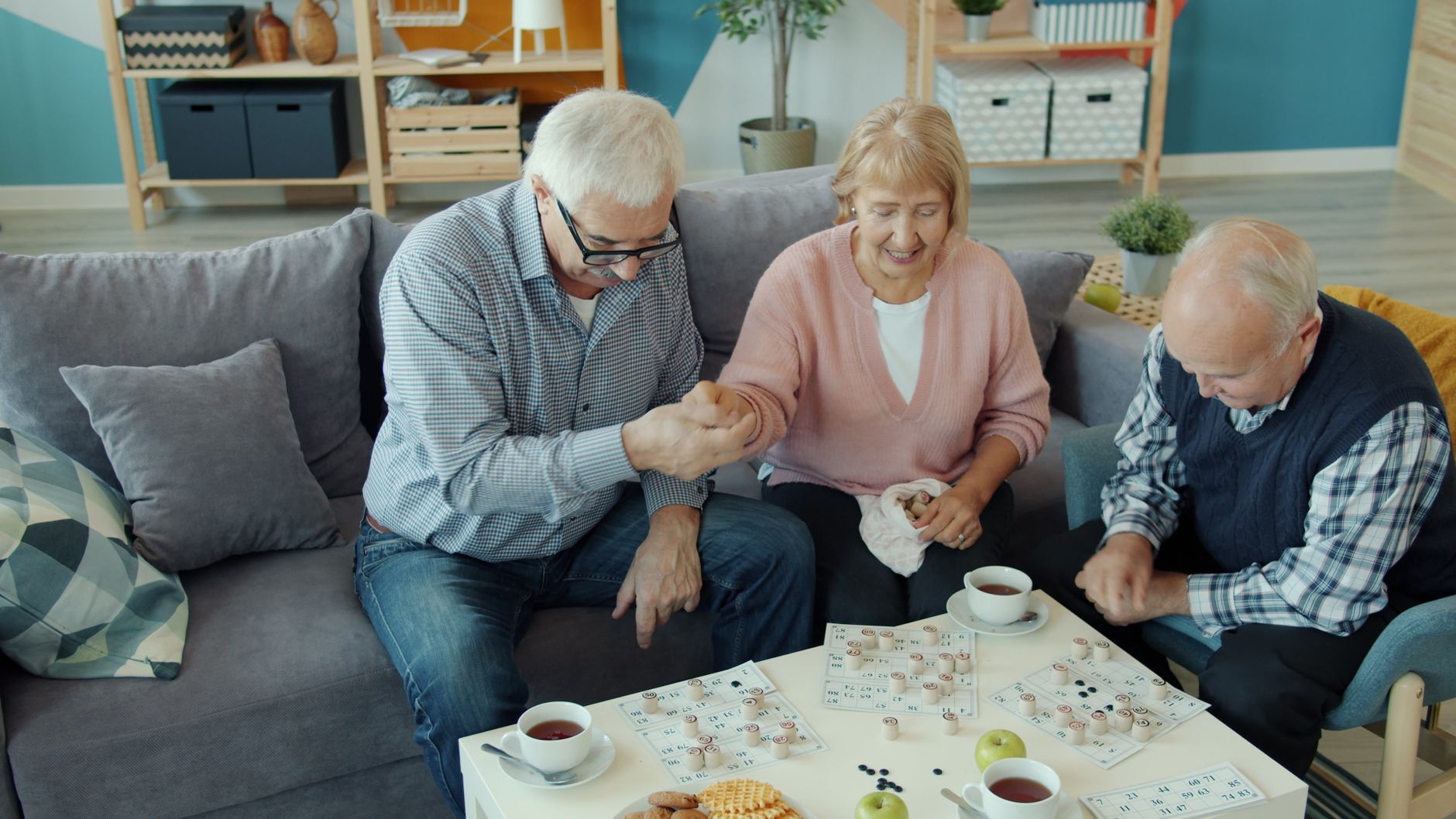
The Tuesday Night Bingo Ban That Backfired
That is what I mean when I say it was my Tuesday. I was not the best player in the room. I was only the one who kept the lights on.
I will be fair to Darla, because I was not fair to her at the start.
She came to Harlan Springs in August from Carmel, the suburb of Indianapolis with roundabouts that have art in them. She had been through a divorce and then a layoff, in that order, and the house committee offered her eighteen dollars an hour, part time, to bring in revenue from the hall, plus a laminator. I think the laminator was the clincher.
Her first Tuesday, she asked to say a few words before bingo. She had slides. She had a clicker. She stood in front of forty-one people who wanted to play bingo and spoke for eleven minutes about “reimagining the hall as a community hub” and “the player journey.”
At minute eleven, the clock over the kitchen window said six twenty-nine. I was holding two packs of cards and a thermos, and I said from my table, mildly, the way you’d mention that a pot was boiling, “Darla, hon, game one is at six-thirty.”
And the room applauded.
It was not meant to hurt her. Forty-one people had been waiting eleven minutes with their daubers uncapped, and the sound just came out of them like steam. But I saw her face. I saw the clicker go slowly down to her side. She said, “Of course,” in a small voice, and sat down, and nobody asked her to sit with them.
I told myself I hadn’t meant anything by it. But a small, petty piece of me enjoyed that applause, and I did not cut it short. I let it run.
Then she put a sheet on the corkboard by the kitchen, next to the notice about the pancake supper. “Sip and Swirl: Paint and Wine Night, Tuesdays.” Twelve seats at thirty-five dollars, beginning the third Tuesday of October, in the main hall.
I did the arithmetic. Twelve seats at thirty-five dollars is four hundred and twenty dollars a night. Bingo cleared two-fifty. If I’d been Darla, I would have done the very same sum, and my answer would have been her answer.
But I would have asked someone first.
The kitchen at home was very quiet that night.
I had not been home on a Tuesday evening before eight o’clock since 2001, and I did not know where to put myself. At six-forty, I thought, Orville will be calling the second game. At seven they would take the break, and Bev would be cutting the pie.
At a quarter past eight, the phone rang.
“Maxine?” It was a thin, rustling voice, and behind it the wheeze of an oxygen concentrator. “It’s Alma. Tommy’s got the phone for me. I can’t see the buttons.”
Alma Kessler is ninety-one. She has played Tuesday bingo since 1974. For two years her grandson Tommy, who is nineteen and works at the Chevy dealer in Peru, has driven her in his Silverado and carried her tank in from the truck.
“I’m not calling to ask if you’re all right,” she said, and I could hear her chin come up. “I know you’re not. I was sitting right there with my mouth open. I’m going to tell you something fast, because Tommy says the tank is not infinite. I only get my numbers right because you sit on my left. You tap the table twice when I’m behind. Did you know that? I don’t think you know you do it. I’ve never said. But I’d have lost every game for ten years if you hadn’t tapped the table.”