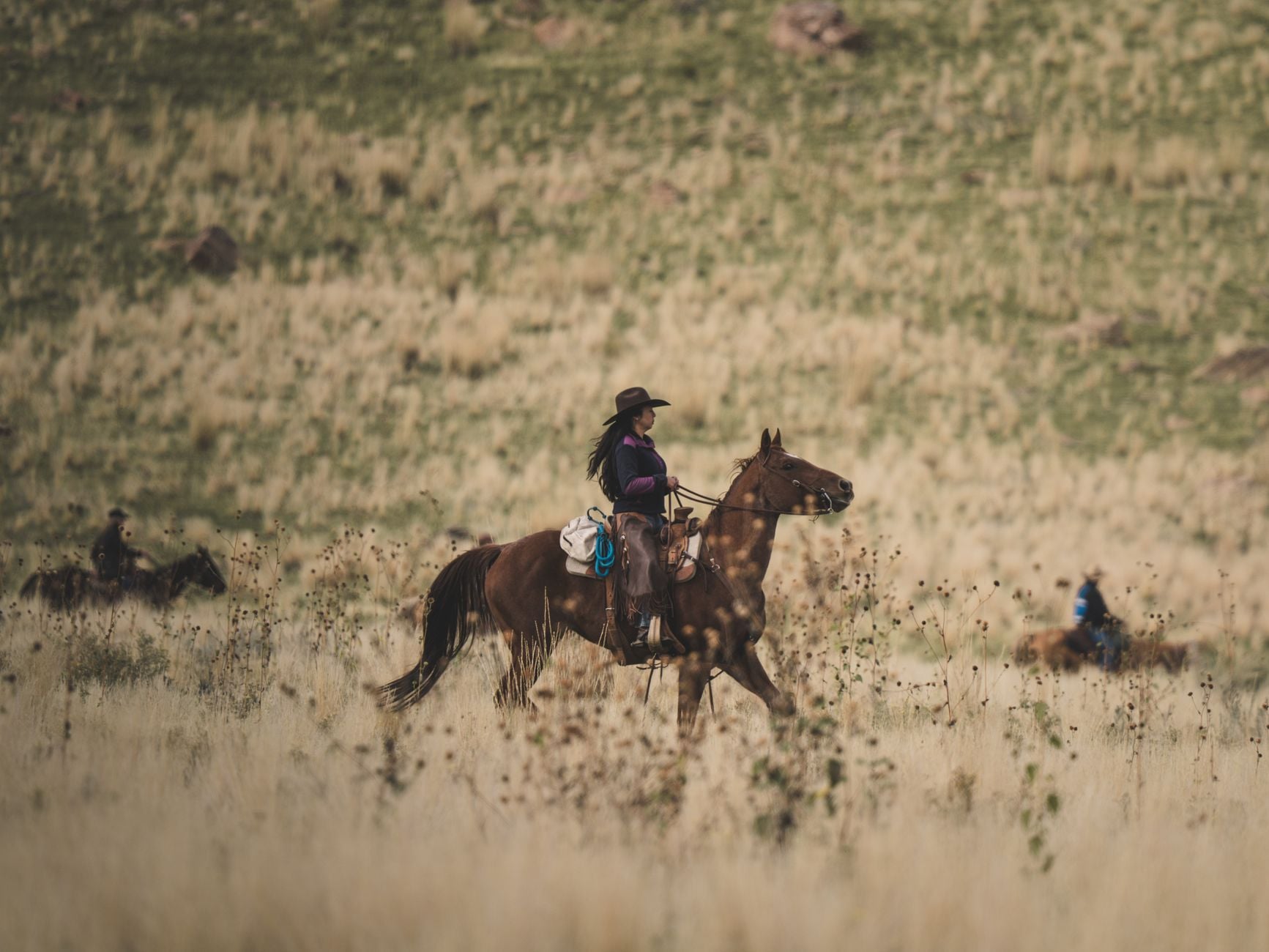
The Spring Branding Nine Neighbors Ran
Four in the Morning
I did not sleep. Around four I gave up and went down to make coffee, and I found Kenzie already sitting at the kitchen table in her jeans and her barn coat, with her hat on the chair beside her.
She was sixteen that spring. She had her dad’s long face and his way of sitting very still when she had decided something.
“Brynn’s getting dressed,” she said. “We’ll do it, Mom. Me and Brynn and you. We’ll just go slower.”
I sat down across from her. I could not say anything at first. “Honey, it’s three hundred calves,” I said. “Three of us cannot wrestle three hundred calves.”
“Then we’ll do a hundred today and a hundred next Saturday and a hundred the Saturday after,” she said. “Dad says you do the work in front of you.”
Brynn came down the stairs then, fourteen years old, braiding her hair as she walked. She had on two pairs of socks because her boots were a size too big, hand-me-downs from Kenzie.
She did not say a word. She just poured herself coffee, which she was not supposed to drink.
Then we heard Kyle on the stairs. He came down one step at a time with his hand flat against the wall.
He had come home from North Platte on Thursday, and on chemo weeks he could not lift a saddle, could not even pull on his own boots.
“I’ll keep the book,” he said. He sat down slow at the end of the table, out of breath from the stairs.
“I can sit on a tailgate. I can hold a pen. Somebody’s got to count.”
I looked at the three of them in the kitchen light, my two girls in their barn clothes and my husband in his old Carhartt with his cheekbones showing, and something in my chest that had been clenched for nine days let go a little.
Headlights
At a quarter after five, Brynn was standing at the window rinsing her cup. She went still. “Mom,” she said. “There’s somebody on the road.”
I went to the window. Down on the county road, a mile off where it comes over the rise from the highway, there was one set of headlights.
Then a second set behind it. Then I saw the running lights of a stock trailer.
They turned in at our lane. Three pickups, then four, then more, the trailers rattling over the cattle guard, horses shifting inside them.
The first truck pulled up by the barn and the door opened and Walt Hagen got out.
Walt was seventy-four that spring. He had a new hip and an old hat and a face like a creek bed in August.
He was the man Earl had worked for before he worked for us. He stood there in the yard light and looked at the house, and I went out on the step.
“Morning, Rachel,” he said. “Heard you were short a man.”
Behind him the others were climbing out. Mike Lindqvist and his boy Tyler. The Pruitt brothers, Steve and Dan.
Tom Hagen, Walt’s son, and his two teenage boys. Bill Ochsner from south of the river, who I had not even thought to call.
Jeff Carlson and his brother-in-law Ron. Old Harold Beck from down on the Dismal River, who had to be close to eighty.
Nine men, counting Walt, and three of their boys besides. Men who had known Earl Tolliver thirty years.
Every one of them had heard by then. I could see it in how they did not quite meet my eyes at first.
Nobody said Earl’s name. Not once, the whole morning. Walt just looked over at the corral and then up at the sky, where it was starting to gray in the east.
“Well,” he said. “Calves aren’t going to brand themselves. Who’s riding the gather?”