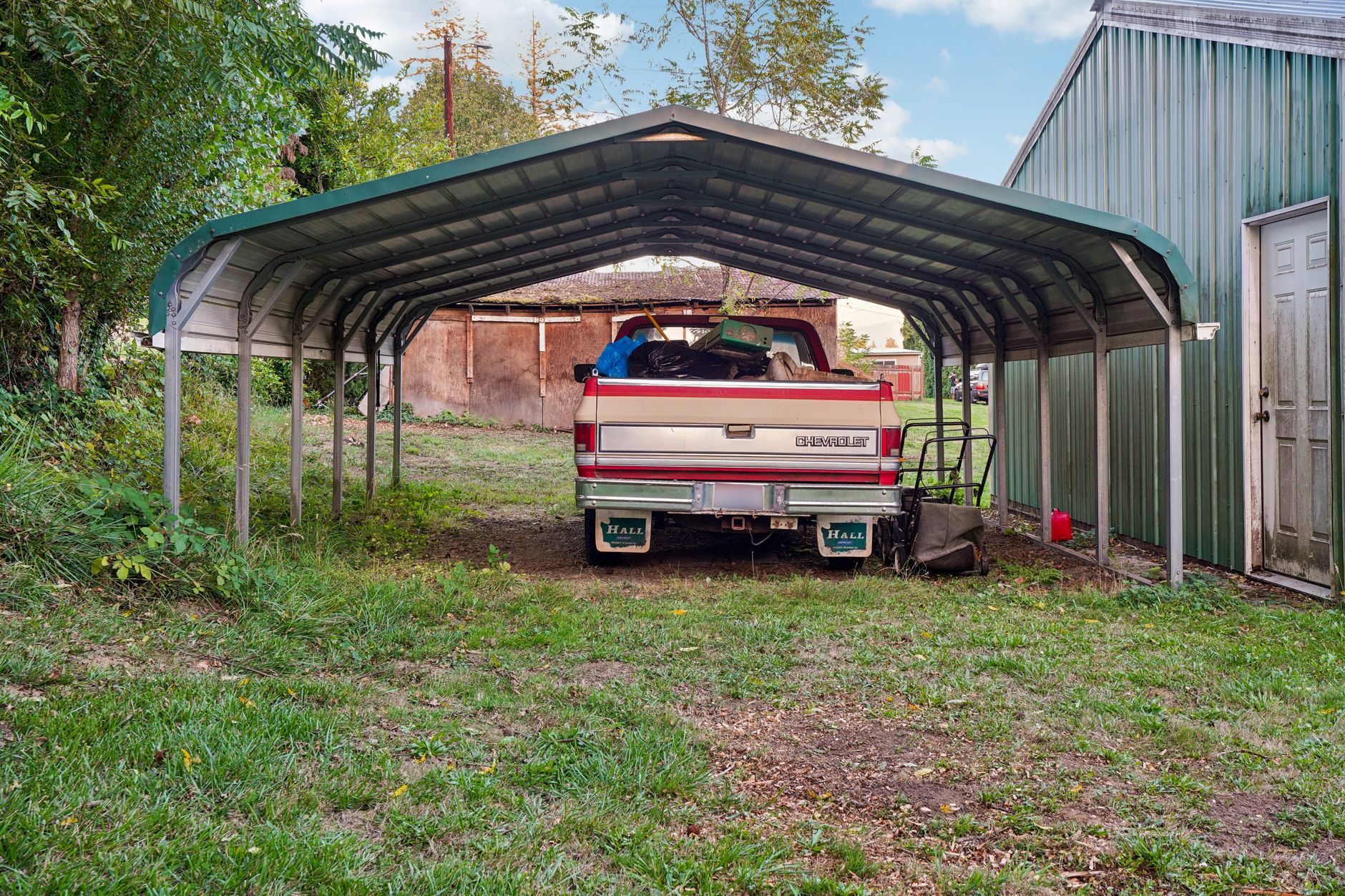
The Payment Stub on My Son’s Truck Title
He drove it to school his junior year and his senior year. He drove it to the vet clinic in Gallatin, where he got a job cleaning kennels. He never once asked me how it got paid.
I never told him. I did not want him to feel that truck every time he turned the key. I wanted it to just be his.
Here is what three years of night shifts looks like, since Marlene skipped that part.
It looks like sleeping from seven in the morning until one in the afternoon, with a box fan on high to drown out the school bus and the neighbor’s grain dryer.
It looks like setting an alarm at two-forty so I would be awake when Caleb got home.
It looks like eating supper at four-thirty with my son, which was my breakfast, then making him a plate for later and leaving it in the fridge with a sticky note.
It looks like missing every Tuesday night ball game his junior year because Tuesday was my long night.
It looks like sitting at a desk with three monitors and a headset, tracking forty-one trucks across eight states, talking a driver named Hector through a tire blowout outside Salina at three in the morning, and calling a wrecker in Wyoming for a man whose wife had just had a baby in Ohio.
I liked the work, honestly. The drivers were good to me. They called me Red on the radio.
But I was tired in a way I had never been tired, a tiredness that lived down in my bones and never quite left, even on my nights off.
My brothers knew. Wayne used to leave a sack of sweet corn on my porch in August without saying anything. Dale’s wife, Kim, would bring a casserole on Sundays.
Neither of my brothers ever asked me if I needed money, because they knew I would say no, and they knew I would not be lying exactly, just being stubborn.
Marlene knew too. That is the part I could not get past, standing in my own shed. She knew what that truck had cost me. She had seen me at church on Sunday mornings with my eyes half shut.
The envelope was in my hand now. I walked back into the shed.
Marlene was still talking. She was telling a story about Caleb at four years old, falling asleep in her lap at a Fourth of July fireworks show in Gallatin, and people were laughing, and she was laughing, and her hand kept going back to the truck like the truck was part of the story.
I walked straight to my son. I did not look at Marlene. I did not look at anybody.
Caleb watched me come with that careful look he has, the same one he had at seven when his father and I used to go quiet at the supper table.
“Mom?” he said.
“I was going to give you this later,” I said. “But I think now is a good time.”
I took the papers out of the envelope. The shed got quieter. Marlene stopped talking in the middle of a sentence and set the microphone down on the cake table.