The Deed I Set Beside His Plate
The Signing
He did not hurry. He unfolded the paper and read every line of it, the whole legal description, his lips moving a little at the part about the northeast quarter. I respected that. It is what my father would have done.
Then he signed it. Ronald J. Dykstra, in careful, square letters, like a man who learned his penmanship from a nun.
He set the pen down. He folded the deed back the way I had folded it, along the same crease.
And then, instead of handing it to me, he turned and held it out to my mother.
“It’s yours, Bev,” he said. “It was always yours. I’m sorry.”
My mother took it. She looked at it a long time. Then she stood up, right there at the head table, and she put her arms around his neck and kissed him on the cheek in front of 140 people.
The hall did not cheer, exactly. It was more like everybody let out a breath at once.
Kathy Moser stood up from the third table and called, “Bring it by the bank Monday at eight, Ron. I’ll stamp it for you myself.”
“I’ll be there,” Ron said.
He was still red to the ears. But he was sitting up straighter.
The Men at the End of the Table
What happened next was not anything I planned. I want to say that clearly. I had planned the party and the cake and the paper. I had not planned the men.
Earl Becker got up from his chair, walked down to Ron, and shook his hand. Not a quick shake. A long one, two hands, the way farmers shake when they mean it.
“That took something,” Earl said. “That took more than signing it the first time.”
Then Walt shook his hand. Then the two Legion men. Then a retired bus driver named Harold who I don’t think had ever said ten words to Ron in his life.
Ron stood there and shook every hand that came, and his eyes were wet, and he kept saying, “Well, thank you. Well, thank you.”
I sat back down beside Tom. My hands were shaking.
“You all right?” Tom said.
“I don’t know.”
He put his arm around me. “That’s the best I ever saw anything go,” he said. “And I watched the co-op try to merge.”
I laughed so hard I had to put my napkin over my face.
The Cake
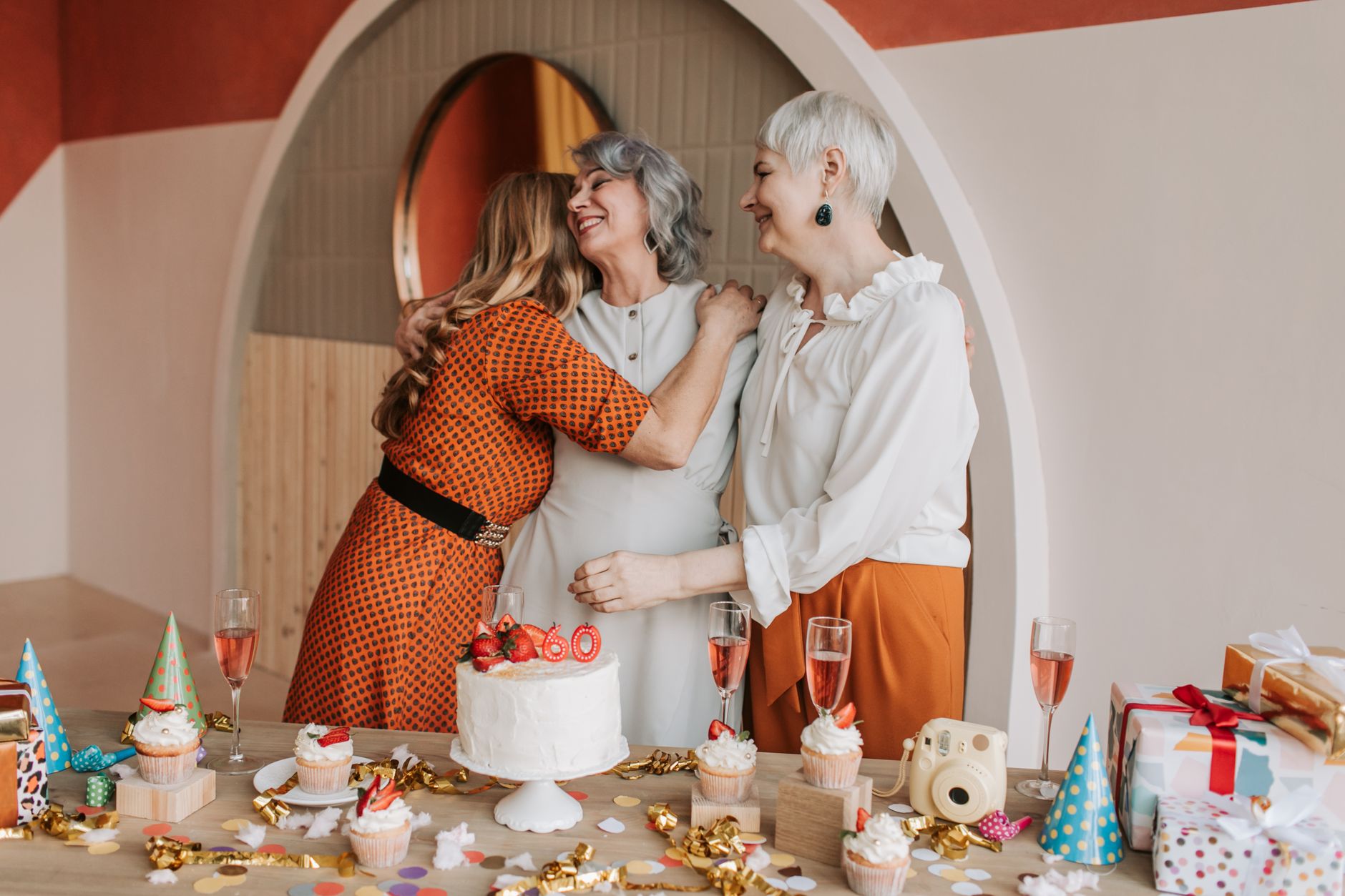
The Auxiliary ladies lit the candles on the cake at eight o’clock. Seven of them, one for every ten years, because a sheet cake will not hold seventy candles and the fire marshal is somebody’s nephew.
My mother looked down at it and stopped.
There she was. Sixteen years old in her hairnet and her white uniform, squinting into the September sun of 1972 on the grade school steps, in frosting.
“Where did you find this?” she whispered.
“The brown album in the hall closet.”
“I haven’t seen this in thirty years.” She touched the edge of the cake with one finger. “Look at that girl. She didn’t know anything. She thought she’d work there a year.”
“She worked there forty-six,” I said.
My mother turned and looked at the hall. All those faces. All those people she had fed.
“I didn’t think anybody remembered,” she said. “Honestly, Jenna. I thought when you retire, they forget you.”
The man in the seed cap, the milk carton boy from 1974, called from the second table, “We didn’t forget, Mrs. Holt!”
And the whole hall said it back, in a ragged way, laughing, some of them crying: “We didn’t forget!”
My mother put both hands over her face and wept, standing right there at her own birthday cake, and Ron put his arm around her and held her up, and I thought, well. Well. Maybe he’ll do.