The Recipe Card I Set by the Pan
Two Days of Work
People hear the words holiday dinner and they picture one busy morning in an apron. They do not picture the two days before it.
By the fourth year, Lorraine had stopped doing much of the cooking herself. Her hip had gone bad, and her hands shook over a paring knife.
So the list that had always been hers slid over onto me, one dish at a time, until nearly all of it was mine.
I did not mind the work. I want that understood. I liked the work. I have always been happiest with my hands busy and a kitchen warm around me.
I would start on the Tuesday before. Three pans of cornbread, baked and then left out overnight to go stale the way good dressing needs it to.
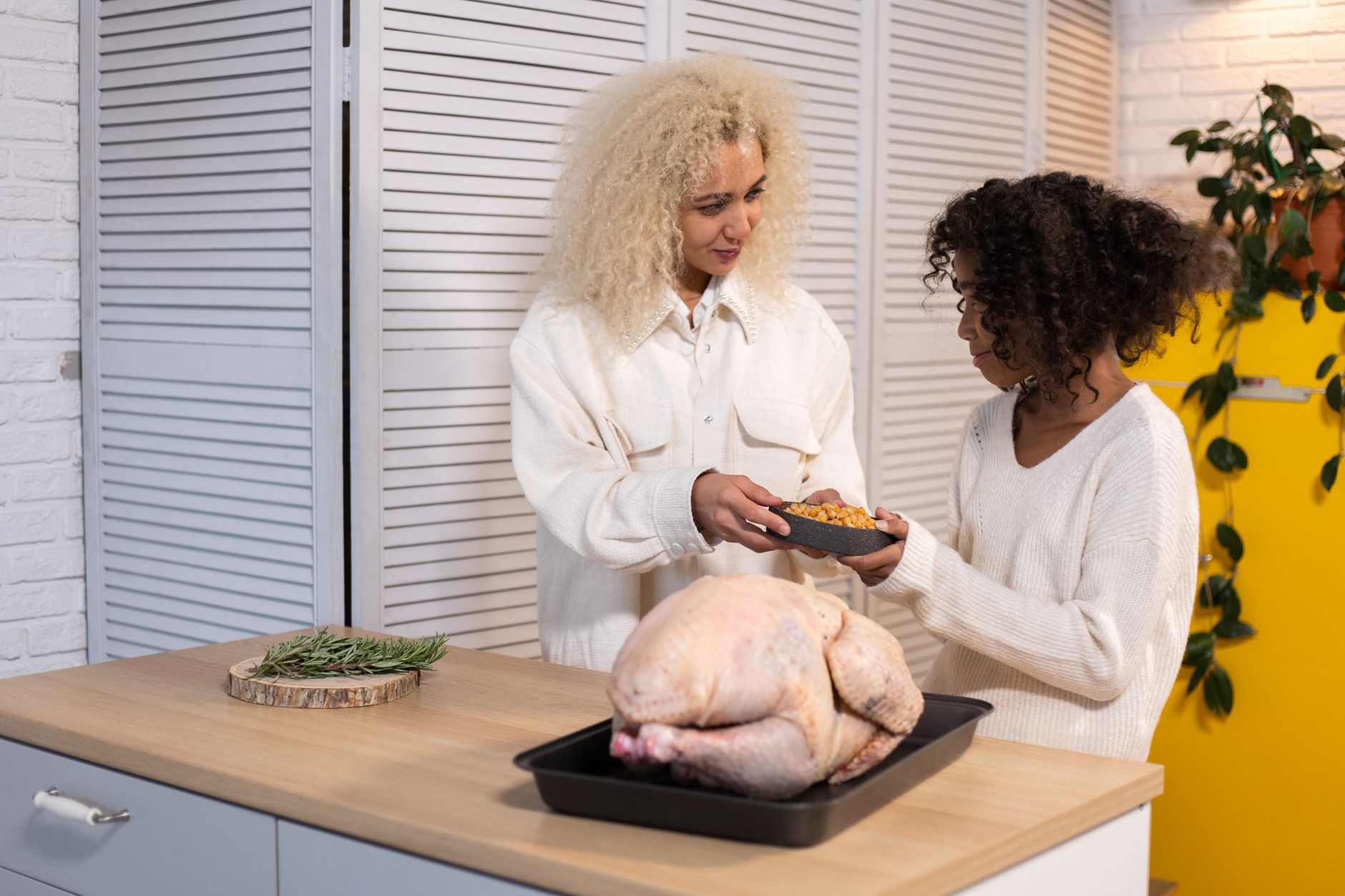
A twenty two pound turkey I brined in a cooler out on the back porch, because a bird that size would not fit in my refrigerator.
Forty pounds of potatoes, peeled at my own sink, while Warren watched the ballgame in the next room and carried me cups of coffee I forgot to drink.
Twenty two people. I counted them every single year on my fingers, standing in the aisle at the Kroger in Chillicothe.
I did the math right there by the broth. How many cans. How many pounds of butter. How many bags of celery and onion.
I paid for most of it out of my own pocket. I want that in here too. I never once sent Lorraine a bill, and she never once thought to offer.
One year the butter alone came to near eleven dollars, and I remember standing there thinking it was a cheap enough price for being let into a family.
I was wrong about that, but I did not know it yet. I still thought the price of belonging was paid at the register.
By Wednesday afternoon my own kitchen looked like the church basement on a funeral week. Every burner going, every bowl I owned dirty in the sink.
I made the green bean casserole and the sweet potatoes with the brown sugar crust. I made two pumpkin pies and a pecan, and I rolled out the noodles by hand because Warren likes them thick.
I kept the dressing for last, every year, because it was the one she had asked me to make. I treated it like the important one.
I would stand at my counter crumbling the cold cornbread between my fingers, tearing the stale white bread, cooking the celery and onion down slow in that full stick of butter until the whole house smelled like a holiday.
On Wednesday I cooked all day and half of the night. On Thursday I was up at four in the dark to get the bird into her oven.
Because the dinner was always at her house. On her table. Served out on her mother’s good plates, the ones with the little gold rim worn thin.
And every year, somewhere between the blessing and the pie, Lorraine would set down her fork and tell the whole table that my dressing tasted like wet cardboard.
Warren heard every word of it. I have to tell you that part, because a good man gets written out of these stories, and he should not be.
He heard it every year. And every year, on the dark drive home, he would reach across the bench seat of the truck and take my hand.
“Mom’s just like that,” he would say. “You know the dressing’s good. I know it’s good. Dad knew it was good.”
And it did help, a little. It helped more than I let on. But he did not say it at the table, out loud, where it would have counted the most.
I did not ask him to, either. I had decided a long time back that his mother was my mountain to climb, and not his.
I thought that was strength. I have had some time to think about it since, and I am not so sure anymore that it was.