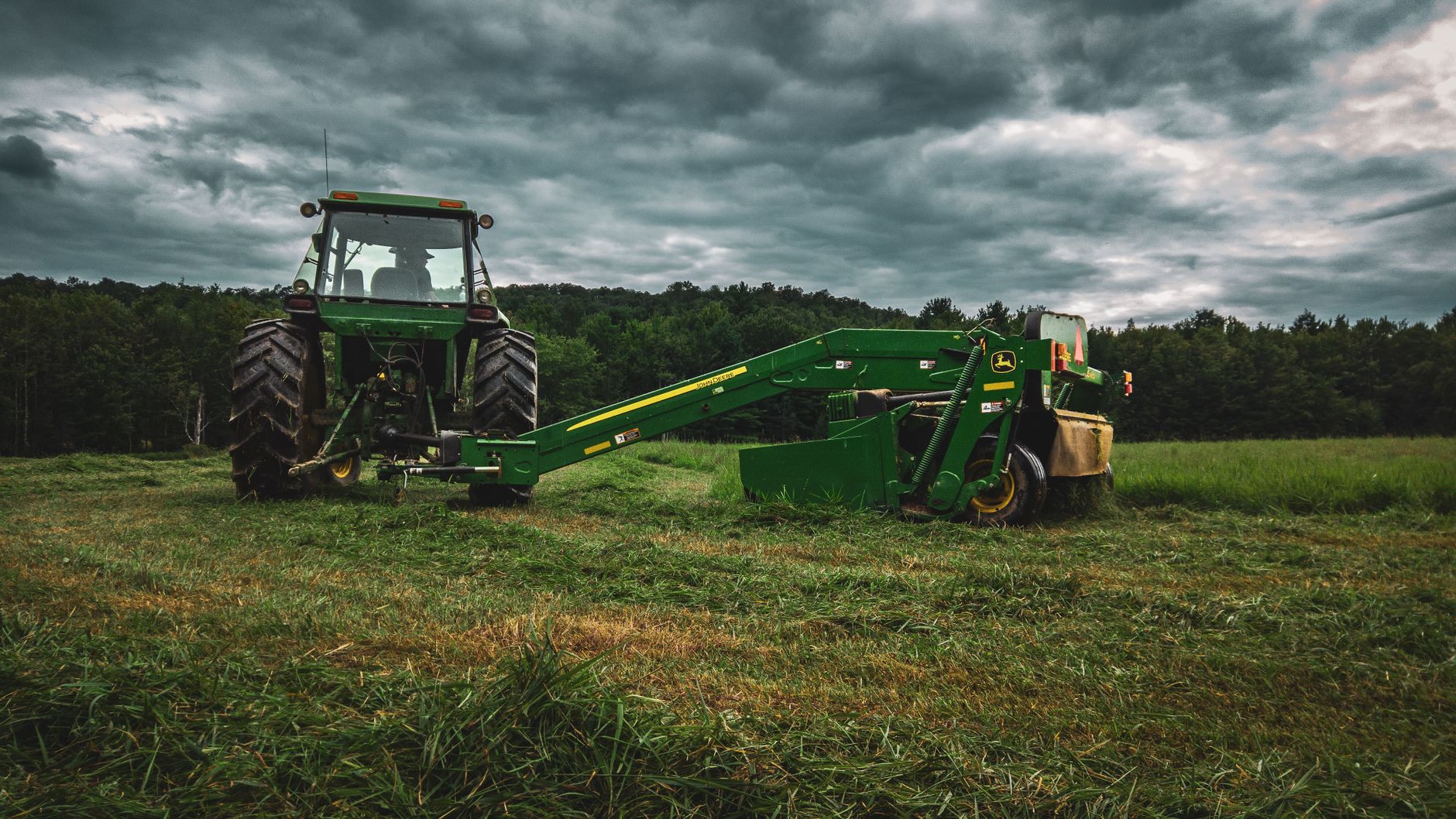
The Name I Cut in the Hayfield
Grandpa’s Eighty Acres
To understand the field you have to understand Grandpa Earl. And to understand him you have to know he never once raised his voice at either of us.
He had eighty acres of hay ground outside a little town in southern Michigan. Flat and good, with a line of hardwoods along the back.
A creek ran through it that fed the Kalamazoo somewhere past the next farm. He cut it twice a year, sometimes three times in a wet summer.
He sold the bales to the horse people over by the county road and to a dairy that has since gone under. It was never going to make anybody rich. It made enough.
When our dad left, Megan was six and I was nine. Grandpa Earl was the man who showed up.
He taught me to drive the old Ford tractor when my legs barely reached the pedals. He sat behind me on the fender with his hand loose on my shoulder.
He taught me to read the sky for rain before a cutting. How to tedder the hay so it dried even. How to tell good timothy from the weedy stuff by the feel of it.
Megan never took to any of it. She would come out to the field for about ten minutes, get itchy from the chaff, and go back to the house to sit with Mama.
Nobody blamed her. We are just made different.
I remember one evening we were up on the wagon stacking bales, me and Grandpa, and the heat lightning was flickering way off over the next county.
He stopped and leaned on the rack and looked at the sky. He said a man does not own land so much as he owes it.
I did not understand him then. I was fourteen and my arms hurt. I understand him now.
He fed six families off that hay across the years, counting the horse people and the dairy. He never once told anyone he was doing them a favor.
I married Jeff at twenty-six and we stayed close, ten minutes down the road. I spent half my weekends on that farm with Grandpa, into my thirties, into my forties.
Long after a woman my age is supposed to want to spend a Saturday raking windrows. I did not do it to earn anything.
I did it because the man was the whole shape of my childhood. I liked being near him.
So when the lawyer read the will two springs ago, after the funeral, it was not a shock that Grandpa left me the eighty acres.
He had told me himself the October before. Sitting at his kitchen table with his hands around a cup of coffee he was too sick to drink.
He said the land should go to the one who would keep it hay. Not sell it to a man who wanted to put up pole barns.
He looked right at me when he said it. I told him I would keep it hay. I meant it.
What I did not expect was how it landed on Megan.