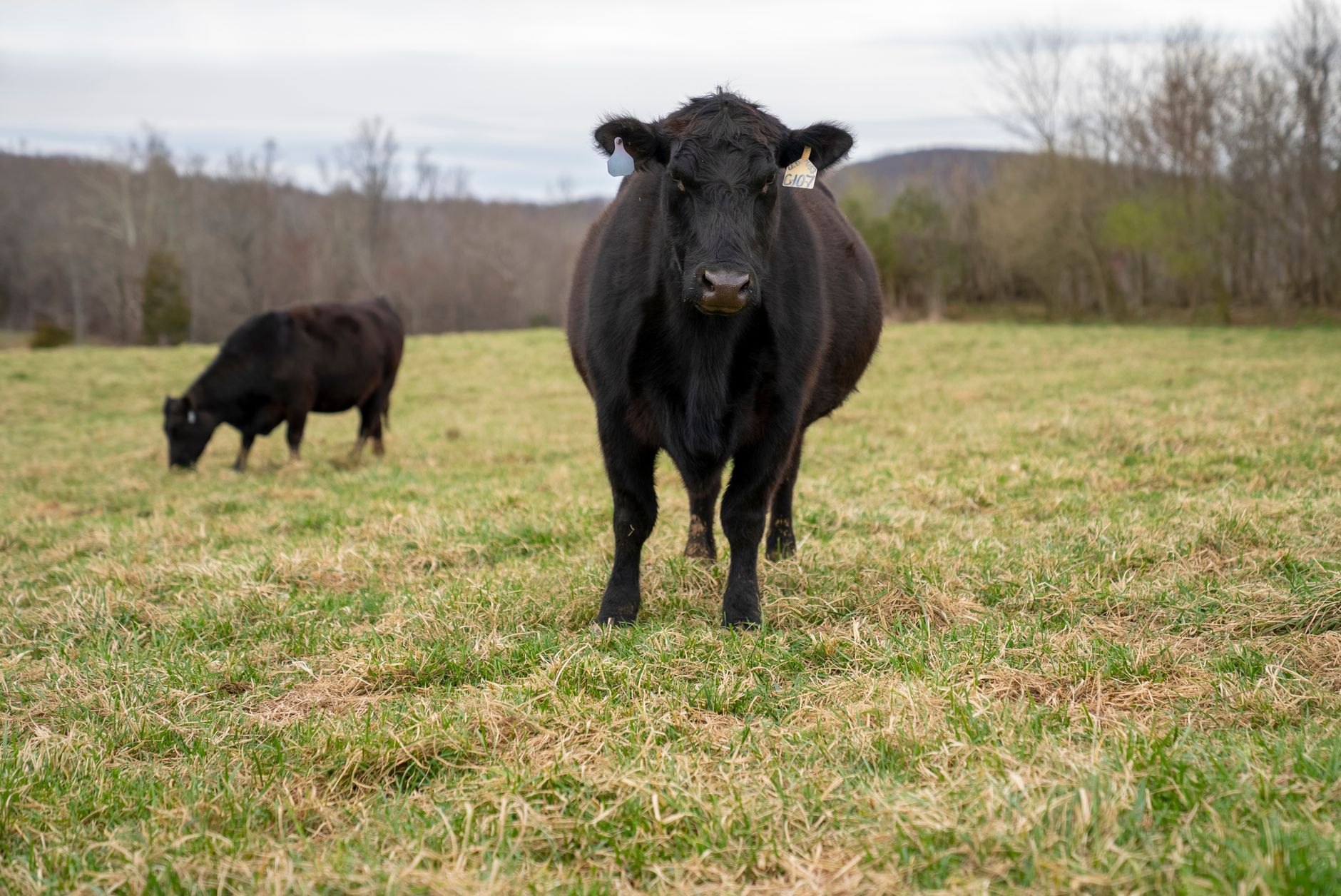
The Heifer I Gave My Daughter
What Merle did
Merle Nelson was quiet a long time. Long enough that Glenda came to the kitchen door and looked in and read something in the backs of us and went away again without a word.
Then he took his glasses off and he rubbed the bridge of his nose, and he got up out of his chair, old and slow, his knees telling on him, and he went to the kitchen doorway and he called into the other room.
“Hallie. Come here a minute, hon.”
She came, cocoa mustache and all, wary, because a grandpa’s voice calling you to the kitchen can go either way.
Merle got himself down on one knee in front of my daughter, which I know for a fact cost him something, because that man’s knees are shot from fifty years of this life.
“I hear you got yourself a cow,” he said.
Hallie nodded, careful.
“A bred one. Good one. Your mama’s best.” He cleared his throat. “She gonna calve out in your mama’s lot, or you got a place for her?”
“I don’t know,” Hallie said.
“Well.” Merle looked at the floor, and then he looked back at her, and I watched a proud man say the hardest thing a proud man can say, which is not sorry. It is let me help. “A cow of your own needs a pen of her own. A good stout one, so’s that calf can’t get out through the rails come spring. I built pens on this place for fifty years. Built the one your cousins’ll use.” He stopped. His voice was not steady. “Reckon I ought to come help you build yours. If you’d want me to. You and me. We’ll set the posts this week before the ground freezes up hard.”
Hallie looked at me. I nodded.
“Okay, Grandpa,” she said.
And Merle Nelson, who had handed my daughter a twenty-dollar bill two days before and told her girls don’t stay on the farm, reached out and shook my eight-year-old’s mittened hand like she was a cattleman he respected, which, I understood then, was the only apology that man had in him, and it was enough. It was more than enough. It was the whole thing.