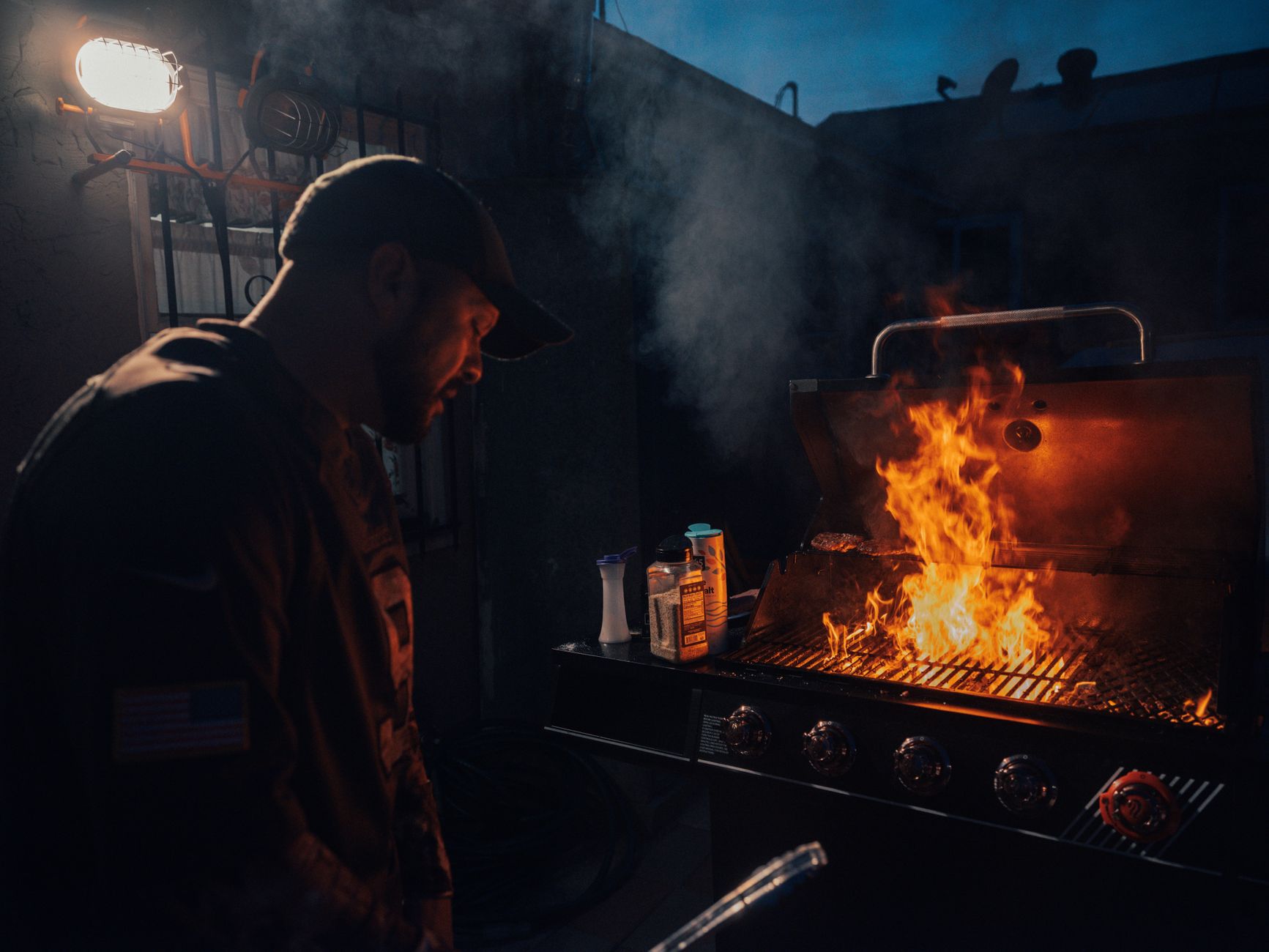
The Brisket I Smoked For Dads Hall
I thought about him the whole drive. The way he used to sit by his homemade smoker in a lawn chair with a thermos of coffee and a transistor radio, listening to a ball game, perfectly content to do nothing all day but keep a fire. He never rushed a brisket and he never rushed a person. If I came to him upset about something at school, he would not fix it right off. He would hand me the spritz bottle and say, “Mind the fire a while, we’ll talk when it’s ready.” By the time the meat was ready I had usually talked myself calm.
I did not know, driving to Cedar Hollow in the dark with my fire going in the back, whether this would be a day he knew me. The doctors said not to expect too much. They said the man I remembered was mostly gone, and the kindest thing was to meet whoever came to the door that morning and not grieve the one who did not. I had tried to make my peace with that. I had not managed it.
Kim met me at the service door in her coat. She was maybe fifty, with reading glasses pushed up in her hair and the kind of tired that nurses wear like a uniform.
“Back patio’s through here,” she said. “We got an outlet, a water spigot, and I dragged out every folding table we own. You need anything, holler. I’ll be in and out, we got a med pass at seven.”
The patio faced east. There was a low brick wall and some raised beds gone to frost and a scatter of those heavy plastic chairs. I set the smoker up where the smoke would roll away from the building, got my fire going with the hickory I had brought from home, and put the two briskets on fat side up at twenty after five.
Then I did the thing you do with brisket, which is nothing. You tend a fire and you wait.
The sun came up gray and then gold. Around six the smell started doing its work, that deep sweet smoke that gets into everything, and I noticed the windows along the back of the building. Faces in them. An old man in one, a hand lifted. A woman in a pink robe in another, just watching.
Kim came out with two cups of coffee and handed me one.
“They can smell it,” she said. “You have got no idea what you’ve started. Mr. Pruitt in 114 was a butcher for forty years. He has not said a full sentence to me in a month. This morning he asked me was somebody smoking a packer or a flat.”
“Packer,” I said. “Tell him packer.”
She laughed and went back in, and I heard her through the window say, “Packer, Lloyd. The man says packer,” and I heard, faint, an old man’s voice say, “Good.”