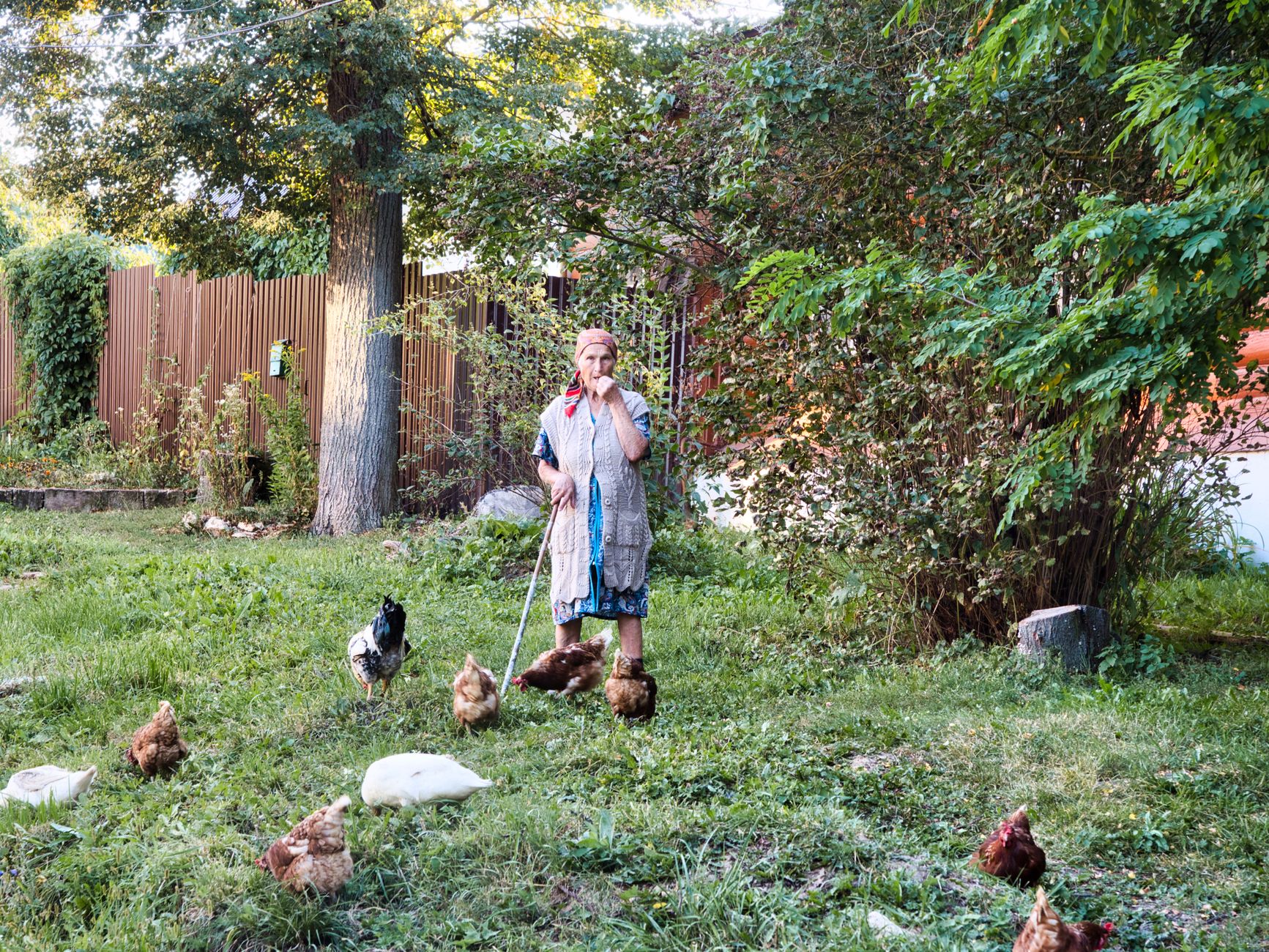
The Two Chairs On The Lawn
Sunday morning
It came up bright and cool, the way the best Octobers do around here. There had been a frost in the low spots and it burned off by nine and left everything smelling like cold grass and woodsmoke.
I wore my blue dress. It is not new. I bought it for Sheryl’s girl’s confirmation four years back and it is the nicest thing I own, a plain Sunday blue with buttons up the front, and I pressed it the night before so it would hang right.
Harold wore his good short-sleeve dress shirt, the white one, and his belt, and he combed what he has left of his hair with water. He looked, standing by the truck, about the way he looked the day I married him, if you let my eyes do the work they want to do.
We did not say much on the drive out. Mount Olive Methodist is seven miles out of Bedford on a road that is mostly soybean this year. The steeple comes up over a rise and then there it is, white as a bedsheet, with the two front doors and the three steps and the lawn that slopes down toward the little gravel lot.
We sat through the service. Pastor Reed preached on the wedding at Cana, which I had not asked him to and did not expect, and I will tell you my eyes stung a little, because it felt like the Lord was leaning on the scale in my favor for once.
I had the two chairs in the bed of the truck under a tarp. Harold had oiled the wobble Friday night, down in the shop, and he had wiped them both down with a rag so the dust of the laundry pile was off them.
When the service let out, the people came down the three steps into the sun the way they always do, blinking and talking, the men hitching their belts and the women finding each other.
And Harold backed the tailgate down and lifted out the chairs.
Two chairs on the grass
I will tell you, carrying a kitchen chair across a church lawn in your good blue dress is a thing that makes you feel every one of your years.
People slowed down. You could feel it, the way a crowd slows when it is trying to figure out what it is looking at. Harold set the chairs facing each other on the flat part of the lawn, near the big maple that was half-turned to orange, and he looked at me, and I looked at him, and I thought, well, Eunice, you said you would.
I sat down in my chair. He sat down in his, knees almost touching mine.
“You want to start,” he said, low, “or you want me to.”
And right then a shadow came over us, and it was Pastor Reed.
He is maybe fifty, Pastor Reed, a square-built man with a farm boy’s forearms, and he had already shed his robe inside and come out in his shirtsleeves and his tie, the way a man does when the work part of Sunday is done. He stood there a second looking down at the two of us in our kitchen chairs.
“Eunice,” he said. “Harold. What’s this.”