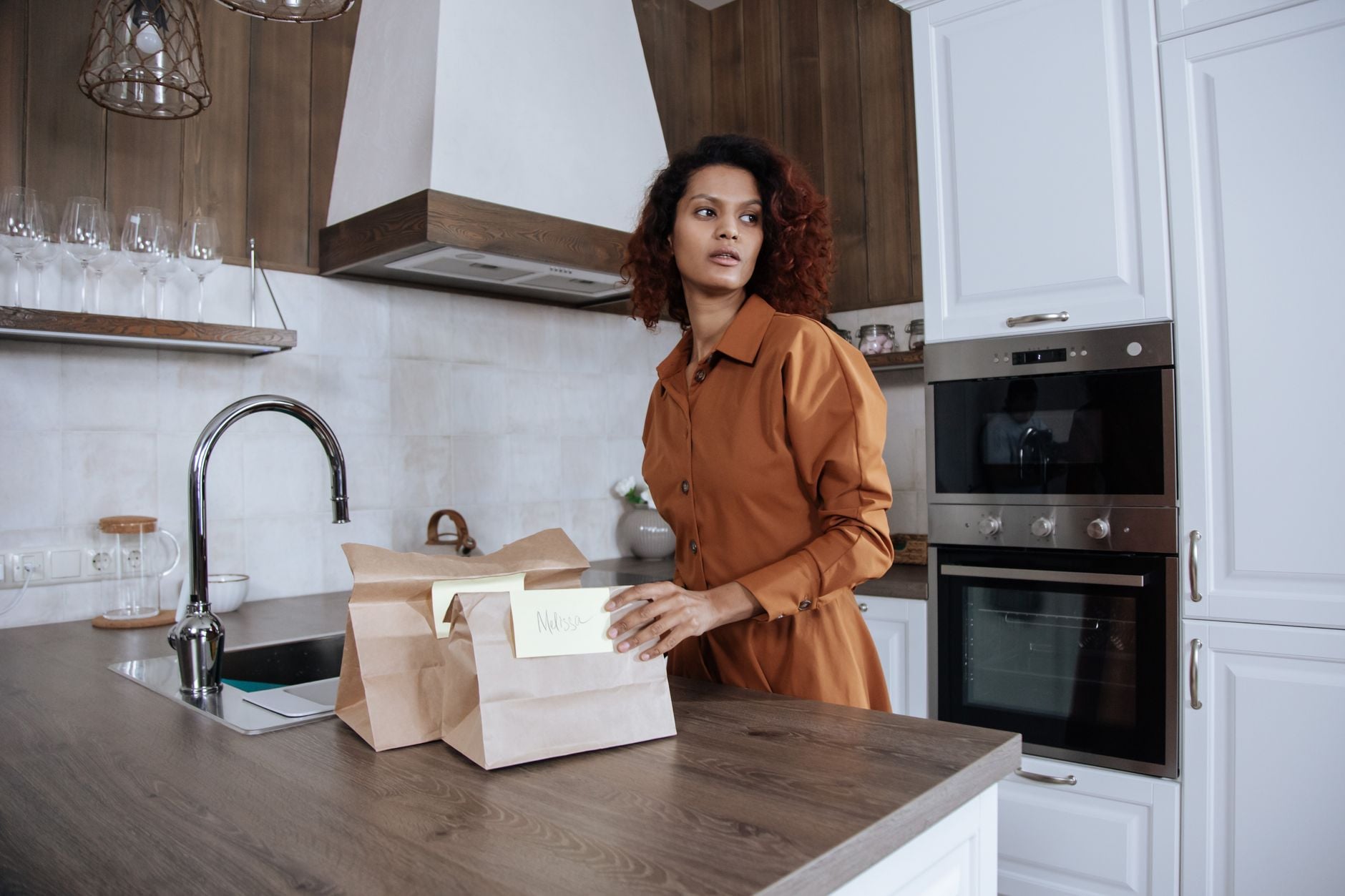
Three Brown Sacks Before Dawn
He came into the kitchen in his pajamas, the navy-sleeved shirt with the red collar and the red and navy striped pants, with his hair sticking up on one side, and he climbed up on the stool at the counter.
“Why are you making lunch?” he said.
“I’m going to pack your lunch from now on,” I said. “Every night, when I get home.”
He looked at the three sacks lined up on the counter for a long time. He is a noticing kind of child. He gets that from his mamaw.
“Mama,” he said. “Did Miss Bev tell you?”
I had told myself on the drive home that I would not cry in front of him, and I very nearly made it. I nodded my head. I could not trust my voice yet.
He looked down at the counter. He traced the edge of it with his finger.
“I didn’t want you to have to work more nights,” he said. “The paper said we owed money. I figured we ran out. I figured if I told you, you’d take another shift, and then I’d never see you.”
He is eight years old. He had been carrying that since September, by himself, eating a cheese sandwich every day so his mother would not have to work more.
I came around the counter and I held onto him, stool and all. He smelled like sleep and the fabric softener Mama uses. I held on until he started to squirm, and then I held on a little longer.
“Baby, you don’t ever have to carry something like that for me,” I said. “You hear me? That’s my job. Not yours.”
“Okay,” he said, into my shoulder. Then, because he is eight, he pulled back and pointed at the sacks. “Who are those for?”
“Miss Bev said there’s two other boys from your class in that line.”
His whole face changed. “Caleb and Austin,” he said. “We sit together. Caleb’s grandma is raising him. Austin’s daddy got hurt at the plant and he can’t work right now.”
“Well,” I said, “then I guess those are for Caleb and Austin.”
He slid down off the stool and went to the fridge, where I keep a black marker clipped to the calendar. He came back and pulled the first extra sack toward him and wrote on it, slow and careful, with his tongue poking out the corner of his mouth.
Caleb, it said. He wrote the C backward and then fixed it.
On the second one he wrote Austin, and on his own he wrote Tyler, and then, under his own name, in smaller letters, he drew a little smiling face.
“So they know it’s from us,” he said.
I had to go stand at the sink for a minute.
Mama woke up at six thirty, the way she always does. I heard her fold the afghan and come down the hall, and I heard her stop in the kitchen doorway.
“What’s all this?” she said.
I was at the sink, rinsing out the peanut butter knife. I kept my back to her. I wanted to give her the space to say it without having to look at me.
“I’m going to start packing Tyler’s lunch,” I said. “Save us both some money.”
It was quiet for a long breath. I could hear the refrigerator hum and the clock over the stove.
“Well,” she said finally. “That’s fine, honey. That’s fine.”