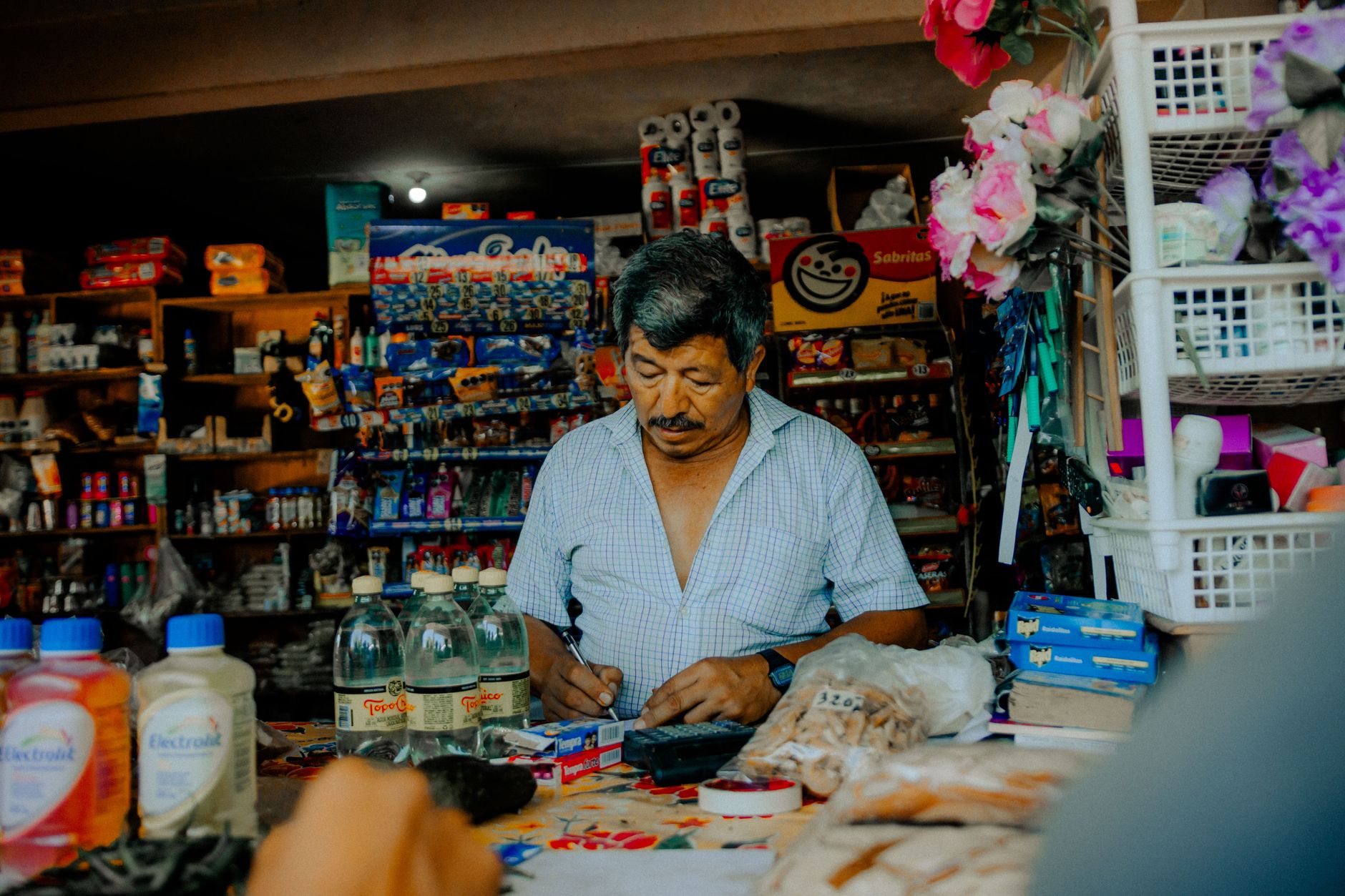
The Ticket She Marked Paid in Full
The Ticket
I did not argue with him. I knew if I opened my mouth to argue, my voice would shake, and I was not going to let it shake in front of Virgil Snell.
Instead I reached under the register and pulled out the drawer.
I found the G’s with my thumb and pulled out Earl’s ticket, three years of charges in my handwriting, front and back, the lines packed in tight to fit the one sheet.
I laid it on the wooden counter, faceup, turned so that every one of them could read it if they wanted to.
Then I took the black marker out of my vest pocket and pulled off the cap.
Earl watched me like a man watching a dog he is not sure about. “What are you doing, Jo?”
I did not answer. I wrote it across the ticket in big letters, corner to corner, right over three years of feed and fence: paid in full.
The marker squeaked on every letter. It is funny what you remember.
I remember that squeak, and I remember that my hand was steady, and I remember thinking it was a good marker and I should buy more of that brand.
I capped the marker and set it down. Then I looked up at Earl.
“You’re right,” I said. “You raised me. You did. So that’s paid. I’m not going to say another word about it, to you or to anybody else.”
His grin was gone. He looked down at the ticket and then back at me, and for a second he looked like he did not know where he was.
“From here on, though,” I said, “the next sack is cash.”
Then I rang up his four sacks of range cubes, the ones he had asked for when he walked in. The register said $70 even, and I turned the little screen so he could see it.
And I waited.
I have never heard my store so quiet. The radio was on low, a man selling pickup trucks in Springfield, and the big cooler in the back was humming, and that was all.
Earl stood there a long moment. Then he reached back for his billfold. He counted out three twenties and a ten, slow, one bill at a time, and laid them on the counter beside the ticket.
I made sure to say, “Thank you, Earl.” I meant it, too, in a way I could not have explained right then.
He did not say anything back. He did not even take the receipt. He loaded the four sacks himself, two trips, and the bell over the door rang hard behind him on the second one.
Through the front window I watched his old Ford pull away from the square, and nobody at my counter said a word until it turned the corner by the courthouse.
What Virgil Said
Don cleared his throat first. Ray folded his newspaper in half and then in half again, which is what Ray does instead of talking.
I picked up Earl’s ticket and slid it back into the drawer, under the G’s, right where it had always been. I did not throw it away. I am still not sure why.
Then Virgil Snell set down the sack of mineral he had been about to pay for. He reached up, slow, and took off his cap.
He held it against his chest with both hands, the way the old men do at a funeral or the anthem.
I did not know what he was going to say.
I was afraid it would be something about Earl, something the men would carry out of there and repeat at the café, and I did not want that either.
“Jolene,” Virgil said. He has a voice like gravel in a bucket. “I knew your daddy, and I’ve known your mama since she was sixteen. Your mama raised you right.”
That was all he said. He put his cap back on, paid for his mineral with exact change, and carried it out to his truck himself, the way he always does.
I told Don and Ray I needed to check something in the back.
I went into the storeroom between the pallets of dog food and the seed corn and I stood there with my hand over my mouth until I could breathe like a normal person again.