The Sundays My Father Never Explained
The card table
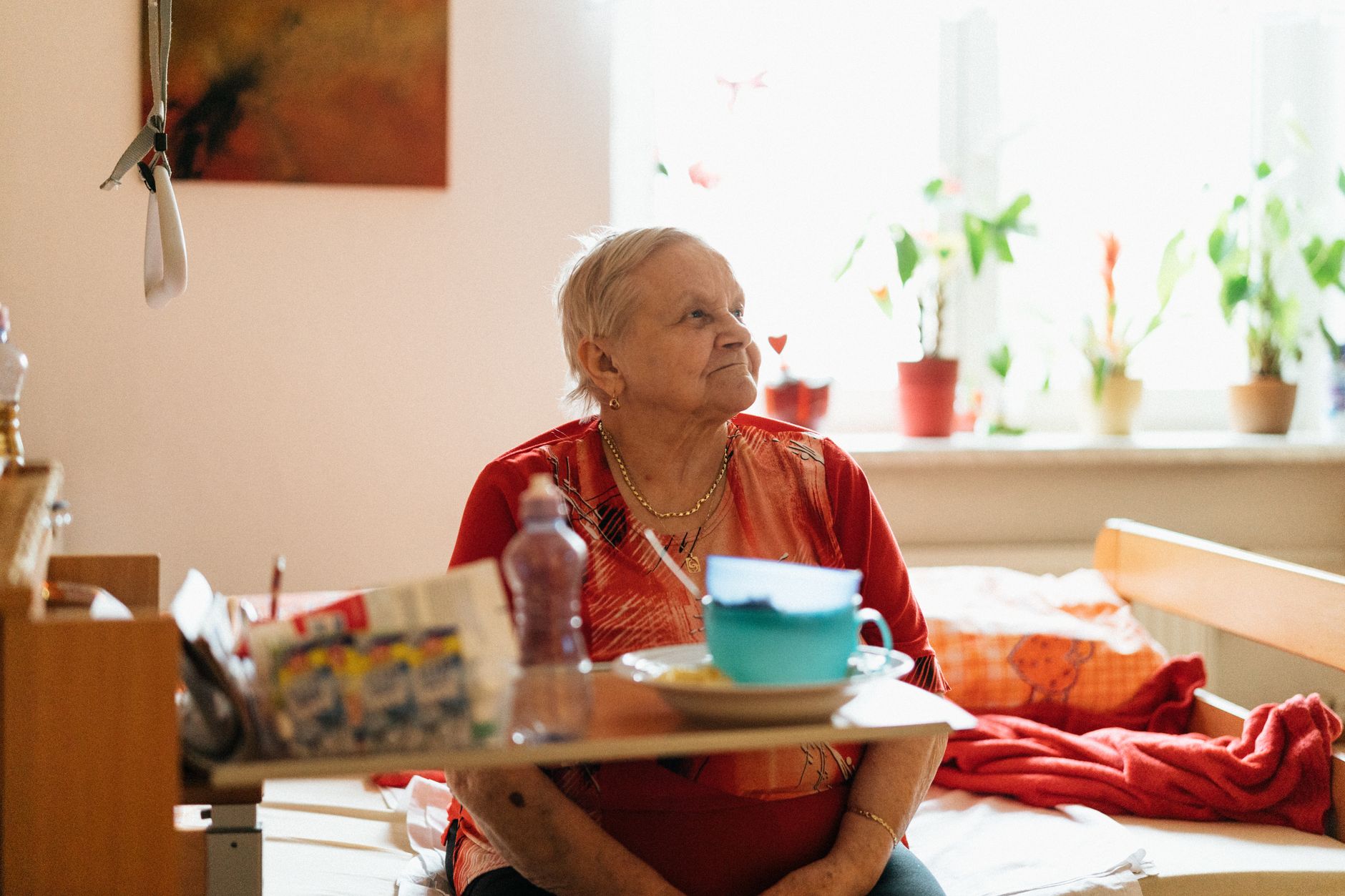
That was Irene Moss. She was eighty-four years old, about as big as a sack of feed, with the sharpest eyes in the building.
Dad settled her back in her chair before he so much as looked for one of his own.
Then he went around the room. I followed with the butterscotch, because he handed me the sack and I didn’t know what else to do with myself.
He stopped at every chair. He knew every name. He knew that Clarence, who was nearly blind, could still squeeze with his left hand but not his right, so he took the left.
He knew that Doris liked her candy unwrapped because her fingers had gotten too bad for the cellophane.
He knew that Marvin, the man by the TV, had farmed eight hundred acres of corn and beans and had opinions about all of it.
Dad sat with him five minutes and talked bean yields, and Marvin talked back like they were two men leaning on a pickup tailgate.
“Clarence wants the markets,” Dad told me, when we got to the end of the row. “Read him the cash corn price. Slow. He used to haul to the same elevator I did.”
I found the farm paper on the card table and read Clarence the cash corn and bean prices, slow. He nodded at every number like he was writing it down in his head.
When I finished, he said, “Thank you, young lady,” and I am forty-four and I nearly cried.
Then Dad went back to Irene, and he pulled a card of hearing-aid batteries out of his shirt pocket. They were the tiny ones, size 312, the kind you can lose in the carpet if you breathe on them wrong.
He held out his right hand to take the old ones out of her hearing aids. It shook so bad he couldn’t get his thumbnail under the little door.
He tried twice. Then he set the card of batteries in his lap and looked at me.
“Dana,” he said. “Her batteries.”
I knelt down by Irene’s chair. She laid both hearing aids in my palm, and I peeled the tabs off the new batteries, waited the minute you’re supposed to wait, and put them in.
She put them in her ears and blinked twice and smiled. “Oh,” she said. “There’s the world again.”
The whole time, she watched my face. When I was done, she patted my hand and said, “You’ve got his patience.”
I didn’t have his patience. I had been counting the minutes since we walked in.
We stayed two hours. Dad lost three hands of pitch to Marvin, who cheated in a way everyone in the room could see, and nobody said a word about it.
A woman named Edna asked me to read her the bulletin from her daughter’s church in Cedar Rapids, and I did.
At half past two, an aide in blue scrubs came through to start helping people back to their rooms for their afternoon rest. She had a gray ponytail and the kind of forearms you get from lifting people for a living.
“Walt,” she said, and squeezed his shoulder as she went by. “We missed you something awful.”
“Bev,” Dad said. “This is my daughter.”
“I figured,” Bev said, and gave me a look I couldn’t read.
On the drive home, Dad fell asleep before we hit the county line with his hand resting on the empty candy sack. I drove forty miles with my speech in my mouth, and I never said one word of it.