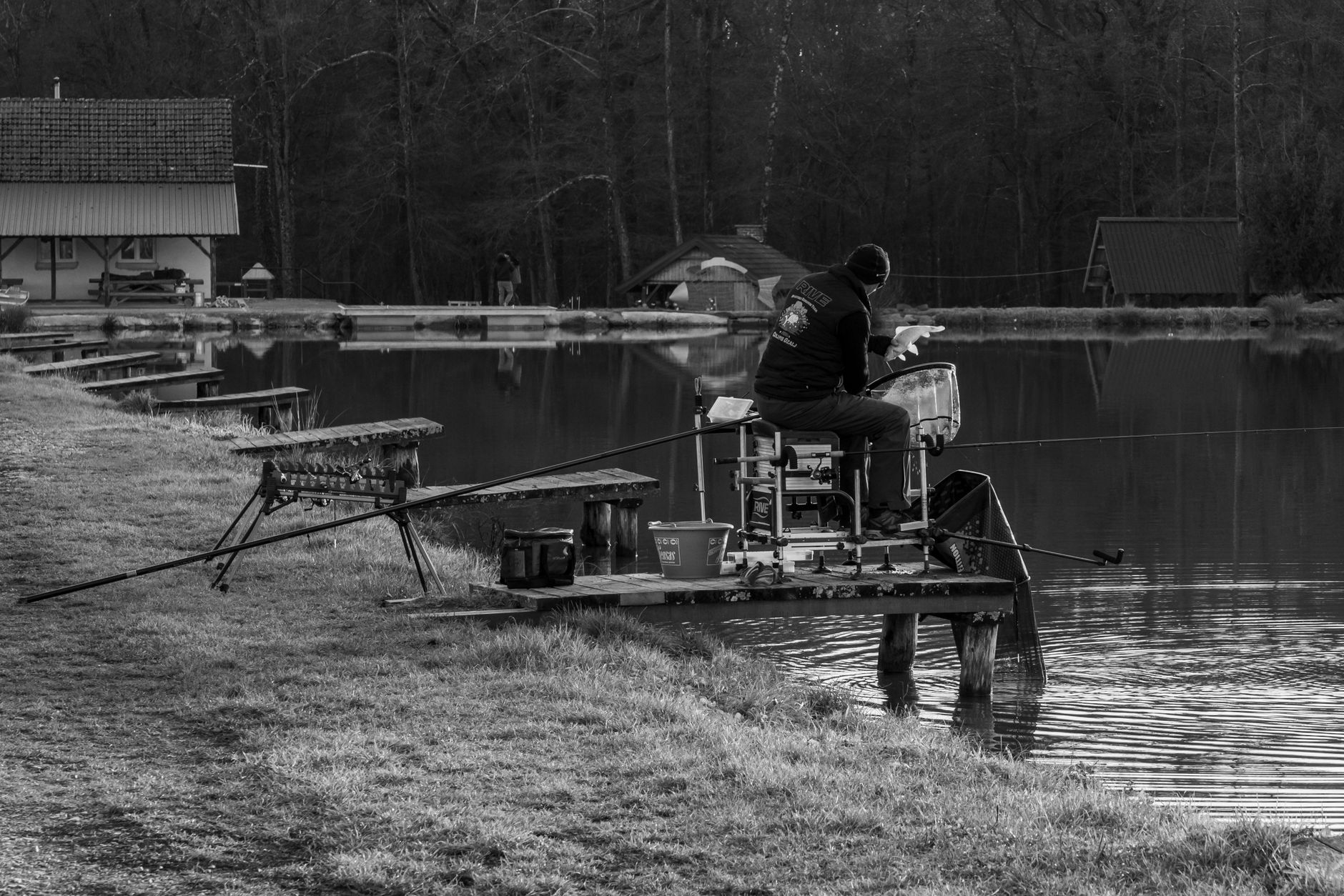
The Pond I Bought Back With My First Pay
I did not know what to say. I had thought about this evening for weeks, and none of the versions had gone like this.
“Why didn’t you call me?” I said finally. Not hard. Just asking.
“Because I was ashamed,” she said. “And because you were always fine. That’s what they always said about you, Jess. You’re fine. Jessie’s always fine. And I believed that too. I believed it my whole life because it was easier for all of us.”
She wiped her face with the heel of her hand.
“You weren’t fine,” she said. “Were you.”
It was the first time anyone in my family had ever asked me that. I was 32 years old, sitting on a dock I had built with my own two hands on ground I had bought with my own first pay, and my little sister was the first one to ask.
“No,” I said. “I wasn’t.”
She started crying again then, really crying, the deep kind that comes up from a place you have been keeping shut. I set the pole down and put my arm around her, and she leaned into me the way she used to when we were girls and a storm came up too fast.
We sat like that a long time. The redwings came in to the cattails and argued about who got which stalk. A bluegill rose out past the end of the dock and made a ring that spread all the way to the bank.
“I want to pay you back,” Brittany said, when she could talk. “Ryan and I talked. We can do it a little at a time. Half of what you paid, at least.”
“No.”
“Jess.”
“I didn’t ask you here for money,” I said. “I asked you here to fish.”
She laughed, a wet surprised laugh, and wiped her nose on her sleeve like she was nine.
I opened Grandpa’s tackle box then. The latch stuck, and I had to work it with my thumbnail, and when it finally gave, the smell that came up was old line and rust and something sweet that might have been his pipe tobacco.
The top tray had hooks and sinkers and a few sad old jigs. Under it, in the bottom of the box, was a sandwich bag with two folded pieces of paper inside.
They were drawings. Mine and Brittany’s, done in crayon when we were maybe seven and four. Two stick girls on a dock, with a big round sun and a fish bigger than both of them. Mine said Jessie in careful letters. Hers said Brit, with the B on backwards.
On the back of each one, in Grandpa’s square farm handwriting, he had written the same thing.
For my girls. Both of them.
Brittany put her hand over her mouth. I held the two pictures side by side on my knees and could not see them anymore for a while.
“He kept these,” she whispered. “All this time. In his tackle box.”
“Everything needs a place to hide sometimes,” I said.
She looked at me. “That’s what he said about the cattails.”
“Yes.”
I had brought a second cane pole down with me. It was a cheap one from the farm store in Corning, not Grandpa’s, but it was the same length and the same color, and I had rigged it that morning.