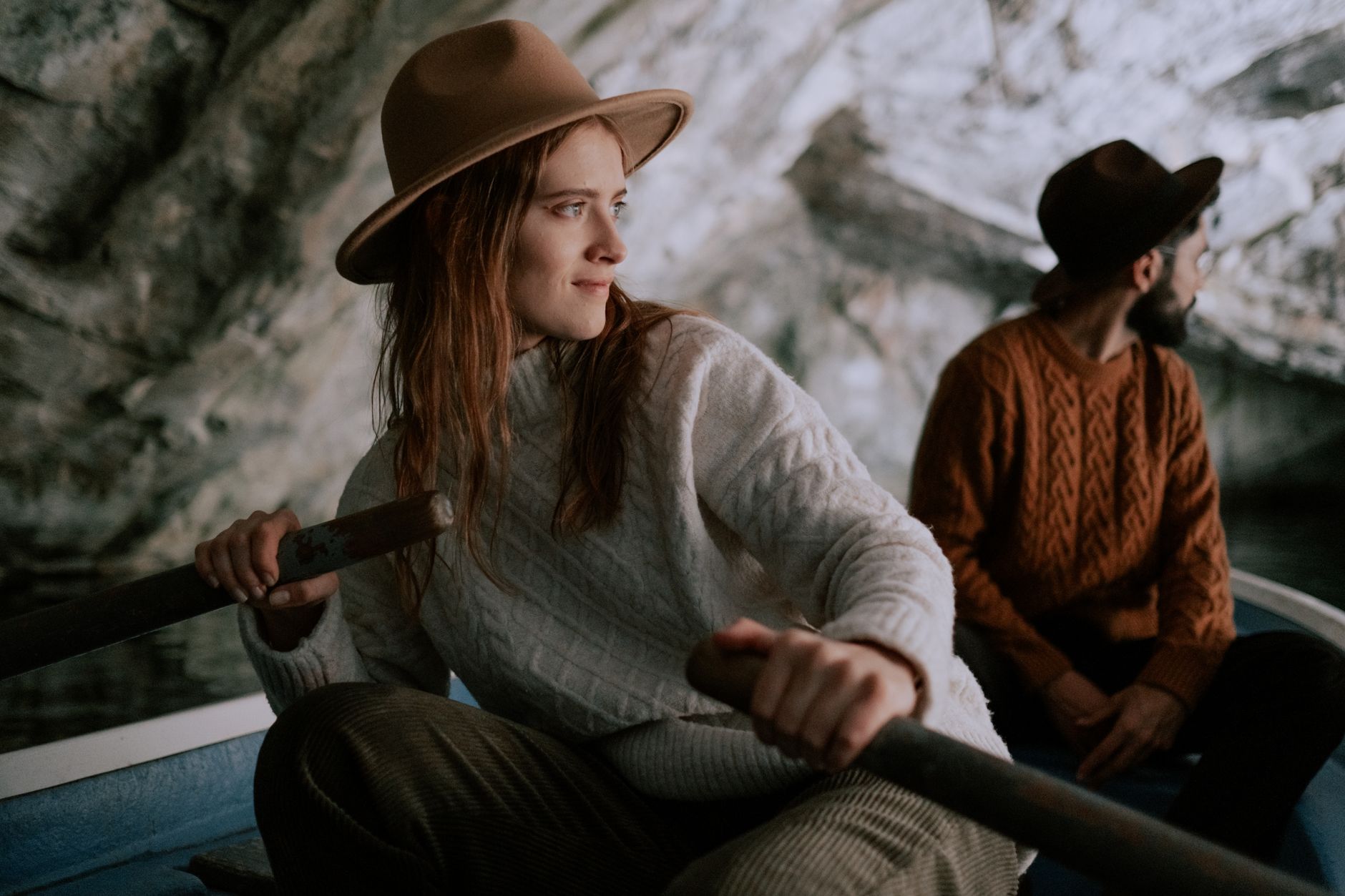
The Jon Boat in My Driveway
The Week
He did not come.
Sunday morning the boat sat by the mailbox in the frost. Sunday afternoon our neighbor Gene drove by slow and lifted two fingers off the wheel the way he does, and then backed up and drove by again.
Monday the school bus stopped right next to it. Tuesday Corey’s cousin texted him a picture of it with three question marks.
Wednesday at the store, a woman I barely know asked me at the register if Rusty had sold me his boat.
“No, ma’am,” I said. “It’s Rusty’s. He’ll be by for it.”
That was all I ever said to anybody, and I said it a lot that week. I did not tell the story. Kim did not tell it either, I found out later, not even to her sister.
Darla did not tell it. People on that river knew anyway, the way people always do, because the Haskins boys were in that back room.
I will be honest. Part of me wanted the whole county to know. Part of me lay awake Tuesday night thinking of every word I could say at Sunday dinner in front of Harlan and the whole table.
I prayed about that part, and the praying did not fix it all at once.
What I kept coming back to was Rusty’s face in that doorway. It was not the face of a man who did not care.
It was the face of a man who cared so much he could not stand to look at it. I had seen my own daddy wear it, years ago, before he quit.
Eli asked about his uncle every night that week. Was Uncle Rusty sick. Was Uncle Rusty mad at him.
Could he still go fishing with him. I told him his uncle loved him and was working something out, and that was the truest thing I could find to say.
Rusty texted Corey once, on Thursday. It said, “Tell Brandy I’m sorry.” Corey showed it to me.
He did not text back, and I did not ask him to. Sorry by text was not what the boat was waiting for.
Who Came for the Boat
Saturday morning, a week to the day, a truck pulled in and stopped behind the boat.
Eli saw it first from the front window, where he had been watching the road every morning. He did not yell. He just said, “Mom. It’s Grandpa.”
Harlan Cole climbed down out of his old Ford slowly, the way a man his age does after thirty-one years on a grader seat.
He stood for a minute looking at the jon boat. He put his hand on the bow, where the green paint was worn down to bare aluminum, like he was touching the shoulder of a horse.
Then he walked up to my door with his cap in his hand. I opened it before he could knock.
“Brandy,” he said. “I come for the boat.”
“Yes, sir,” I said.
“And I come to say something first, if you’ll let me.” He looked past me at Eli, who was hanging on the back of the couch. “Morning, Buddy.”
“Morning, Grandpa.”
I let him in and poured him coffee, and he sat at my kitchen table with both hands around the cup. Corey came out of the bedroom in his sock feet.
He had been up all night at the plant, but he had heard the truck, and he sat down next to his father without a word.
“I didn’t know till Wednesday,” Harlan said. “Darla’s husband and me were in the service together, back when. She called me. She said she figured I’d want to know.” He turned the cup around.
“She was right.”
He told us he had driven out to Rusty’s rent house Wednesday night and found him sitting on the porch in the dark.
No lights on. A case of beer by the steps and only two gone, which Harlan said was the first good sign he had seen in six months.
“He told me he hasn’t been sober a Saturday since Tammy left,” Harlan said. “Not one. He said he thought he had it handled. He thought that boy was safe as a church pew in that slack water. He thought he’d go in for ten minutes and get warm.” He shook his head.
“Ten minutes turned into three hours. That’s how it goes. I know how it goes.”
Corey looked at his father. “Daddy?”
“I quit drinking the year you were born,” Harlan said. “You didn’t know that. Your mama knew. Rusty was four, and he doesn’t remember it either, and I thank God for that.” He looked at me.
“I scared myself bad one time, and I quit. He scared himself bad last Saturday. That’s what he’s sitting out there with.”