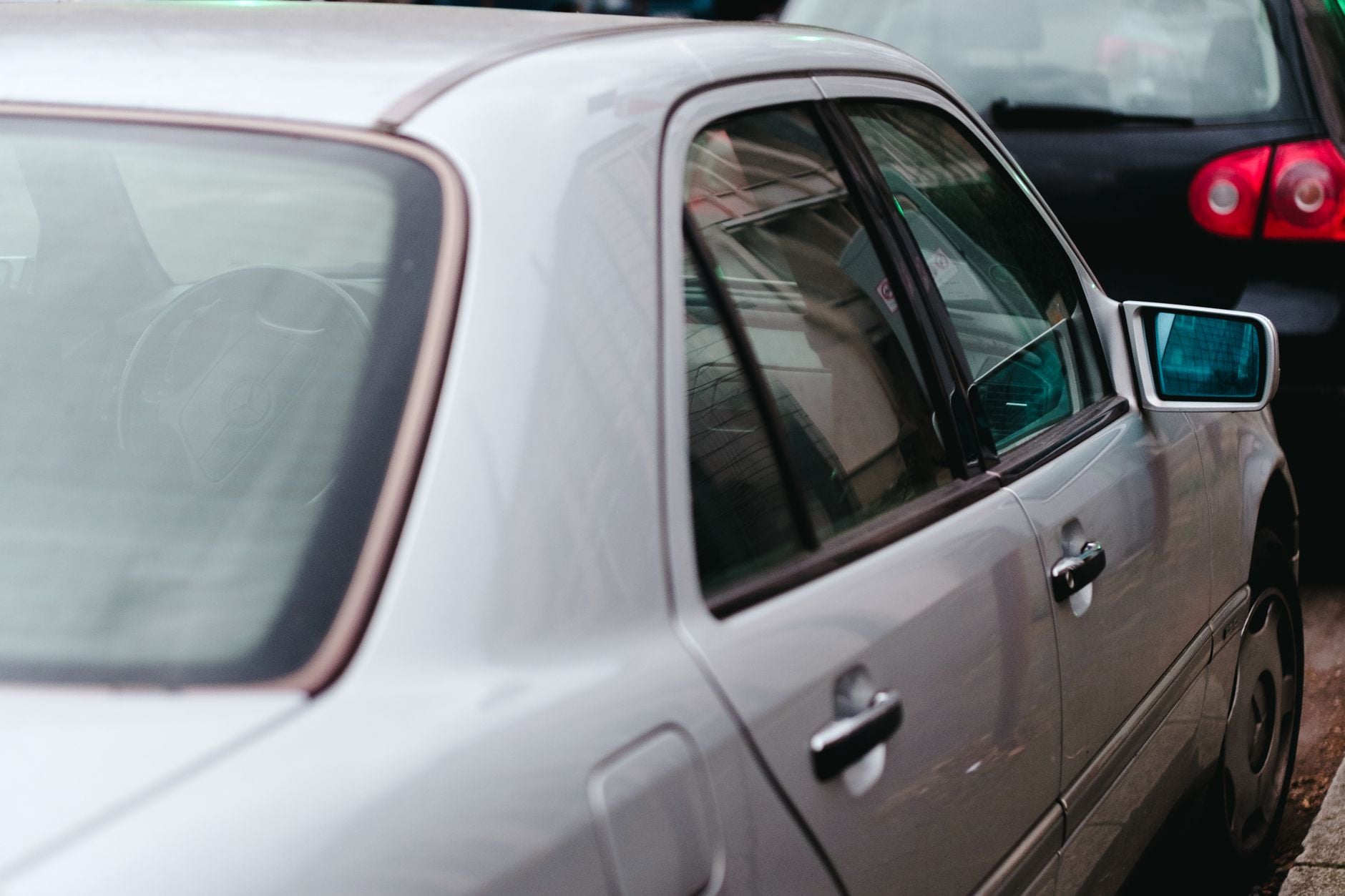
The Grand Marquis Across the Highway
The Drive Home
I pulled out of that lot at about a quarter past four and turned east. The Marquis rode like a church pew on a cloud, just the way my grandpa always said.
I did not turn on the radio. I drove the speed limit the entire way, both hands on the wheel, and I thought about Jesse.
People who do not know us would hear what he did at that gas station and think he is a bad man.
He is not. He is a welder at the trailer plant and has been for sixteen years.
He gets up at four-thirty and comes home with burn holes in his shirts and never once complains about it.
He coached Kaylee’s softball team two summers in a row. He fixed our neighbor’s well pump for nothing when her husband was in the hospital.
But there is a place in Jesse where his brother lives, and nobody else is allowed in it, not even me.
Their daddy died when Dusty was nine and Jesse was fifteen. A tractor rolled on a hillside. Jesse was the one who found him. At the funeral, Jean held onto Jesse’s arm and said, “You look after your brother now. You get him out of whatever he gets into.” And Jesse said he would.
I know because he told me on our third date, sitting on the tailgate of his truck at the lake.
He told it to me like it was a vow he had made in church. In a way, I guess it was.
The first time Dusty got arrested he was nineteen, for fighting at a ball game. Jesse paid the bond out of his first truck money. The second time was drunk driving. Jesse paid.
The third time, two years ago, was drunk driving again, and they took Dusty’s license, and Jesse paid that one too, out of the money we had saved toward a new roof. We still have the old roof.
This time Dusty had been pulled over driving on that suspended license with a busted taillight and an open can on the seat beside him.
A probation violation on top of everything else. The judge set the bond high on purpose. The bondsman wanted ten percent, which was nineteen hundred, to write it.
I was not mad at Dusty, exactly. Dusty is sweet when he is sober.
He once drove four hours to bring Kaylee a stuffed horse when she had her tonsils out. But Dusty does not get better when we pay. He just gets out.
Somewhere around the county line, I started to cry. Not about the car. About the fourteen years.
About standing by an air pump in front of strangers, and about how, even after he drove off, I still wanted to call him and say it was okay.
I did not call. I drove.
Home
I turned into our gravel drive a little before six. The sky had gone darker gray and the porch light was on its timer already. The yard was empty. Jesse’s truck was not there.
He had gone back west, toward the county seat and the jail. I knew it the second I saw the empty drive. He was trying to find some other way to get the nineteen hundred.
Asking the bondsman to take a payment plan, or asking somebody at the jail, or just sitting in the parking lot. That is what Jesse does when he does not know what to do. He sits.
I pulled the Marquis right into his spot, the flat place beside the shed where he always parks.
It was not to be ugly. It was the only good spot, and the car was mine, and I wanted it there.
Then I went in and called my friend Becky’s house, where Kaylee was spending the night for a birthday sleepover. I asked to talk to my girl.
She came on breathless and happy and told me about the cake and the movie and how Becky’s dog ate a paper plate. I did not tell her anything. I just listened to her be twelve.
“Love you, Mama,” she said.
“Love you more,” I said. “Sleep some tonight.”
I made a pot of coffee. I put Bev’s peanut brittle up on top of the refrigerator where Kaylee would not find it for a long while.
I put on a sweatshirt over the flannel and took a cup of coffee out on the porch, and I sat in the old metal glider, and I waited.