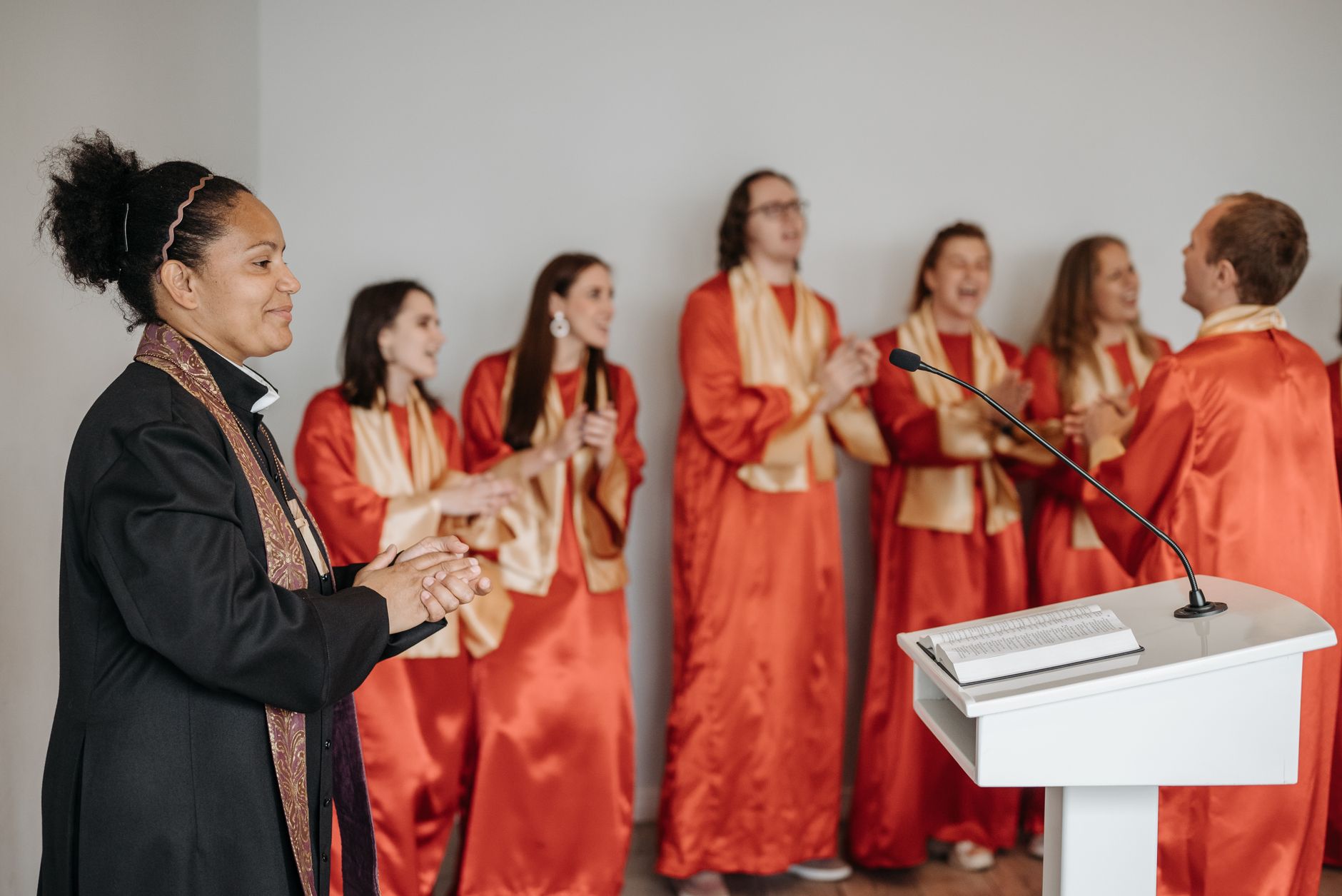
The Front Pew and the Choir
The Back Pew
Dad sang bass in the choir at Zion Lutheran for forty years. He was never the loudest. He was the one the others leaned on, the low note that held the floor up under everybody.
Mom sang alto, two rows in front of him, for thirty-one years. When I was little I thought the choir was something my parents did together the way some people bowled.
When his hearing started going, he blamed the furnace fans, then the new microphones, then the young people who mumbled. Then one Thursday he came home from practice early and did not go back.
He kept going to church on Sundays. But he moved from the third pew on the left, where he and Mom had sat between anthems, to the very last pew by the door.
“So I can get out ahead of the crowd,” he told me. In the back pew nobody would notice when he stood up at the wrong time, or sat down a beat late, or sang the wrong verse.
For two years I watched my father nod at people. He nodded at the pastor’s sermons. He nodded when the waitress at the cafe asked if he wanted pie, and then he looked confused when it came.
He laughed late at jokes, after everyone else, because he was watching faces to know when something had been funny. It about broke my heart every time.
He quit answering the phone altogether. I bought him one of those phones that rings louder and flashes a light, and he said it hurt his ears and didn’t help, both at the same time.
In June I finally got him to the audiologist in town. Dr. Kim Larsen has a little office on Main Street, between the insurance agent and the flower shop, with a fish tank in the waiting room.
She put him in a booth with headphones and ran her tests while I sat outside and watched him through the glass, his eyebrows pulled together, raising his hand late and then not at all.
When she came out she sat down across from both of us and turned her chart so we could see it.
“Mr. Malloy, you have a severe loss in both ears,” she said, slow and loud, facing him so he could see her mouth. “This is not wax. This is the nerve.”
“I’m eighty-eight,” Dad said. “Everything’s been getting worse for a while.”
She smiled. “That’s true. But this part I can help with. You’re a good candidate for hearing aids. The right ones would bring a lot of this back.”
I asked her about the ones they sell at the drugstore now, without a prescription, because Denise had already mentioned them to me once.
Dr. Larsen shook her head. “Those are made for mild to moderate loss. His is past that. They would be like putting reading glasses on someone who needs cataract surgery.”
She wrote the number on a card. Four thousand six hundred dollars for the pair, including the fittings and the follow-up visits for three years. Medicare would not pay for any of it.
Dad looked at the card a long time. Then he put it in his shirt pocket and buttoned the pocket shut, which was what he did with anything he meant to think about.