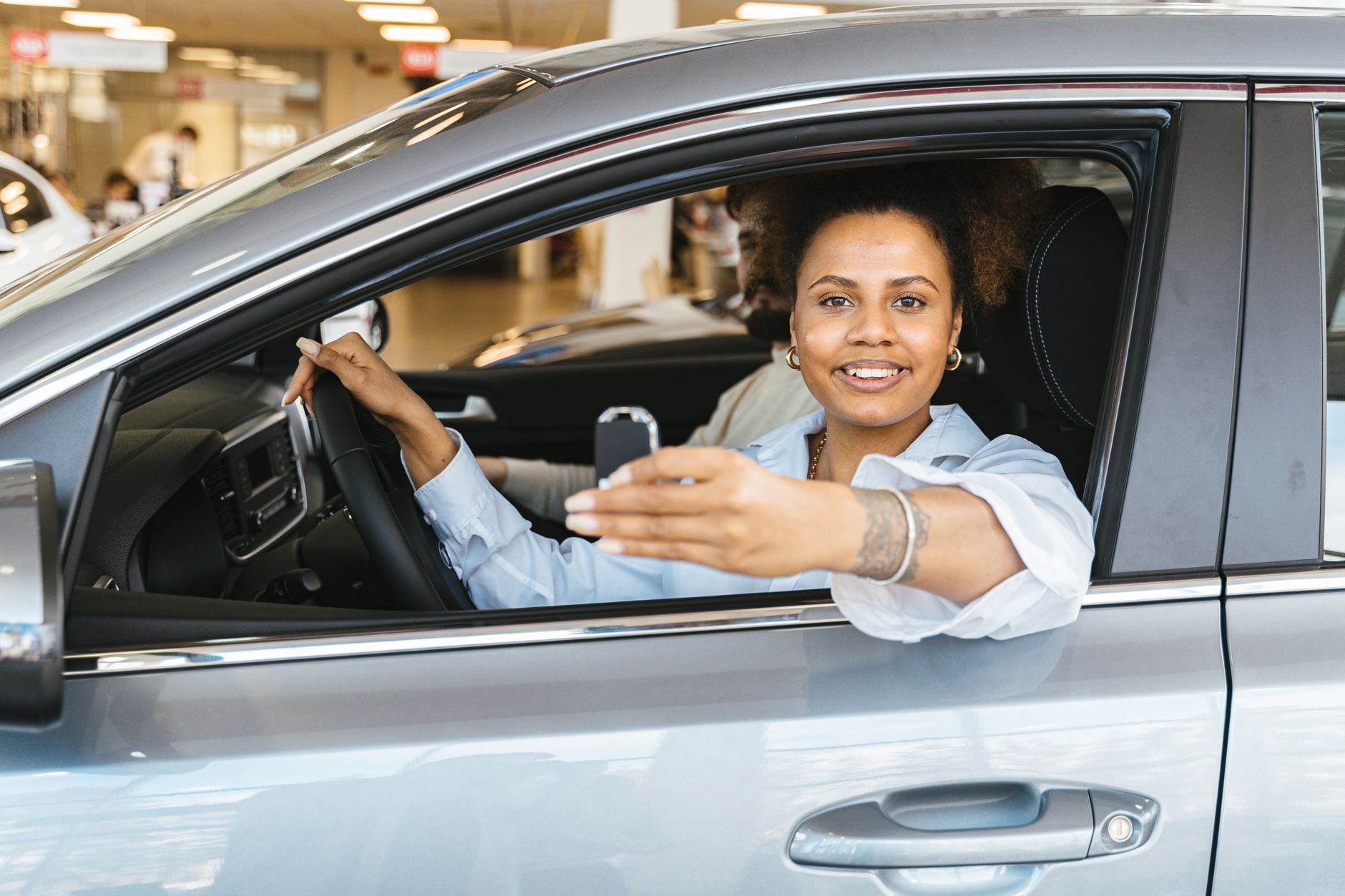
The First New Car of Her Life
The credit application took a while. Roger had to ask her things about her income, and she told him without blinking: her survivor benefit, the little pension from her years as the school cook, what was left in savings.
At one point he asked if there would be a co-buyer, and she looked at me, and I opened my mouth, and she said, “No. Just me.”
I don’t think I understood until that moment what that meant to her.
For forty-four years, every car, every loan, every piece of farm equipment had Dale Duffy’s name on top and hers underneath, if hers was there at all.
“First time I’ve ever been the only name on anything,” she said to Roger. “Isn’t that something. Sixty-eight years old.”
“It’s something,” Roger said gently. “Sign here, and here, and initial here.”
Then there was paperwork, a stack of it, the purchase agreement and the retail installment contract and a form for the state.
Roger explained each one before she signed it. She read every line anyway. Nobody rushed her.
The last one was the application for the title. Roger turned it around and put his finger on the line.
“Owner,” he said. “Right there.”
Out on the lot, the little blue SUV was washed and waiting at the end of the row, the sun on it, the rows of new cars stretching off behind it toward the highway.
He handed her the key fob. It’s not even a key anymore. She turned it over in her hand like a seashell.
“How do I start it?” she asked.
“Foot on the brake and push the button,” Roger said.
She climbed up into the driver’s seat. She sat there with the door wide open and her hands on the wheel, and she pushed the button, and the engine came on so quietly she didn’t believe it at first. She pushed the button again and shut it off.
“Oh, now I’ve done it,” she said, and started to laugh.
I leaned on the open door in my gray fleece with my ponytail blowing across my face, and I laughed with her, and she pushed the button again, and it started again, and she laughed so hard she couldn’t get the seat belt to buckle.
Roger stood by the front fender, and he started clapping.
Just clapping, out there on the lot in front of the rows of new cars, under that bright October sky, like she’d won the blue ribbon at the county fair.
Mom put both hands over her face. “Oh, for Pete’s sake,” she said through her fingers, but she was still laughing, and when she took her hands away her eyes were wet.
“Dale would be so mad,” she said. “He’d be so mad at me.”
“No, he wouldn’t,” I said.
“No,” she said. “He wouldn’t.” She patted the dashboard twice, the way you’d pat a horse. “He told me to. I just took my sweet time about it.”
I followed her home in the dealership’s loaner, because the Buick was staying behind.
She drove the whole twenty miles at fifty-three miles an hour with her hands at ten and two and her turn signal on a full quarter mile before every turn.
When she pulled out of the lot, Roger stood by the door and waved, and kept waving until she was out on the highway.
I saw him in my mirror, a silver-haired man in a navy polo, still waving.