The Filly Across the Road
That low rumble a horse makes deep in his chest for someone he knows. Kenzie stopped walking.
“Hey, buddy,” she said. “Hey, Dash.”
He walked right up to her, dragging the redheaded girl along behind him, and put his chin on Kenzie’s shoulder like he always did.
Kenzie wrapped both arms around his neck and stood there. Nobody said anything for a long time.
Ron’s granddaughter was crying. Ron’s wife was crying. I was crying. Ron took off his cap and looked hard at the tree line like there was something out there he had to see.
When Kenzie finally pulled back, she wiped her face on her sleeve and looked at the redheaded girl.
“He likes the left side of his neck scratched,” she said. “Right here. And he hates having his ears touched, but if you go slow he’ll let you.”
“I didn’t know that,” the girl said. “About the scratching.”
“Now you do,” Kenzie said.
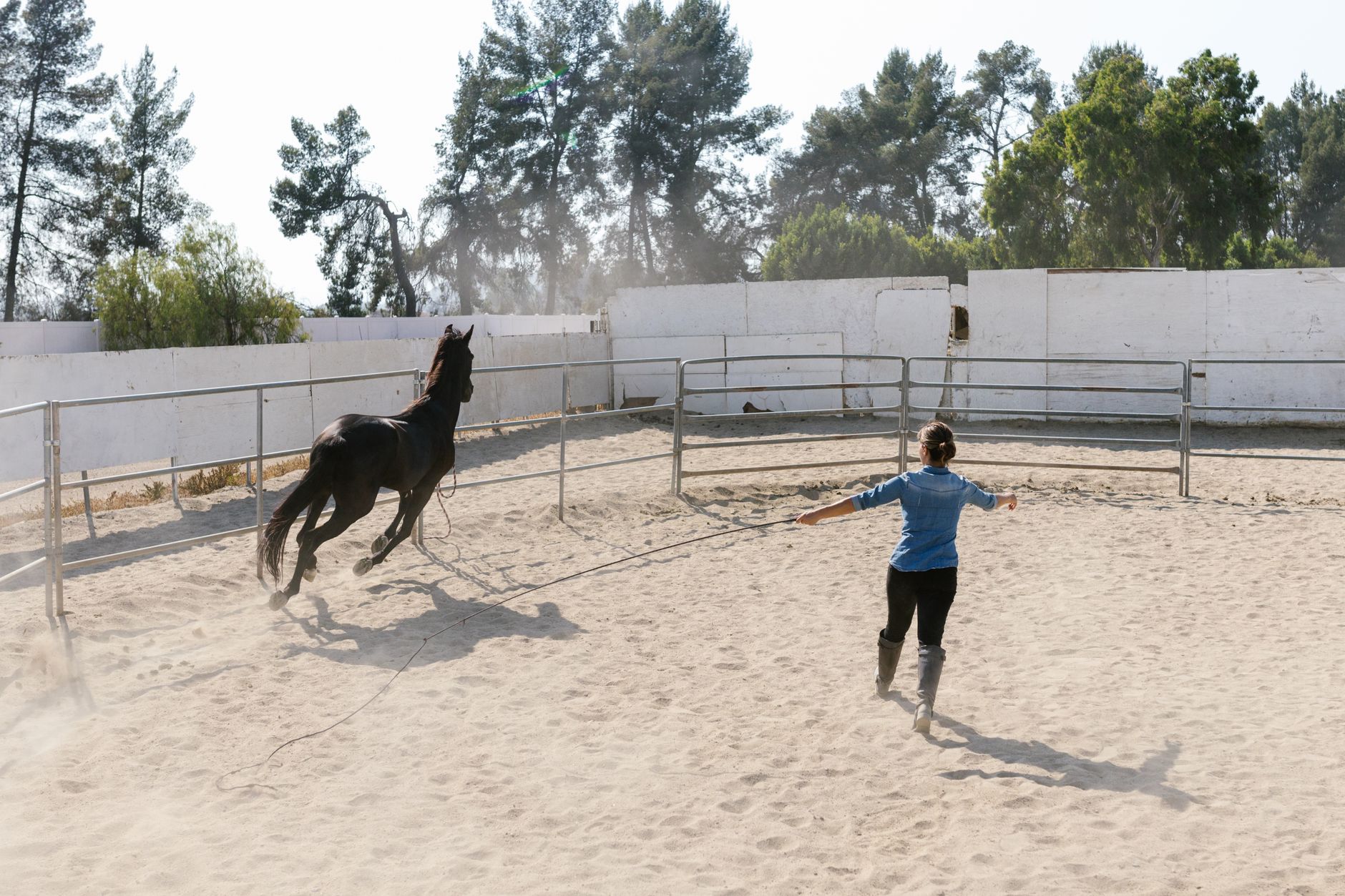
Her surgeon had cleared her for a quiet walk, so Ron saddled Dash and Kenzie rode him around Ron’s arena.
Just around the rail. No pattern. She didn’t need one.
He moved for her like she had never been gone.
I watched her sit that walk with her knee bent easy in the stirrup and her braid bouncing on her back, and I knew whatever Wade had told himself, he’d been wrong. My girl wasn’t done. She’d never been done.
When she got off, she handed the reins to Ron’s granddaughter and said, “Take care of him for me. He’s the best horse in Oklahoma.”
“I will,” the girl said. “I promise.”
Kenzie didn’t talk on the drive home. Somewhere north of Keota, she was looking out the window at the pastures going by, and she said, out of nowhere, “I’ve been thinking about what to call her.”
The filly had gone two months without a name. Kenzie had refused to name her. I had figured that she wasn’t ready to love anything again, and I had not pushed her.
“Yeah?” I said.
“Second Wind,” Kenzie said. “Like when you think you’re done running and then you’re not.”
I had to pull over onto the shoulder. I sat there with the hazards blinking and cried into my hands like a fool, and my fifteen-year-old daughter patted my back and said, “Mom. Mom. It’s just a name.”
But it wasn’t. And she knew it wasn’t. She painted it on a board for the filly’s stall that night, in purple, her favorite color since she was four, and nailed it up herself on one good leg and one bad one.
Wade came across the road on a Thursday evening near the end of October.
I saw him coming the moment he stepped out of his barn, and I’ll admit my stomach went tight. I kept Second Wind walking on the lunge line.
He came up to the pipe slow, the way you’d come up on a horse you weren’t sure of. He had something in his hand.
When he got to the rail, I saw it was Dash’s brass name plate, the one off the stall door.
“Shelby,” he said. “Kenzie.”
Kenzie had stopped the filly. She sat there and looked at him, and she didn’t say anything at all, which was more than I’d have managed at fifteen.
“I owe you both something,” Wade said. “I’m not real good at this, so I’m just going to say it. I told myself she wasn’t going to ride again. I told myself that, and I made it true in my head so I could do what I did.”