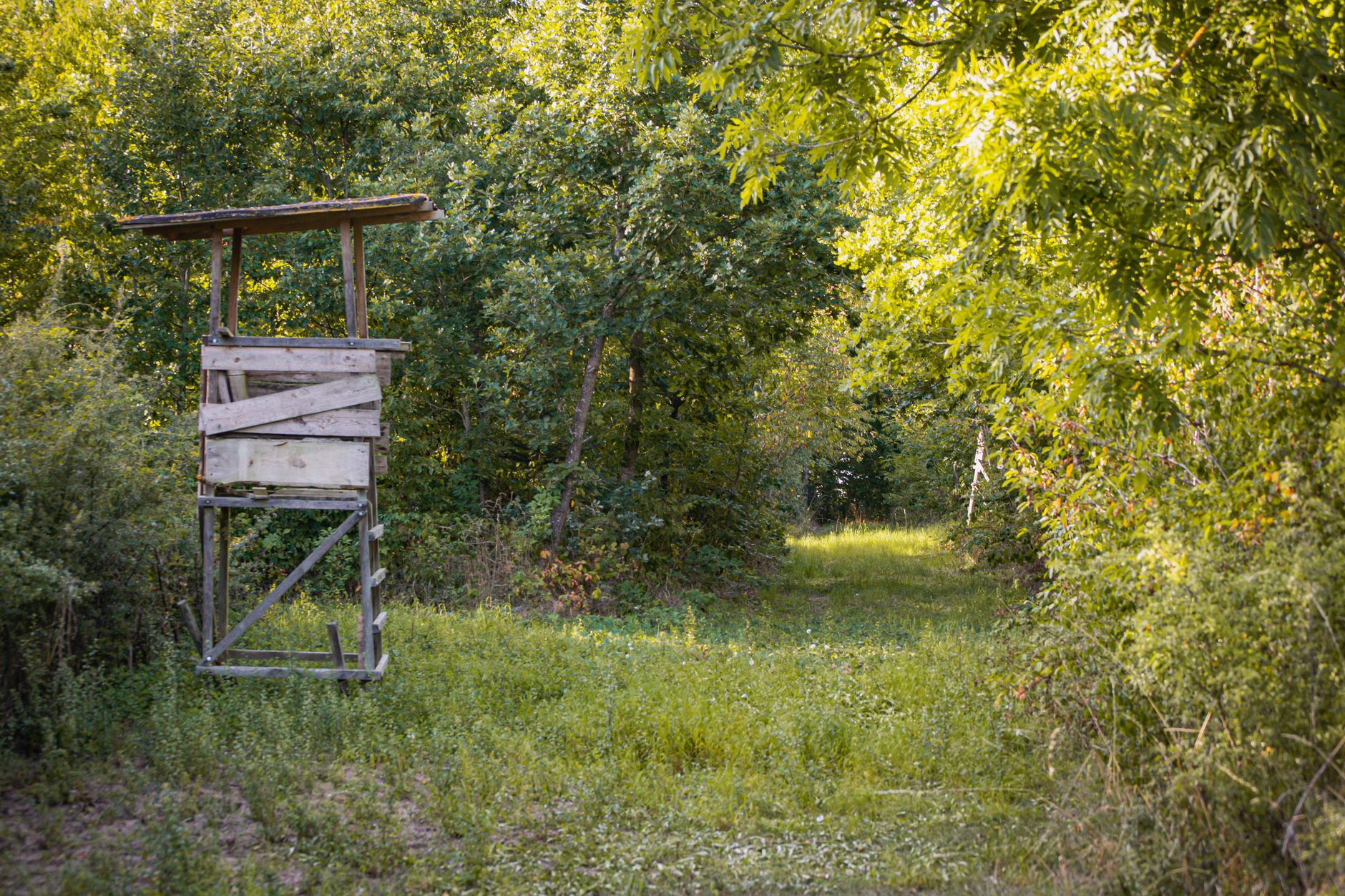
The Deer Blind Where Our Bed Used to Be
“I’m good,” I said. It was the morphine talking, mostly.
He sat down in the chair by the bed and asked the nurse some questions about when I could eat.
Then, inside of twenty minutes, he was asleep sitting up with his chin on his chest, because he had been up since three thirty. My mother put her coat over him.
They let me go home on Saturday afternoon, and by home I mean my parents’ farmhouse ten miles out of town, on the gravel road where I grew up.
I had not slept in that house in more than twenty years. Mama put me in the spare room off the kitchen, in my grandmother’s old walnut bed.
It is the tallest bed I have ever seen in my life. When I was a girl I needed a running start to get into it.
When Mama walked me into the room, holding my elbow, I stopped in the doorway, because there was something sitting on the floor next to the bed that had not been there before.
It was a step stool. Two steps, made out of oak, with the edges sanded so smooth they were almost soft.
On one side, screwed into the frame, was a handrail bent out of gray metal pipe, the kind you run wire through.
“Your dad,” Mama said. “He was out in the shop until midnight. Don’t tell him I told you.”
I sat down on the second step, very slowly, with my hand on the rail. It held me like it had been measured for me, because it had. The top step was exactly level with the edge of the mattress.
My father came in a minute later from the barn. He is seventy-one and does not say much. He stood in the doorway and looked at the stool, and then at me, and then back at the stool.
“Your mother said the bed was high,” he said. “I put the rail on the right side, since you’re right-handed. If you want it on the left, I can switch it.”
That was when I started crying. Not because I hurt, though I did.
I cried because my father, who has bad knees and a bad shoulder and no use for fuss, had stood in a cold shop until midnight bending conduit so his grown daughter could get out of bed by herself.
“Oh, now,” he said, and he came over and put his big hand on the top of my head, the way he did when I was six. “Oh, now. It’s just a step stool, Holly Jo.”
It was not just a step stool. I slept in that tall bed for two weeks, and every single morning I rolled to my side, put my feet on that oak step, took hold of that rail, and stood up without asking anybody for help.
That stool gave me something back that I didn’t know I had lost.
My brothers came over the next Saturday, a week to the day after I came home from the hospital.
Dale is forty-four. He is the oldest and the one who always has a plan.
Rusty is thirty-eight, the baby, and he is the one who always says yes to Dale’s plans before he has heard what they are. Between the two of them they have never had a quiet idea in their lives.
They came in through the kitchen around four, stomping mud off their boots, and stood at the foot of my grandmother’s bed looking at me like I was a sick calf.