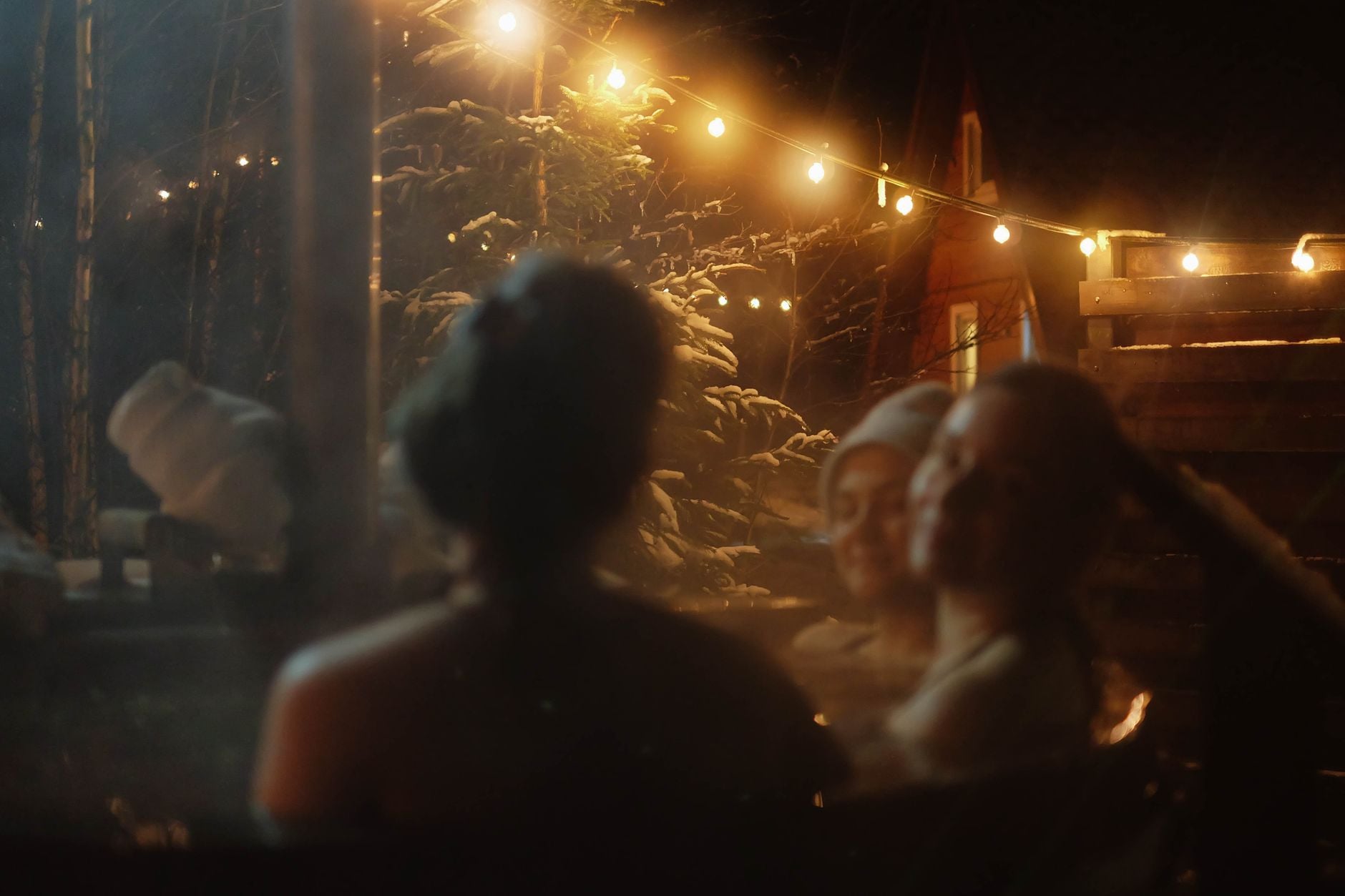
Mom’s Eight Thousand Dollar Hot Tub
Mark tries
That week Mark came over to Mom’s on his one afternoon off. He brought an envelope with two hundred dollars cash in it, from his paycheck.
He held it out to her at the kitchen table without being able to look at her.
“It’s what I can do this month,” he said. “I’ll bring the same every month until it’s paid.”
Mom pushed the envelope back across the table with one finger. “You didn’t borrow it, son,” she said. “You don’t get to pay it. That’s not how this works.”
“Mom.”
“No.” She put her hand over his, his big rough hand with the grain dust ground into the knuckles.
“You gave me that gate code. That told me everything I needed to know about you. Now you go take your boys out for supper on that money.”
My brother is not a crier. He did not cry then either.
But he sat there a long time with his mother’s hand on his, and when he finally stood up he hugged her harder than I had seen him hug anybody since the funeral.
On his way out the door he stopped and said to me, low, “She hasn’t slept a full night since the surgery. Tiffany. She walks the halls at three in the morning. I didn’t know how bad until this fall.”
“Is that what the tub is for?” I asked him.
He looked at me with the saddest face. “I think so,” he said. “But she won’t tell me. She just says she’s fine.”
Saturday five
The fifth Saturday, Mom told me something on the drive home that I have not been able to forget.
We were coming back out the blacktop, past the old schoolhouse and the cemetery where Dad is buried. The sky was still low and gray.
Mom had her cap in her lap and her hair was damp at the edges where it had crept out.
“You know,” she said, “I haven’t had a Saturday out since your dad died.”
I looked over at her. She was watching the fields go by.
“Four years,” she said. “Saturdays were ours. He’d take me to the sale barn café for biscuits and gravy, and then we’d drive around and look at everybody’s crops and tell each other who planted too late. Every single Saturday, forty-six years.”
“Mom.”
“After he passed, I just stayed home Saturdays. I’d clean the house that was already clean. I’d sit and listen to the clock.”
She turned the cap over in her hands. “These Saturdays are the first time I’ve had somewhere to go. Somewhere I wanted to be.”
I had to pull over onto the shoulder. I put the car in park and put my forehead on the steering wheel and I cried, right there on the blacktop with a grain truck rumbling by.
Mom patted my back the way she did when I was little. “Well, now,” she said. “Well, now. I didn’t say it to make you sad. I said it because I’m happy.”
I had been so busy being angry at Tiffany. I had been so busy keeping score.
And all that time my mother had been lonely, every Saturday for four years, eight miles out on the blacktop, and I hadn’t noticed.
I had been her daughter forty-five years. I lived twelve minutes away. I had never once asked her what she did on Saturdays.