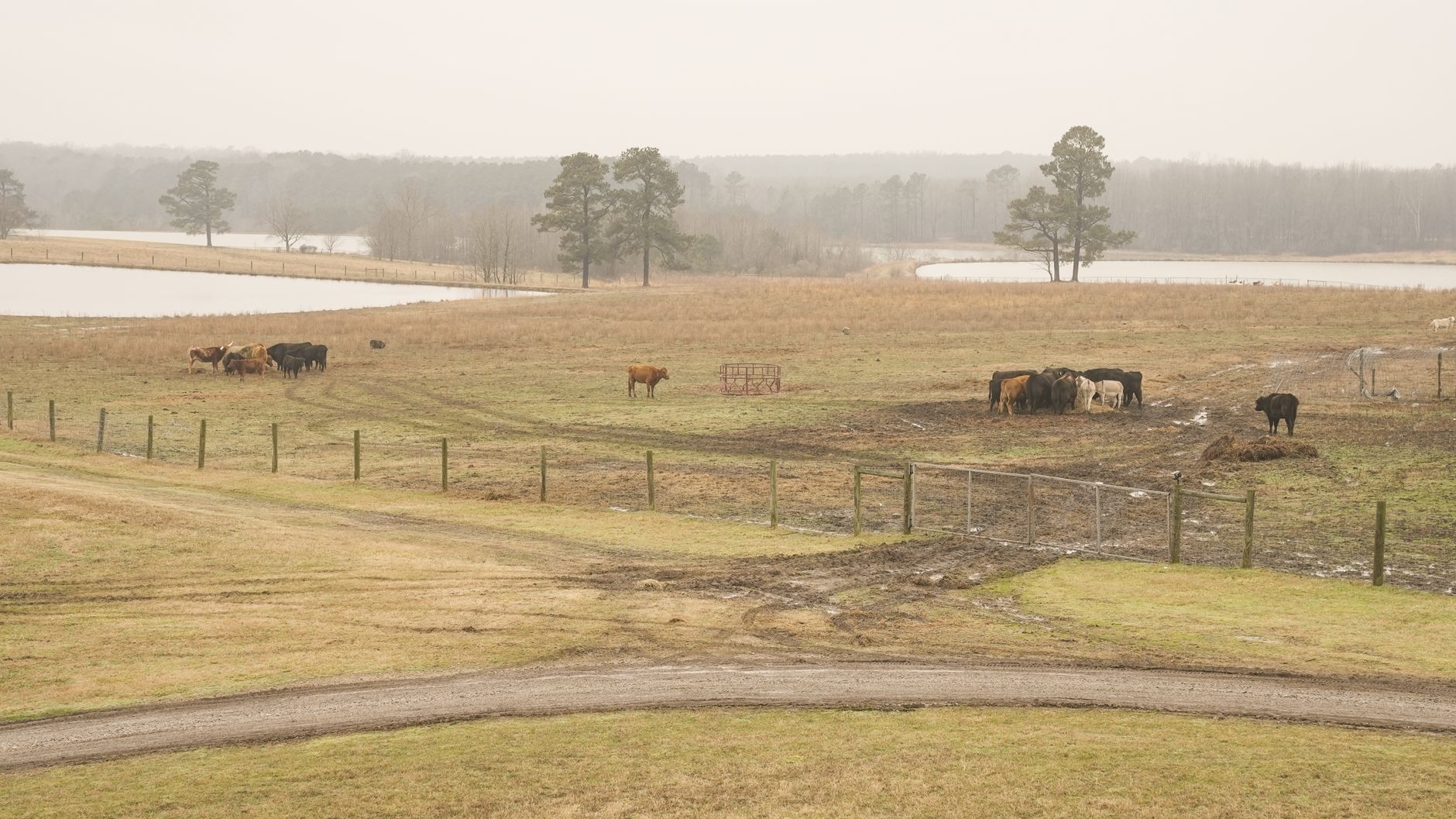
The Pond Fence My Husband Built
Saturday
Caleb drove in at six in the morning from the apartment he shared with two other apprentices, two hours away.
He is twenty-four, a few days of stubble on his jaw, built long and lean like his daddy, and he had been on a storm crew all week.
He came in the back door in a gray hooded sweatshirt and hugged me hard, the way he had not quite been able to since the funeral, and then he poured coffee into his daddy’s thermos without asking.
Luke came at seven with Megan and the baby, in that same camo jacket he wears everywhere from October to April. Megan stayed at the house to make lunch.
Luke loaded the truck with everything his daddy had: the T-post puller, two fence stretchers, a come-along, the wire roller, fencing pliers, a box of clips, a keg of fence staples, four new rolls of barbed wire Wade had bought in the spring and never used.
I wore Wade’s old red ball cap. The Co-op one, faded nearly pink on the bill from twenty summers of sun. I had not worn it before.
I put it on that morning because it was hanging by the door and my hair was a mess, and then I left it on.
I wore my tan barn coat and my oldest jeans and the brown leather gloves Wade bought me two Christmases ago.
They were still stiff. I had not done much fencing with him. That was always his.
We started at the south end at eight o’clock sharp. I said I would, so we did.
The work
Here is how you take down a T-post fence, for anybody who has never done it.
First you cut or unhook the wire at the end brace and let the tension off slow, standing well back, because barbed wire under tension will take your eye out.
Then you go down the line with fencing pliers and pull every clip off every post. Four clips to a post.
Dwayne had set his posts twelve feet apart, so that was a hundred and ten posts, and four hundred and forty clips.
We did it a stretch at a time, so we were never fighting a quarter mile of loose wire at once.
Then you roll the wire. Caleb did that. He had Wade’s old wire roller, a reel on a pipe handle, and he walked backward down the line rolling up Dwayne’s new barbed wire, one strand at a time, careful as a man rolling up a garden hose.
Then you pull the posts. A good T-post puller is a steel jack on a long handle.
You hook the jaw on the studs of the post, and you pump the handle, and the post comes up out of the ground a few inches at a time.
I pulled most of them. I wanted to. Luke offered and I said no.
I wanted my own two hands on every one of them, and by noon my shoulders were burning and I did not care.
Luke carried them. He would wait until I had five or six pulled and then gather them up in his arms and carry them to the trailer, the steel all clanking together, and stack them straight as cordwood.
We did not talk much. Fence work is not talking work. It is a rhythm. Clip, clip, clip, clip. Hook, pump, pump, pump. Lift. Carry. Next post.
The minute the first stretch of wire was down, the old cow with the white splash found the gap and walked straight through it to the pond.
The rest followed her in a line. Dwayne had not turned his own cows into that strip yet, so there was nobody to mix with.
I stood with the puller in my hands and watched them wade in to their knees and drink.
Wade’s cows, at Wade’s pond. I had to look away for a minute before I could hook the next post.